Volkswagen Group EV Deliveries Fall Globally as Europe Accelerates
Volkswagen Group's EV deliveries fell 5.4% through September, but Europe grew 12.1%. Its small-EV family now has nearly 150,000 orders.
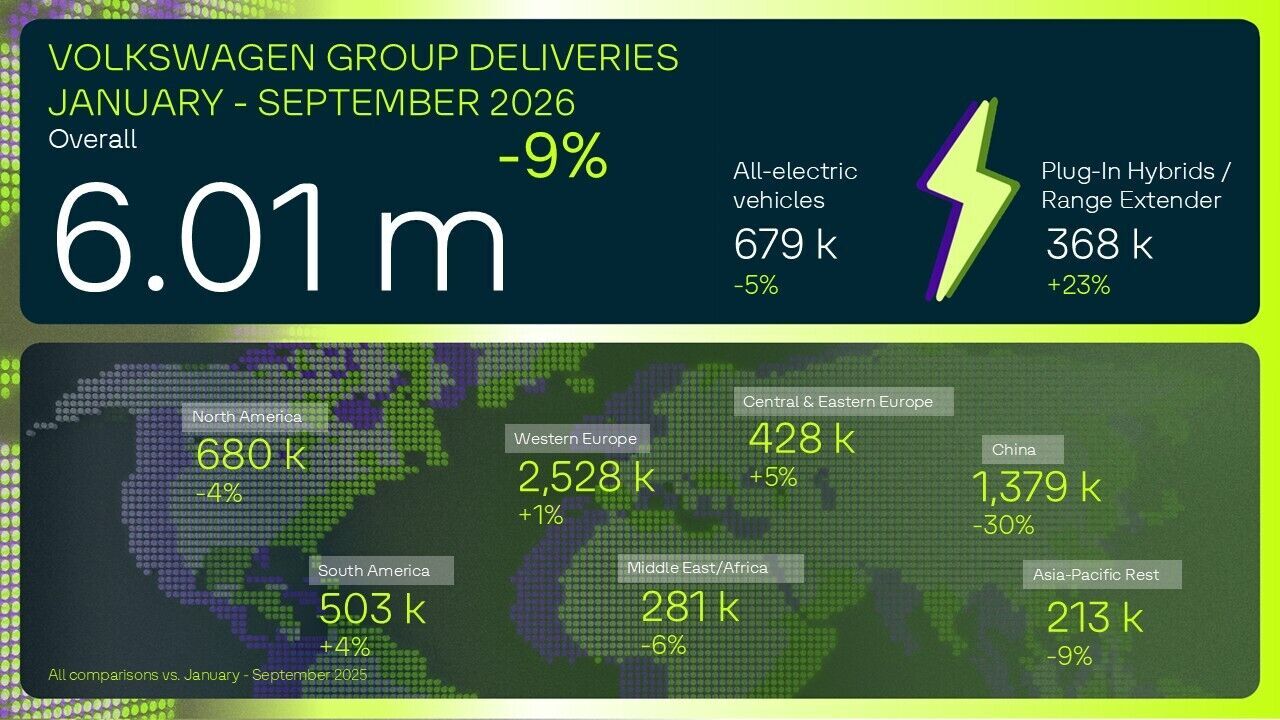
Volkswagen Group’s electric-vehicle business is moving in sharply different directions depending on where you look. Global battery-electric deliveries fell 5.4% to 678,700 through September 2026, while European deliveries rose 12.1% to 586,100. Europe’s momentum strengthened in the third quarter, with EV deliveries up 19.6%.
The other notable number is attached to smaller cars: Volkswagen says its Electric Urban Car Family has attracted nearly 150,000 orders. That lineup comprises the Volkswagen ID. Polo and ID. Cross, Škoda Epiq and CUPRA Raval.
These are figures for Volkswagen Group across its brands, not just Volkswagen-badged passenger cars. They come from the group’s October 12 delivery release, also published by its French newsroom on October 13.
Europe’s Growth Cannot Offset the U.S. and China Declines
| Market | 2026 deliveries | 2025 deliveries | Year-over-year change |
|---|---|---|---|
| Europe | 586,100 | 522,700 | +12.1% |
| United States | 14,900 | 68,700 | −78.4% |
| China | 48,900 | 85,100 | −42.5% |
| Rest of the world | 28,800 | 41,100 | −30.0% |
| Worldwide | 678,700 | 717,700 | −5.4% |
Europe’s result is substantial: it accounts for roughly 86% of the group’s worldwide battery-electric deliveries, calculated from the reported totals. But the gains were not enough to cancel out falling volume elsewhere.
The U.S. decline was particularly steep in the completed July–September quarter. Volkswagen Group delivered 5,100 battery-electric vehicles, down 86.4% from 37,400 a year earlier. China recorded 18,000, down 30.1%. Worldwide Q3 battery-electric deliveries fell 4.7% to 240,200.
Volkswagen points to the end of U.S. subsidy programs and continued import-tariff pressure as part of the American backdrop. That is the company’s explanation; the release does not quantify how much of the decline came from each factor.
Nor should those U.S. percentages be applied to Canada. The battery-electric table identifies the United States separately but does not provide a standalone Canadian total.
Small EVs Are Filling the European Order Book
Battery-electric vehicles now represent around 40% of Volkswagen Group’s European order backlog, versus about 20% of its deliveries in Europe through September. Those percentages measure different things: pending orders and cars already handed over to customers.
The European EV backlog has doubled compared with year-end 2025, Volkswagen says. New battery-electric orders in Q3 rose by more than 60% year over year, with the four-model urban-car family a prominent contributor.
Nearly 150,000 orders is a meaningful follow-up to the 70,000-order update Motorlinks covered in July. It is not a clean like-for-like growth calculation: that earlier update counted three available family members, while the latest release names all four. Neither figure is a delivery total.
The appeal is straightforward. Smaller hatchbacks and crossovers give buyers an alternative to paying for a large vehicle and battery they may not need. Volkswagen attributes Europe’s stronger EV interest to high fuel prices and a wider selection of entry-level models. The order numbers support interest in that offering, but do not establish its profitability or guarantee smooth deliveries.
The small-EV family behind the order growth
13
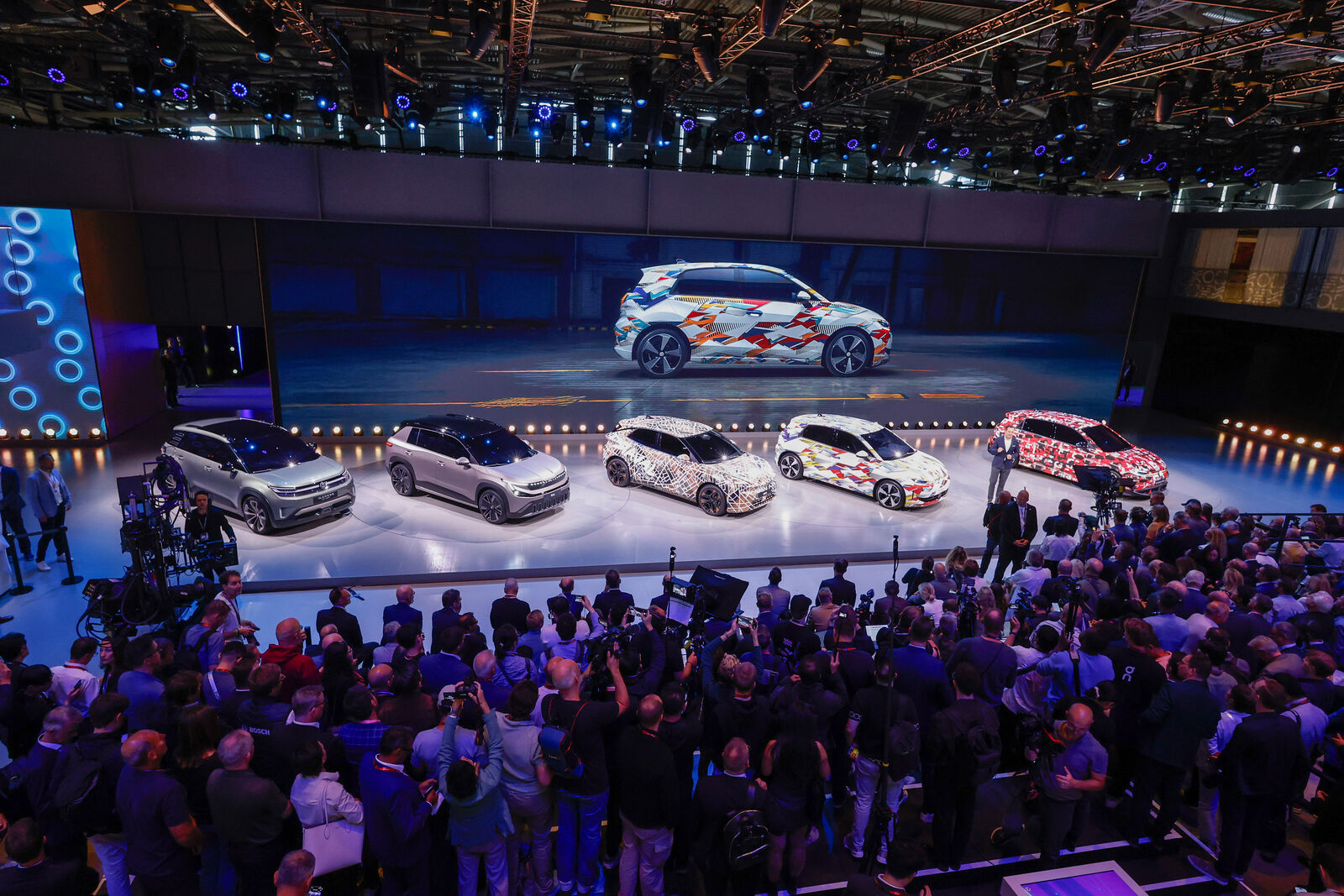
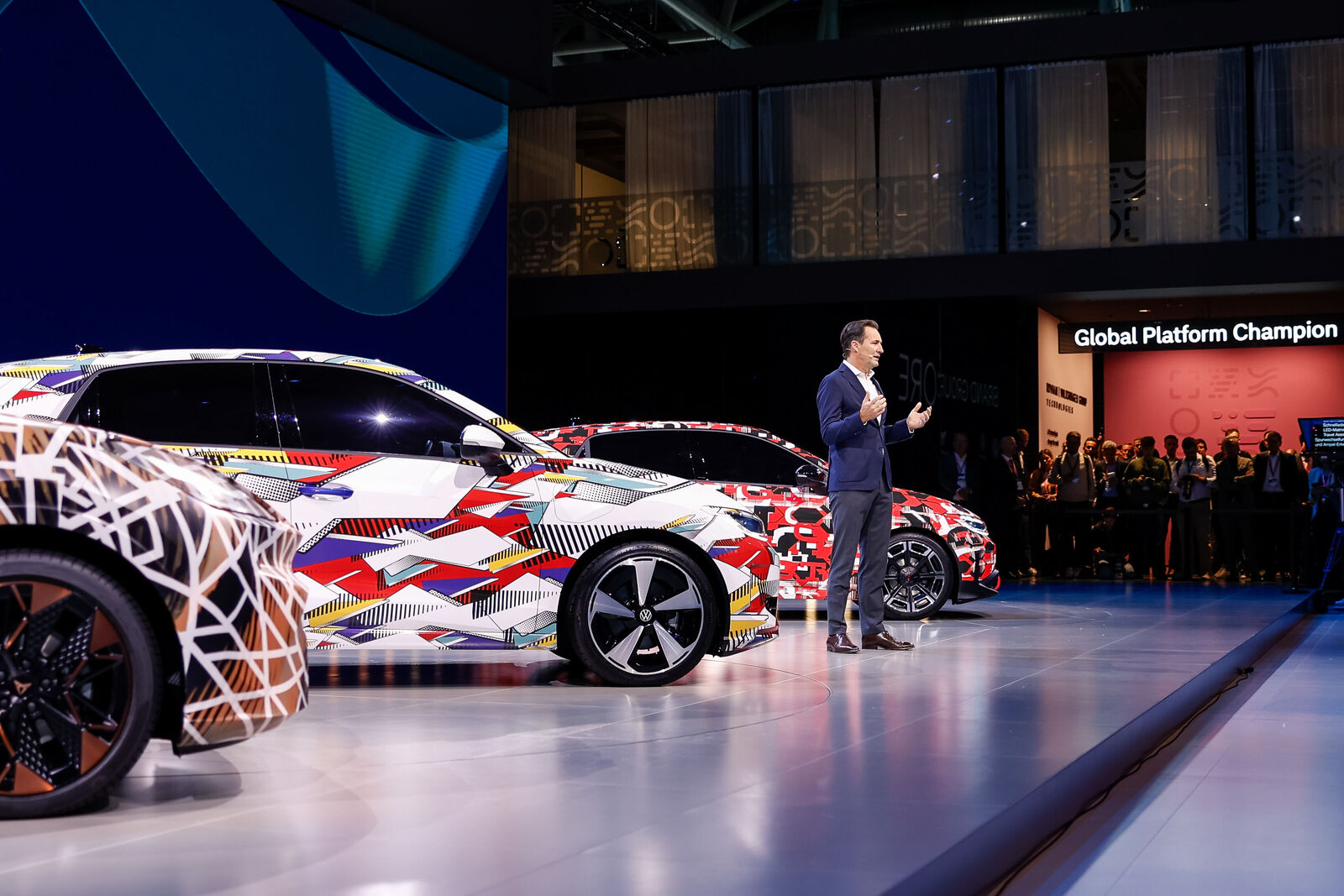
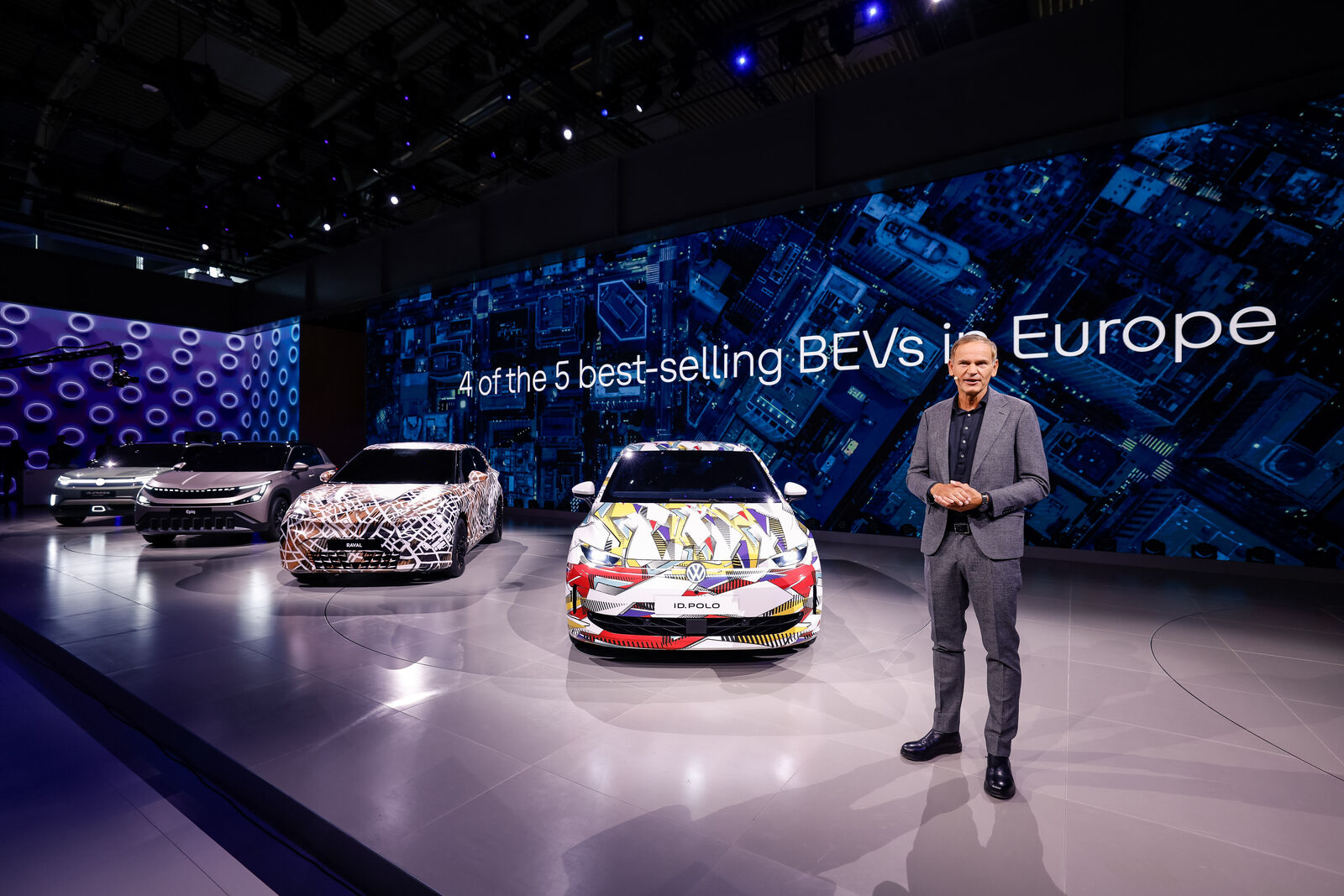
Earlier official presentation imagery shows the group's compact-EV family. This is not a photograph of October customer deliveries. Image: Volkswagen Group.
Plug-In Growth Is a Separate Story
Volkswagen also reported 368,000 global deliveries of plug-in hybrids and range-extender vehicles, up around 23% through September. Both categories retain combustion engines; they should not be added to the battery-electric count and described as fully electric sales.
That distinction matters in China. Volkswagen says its electrified deliveries there grew around 30% in Q3, with plug-in hybrids and range-extender models particularly strong. Its Chinese battery-electric deliveries still declined in the same quarter. Both statements can be true.
Across all powertrains, the group delivered 6,011,000 vehicles worldwide through September, down 9.0%. Europe’s improving EV results therefore sit inside a weaker global business, rather than proving the whole company has returned to growth.
What Canadian Readers Should Take From It
This is a completed-quarter sales update, not a Canadian vehicle-launch announcement. It supplies no new Canadian arrival date, price or incentive eligibility for the urban-car family.
The useful takeaway is that EV demand is not moving uniformly. Volkswagen Group is finding European buyers for a broader electric lineup even as its U.S. and Chinese battery-electric volumes shrink. Turning the stronger order book into deliveries is the next test.
For shoppers here, the relevant numbers remain local availability and the actual Canadian purchase price. Our Canadian EV incentive and affordability guide covers that separate decision.
Hero graphic and gallery: Volkswagen Group. The hero rounds several totals; the article uses the more precise figures in the official tables. Gallery photographs are earlier presentation imagery, not the current production or delivery mix.