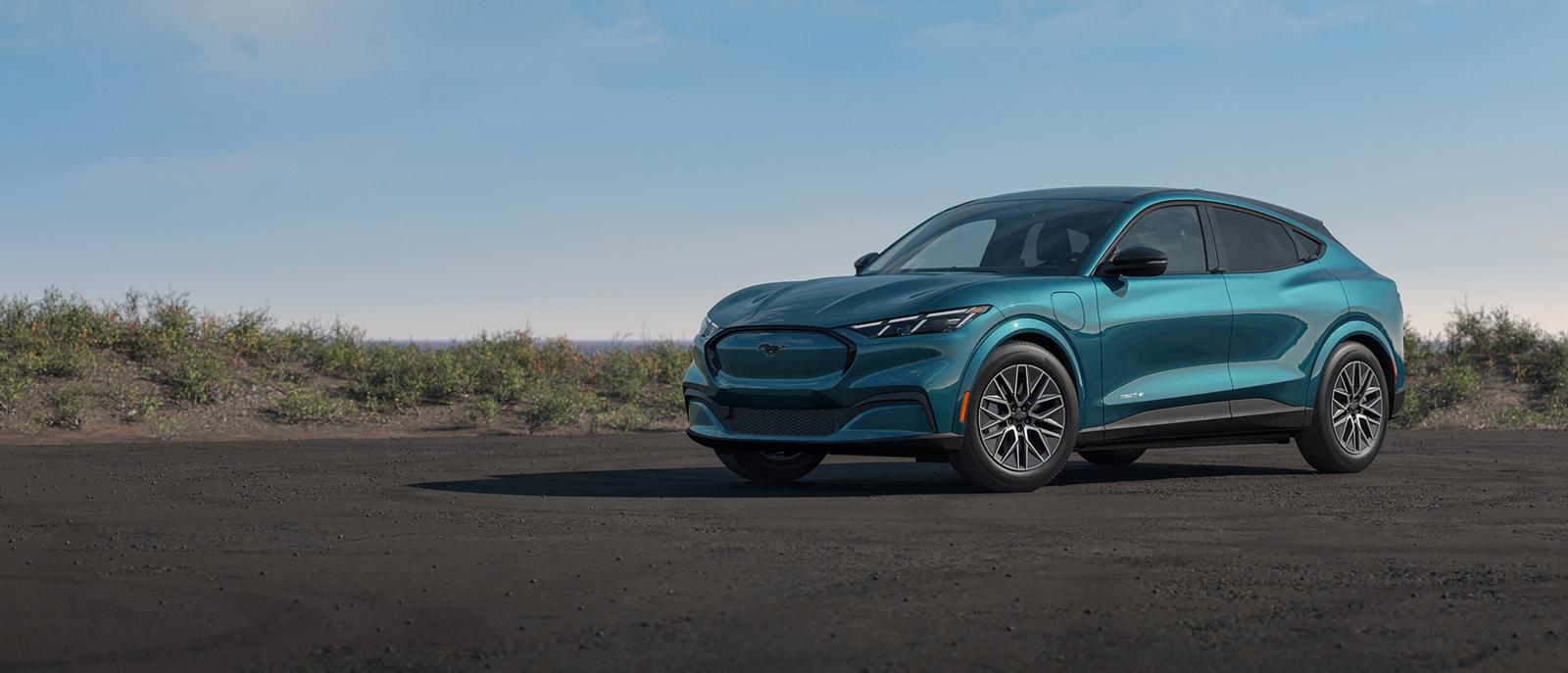
Ford U.S. EV Sales Fall 80% in Q3 as Mach-E Leads a Smaller Lineup
Ford sold 6,047 EVs in the U.S. in Q3 2026, down 80.2%. Mach-E accounted for most sales, while Maverick Hybrid set a quarterly record.
Photo: Ford
Manufacturer estimates, market scope and other evidence limits remain explicit.
Ford sold 6,047 electric vehicles in the United States in the third quarter of 2026, down 80.2% from 30,612 a year earlier. The Mustang Mach-E supplied 5,574 of those sales, leaving the F-150 Lightning and E-Transit with much smaller contributions.
The figures come from Ford’s October 2 U.S. sales release, specifically its third-quarter sales table on page 8. They describe U.S. sales, not Canadian sales or worldwide deliveries.
The contrast inside Ford’s business is striking. Battery-electric sales fell sharply, but the Maverick Hybrid set a third-quarter record of 27,793 sales, up 59.6%. Even that bright spot did not lift Ford’s overall hybrid total above last year’s result.
Mach-E Accounts for More Than Nine in Ten Ford EV Sales
| Model | Q3 2026 U.S. sales | Q3 2025 U.S. sales | Year-over-year change |
|---|---|---|---|
| Mustang Mach-E | 5,574 | 20,177 | −72.4% |
| F-150 Lightning | 289 | 10,005 | −97.1% |
| E-Transit | 184 | 430 | −57.2% |
| Total battery-electric vehicles | 6,047 | 30,612 | −80.2% |
Mach-E represented approximately 92.2% of Ford’s quarterly EV total, calculated from the reported model and propulsion figures. The electric crossover remains the centre of Ford’s current U.S. battery-electric sales, but its own volume was down 72.4% year over year.
The Lightning’s 289 sales require different context from the Mach-E’s decline. Drive Tesla’s October 3 report notes that Ford ended production of the battery-electric Lightning in late 2025 as it prepares an extended-range successor. This is not a like-for-like reading of demand across three continuously produced models.
Ford reports Lightning as a memo line within F-Series and E-Transit within Transit. Those electric counts should not be added on top of their parent model totals when calculating overall truck and van sales.
A Tough Comparison, but Not Just a One-Quarter Headline
Drive Tesla also identifies an unusually strong year-earlier comparison: U.S. buyers brought purchases forward ahead of the federal EV tax credit’s September 30, 2025 expiration.
That helps explain why a year-over-year percentage can be especially dramatic. It does not make the decline disappear. Ford’s official table shows 22,653 U.S. EV sales through September 2026, down 67.5% from 69,600 in the same nine months of 2025.
Battery-electric vehicles accounted for about 1.2% of Ford Motor Company’s 509,764 U.S. vehicle sales in Q3, compared with about 5.6% of 545,522 a year earlier. These are calculated shares of Ford’s own sales, not EV market share.
The report does not isolate the effects of incentives, model availability, pricing and consumer preferences. Assigning the entire decline to any one factor would go beyond the disclosed figures.
Official Mustang Mach-E imagery
11
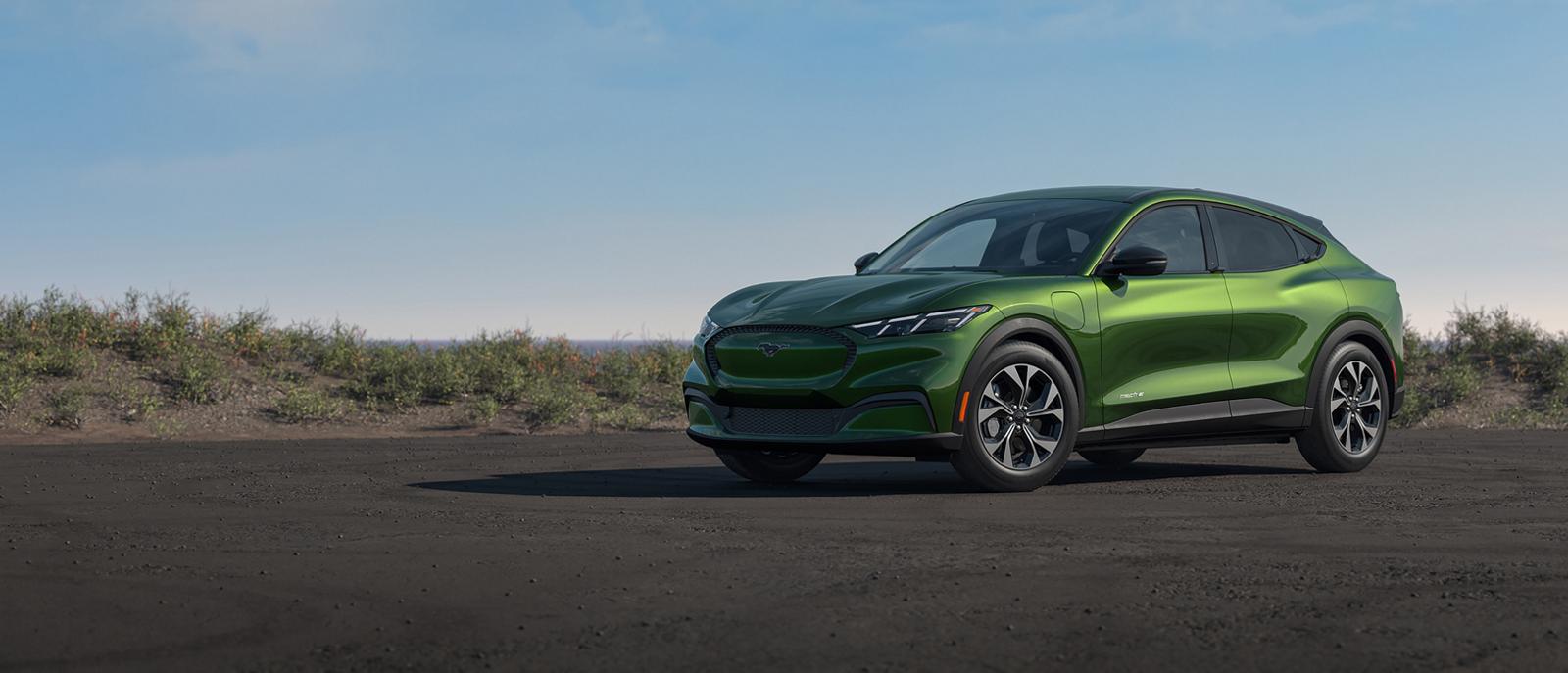
The Mach-E Select illustrates the entry trim. Ford's quarterly report does not break sales down by trim.
Maverick Hybrid Is the Bright Spot, Not the Whole Hybrid Story
Ford’s 44,308 hybrid sales fell 19.7% from 55,177 in Q3 2025. The Maverick Hybrid’s record therefore sits inside an overall hybrid decline, rather than proving that every hybrid model benefited.
Combined electric and hybrid sales reached 50,355, down 41.3%. Ford calls that combined category “electrified”; it should not be confused with the 6,047 battery-electric vehicles.
Across all powertrains, Ford’s U.S. sales declined a much smaller 6.6%. The company says its total volume was essentially unchanged when adjusted for the planned phase-out of Escape and Corsair. That adjustment is Ford’s stated context for the broader business, not an adjustment to the reported EV total.
What This Does—and Does Not—Tell North American Readers
For U.S. readers, the quarter shows a substantially smaller Ford EV business, increasingly concentrated in Mach-E, alongside strong demand for the Maverick Hybrid. It doesn’t confirm Ford’s EV profitability or the sales performance of rival manufacturers.
For Canadian readers, this release provides no Canadian model or propulsion sales totals. The U.S. percentages cannot be applied to Canada, and neither the report nor the images establish a change to Canadian pricing or availability.
There is no new vehicle arrival date in this sales announcement. The immediate story is the completed July–September quarter: Ford’s EV volume fell sharply, while one hybrid pickup posted a record. The next useful measure is whether Ford can rebuild electric sales—not whether a single quarterly result can settle the wider EV-versus-hybrid debate.
Images: Ford Canada. The hero and gallery show 2026 Mustang Mach-E variants as illustrative manufacturer imagery; Canadian product photos do not identify the configuration mix sold in the United States.