Honda's Japan-Only Insight EV Shows the EV It Is Not Selling Here
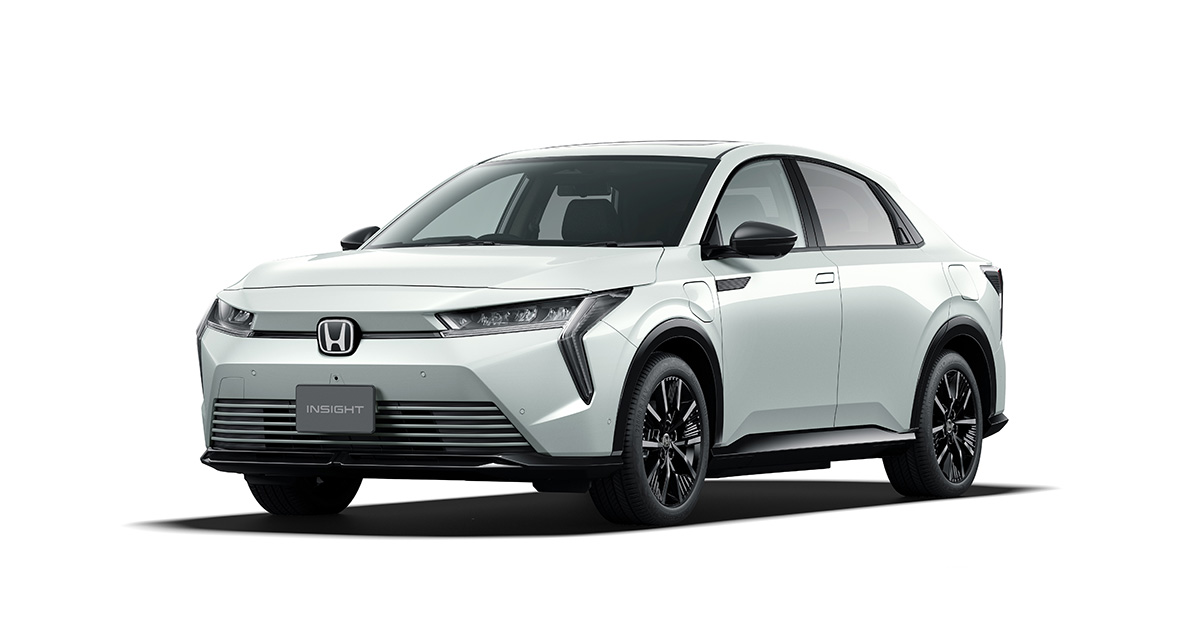
Honda's new Insight EV is limited to Japan, but its 535-km WLTC range, compact crossover format, and calmer mission show what Honda still needs in North America after its EV reset.
Photo: Honda
Honda’s North American EV story has been messy in 2026. The company cancelled three U.S.-planned EVs, booked massive electrification-related losses, and shifted its near-term attention back toward hybrids. That is the headline Motorlinks has already covered.
But while that reset was unfolding, Honda also put two very different battery-electric products into Japan: the tiny Super-ONE compact EV and the new Insight EV crossover. The Insight is the more interesting one for North American shoppers, not because it is coming here, but because it shows the kind of straightforward electric Honda that still feels missing from the local lineup.
Honda began sales of the all-new Insight EV in Japan on April 17, positioning it as a fourth-generation Insight and a new crossover-style EV passenger model. The company says it has a 535 km WLTC range, an approximately 40-minute fast-charge time to 80 percent from the low-charge warning on chargers above 50 kW, a 1,500W external AC power output option, and a limited sales plan of 3,000 units.
That does not translate neatly into an EPA or Natural Resources Canada number. WLTC ratings are not the same as North American range testing. Japanese pricing, subsidies, charging habits, and vehicle-use patterns are different too. Still, the product brief is worth paying attention to because it is refreshingly normal: a compact electric crossover, useful range, five seats, practical cargo packaging, and a familiar Honda nameplate.
In other words, exactly the kind of EV Honda loyalists in Canada and the U.S. could understand quickly.
Why the Insight EV Matters Even If We Do Not Get It
The Insight name used to mean efficient oddball, then sensible hybrid sedan. Now Honda has turned it into an electric crossover for Japan.
That shift says a lot. Honda is not trying to revive the Insight as a nostalgia object. It is using the name for a practical electrified vehicle again, just in the form factor buyers now expect. The company describes the new Insight as a crossover SUV EV with a high-quality cabin, generous rear-seat comfort, a large cargo area, and a power unit built around a compact drive unit and thin battery.
Those details are not spectacular on their own. That is partly the point.
Honda does not need every EV to be a futuristic flagship. It needs EVs that feel easy to understand. The Prologue gave the brand a useful North American foothold, but it is a GM Ultium-based bridge product. The cancelled Honda 0 SUV, Honda 0 Saloon, and Acura RSX were supposed to be the clean-sheet next step, but Honda said in March it would cancel those North American EV programs as part of a broader reassessment.
The Insight EV sits in a different lane. It is not a moonshot. It is not trying to redefine Honda. It looks more like an answer to a basic buyer question: can I get a Honda-shaped EV with enough range for ordinary life?
For North America, that question still does not have a fully satisfying Honda-branded answer.
The Specs Tell a Practical Story
The headline number is the 535 km WLTC range. Again, that should not be read as a North American estimate. But it does indicate Honda is aiming beyond city-only use with the Insight EV.
The fast-charging claim is also modest but sensible. Honda says the Insight can charge to 80 percent in about 40 minutes from the low-charge warning when using a fast charger with output above 50 kW, with caveats for summer and winter conditions. That is not Hyundai IONIQ 5 or Kia EV6 territory, and it would not be a class-leading road-trip number in North America. But for a Japan-market compact crossover, the target makes sense.
The other practical detail is the 1,500W external AC output option through Honda’s Power Supply Connector. That matters because Japanese automakers have long treated vehicle power export as more than a camping trick. In a country where natural disasters and grid resilience are real ownership considerations, external power has a clearer use case.
North American EV shoppers increasingly understand that idea too. Ford made bidirectional power part of the F-150 Lightning pitch. Hyundai and Kia have leaned into vehicle-to-load capability. Honda bringing that thinking into a compact EV reinforces how useful the feature can be when it is packaged into normal vehicles instead of reserved for trucks and halo models.
Super-ONE Shows the Other Half of the Lesson
The Insight is the practical crossover. The Super-ONE is the small-car counterargument.
Honda opened Super-ONE pre-orders in Japan on April 16, with sales planned for late May 2026. The tiny EV uses an A-segment format, weighs 1,090 kg, claims 274 km of WLTC range, and has a BOOST Mode that raises output from 47 kW to 70 kW while adding simulated seven-speed shift feel and active sound.
Motorlinks covered the Super-ONE as a news item because it is charming and weird in the best Honda way. In this broader context, it matters because it shows Honda pursuing two separate EV answers instead of one compromised middle.
The Insight is for practical crossover buyers. The Super-ONE is for urban buyers who need a light, efficient, personality-rich EV more than they need road-trip range. That distinction is healthy. One of the reasons affordable EVs are hard is that automakers keep trying to make every small EV feel like a shrunken family SUV. That adds battery, weight, cost, and complexity.
Honda’s Japan-market pair suggests a clearer split: let the city EV be a city EV, and let the crossover EV be the practical one.
Honda Japan EV gallery: Insight EV and Super-ONE official images
13
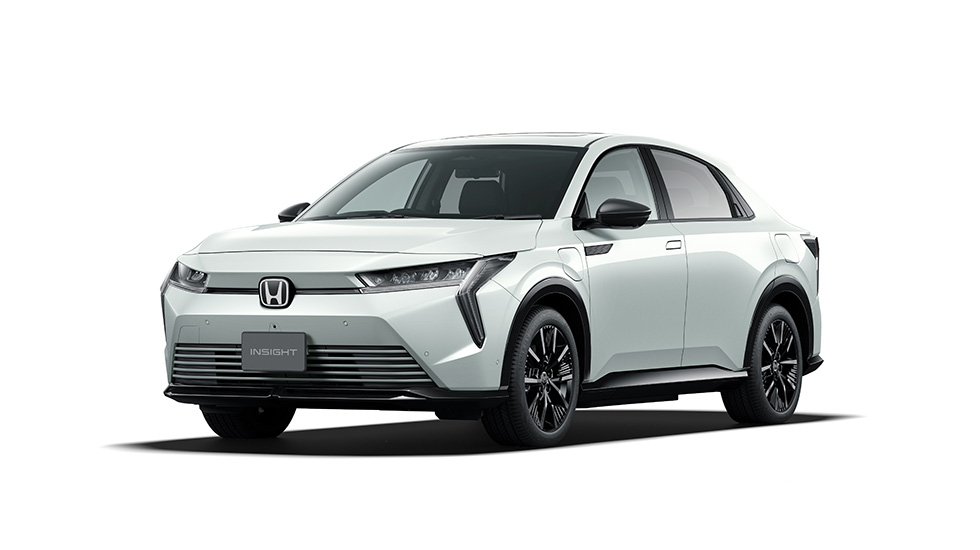

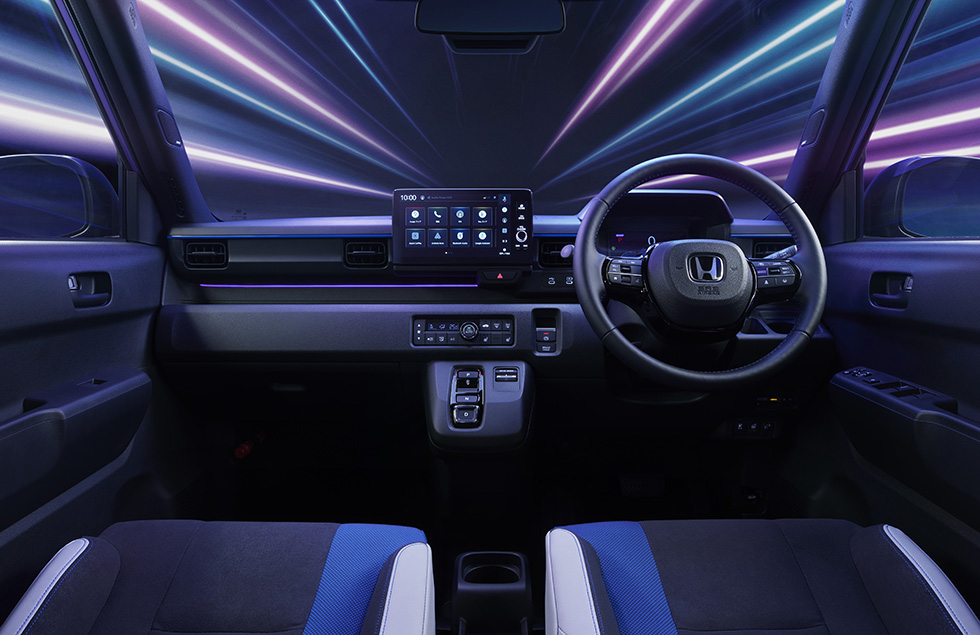
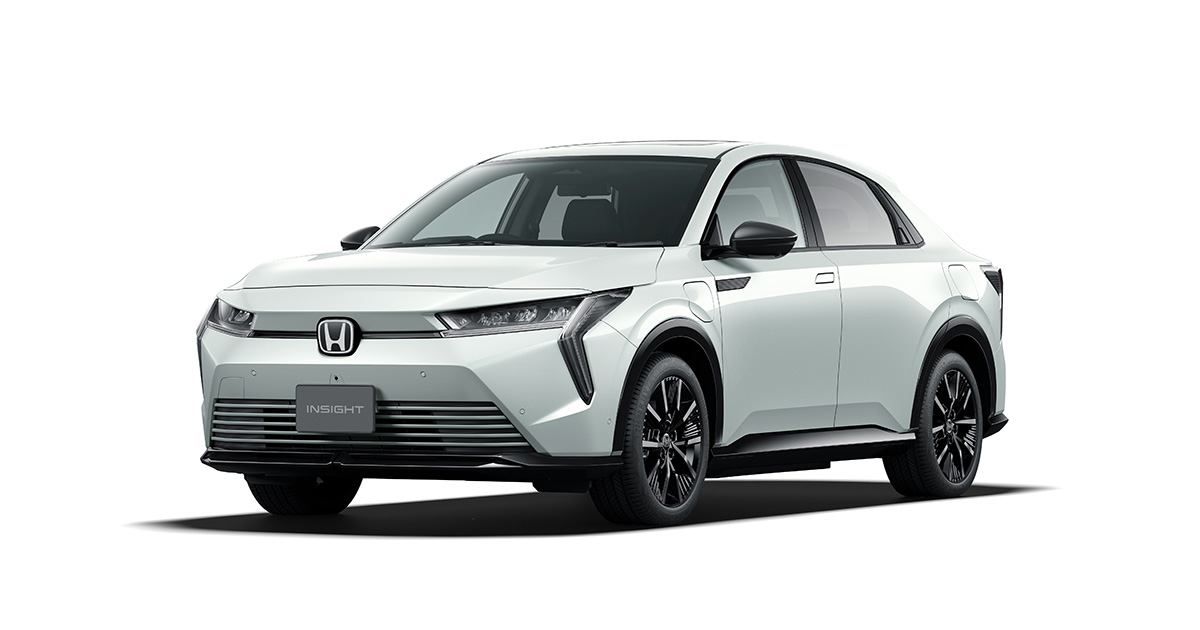
Honda says the all-new Insight EV is a Japan-market crossover with 535 km of WLTC range and a limited 3,000-unit sales plan.
The North American Gap Is Still Real
None of this erases Honda’s current North American problem.
The brand has strong hybrid products and an increasingly explicit hybrid-first recovery plan. That makes sense in the short term. A broader CR-V Hybrid, Accord Hybrid, Civic Hybrid, and future Acura hybrid strategy may line up better with what many shoppers want right now than expensive clean-sheet EVs with uncertain demand.
But Honda still needs a credible long-term EV ladder. The Prologue can hold the door open, but it cannot carry the full brand story forever. If Honda waits too long, the gap to Hyundai, Kia, GM, Tesla, Rivian, Volkswagen, and Toyota’s expanding EV lineup gets harder to close.
The Insight EV is not automatically the answer for Canada or the U.S. A vehicle built around Japanese rules, charging norms, pricing, and buyer expectations would need careful adaptation before it made sense here. Honda would also need to prove charging speed, cold-weather range, battery supply, software, dealer readiness, and price competitiveness in a much more demanding North American EV conversation.
Still, the idea is right: a normal Honda EV, sized like something people already buy, with enough range to remove daily anxiety and enough restraint to avoid luxury pricing.
That is the gap Honda should be trying to fill.
The Canadian Buyer Angle
For Canadian shoppers, the Insight EV is mostly a reminder of what to watch for next.
Canada’s EV market is not just about maximum range anymore. It is about price, charging access, winter confidence, and whether the vehicle fits a household without feeling like a lifestyle overhaul. That is why Motorlinks keeps pointing readers back to the Canadian EV incentive guide: affordability and eligibility can change the decision as much as horsepower or screen size.
If Honda eventually brings a right-sized EV crossover to Canada, it will need to land in that practical zone. Not a $90,000 tech showcase. Not a compliance car. Not a vehicle that only makes sense with perfect charging access. A Honda EV that looks boring on paper in the best possible way: enough range, enough space, predictable controls, useful charging, sane pricing, and a dealer network buyers already know.
The Insight EV proves Honda can still package that idea. The uncomfortable part is that Japan gets to see it first, while North American buyers are being asked to wait through another strategic reset.
The Bottom Line
Honda’s Japan-only Insight EV is not a secret North American launch preview. It is a useful clue.
After cancelling three North American EV programs and leaning hard back into hybrids, Honda still needs to show what its next normal EV looks like. The Insight EV and Super-ONE suggest the company has not forgotten how to build around clear use cases: one practical crossover, one lightweight city car, neither pretending to be everything.
That clarity is exactly what Honda needs here. Hybrids can carry the next few years, but they cannot be the whole answer forever. When Honda is ready to return to EVs in North America with its own product, the lesson from Japan should be simple: make it practical, make it unmistakably Honda, and make the price make sense.