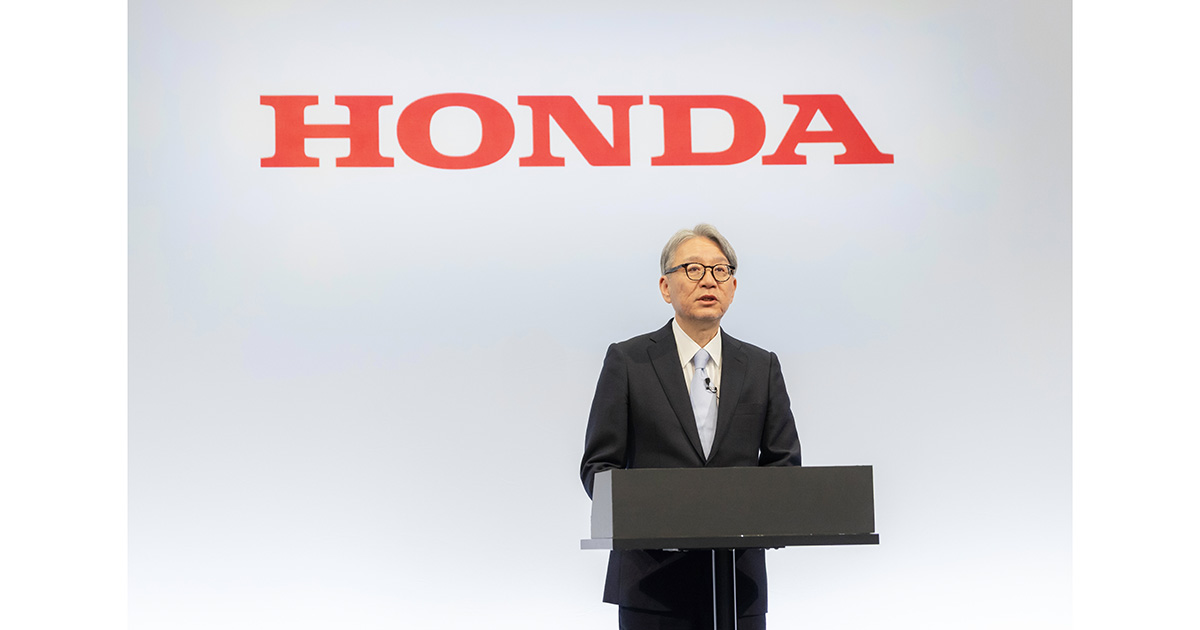
Honda’s EV Reset Turns Into a $2.7 Billion Annual Loss
Honda has posted its first full-year loss after EV-related charges, while laying out a three-year reset built around hybrids, motorcycles, software, and more cautious EV spending.
Photo: Honda
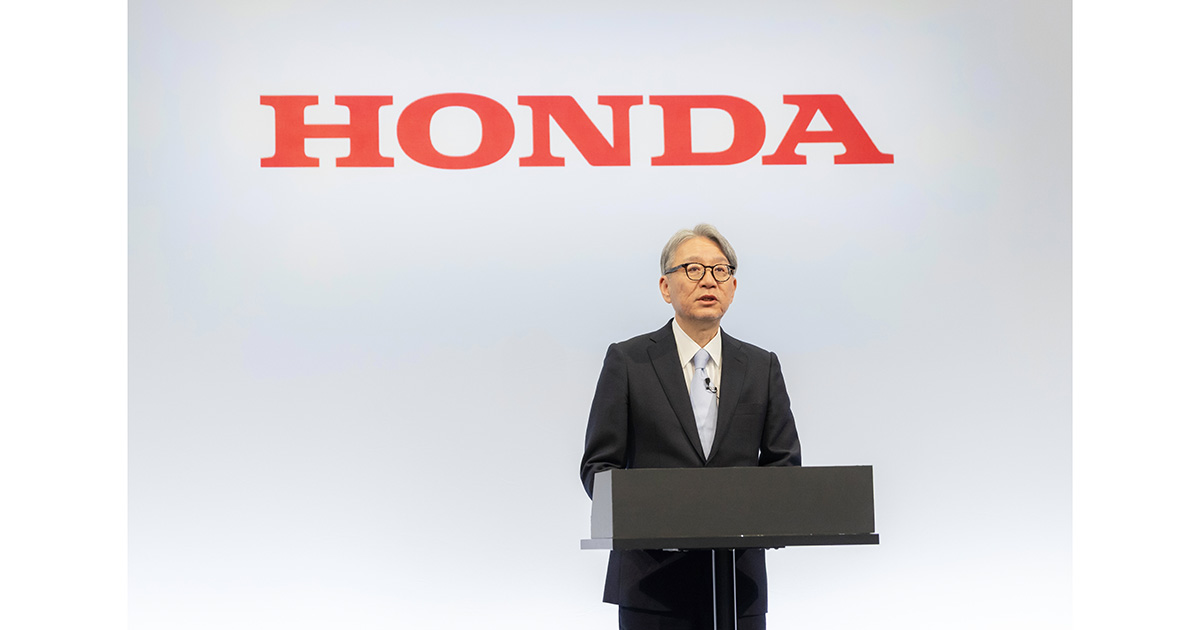
Honda’s EV retreat is no longer just a product-plan story. It is now written directly into the company’s full-year results.
On May 14, Honda reported a 423.9 billion yen loss, roughly $2.7 billion, which Associated Press described as the Japanese automaker’s first-ever full-year loss. The headline reason is blunt: heavy costs tied to a reassessment of Honda’s electric-vehicle strategy, including the cancellation of three North American EVs and write-downs linked to EV operations.
Honda is not walking away from electrification. But its new plan is much more cautious than the aggressive battery-electric roadmap it was pitching only a short time ago. In a May 14 business briefing, Honda said it will spend the next three years rebuilding its automobile business, redirecting resources toward hybrids, software, gasoline and hybrid models, and markets where it believes it can recover profitability faster.
That is a major shift for a company that once wanted the Honda 0 Series to announce a new EV era. Now, Honda’s near-term message is simpler: fix the car business first, keep investing in future technology, but stop forcing EV spending ahead of demand.
The EV Charges Are Huge
The numbers are what make today’s update more than another vague strategy reset.
In its latest financial materials, Honda said EV-related losses for the fiscal year ended March 31, 2026 totaled about 1.58 trillion yen. The issuer financial presentation separates 1.4536 trillion yen of operating EV-related losses from 124.1 billion yen of equity-method losses, totaling 1.5778 trillion yen before tax. Honda reported an operating loss of 414.3 billion yen; its adjusted operating profit excluding the operating EV-related charges was 1.0393 trillion yen. Adjusted profit is an issuer-defined comparison, not the reported result. That contrast tells the whole story: Honda still has strong underlying businesses, especially motorcycles and financial services, but the EV reset has overwhelmed the annual result.
The company had already warned in March that it expected major losses from its revised electrification strategy. At the time, Honda confirmed it was canceling the development and market launch of three EVs planned for North American production: the Honda 0 SUV, Honda 0 Saloon, and Acura RSX.
Honda said then that starting production and sales of those models in a market where EV demand was declining significantly would likely create further long-term losses. It also pointed to U.S. tariff-policy changes, slower EV growth, tougher competition in China, and the impact of allocating too much resource to EV development while its broader auto competitiveness slipped.
That is not a small correction. It is Honda admitting that its dedicated EV push was mistimed, overcommitted, or both.
Hybrids Move Back to the Center
The clearest product takeaway is that hybrids are now at the heart of Honda’s recovery plan.
Honda says that starting in 2027, it will begin launching next-generation hybrid models using an all-new hybrid system and platform. The company is planning 15 next-generation hybrid models globally by the end of the fiscal year ending March 31, 2030, with North America named as a priority region. Honda also says large-size hybrid models in the D-segment or above are planned for North America in 2029.
For shoppers, that is probably the most relevant part of the announcement. Honda has strong hybrid credibility with models like the CR-V Hybrid, Accord Hybrid, and Civic Hybrid. Those vehicles fit the current market better than expensive clean-sheet EVs because buyers get lower fuel consumption without depending on charging access, incentives, or new ownership habits.
It is also a very Honda-like pivot. The brand has rarely been at its best when chasing spectacle. It is strongest when it makes efficient, durable, practical vehicles that feel thoughtfully engineered. A deeper hybrid lineup may not make headlines the way a futuristic 0 Series sedan did, but it is probably easier to sell at scale.
EVs Are Delayed, Not Dead
The important nuance is that Honda is not saying batteries no longer matter.
The company says EV-related losses should be resolved by the fiscal year ending March 31, 2029, and that it will reassess EV demand trends from fiscal 2030 onward before deciding where to invest. Over the next three years, Honda plans about 0.8 trillion yen in EV-related investment, compared with 1.0 trillion yen for software technologies and 4.4 trillion yen for gasoline and hybrid vehicles.
That spending mix says a lot. Honda still wants the option to compete in EVs, but it is putting far more near-term capital behind the products that can keep dealers busy and profits steadier.
This is where the story gets more complicated for EV fans. Honda was already late to dedicated EVs in North America, and canceling the 0 SUV, 0 Saloon, and Acura RSX leaves the brand without the kind of homegrown electric lineup that Hyundai, Kia, GM, Ford, Toyota, and Volkswagen are still trying to build. The longer Honda waits, the more ground it risks losing in software, charging integration, battery cost, and customer familiarity.
At the same time, launching expensive EVs into weak demand would not have solved that problem. It might have made it worse. A money-losing EV halo car does not help if the core lineup is losing momentum.
Motorcycles Are Carrying More Weight Than Ever
One of the more striking parts of Honda’s update is how much strength comes from outside the car business.
AP reports that Honda sold 22.1 million motorcycles in the fiscal year through March, up from 20.572 million the year before, while global automobile sales fell to 3.4 million vehicles from 3.7 million. Honda’s own briefing says the motorcycle market could expand to around 60 million units by 2030, and the company plans to grow production capacity in India from 6.25 million units today to about 8 million units in 2028.
That matters because Honda is not just a car company with a motorcycle sideline. Its motorcycle business is a global cash engine, especially in Asia and South America. The stronger that business stays, the more breathing room Honda has to fix automobiles without cutting too deeply into future technology spending.
It also explains why Honda can talk about a return to record-level operating profit even after a brutal EV write-down. The plan is not simply “sell more cars.” It is motorcycles, financial services, hybrids, software, cost control, and more selective EV investment all working together.
What This Means for North American Buyers
For North American buyers, the message is fairly clear: expect more hybrids before more Hondas that plug in.
That is not necessarily bad news. A stronger CR-V Hybrid, a broader Accord/Civic hybrid strategy, and larger hybrid SUVs could be exactly what many mainstream buyers want right now. Fuel economy matters, but so do price, range confidence, dealer familiarity, and the ability to refuel quickly on long trips.
The downside is that Honda risks looking reactive in EVs. The Prologue gave the brand a temporary foothold, but it was developed with GM technology. The canceled Honda 0 models were supposed to be the clean-sheet answer. Without them, Honda’s electric future in North America becomes more distant and less concrete.
That creates an opening for rivals. Toyota is leaning hard into hybrids too, but it is also adding more EVs. Hyundai and Kia already have credible EV platforms and are refining them. GM and Ford have taken their own lumps, but they still have electric trucks, SUVs, and commercial programs in market. Honda’s next few years will be judged on whether its hybrid strength can buy enough time to re-enter EVs from a better position.
The Motorlinks Take
Honda’s annual loss is ugly, but the strategy behind the reset is not irrational.
The company overreached on EV timing, especially in North America, and is now paying for it. But Honda still has real strengths: efficient hybrid systems, loyal customers, strong motorcycles, manufacturing discipline, and a brand reputation built on practical engineering rather than hype.
The risk is that caution becomes delay. If Honda uses the next three years to rebuild profitability, sharpen hybrids, improve software, and prepare a more cost-competitive EV plan, this reset could look painful but necessary. If it simply retreats into hybrids while the EV market keeps maturing around it, the 0 Series cancellation will look like the moment Honda gave up too much ground.
For now, Honda’s message is clear: the electric future is still on the table, but the company is no longer willing to burn cash getting there faster than customers are ready to follow.