NIO and Geely Are Combining Charging and Battery-Swap Networks in China
NIO and Geely have agreed to link charging networks, co-develop battery-swap standards and give Geely a 30 percent stake in NIO Power.
NIO and Geely are turning one of the hardest EV infrastructure problems into a shared network play.
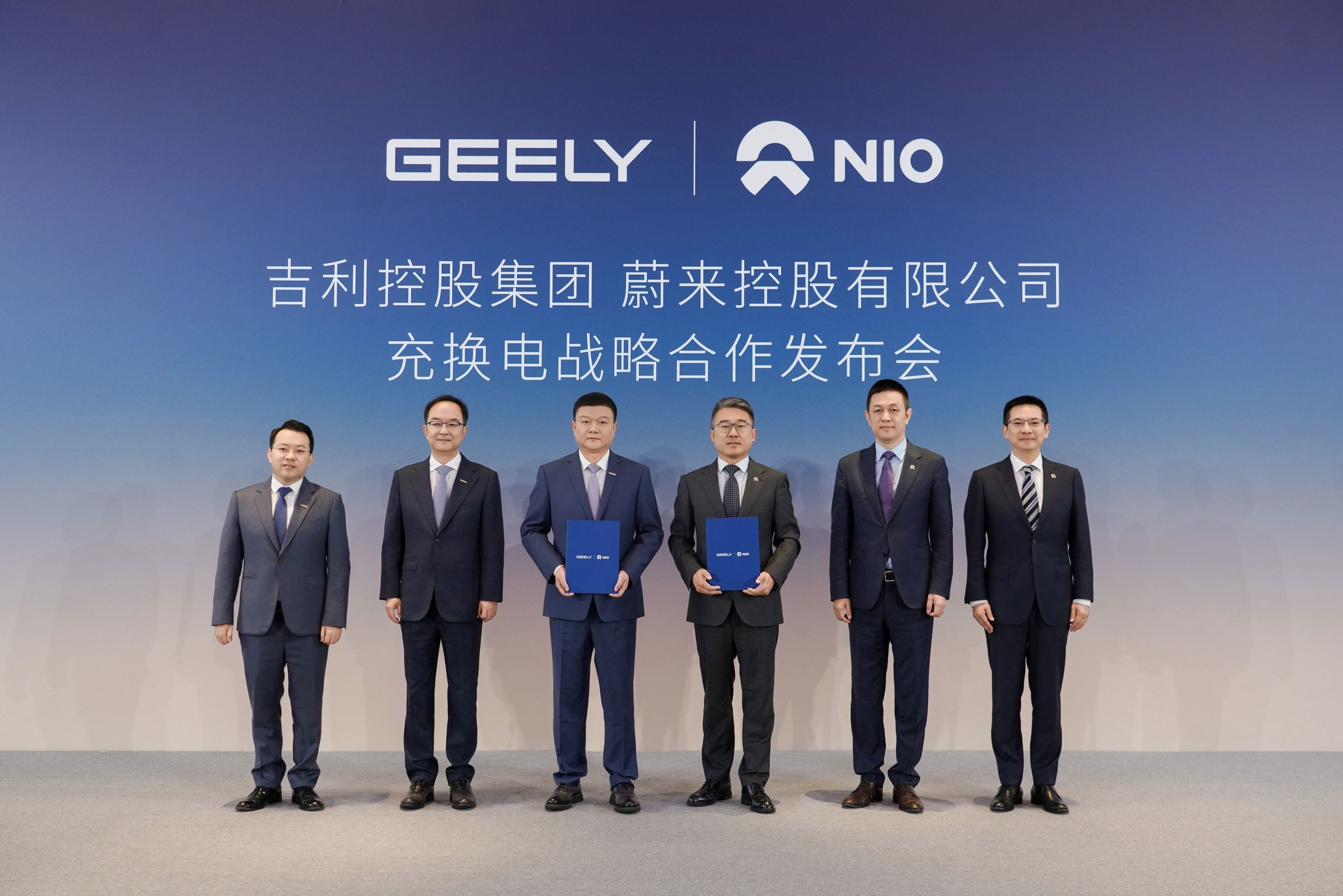
The two Chinese automakers announced a broad charging and battery-swapping partnership on September 28, with Geely set to take a 30 percent stake in NIO Power by contributing its Yiyi Power battery-swapping business plus RMB 640 million in cash. NIO, in turn, will invest in Geely’s Haohan Energy charging business and take a 10 percent equity stake after the transaction closes.
That sounds like corporate plumbing, but the practical point is bigger: two major Chinese auto groups are trying to make EV charging and battery swapping less fragmented. If the plan works, Geely-linked vehicles could use NIO Power swap services, the companies could share charging coverage, and battery-swap standards could become less brand-specific.
What the Agreement Covers
According to NIO’s official announcement, the partnership spans technology, operations and capital. Geely Holding Group will invest in NIO Power through Yiyi Power and cash, while Yiyi Power’s commercial-mobility battery-swapping business is expected to be integrated into NIO Power.
The consumer side is the more interesting part for EV buyers. NIO says the two companies will co-develop unified battery-swapping technologies and standards for consumer-facing vehicle models. Geely Holding Group plans to develop consumer vehicles that can use battery swapping, with NIO Power providing the swap services.
On the charging side, NIO will invest in Haohan Energy, one of Geely’s charging-network subsidiaries. The companies say they will connect their charging infrastructure to expand coverage and improve network efficiency.
The Scale Is Already Serious
NIO is no longer experimenting with a handful of showcase swap stations. As of September 27, 2026, the company says it had invested more than RMB 20 billion in charging and battery-swapping technology and infrastructure.
Its Chinese network includes 9,433 swapping and charging stations, split between 4,126 Power Swap Stations and 5,307 charging stations with 30,598 charging piles. NIO says it has delivered more than 220 million charging and swapping services, including more than 125 million battery swaps.
Geely brings a different kind of scale. Its Haohan Energy network has 2,500 charging stations and more than 12,000 charging connectors across 232 Chinese cities. By the end of 2027, Geely is targeting more than 22,000 charging stations with more than 100,000 charging connectors, including over 15,000 smart charging stations.
Those numbers matter because charging convenience is no longer just a charger-count contest. The best network is the one that a driver can actually use, with predictable access, working hardware, clear payment and enough compatibility to avoid dead-end brand silos.
Why Battery Swapping Still Matters In China
Battery swapping has struggled to become a mainstream idea in North America, where most EV strategy revolves around faster DC charging, Tesla’s Supercharger network and the shift toward NACS connectors. China is different. Dense urban driving, high apartment living rates, ride-hailing use and stronger government interest in standardized infrastructure have kept swapping alive as a real alternative.
NIO’s model lets a compatible vehicle exchange a depleted pack for a charged one instead of waiting through a charging stop. That can be useful for high-mileage users, drivers without reliable home charging and commercial fleets where downtime is expensive.
The catch has always been scale and compatibility. A swap station is more complex and capital-intensive than a charging stall, and it works best when enough vehicles use compatible packs. Bringing Geely into NIO Power does not erase those challenges, but it gives the model a bigger addressable vehicle base and a better chance of moving beyond one company’s ecosystem.
What It Means Outside China
This is not a Canadian launch announcement. NIO does not currently sell consumer vehicles in Canada, and Geely’s direct Canadian footprint remains complicated by tariffs, certification, retail support and brand strategy. For Canadian buyers, the immediate impact is mostly indirect.
Still, the deal is worth watching because it shows where China’s EV market is pushing next. The fight is no longer only about who can sell the cheapest long-range EV. It is also about who can build the energy network behind those vehicles, who can share infrastructure without giving up customer control, and who can make recharging feel routine at national scale.
Western automakers are still trying to solve many of the same problems through charging alliances, Supercharger access, dealer-installed home charging and public-network partnerships. NIO and Geely are attacking it with a more vertically integrated Chinese-market answer: shared charging plus battery swapping, backed by direct equity stakes.
The biggest question is whether this becomes a template or just a China-specific solution. If Geely launches consumer battery-swappable models that customers actually buy, and if NIO Power can serve multiple brands without hurting reliability, the partnership could make swapping look less like a NIO quirk and more like infrastructure that other automakers have to take seriously.