Porsche Plans 5,000 More Job Cuts and €2.1 Billion Factory Investment
Porsche will remove another 5,000 jobs by 2035 while investing €2.1 billion in Zuffenhausen and Weissach, pairing deep cost cuts with long-term site guarantees.
Porsche has put hard numbers behind its next restructuring phase: 5,000 additional jobs will disappear by 2035, while the company commits €2.1 billion to its Zuffenhausen factory and Weissach development centre.
The agreement, announced July 27 after negotiations between Porsche management, its General Works Council, IG Metall and an employers’ association, is a trade-off between lower costs and longer-term security. Porsche says there will be no compulsory redundancies through the end of 2035, but the workforce will become considerably smaller through natural attrition, partial retirement and voluntary severance agreements.
For an automaker built around high-margin sports cars, the scale is striking. Reuters reports that the new 5,000-position reduction follows 3,900 cuts agreed in 2025 and another 500 tied to subsidiary closures. Together, those plans amount to roughly 9,000 positions, or about one-fifth of Porsche’s 42,600-person workforce at the end of 2024.
This is not Porsche walking away from its German engineering and production base. It is Porsche trying to make that base lean enough for a much tougher luxury-car market.
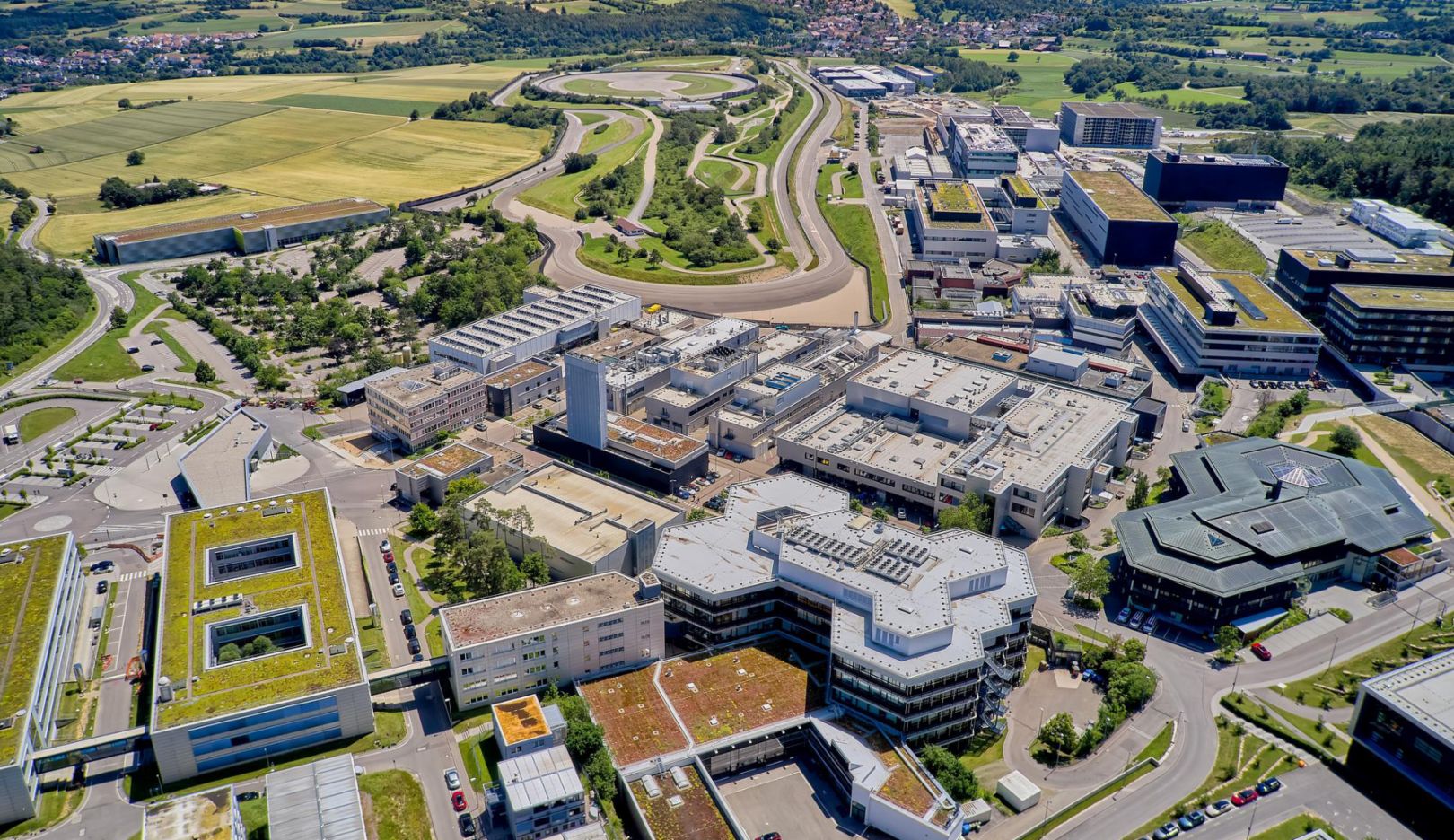
Porsche's Zuffenhausen and Weissach Sites
13
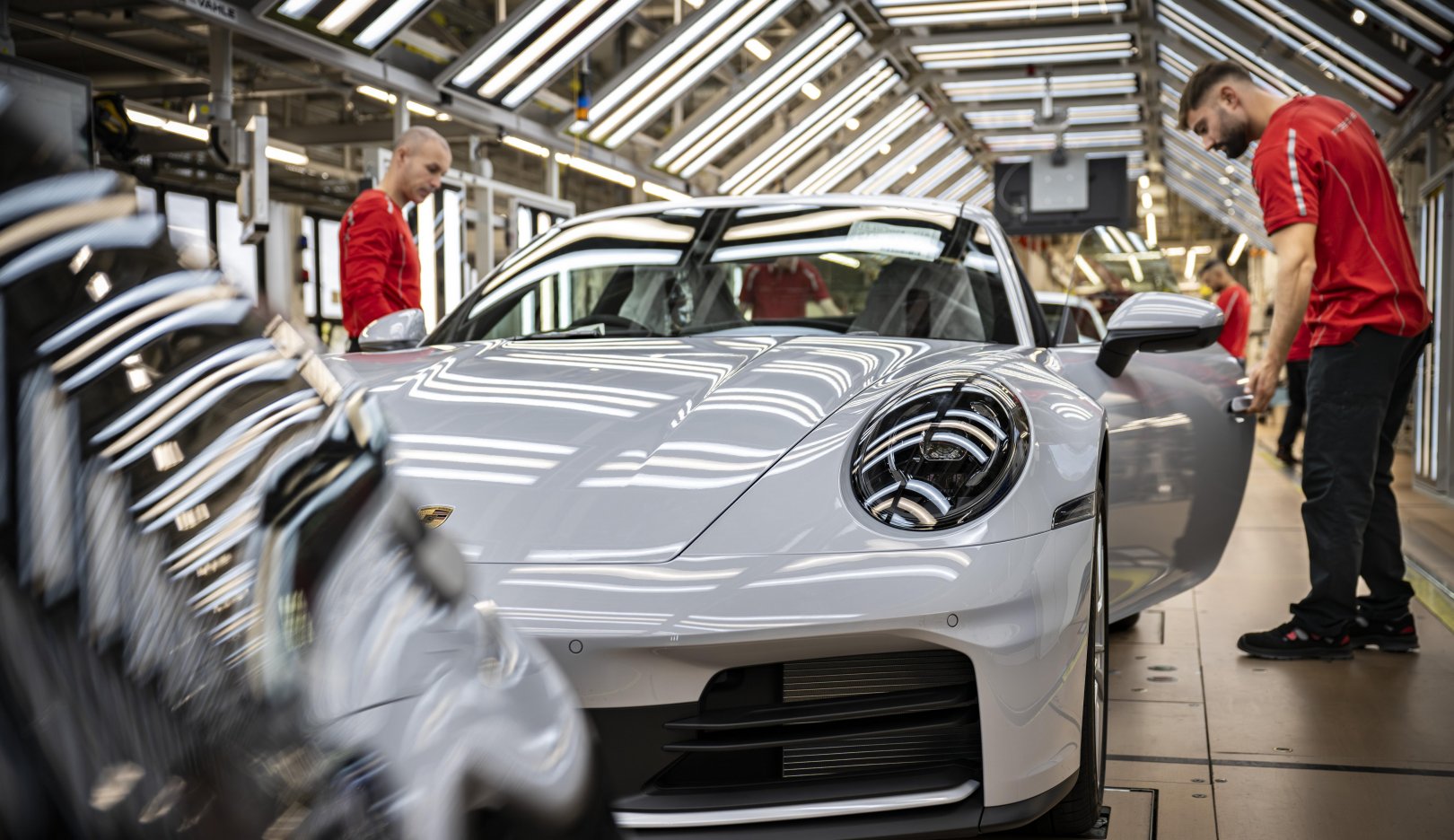
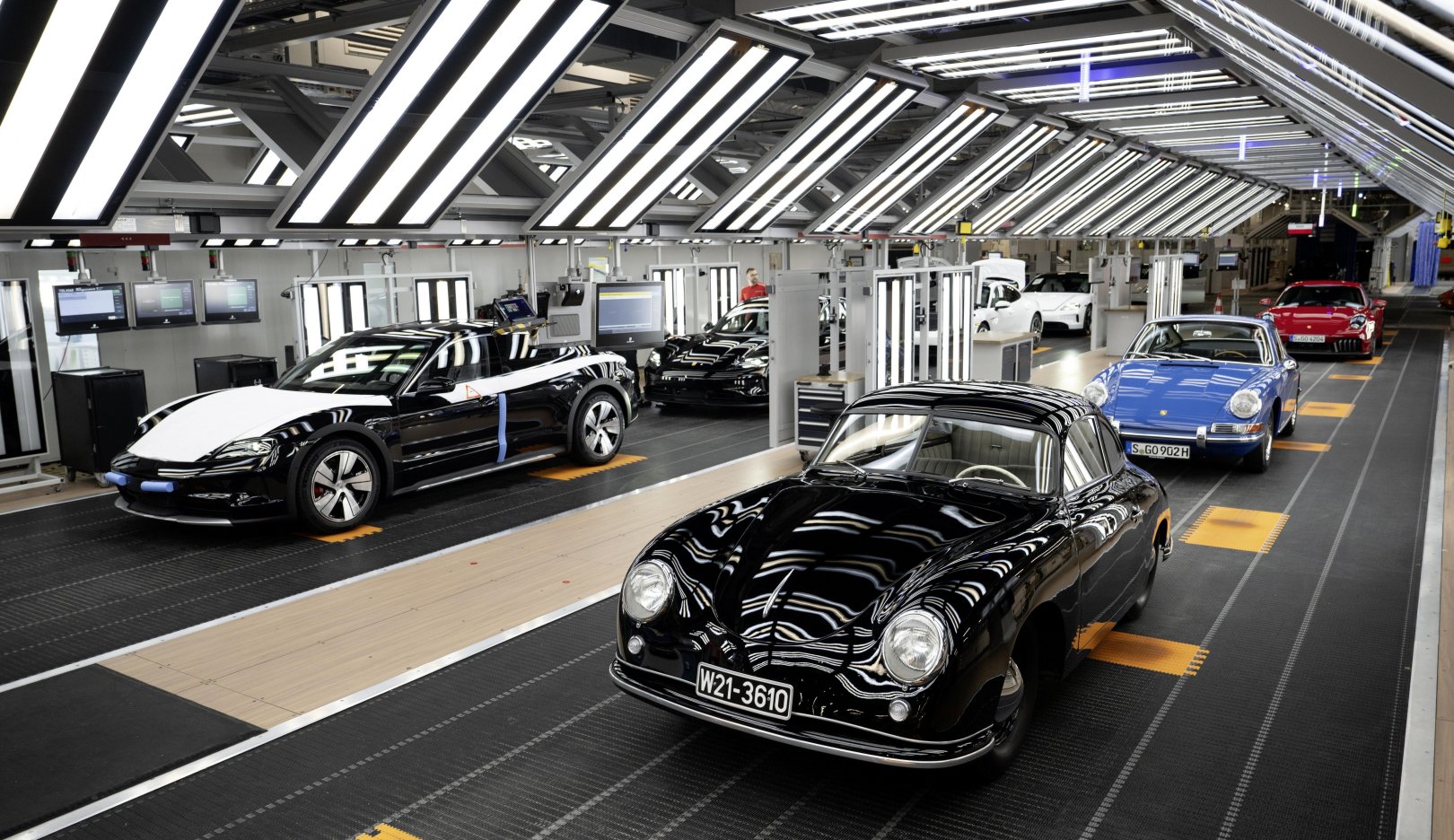
Zuffenhausen builds Porsche's two-door sports cars and the all-electric Taycan, while also producing electric motors for the Taycan and Macan Electric. Image: Porsche AG.
What Porsche’s Agreement Actually Does
Porsche’s official Future Package combines four big commitments.
First, Porsche plans to remove a further 5,000 jobs by 2035. It says the reductions will happen primarily through employee turnover, demographic changes, an expanded partial-retirement program and voluntary severance. Compulsory redundancies are ruled out under the agreement.
Second, employment and site protections for Zuffenhausen and Weissach will be extended through the end of 2035. That is five years beyond the previous guarantee.
Third, Porsche will invest a cumulative €2.1 billion in the two sites over that period. The company specifically says it wants two-door sports cars to keep rolling out of Zuffenhausen, to expand its Sonderwunsch custom-car operation and to retain development work for every model line at Weissach.
Fourth, employees and management will give up part of their future compensation. Porsche says 3.5 percent of current and future collectively agreed pay increases will be deferred until 2035. Senior leaders will make an equivalent contribution in 2027 and 2028, while Christmas bonuses and other voluntary payments will become less generous or more closely tied to profitability.
Mobile-working allowances will also fall from 12 days per month to eight. Porsche is changing break arrangements and production cycle rules as it pushes for more output and flexibility from a smaller workforce.
Why Porsche Is Cutting So Deeply
Porsche’s vehicle business has shrunk faster than a premium badge can comfortably absorb.
The automaker delivered 122,306 vehicles in the first half of 2026, down 16 percent from 146,391 a year earlier. North American deliveries fell 13 percent, while China declined another 32 percent.
Those are difficult numbers for any manufacturer, but Porsche’s cost structure makes falling volume especially painful. The company maintains specialized German factories, a large in-house development operation and a product range that must support combustion engines, hybrids and battery-electric vehicles at the same time.
Reuters reported that weak Chinese demand, tougher competition and a stalled EV strategy are central pressures behind the restructuring. Porsche is also contending with tariffs and a luxury market that is less predictable than it looked when several of its current electric programs were approved.
The job reductions roughly match the scale of Porsche’s volume decline. That makes the package less a temporary belt-tightening exercise than an attempt to resize the company for a lower-sales reality.
The EV Part of the Story Is More Complicated Than a Retreat
Porsche has already revised the all-electric product strategy it promoted earlier in the decade. The Macan Electric remains on sale, the Taycan continues as the brand’s electric sports sedan, and the new Cayenne Electric gives Porsche a third major EV line. But the company is also preserving combustion-engine and plug-in-hybrid products longer than once planned.
Zuffenhausen shows why that mixed strategy is expensive. The site builds the 911 and 718 sports cars, produces the Taycan, assembles combustion engines and makes electric motors for the Taycan and Macan Electric. Porsche needs the factory to handle multiple propulsion systems without carrying duplicate costs everywhere.
The new investment agreement therefore should not be read as €2.1 billion reserved for EVs. Porsche has not published that kind of breakdown. It is a broader commitment to factories, development work, productivity and flexible production as the model mix evolves.
That distinction matters. Porsche is not betting that one powertrain will solve its problems. It is betting that a smaller, more adaptable organization can keep funding combustion, hybrid and electric sports cars while buyer demand sorts itself out.
For EV shoppers, the most important point is that the current electric lineup remains part of Porsche’s plan. The job cuts do not cancel the Macan Electric, Taycan or Cayenne Electric. They do show that premium EV programs must now justify their costs inside a company under much tighter financial discipline.
What Happens Next
Porsche calls this package the foundation for its “Sportwagenschmiede 35” strategy. The automaker plans to explain that 2035 roadmap in more detail at a Capital Markets Day in October.
Between now and then, three questions matter.
The first is how Porsche allocates the €2.1 billion between factory upgrades, product development and other site investments. The second is whether the company can remove thousands of positions without slowing software, battery, vehicle-development or quality work. The third is how much product complexity Porsche is willing to carry when it is trying to cut costs.
There is a real tension in the plan. Zuffenhausen and Weissach gain a long employment guarantee and a substantial investment commitment, but employees will finance part of that future through fewer positions, reduced compensation growth and less flexible working arrangements.
Porsche is buying time and stability, not declaring the turnaround complete. The company still has to restore demand, decide which future models deserve investment and prove that its electric cars can earn their place beside the 911 and its profitable SUV lines.
The next clear marker arrives in October. Until then, the July agreement tells us the direction: protect Porsche’s core German sites, shrink the workforce substantially and make every combustion, hybrid and electric program compete for capital inside a leaner company.