
Porsche Cayenne Electric vs Macan Electric: Which Porsche EV SUV Should You Buy?
Porsche now has two serious electric SUVs. The Cayenne Electric brings space, towing and 400-kW charging, while the Macan Electric is the sharper and cheaper daily EV.
Image: MotorLinks
Porsche’s EV lineup just became a more interesting shopping problem.
For years, the electric answer was simple: buy a Taycan if you wanted a Porsche EV, or wait if you needed an SUV. Now the Macan Electric is already a real showroom choice, and the larger Cayenne Electric has moved from future product to priced, specified Porsche.
That creates a decision Porsche buyers have not had to make before. Do you buy the smaller electric Macan because it is cheaper, sharper and available in a broader trim ladder, or spend Cayenne money for the bigger body, stronger utility story and faster charging hardware?
Porsche USA lists the 2027 Cayenne Electric from $109,000, with 435 hp, a 4.5-second 0-to-60-mph time with Launch Control, up to 7,716 pounds of towing and a 16-minute 10-to-80-percent DC fast-charge claim under ideal conditions. The Cayenne S Electric climbs to $126,300 and 657 hp, while the Turbo Electric reaches $163,000 and 1,139 hp.
The 2027 Macan Electric starts at $80,300 in rear-drive form, with 355 hp and a 5.4-second 0-to-60-mph time. The Macan 4 Electric adds AWD from $84,000, the 4S starts at $89,900, the new GTS sits at $105,300, and the Turbo Electric starts at $112,700 with 630 hp and a 3.1-second 0-to-60-mph claim.
So this is not a simple “bigger is better” comparison. It is a Porsche-specific version of a familiar EV question: how much size, towing, charging speed and badge hierarchy do you actually need?
October Source Update
Porsche’s current U.S. product pages now identify both SUVs as model year 2027. Prices here are U.S. dollars and exclude the listed fees; Canadian delivered prices remain separate. The quoted power peaks are overboost figures with Launch Control, not continuous output. The Cayenne’s maximum trailer rating requires its optional towing equipment. The driving-character recommendations are editorial expectations from specifications and size, not a Motorlinks drive or a matched handling test.
Quick Verdict
Buy the Macan Electric if you want the lower entry price, a smaller footprint for daily driving and enough Porsche EV performance without turning every trip into a six-figure luxury-SUV statement.
Choose the Cayenne Electric if you need family-SUV space, real towing capacity, more cargo flexibility, 400-kW DC charging, optional wireless home charging or the simple fact that a Macan is not big enough for your life.
The sweet spot is probably Macan 4S Electric for driving-focused buyers and Cayenne Electric or Cayenne S Electric for families. The Turbo versions are spectacular, but they are emotional buys first and rational buys second.
If you are in Canada, treat this as a product-fit guide rather than a final deal sheet. U.S. pricing is published now, but Canadian transaction math will depend on local Porsche pricing, delivery timing, lease programs, luxury-tax treatment, winter tire packages and charging setup.
| Model | Starting MSRP (USD) | Best Reason To Choose It |
|---|---|---|
| 2027 Macan Electric | $80,300 | Lowest Porsche EV SUV entry point, rear-drive efficiency, compact footprint and 21-minute 10-to-80-percent DC fast charging. |
| 2027 Macan 4 Electric | $84,000 | Adds all-wheel drive while staying far below Cayenne Electric money. |
| 2027 Macan 4S Electric | $89,900 | Likely the driver sweet spot, with 509 hp and a 3.9-second 0-to-60-mph claim. |
| 2027 Cayenne Electric | $109,000 | Bigger body, 7,716-pound towing capacity, 400-kW charging hardware and stronger family-SUV utility. |
| 2027 Cayenne S Electric | $126,300 | The high-output family choice, with 657 hp and a 3.6-second 0-to-60-mph claim. |
| 2027 Cayenne Turbo Electric | $163,000 | The wild one: 1,139 hp, 2.4 seconds to 60 mph and flagship Porsche EV drama. |
Porsche Cayenne Electric and Macan Electric gallery
12
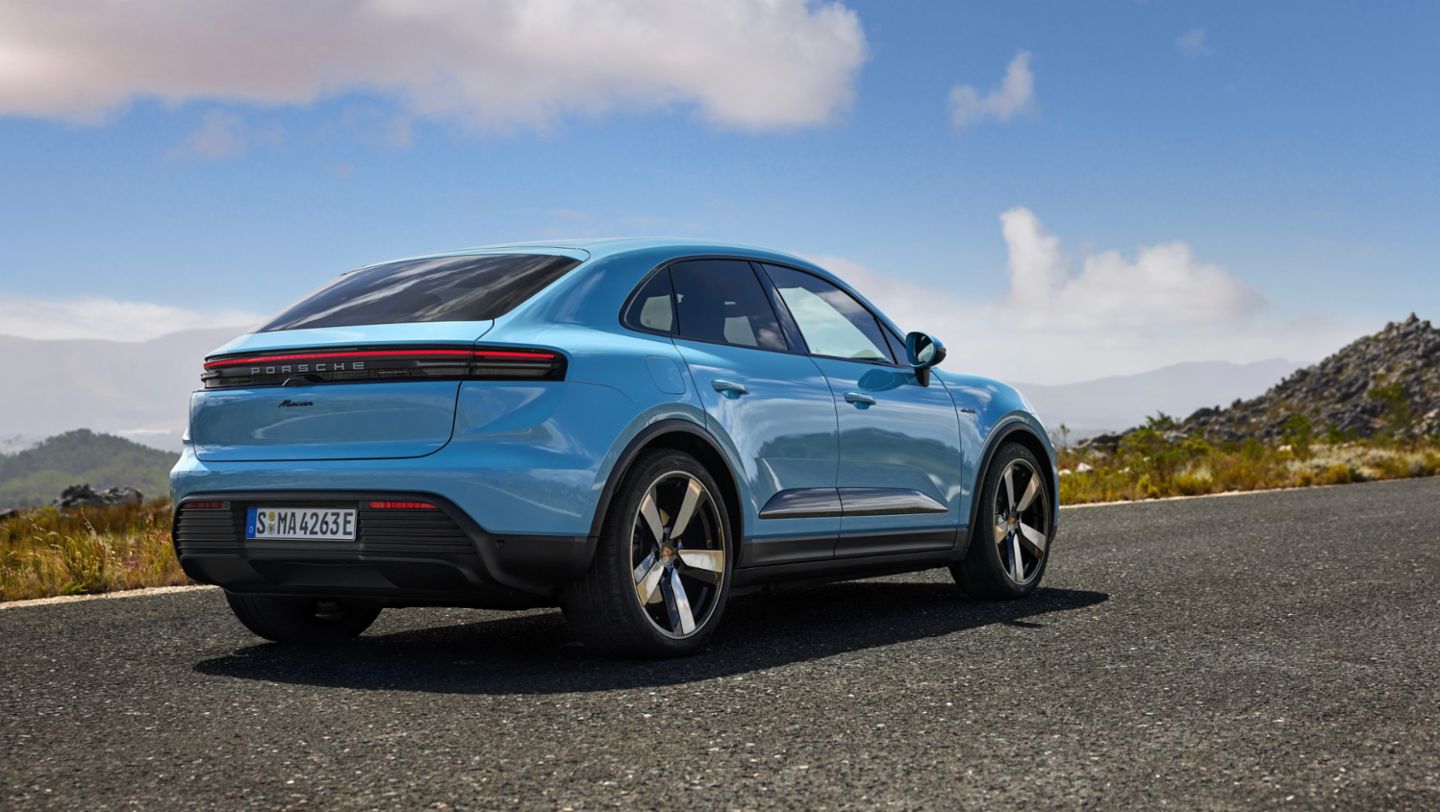
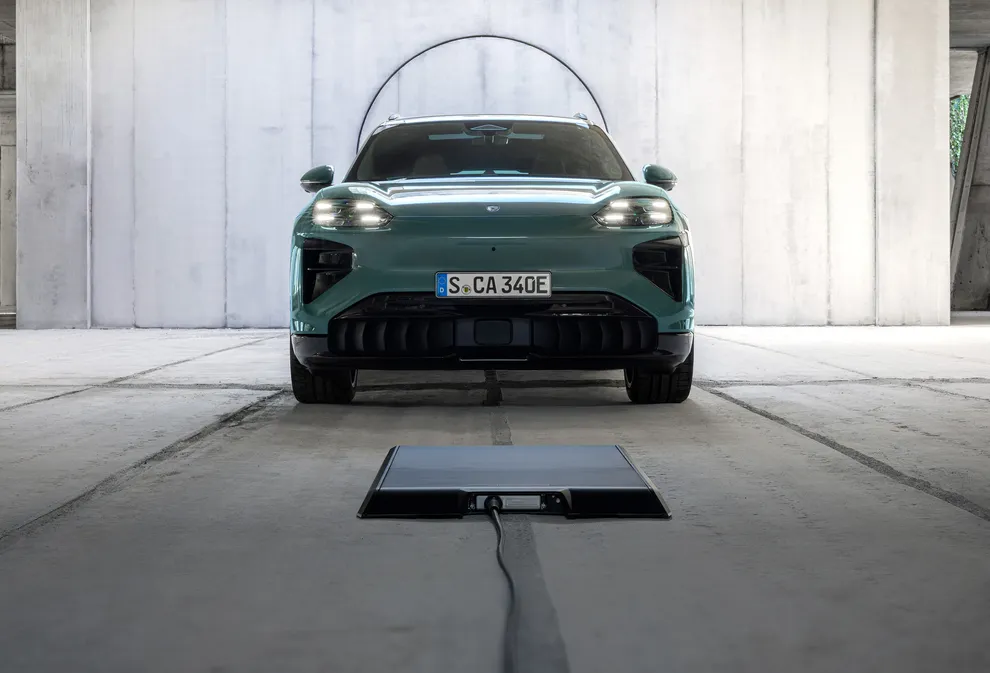

The Macan Electric is the lighter and more affordable Porsche EV SUV, and it now has a wider 2027 trim ladder.
Why The Macan Electric Is The Smarter Default
Start with the Macan Electric unless you already know it is too small.
The price gap is the first reason. A base Macan Electric starts $28,700 below a base Cayenne Electric before fees and options. Even the AWD Macan 4 Electric starts $25,000 below the Cayenne. That is not pocket change, especially in Porsche-land where wheels, paint, driver assistance, interior trim, charging hardware and winter accessories can move the real invoice quickly.
The second reason is use case. If the vehicle is mostly commuting, school drop-off, errands, weekend drives and occasional road trips, the Macan Electric already gives you Porsche’s PPE-era EV hardware. Porsche quotes 800-volt charging and a 21-minute 10-to-80-percent fast-charge time under ideal conditions at a suitable high-power charger. That is quick enough that the Cayenne’s faster number may not matter much in normal ownership.
The Macan is also the one that should feel more like the electric answer to Porsche’s compact-SUV formula. It is lower, lighter and less burdened with family-hauler expectations. If the goal is “electric Porsche that happens to be practical,” the Macan is the cleaner starting point.
The trim ladder helps. The rear-drive Macan Electric is the efficiency and price play. The Macan 4 Electric is the all-weather default. The Macan 4S Electric looks like the enthusiast sweet spot because it brings 509 hp and a 3.9-second 0-to-60-mph claim without jumping all the way to Turbo money. The GTS and Turbo are there if you want the character and acceleration bragging rights.
Why The Cayenne Electric Justifies The Stretch
The Cayenne Electric exists for buyers who hear all of that and still say: nice, but not enough.
Porsche gives the Cayenne Electric up to 7,716 pounds of towing capacity, which immediately separates it from most luxury EV crossovers. It also lists 27.6 cubic feet of luggage space and up to 56.1 cubic feet with the rear seats folded. That makes it the more convincing family and road-trip SUV.
Charging is the other big differentiator. Porsche says the Cayenne Electric can charge at up to 400 kW and go from 10 to 80 percent in 16 minutes under ideal conditions. The Macan’s 270-kW ceiling and 21-minute claim are already strong, but the Cayenne is clearly Porsche’s newer big-battery charging showcase.
Then there is the convenience angle. Porsche says the Cayenne Electric will be its first EV with optional Porsche Wireless Charging, an 11-kW inductive home-charging system available from the second half of 2026 at the earliest. That will not be the cheapest way to charge, and it will not matter to everyone, but it fits the Cayenne buyer who values a polished daily routine.
The Cayenne also gives Porsche room to layer luxury. Bigger cabin, richer seats, more screen area, more towing, more cargo, more presence. If the Macan Electric feels like the electric version of a sports crossover, the Cayenne Electric is the electric version of a Porsche family flagship.
The Charging Difference Is Real, But Context Matters
On paper, Cayenne wins the charging fight.
The headline numbers are simple: 400 kW and 16 minutes for the Cayenne Electric versus 270 kW and 21 minutes for the Macan Electric. Both claims require the right DC fast charger, preconditioned battery and ideal conditions, so neither number should be treated as an everyday guarantee.
The practical question is whether those five minutes matter to you. If you mostly charge at home, the difference is mostly a road-trip convenience. If you do frequent long highway drives, tow, or run a packed family schedule where every stop matters, the Cayenne’s higher charging ceiling becomes more meaningful.
For Canadian buyers, charger availability matters as much as vehicle hardware. A 400-kW capable EV is only as useful as the charging route in front of it. If your regular corridor tops out below the Cayenne’s peak, the real-world gap between Cayenne and Macan narrows.
That is why the charging edge should support the Cayenne decision, not make it by itself.
Which Trim Makes The Most Sense?
For the Macan Electric, start with the Macan 4 Electric if you want AWD, and the Macan 4S Electric if the Porsche part of the equation matters more than the lease payment. The rear-drive Macan Electric is tempting if range, price and a lighter feel matter, but many North American Porsche SUV buyers will naturally lean AWD.
For the Cayenne Electric, the base version is more credible than the word “base” suggests. It already has 435 hp, all-wheel drive, serious charging hardware and the big-body utility that separates it from the Macan. The Cayenne S Electric adds a lot of performance without going full Turbo, which probably makes it the best-fit version for buyers who want the Cayenne to feel properly special.
The Cayenne Turbo Electric is not hard to understand. It is the one you buy because 1,139 hp in a family SUV sounds irresistible and the price does not scare you. It is less about need and more about Porsche proving that electrification can make its big SUV outrageous.
Do Not Forget The Gas And Hybrid Cayenne
One reason the Cayenne Electric decision is tricky is that Porsche is not forcing every Cayenne buyer into an EV.
The gas and plug-in-hybrid Cayenne lineup continues alongside the electric model. That gives shoppers a genuine fork in the road: go fully electric for the fastest charging and newest Porsche EV experience, or stay with the combustion/hybrid Cayenne if towing routes, remote travel, condo charging or winter-road-trip habits still make liquid fuel easier.
That does not weaken the Cayenne Electric. It makes the buying decision more honest.
If you have home charging, predictable long-distance charging corridors and want Porsche’s newest SUV technology, the Cayenne Electric is the exciting choice. If your use case still depends on fast refuelling in places where high-power charging is thin, the hybrid or gas Cayenne may be the calmer answer.
The Macan Electric does not offer that same side-by-side choice in the same way. It is the clean EV move for smaller-SUV buyers.
Bottom Line
The Porsche Macan Electric is the smarter default because it is cheaper, smaller and still properly quick. Most buyers who want a Porsche EV SUV should start there, especially with the Macan 4 Electric or Macan 4S Electric.
The Porsche Cayenne Electric is the better answer when the SUV part matters more: towing, cargo, family use, flagship cabin feel, faster road-trip charging and the convenience of optional wireless home charging.
Think of it this way: the Macan Electric is the Porsche EV SUV you buy because you want to drive it every day. The Cayenne Electric is the Porsche EV SUV you buy because your life is bigger than a Macan.
That is a good problem for Porsche to have.
Should I buy the Porsche Cayenne Electric or Macan Electric?
Buy the Macan Electric if you want the lower price, smaller footprint and sportier daily feel. Choose the Cayenne Electric if towing, cargo space, family use, faster charging or flagship luxury matter more.
Is the Cayenne Electric faster charging than the Macan Electric?
Yes. Porsche lists the Cayenne Electric at up to 400 kW with a 16-minute 10-to-80-percent fast-charge claim. The Macan Electric is listed at up to 270 kW and 21 minutes under ideal conditions.
Is the Macan Electric cheaper than the Cayenne Electric?
Yes. Porsche USA lists the 2027 Macan Electric from $80,300, while the 2027 Cayenne Electric starts from $109,000 before destination, options, taxes, dealer charges and other fees.
Which Porsche EV SUV is better for Canadian buyers?
The Macan Electric is the easier starting point for urban and suburban Canadian buyers who want a smaller Porsche EV with AWD available. The Cayenne Electric is better if you need towing, cargo space, road-trip charging speed or a larger luxury-SUV footprint. Final Canadian pricing and lease math should decide the deal.