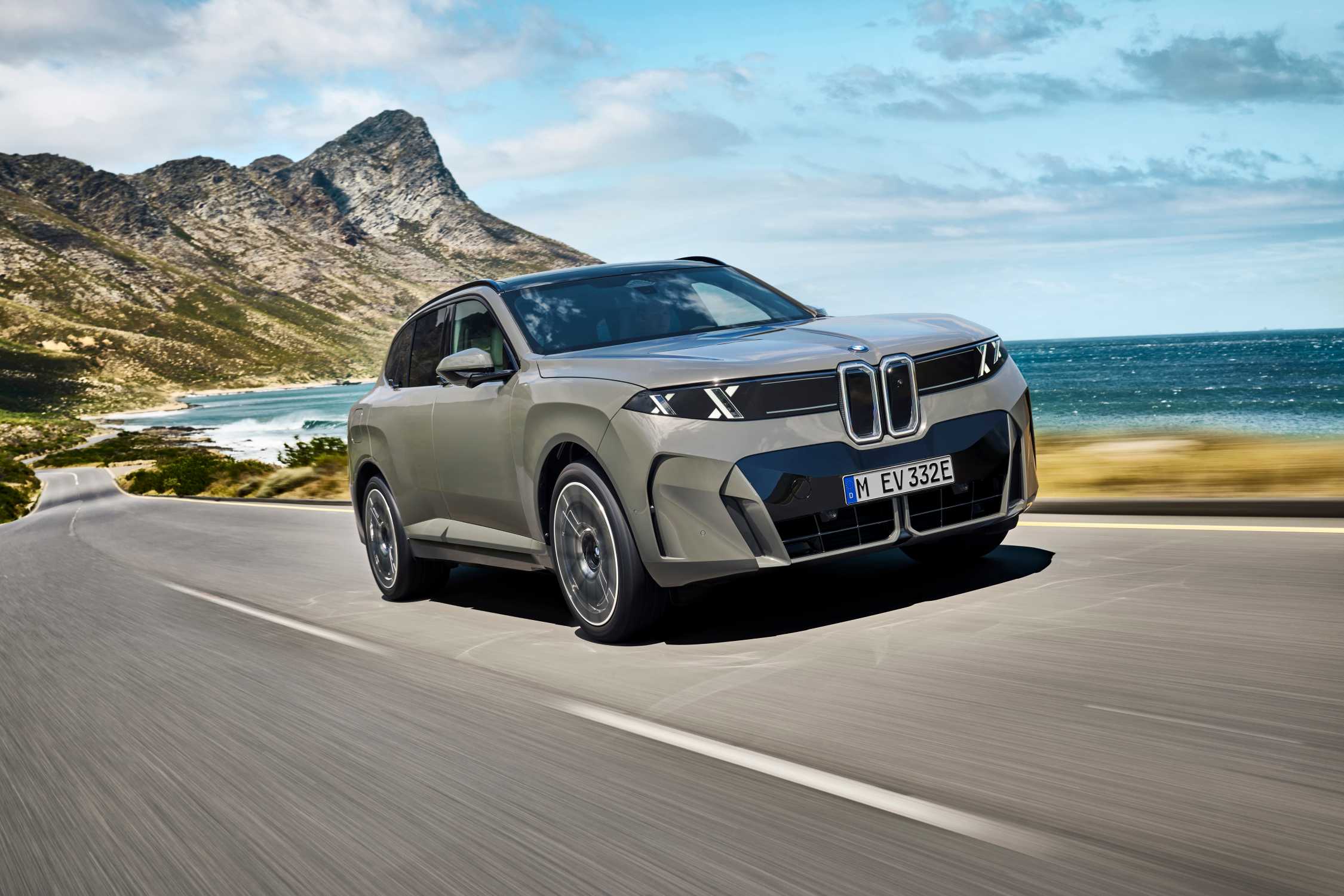
BMW's First U.S.-Built EV Will Be the 435-Mile iX5
BMW has confirmed the electric iX5 will be assembled in South Carolina, with up to 435 miles of estimated range, 800V charging, NACS, and a $79,800 starting price.
BMW just made the electric X5 a lot more real.
At its “Home of X” event in Spartanburg, South Carolina, BMW confirmed that the new BMW iX5 will be the first fully electric BMW assembled in the United States. Assembly is scheduled to begin at Plant Spartanburg before the end of 2026, with the iX5 60 xDrive reaching the market in the first quarter of 2027 after the initial gas X5 40 xDrive launch.
The headline numbers are not timid. BMW says the iX5 60 xDrive will offer up to 435 miles of estimated range, a 144-kWh net usable battery, 570 hp, 593 lb-ft of torque, an estimated 4.4-second 0-to-60 mph time, 800V electrical architecture, a standard NACS port, and DC fast charging at up to 460 kW.
That makes the iX5 more than a compliance version of the X5. It is BMW’s attempt to make its most important SUV nameplate work across gasoline, plug-in hybrid, battery-electric, diesel in some markets, and eventually hydrogen fuel-cell power.
Why This Matters
The X5 is not a niche BMW. It is one of the brand’s backbone products, and Spartanburg is BMW Group’s largest plant globally. BMW says more than 3 million X5s have been sold since 1999, with roughly a third of those sold in the U.S.
That context matters because a U.S.-assembled electric X5 is exactly the kind of EV legacy automakers need if they want normal luxury-SUV buyers to take electrification seriously. Small EV crossovers and halo sedans are useful, but the X5 is the kind of vehicle buyers already understand: family-size, premium, powerful, road-trip capable, and not trying to explain its own existence.
BMW is also tying the iX5 to a major manufacturing commitment. The company says it has completed a $1.7 billion investment in South Carolina, including the expansion of Plant Spartanburg and the construction of the nearby Plant Woodruff high-voltage battery facility. By 2030, BMW says it will assemble at least six fully electric BMW models in the United States, supported by locally assembled high-voltage batteries.
That is the industrial side of the story. The buyer side is simpler: BMW wants its electric SUVs to feel like mainstream BMW products, not side projects.
The iX5 Numbers BMW Has Confirmed
| Item | BMW iX5 60 xDrive |
|---|---|
| U.S. starting price | $79,800 plus $1,450 destination and handling |
| Market timing | First quarter of 2027; assembly begins before the end of 2026 |
| Estimated range | Up to 435 miles, based on BMW AG testing using EPA procedures |
| Battery | 144 kWh net usable energy, cell-to-pack cylindrical-cell design |
| Output | 570 hp and 593 lb-ft of torque from dual motors |
| Charging | 800V architecture, standard NACS, up to 460 kW DC fast charging |
| Fast-charge claim | 10-80 percent in 22 minutes; about 170 miles added in 10 minutes under ideal conditions |
Those are company estimates for now, so final EPA ratings and independent charging tests still matter. But on paper, the iX5 lands with the kind of range and charging claims that can change a shopper’s expectations for a large luxury EV.
The 144-kWh usable battery is huge, but the X5 is a big vehicle and BMW is clearly aiming for road-trip confidence. The 460-kW peak charging claim is also eye-catching, though owners will need compatible high-power chargers to see anything close to that number. On the plus side, the standard NACS port should make the North American charging transition less awkward by the time the iX5 reaches customers.
BMW also says the iX5 supports bidirectional charging. Vehicle-to-load can power devices, vehicle-to-home can provide backup power during an outage when properly equipped, and vehicle-to-vehicle can share energy with another EV. Those features are still dependent on hardware, installation, and regional support, but they are increasingly important as large-battery EVs become part of home-energy planning.
BMW iX5 and new X5 official reveal gallery
13
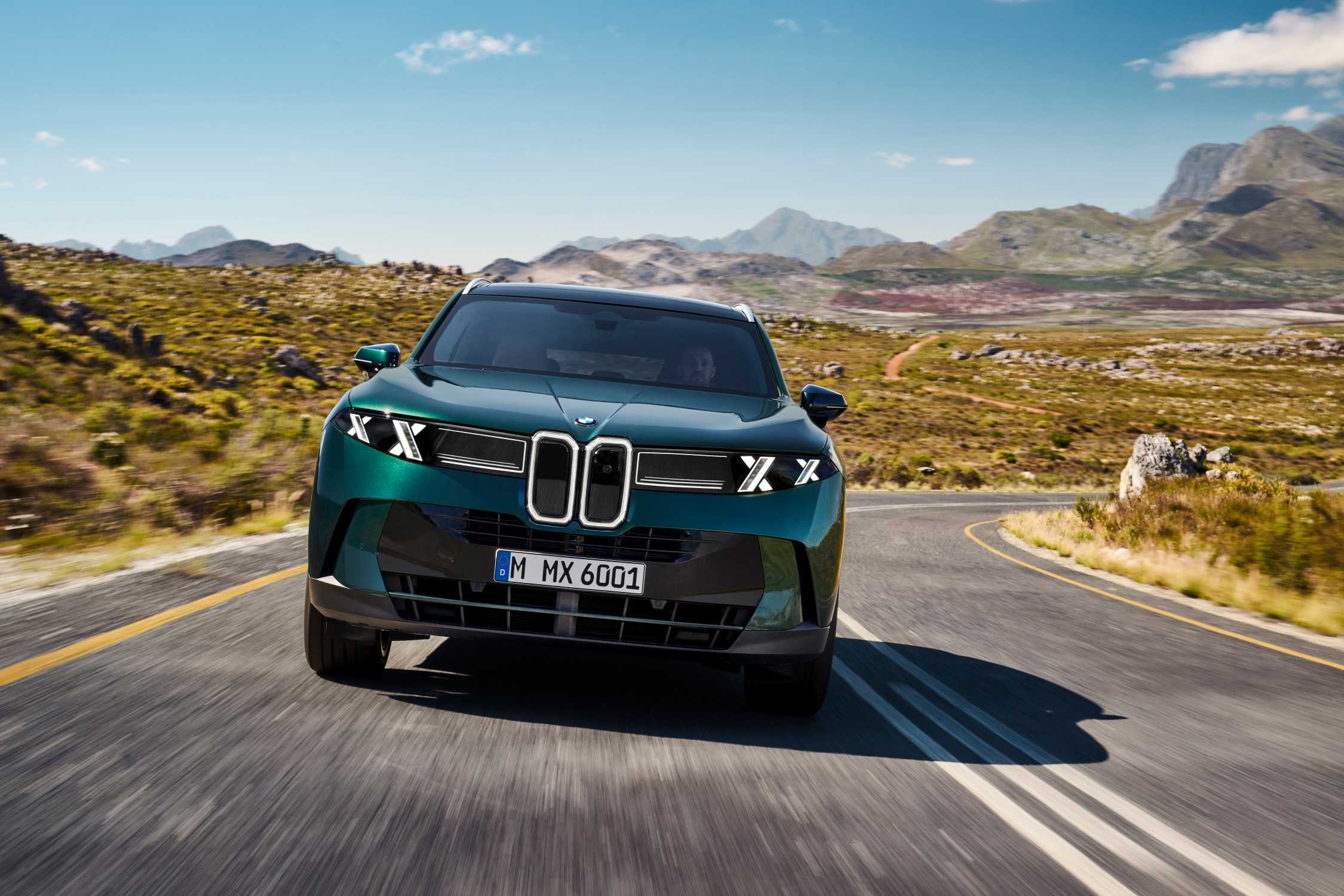
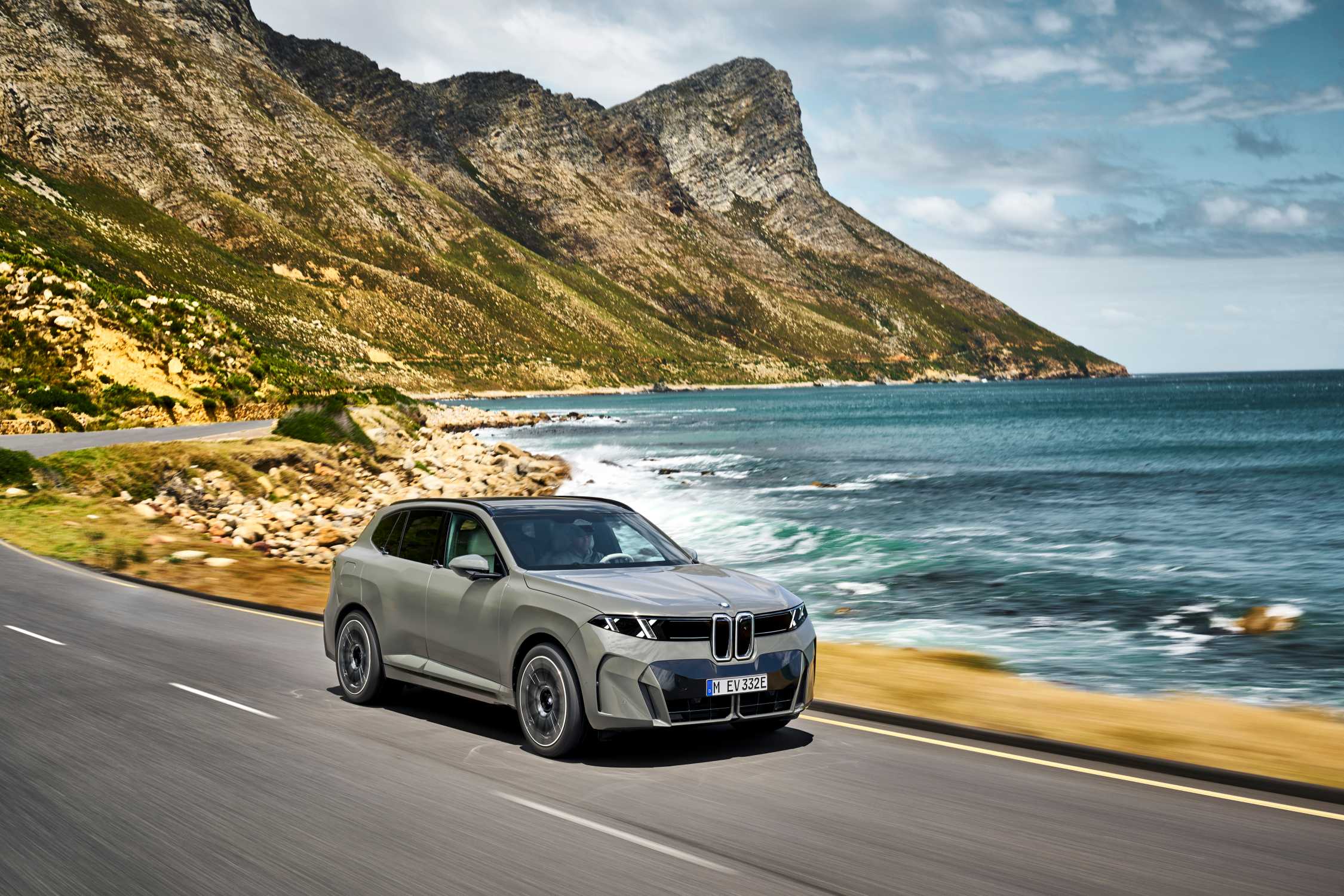
The fifth-generation X5 family now includes the battery-electric iX5, plug-in hybrid, combustion models, and a future hydrogen variant.
BMW Is Keeping Every Powertrain On The Menu
The fifth-generation X5 will not go EV-only. That is very BMW.
The 2027 lineup begins with the X5 40 xDrive in October. BMW says the rear-wheel-drive X5 40, plug-in hybrid X5 50e xDrive, and battery-electric iX5 60 xDrive follow in the first quarter of 2027. A V8-powered M Performance version is due later in 2027, and the iX5 Hydrogen is planned farther out.
Pricing starts at $69,800 for the X5 40, $72,100 for the X5 40 xDrive, $77,500 for the X5 50e xDrive plug-in hybrid, and $79,800 for the iX5 60 xDrive. All require a $1,450 destination charge.
That puts the electric iX5 surprisingly close to the plug-in hybrid, at least before options. BMW’s option sheet will almost certainly move real transaction prices higher, but the base spread tells you how seriously the company wants shoppers to cross-shop the EV version inside the X5 family.
The plug-in hybrid is not an afterthought, either. BMW says the X5 50e xDrive will make 483 hp and travel up to 44 miles on electric power, based on preliminary BMW testing using EPA procedures. For buyers without reliable fast-charging access, that may still be the easier step into electrified driving.
The Canadian Question
BMW’s announcement is U.S.-focused, and the iX5 pricing BMW published is in U.S. dollars. Canadian pricing and launch details were not included in the release, so shoppers north of the border should treat the U.S. numbers as a signal rather than a local buying guide.
Still, the product matters for Canada. Large premium SUVs remain popular here, winter range is a real concern, and a 435-mile estimated U.S. range would give the iX5 a meaningful buffer before cold weather, speed, and tires take their usual bite. The standard NACS port also matters because charging access is quickly becoming part of the purchase decision, not an afterthought.
For Canadian shoppers already watching BMW’s Neue Klasse iX3, the iX5 is the bigger, more expensive, more traditional sibling. The iX3 is the cleaner ground-up EV story. The iX5 is the vehicle for people who want electric range and charging speed without leaving the X5 format behind.
The Bottom Line
The iX5 is the kind of electric BMW that could pull in buyers who were never going to buy an i3, an iX, or a low-slung EV sedan.
It has a familiar badge, familiar size, U.S. assembly, a big battery, very strong claimed range, serious charging hardware, and a price that sits close enough to the plug-in hybrid to make the EV decision feel practical for the right buyer.
The caveats are obvious. Final EPA numbers are not published yet. Charging at 460 kW will depend on infrastructure that is still uneven. Real winter efficiency will matter. And BMW options have a way of turning a reasonable base price into a very different window sticker.
But this is still a major move. BMW is not just adding another electric model. It is electrifying one of its most important SUVs at its most important plant.
If the production iX5 delivers anything close to the claims, the electric luxury SUV fight in 2027 gets a lot more interesting.
FAQ
Is the BMW iX5 the same as the BMW iX?
No. The iX is BMW’s dedicated electric luxury SUV already on sale. The iX5 is the battery-electric version of the new X5 family, built around the X5 format and assembled at Plant Spartanburg in South Carolina.
How fast can the BMW iX5 charge?
BMW says the iX5 supports up to 460 kW DC fast charging on its 800V system. Under ideal conditions, BMW claims a 10-to-80 percent charge in 22 minutes and about 170 miles of range added in 10 minutes.
Does the BMW iX5 replace the plug-in hybrid X5?
No. BMW will sell the iX5 alongside the X5 50e xDrive plug-in hybrid, gas models, and later performance and hydrogen variants. The iX5 is the fully electric option, not a full replacement for the rest of the X5 lineup.