Li Auto's New Five-Seat L8 Shows Why Range Extenders Still Matter in China
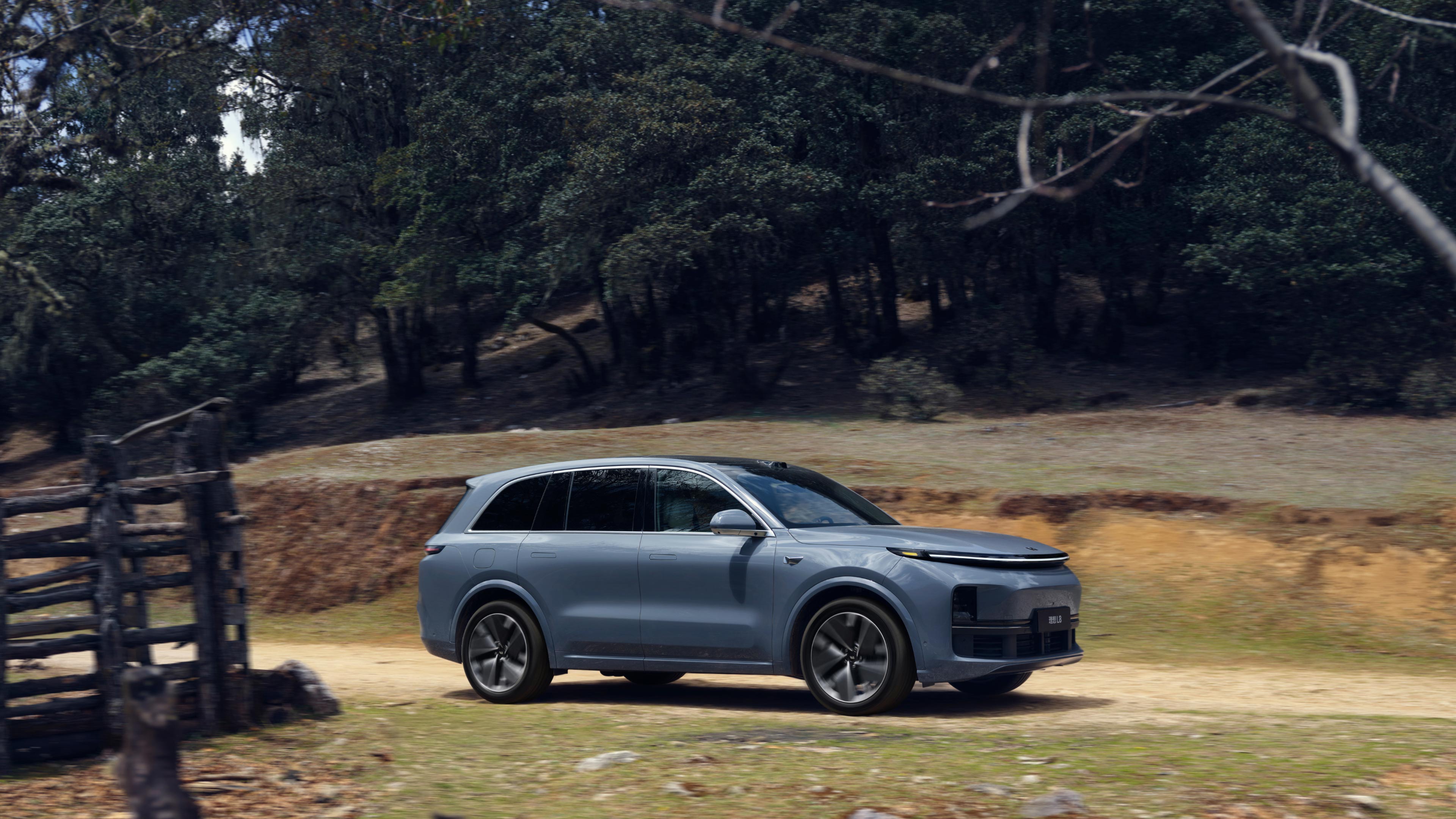
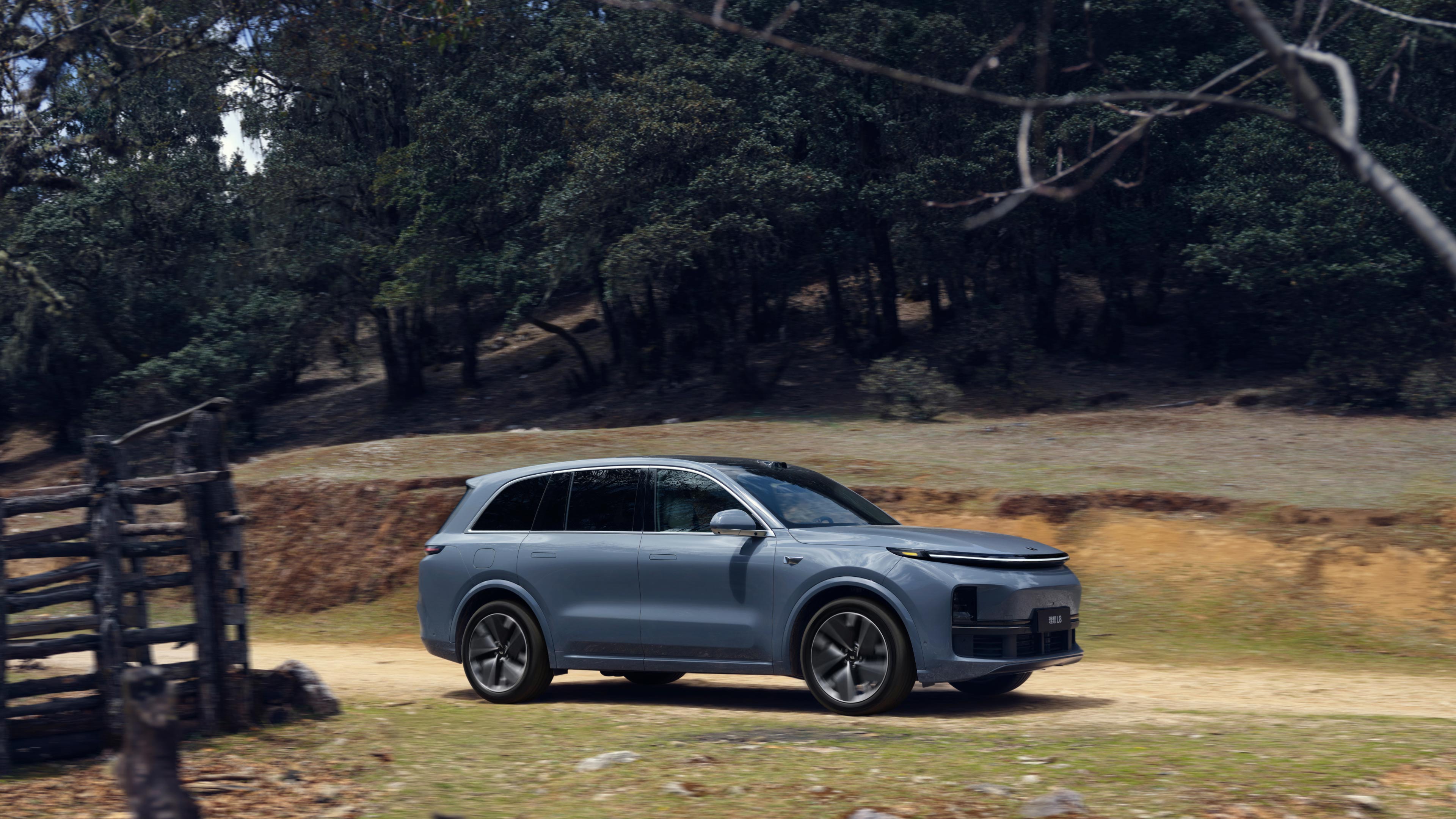
Li Auto has launched the revamped five-seat L8 in China with higher pricing, a larger battery, long CLTC range claims, and more in-house computing hardware.
Photo: Li Auto
It is higher than the old entry trim; the new Livis occupies the higher price position.
Li Auto is giving one of its most important SUVs a serious reset, and the message is pretty clear: in China, the range-extender EV fight is not over.
Li Auto announced on June 23 that it has officially launched the all-new Li L8, now positioned as a five-seat flagship SUV. Deliveries are scheduled to begin within the week, and the lineup opens with two trims: Ultra at RMB369,800 and Livis at RMB429,800.
That is not cheap, even by China’s increasingly brutal new-energy-vehicle standards. But Li Auto is not trying to win this one as a stripped-down value play. The new L8 is meant to make the case that a premium family SUV can still lean on a gasoline range extender while pushing harder on battery range, cabin tech, assisted driving hardware, and chassis sophistication.
For a market that moves faster than almost anywhere else in the car business, that is the interesting part.
What Changed With The New L8
The headline change is the layout. The revamped L8 moves from the previous six-seat format to a five-seat setup, giving Li Auto more separation between the L8 and the larger six-seat L9.
CnEVPost reports that the new L8 is also physically larger than before, measuring 5,135 mm long, 2,000 mm wide, and 1,800 mm tall, with a 3,045-mm wheelbase. The older L8 was listed at 5,080 mm long and 1,995 mm wide, so this is not just a trim shuffle.
The bigger practical claim is comfort. Li Auto says the updated L8 is a five-seat SUV with four zero-gravity seats, while CnEVPost says the rear seats can recline up to 55 degrees and include leg rests. That fits Li Auto’s usual family-first pitch: big cabin, lounge-like seating, and enough tech to make a long trip feel more like a rolling living room than a conventional SUV.
The pricing also moves up. CnEVPost notes that the outgoing L8 started at RMB321,800, with higher trims at RMB349,800 and RMB379,800. The new Ultra’s RMB369,800 list price is RMB10,000 below the old RMB379,800 top trim, while RMB48,000 above the old entry trim. The new Livis is RMB50,000 above the former top trim; limited-time launch discounts are a separate comparison. That makes the product strategy obvious: Li Auto is trying to lift the L8 upmarket, not chase the lowest transaction price.
The Range-Extender Bet Gets Sharper
The L8 remains an extended-range electric vehicle, or EREV. That means the wheels are driven by electric motors, while a gasoline engine works as a generator to extend driving range when the battery runs down. It is not the same ownership proposition as a pure battery-electric SUV, but it solves a real anxiety point for buyers who want electric driving without depending entirely on public charging.
That compromise has been especially powerful in China, where long-distance family travel, apartment living, and uneven regional charging convenience can still make a pure EV feel like a planning exercise for some buyers.
The new L8 leans harder into the electric side of the formula. CnEVPost says it uses Li Auto’s third-generation 5C extended-range system, including an in-house 1.5-litre turbocharged range extender, plus front and rear motors rated at 145 kW and 275 kW. Combined output is listed at 420 kW, with a claimed 0 to 100 km/h time of 4.8 seconds.
More important for daily use, the battery is now a 72.7-kWh ternary lithium pack across the lineup. CnEVPost reports a claimed 430 km of CLTC all-electric range and 1,670 km of total CLTC range with a full battery and full fuel tank.
Those are China-cycle figures, so nobody should treat them like EPA or Natural Resources Canada range numbers. But the direction matters. A 430-km CLTC electric range claim gives many owners enough battery-only driving for the week, while the range extender is still there for the long-trip edge cases.
That is exactly the argument Li Auto wants buyers to accept: use it like an EV most days, but do not build your life around charging stops.
More Silicon, More Sensors
The other big story is the hardware stack.
CnEVPost says the Ultra trim uses one Li Auto-developed Mach M100 chip rated at 1,280 TOPS of computing power, paired with one Hesai ATL-P high-performance lidar. The Livis trim steps up to two M100 chips for a claimed 2,560 TOPS, adds three solid-state variable-focus lidar units, and gets the more serious chassis hardware.
That is where the new L8 starts to look like more than a family-hauler refresh. Li Auto is using the model to show that it can bring more of the vehicle’s intelligence in-house, from chips to assisted-driving systems to cabin software.
The company has been signaling this direction for weeks. In its May 2026 delivery update, Li Auto said it planned a June technology event covering in-cabin interaction, foundation models, assisted driving, system agents, and in-house chips before the L8 launch.
That matters because China’s premium EV market is increasingly a software and compute-power contest. Battery range and acceleration are table stakes. Buyers also expect advanced driver assistance, clean voice interaction, cabin screens that feel current, fast updates, and a sense that the vehicle will keep improving after delivery.
Whether Li Auto’s system feels as good as the numbers sound is a separate question. But the new L8 is clearly being positioned as a technology product, not just a revised SUV body.
Why Li Auto Needed This Reset
The timing is not accidental.
Li Auto delivered 33,350 vehicles in May 2026, according to its own delivery update, and cumulative deliveries reached 1,702,792 as of May 31. That is still serious scale. But CnEVPost reports that L8 deliveries fell sharply to 421 units in May, as shoppers waited for the update, and that January-to-May L8 deliveries were down heavily year over year.
In other words, the L8 did not need a mild facelift. It needed a clearer reason to exist.
The five-seat move helps. It avoids stepping on the L9’s six-seat family-SUV role, while giving Li Auto a big two-row flagship for buyers who want space and comfort more than a third row. The battery upgrade helps too, because it makes the range-extender argument feel less like a hedge and more like a high-electric-use solution.
The risk is price. China’s EV market has trained buyers to expect more technology for less money every few months. Moving the L8 upmarket could protect margins if shoppers buy the premium pitch, but it also gives rivals an easy attack line if the real-world experience does not feel special enough.
Why This Matters Outside China
The new Li L8 is not a Canadian or U.S. launch story. Li Auto sells in China, and this announcement is aimed squarely at that market.
Still, the lesson travels. Western automakers keep wrestling with the same problem: buyers like electric torque, quiet cabins, home charging, and lower day-to-day running costs, but many are not ready to give up the safety net of fast refueling. That is why range-extender ideas keep resurfacing around trucks, off-roaders, and big family vehicles.
MotorLinks has covered that same logic with the Ineos Fusilier range-extender reset and the broader range-extender off-roader trend. Li Auto is simply much further down the road because it built its brand around the formula early.
The new L8 shows where the concept is heading when it is treated as a premium platform rather than a stopgap: big battery, electric-first driving, gasoline backup, heavy compute, lidar, and a cabin designed around family comfort.
That combination will not satisfy EV purists, and it is not as mechanically simple as a pure battery-electric SUV. But in a market where buyers are practical and competition is relentless, purity is not always the point.
Li Auto’s bet is that the best family EV for many Chinese households still has a gas tank. With the new five-seat L8, it is trying to make that argument feel modern, expensive, and technically ambitious rather than defensive.