China-Only EVs Are Becoming the New Global Test Bed
Hyundai, Volkswagen, and Audi are using China-specific EVs to develop faster, smarter, and more localized products. Here is why that matters beyond China.
Photo: Hyundai
The most interesting EV story at Auto China 2026 is not just that every major automaker showed another electric crossover. It is that the old product hierarchy has flipped.
For years, global brands treated China as a destination for adapted versions of cars designed somewhere else. Now China is increasingly the place where the fastest product experiments happen first. Hyundai’s new IONIQ V, Volkswagen Group’s China-developed ID. models, and Audi’s separate AUDI brand all point in the same direction: China-only EVs are no longer side projects. They are becoming rolling test beds for the software, cabin tech, pricing strategy, and development speed that global automakers need everywhere.
That does not mean the exact cars will show up in North America. Most probably will not. But the lessons absolutely travel.
| China-specific move | Why it matters | |
|---|---|---|
| Audi / AUDI | The China-exclusive AUDI E5 Sportback and upcoming E7X use a separate brand strategy built with SAIC. | Premium EV buyers in China want digital-first cabins and local software ecosystems alongside traditional luxury-brand dynamics. |
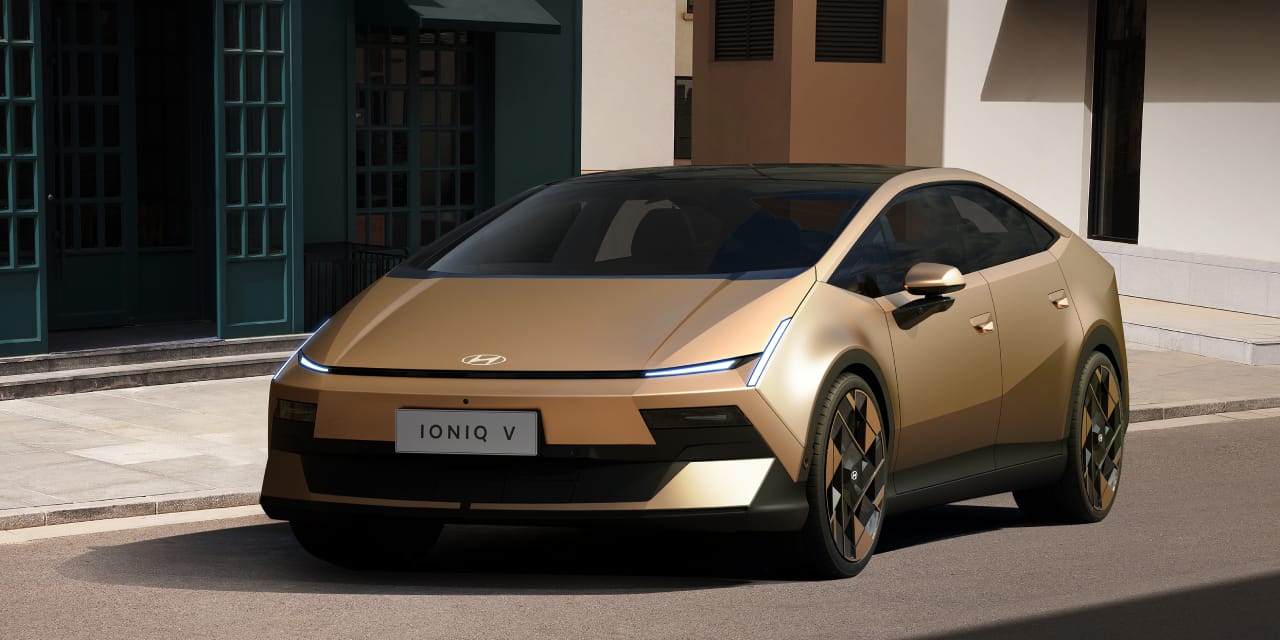
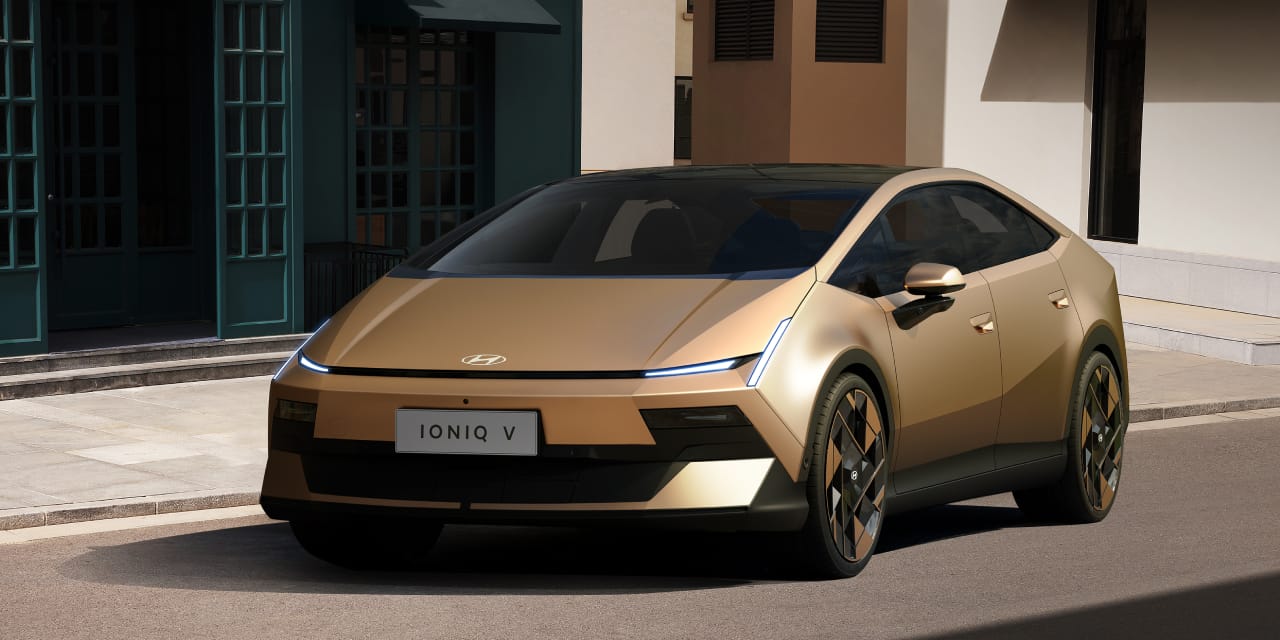
| Hyundai | IONIQ V debuts as the first dedicated IONIQ production model for China, with more BEVs and EREVs planned. | Hyundai is treating China as an innovation base, not just a market where global models are imported late. |
| Volkswagen Group | New China-developed ID. AURA, ID. UNYX, JETTA NEV, and AUDI models headline a larger local product offensive. | VW is trying to match Chinese development speed with local electronic architectures, AI assistants, and advanced driver-assistance systems. |
Hyundai is making China a product lab again
Hyundai’s Auto China 2026 announcement is unusually direct about the strategy. The company says the IONIQ V is the first dedicated IONIQ production model for China, and it is part of a larger plan for 20 new models in the country over the next five years.
The vehicle itself tells the story. IONIQ V is not just a rebadged global Hyundai EV. It was developed around local priorities: a roomy cabin, a 27-inch panoramic display, connected features, a comfort-focused interior, and a long-range version rated at more than 600 km on the CLTC cycle. Hyundai also says the future China rollout will include both battery-electric vehicles and extended-range EVs, which is notable because EREVs are booming in China even as many Western EV conversations still frame the market as a simple BEV-versus-hybrid fight.
For Hyundai, this is partly a recovery strategy. The brand has lost ground in China over the past decade as local EV makers moved faster and understood domestic buyers better. But it is also a useful signal for markets like the U.S. and Canada. If Hyundai can use China to pressure-test faster software cycles, more aggressive cabin tech, and more flexible powertrain choices, those lessons can feed future global products even when the badge and body style change.
Volkswagen is trying to rebuild speed
Volkswagen Group’s Auto China 2026 product offensive is even broader. The company says it will launch 20 new smart electric vehicles in China this year alone, with around 30 electrified models by 2027 and 50 by 2030.
The key phrase is not just “electric.” It is locally developed.
Volkswagen is leaning on China-specific architectures, local R&D, and Chinese technology partners to move faster than the traditional global-platform cycle allows. The ID. AURA T6 uses the locally developed China Electronic Architecture. The ID. UNYX 09 is positioned around intelligent technology, high-performance computing, and an AI assistant. The JETTA sub-brand is being pushed into lower-cost new-energy vehicles. Audi, meanwhile, is using a dual-brand strategy that separates the familiar four-ring global Audi from the all-caps AUDI brand aimed at Chinese premium EV buyers.
That is a huge shift for a company that historically won on platform scale and brand consistency. In China, the challenge is different. Buyers expect EVs to feel fresh quickly. Software matters. Intelligent-driving features matter. Interior screens and voice interfaces are not garnish; they are part of the purchase decision. Volkswagen is effectively admitting that a Europe-first, export-later approach is too slow for this fight.
Audi’s China-only brand shows how premium is changing
The clearest premium example is the AUDI E5 Sportback. Audi says the E5 is fully electric, offers up to 579 kW, reaches 0-100 km/h in as little as 3.4 seconds, and delivers a maximum 770 km CLTC range rating in its Chinese-market specification. It is also built around the Advanced Digitized Platform developed with SAIC, with full-vehicle over-the-air capability and a digital ecosystem aimed directly at Chinese buyers.
That spec sheet is not subtle. The E5 is not a compliance EV, and it is not a conservative luxury sedan with batteries stuffed underneath. It is Audi acknowledging that in China, premium now means performance plus software plus local digital integration.
The same logic explains why the upcoming AUDI E7X matters. Volkswagen Group says the E7X will bring the China-exclusive AUDI brand into the large SUV segment, with planned Level 3 highly automated driving capability. Whether that exact feature package works outside China is not the point. The broader point is that Audi is using China to build a faster, more digital premium playbook than the one it uses in Europe and North America.
Why North American buyers should care
It is easy to dismiss China-only EVs as irrelevant if they are not headed to local dealers. That misses the bigger industry shift.
First, these vehicles compress development timelines. If Hyundai, Volkswagen, and Audi learn to move faster in China, the old five- or six-year product rhythm becomes harder to defend elsewhere. Tesla already trained buyers to expect software improvements after purchase. Chinese EV brands pushed that expectation even further. Legacy automakers now have to respond.
Second, China is normalizing more flexible EV strategies. Battery EVs remain central, but EREVs are gaining attention because they solve a real buyer problem: everyday electric driving without forcing every road trip, tow job, or rural route through the public-charging network. That does not make them pure EVs. It does make them commercially interesting, especially for larger vehicles where battery cost and weight get ugly fast.
Third, cabin technology is becoming a competitive battleground. North American shoppers may not demand the exact same apps or in-car ecosystems as Chinese buyers, but the expectation for better voice control, smarter navigation, cleaner charging-route planning, and faster updates will cross borders. Once buyers experience better software in one market, global brands have a hard time explaining why other markets should wait.
The risk: global brands become too fragmented
There is a downside. China-specific development can create impressive local products, but it can also fragment brand identity. If a Hyundai, Volkswagen, or Audi in China feels dramatically more advanced than one sold in North America, that creates awkward questions. If the best software, fastest cabins, and most creative powertrains stay locked to China, global buyers may feel like they are getting second-tier products from first-tier brands.
There is also execution risk. Moving fast in China is necessary, but speed alone does not guarantee profit. These companies are competing against BYD, Geely, Xiaomi, XPeng, NIO, Li Auto, and others that already understand the market’s pricing pressure and software expectations. A China-only badge does not magically solve that.
Still, the direction is clear. China is no longer just the world’s largest EV market. It is the industry’s harshest proving ground.
For North American buyers, the specific IONIQ V, ID. AURA, or AUDI E5 may remain far away. But the ideas behind them are coming: faster updates, smarter cabins, more localized vehicle development, and a more pragmatic mix of electric powertrains. The next great global EV may not be imported from China. It may simply be shaped by what automakers were forced to learn there.