EV Regenerative Braking in Cold Weather: What One-Pedal Drivers Should Know
A cold or full battery can limit EV regeneration. Learn why energy recovery and one-pedal deceleration differ, using Tesla and Ford owner-manual guidance.
Quick Verdict
A cold battery can limit regenerative braking, but it does not follow that every EV will slow down less when you lift the accelerator. Some vehicles use their regular friction brakes to supplement reduced regeneration. The exact behavior depends on the car, its settings and its operating conditions.
For a first winter with an EV, check the braking section of your own manual now. Learn how the car indicates reduced regeneration, whether it supplements it with friction braking, and what its one-pedal mode can and cannot do. Keep the brake pedal part of your driving routine rather than assuming yesterday’s accelerator-lift response will always be identical.
This is a research-based ownership explainer for U.S. and Canadian drivers, not a road test. The manufacturer instructions below were checked October 8, 2026. They are examples from the cited manuals, not a promise that every model year, software version or local-market vehicle has the same controls.
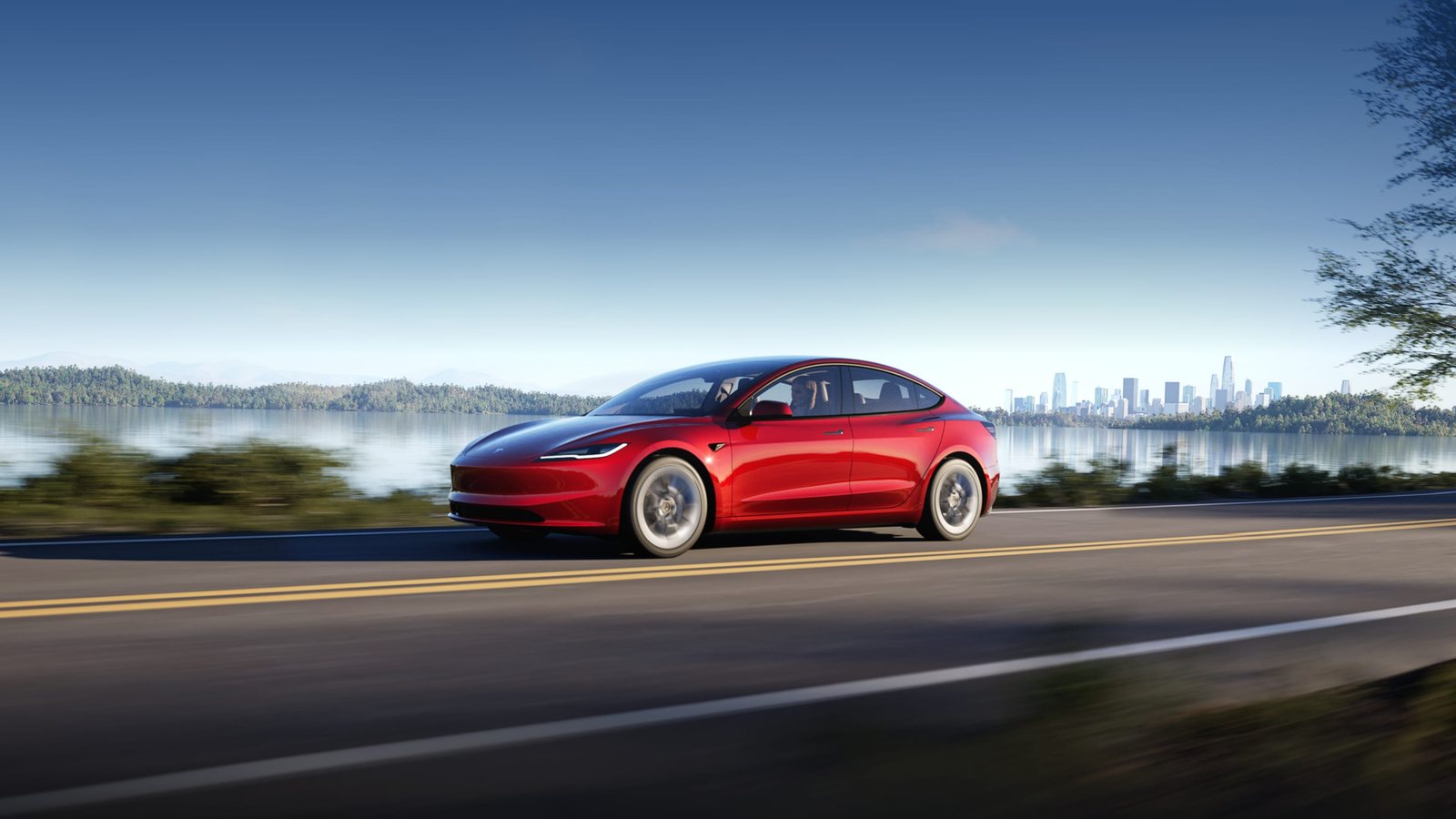
Hero image: Tesla manufacturer imagery. The pictured Model 3 illustrates a vehicle discussed here; it is not evidence of a Motorlinks braking test or a winter-driving demonstration.
The Battery Has to Accept the Energy
Regenerative braking is one of the satisfying differences between an EV and a gasoline car: the drive motor can slow the vehicle while sending recovered energy back to the traction battery.
That energy still needs somewhere to go. A battery near full charge has less room for it, and battery conditions can constrain how much regeneration the vehicle allows. Tesla’s Model 3 and Model Y manuals both identify a cold or fully charged battery as reasons regeneration may be limited.
A chilly October morning is therefore a useful reminder to understand the system before winter arrives. It is not evidence that your particular car has reached a specific limit: there is no universal outside-temperature threshold in the cited instructions.
Two quantities are easy to confuse:
- Energy recovery: how much of the vehicle’s motion is being turned back into stored battery energy.
- Deceleration: how strongly the vehicle slows when you release the accelerator or use the brake pedal.
They can change independently. If friction brakes supply part of the slowing, the vehicle can maintain a similar accelerator-lift response while recovering less energy.
Tesla’s Manuals Show Why Model-Specific Detail Matters
The cited Model 3 manual describes an Apply Brakes When Regenerative Braking is Limited setting under Controls → Dynamics. When enabled, regular brakes can compensate for limited regeneration to help maintain consistent deceleration.
The current Model Y manual describes regular brakes applying automatically when regeneration is limited and the driver releases the accelerator.
Those are not interchangeable instructions. Do not assume a setting exists because another Tesla has it, or that an older vehicle behaves exactly like the current online manual. Use the manual and controls applicable to the car you actually own.
Neither description turns one-pedal driving into an unconditional stopping guarantee. Tesla’s guidance still calls for the driver to remain prepared to use the brake pedal.
| Example | What the cited manual says | Owner takeaway |
|---|---|---|
| Tesla Model 3 | Cold or full battery can limit regeneration; a setting can supplement it with regular brakes | Check whether the setting is present and enabled on your vehicle |
| Tesla Model Y | Regular brakes automatically supplement limited regeneration when the accelerator is released | Do not mistake consistent slowing for unchanged energy recovery |
| Ford Mustang Mach-E | One Pedal Drive does not remove the need to press the brake pedal when necessary | Stay ready to brake; do not generalize another car’s behavior |
One-Pedal Driving Is Not a Reason to Ignore the Brake Pedal
Ford’s published Mach-E One Pedal Drive Precautions make the responsibility clear: the system does not replace the driver’s attention, judgment or need to apply the brakes. Ford warns that failing to press the brake pedal when necessary can result in a collision.
That source does not establish how a Mach-E blends friction braking specifically when its battery is cold. We are not filling that gap with a claim borrowed from Tesla.
For a driver moving between EVs—or between a rental car and the family car—the practical lesson is to check the selected driving mode and learn the specific accelerator response. Do not rely on the label “one-pedal” to tell you everything about slowing or stopping.
A persistent brake warning, unexpected stopping behavior or a mechanical concern also should not be dismissed as normal cold-battery regeneration. Follow the vehicle’s warning instructions and seek appropriate service.
Snow and Ice Add a Separate Traction Problem
Reduced battery energy acceptance and reduced road grip are different issues. A vehicle supplementing regeneration with friction brakes does not gain extra tire grip.
Tesla warns that regenerative braking can cause loss of traction in snow or ice, and that wet or icy roads affect stopping distance. Smooth inputs, space from the vehicle ahead and appropriate tires remain important regardless of how the braking systems share the work.
For Canadian owners and drivers in colder U.S. regions, the first cold spell is a good time to revisit the local winter-tire requirements and the vehicle’s winter-driving instructions. Our winter-tire explainer separates EV-specific tire considerations from the more basic need for suitable seasonal grip.
Do not test reduced regeneration by making abrupt stops in traffic. The useful preparation is understanding the display, controls and manual before a familiar driving response surprises you.
What to Check Before Your First Winter Commute
A short manual check is more useful than searching for a universal regeneration percentage:
- Indicator: what symbol, message or power-meter change shows limited regeneration?
- Supplementation: does the car use friction brakes automatically, provide a selectable setting, or describe another behavior?
- Stopping: does the selected mode bring the car to a complete stop, and what limitations does the manual list?
- Winter guidance: what does the manufacturer recommend for slippery surfaces and cold-weather preparation?
- Warnings: which messages require a different response from an ordinary regeneration limitation?
Do not lower a battery target solely to chase stronger regeneration if that conflicts with the manufacturer’s battery guidance or leaves inadequate trip range. Battery care, usable range and braking behavior are related ownership questions, but they are not the same decision.
The takeaway is to understand both sides of the system: how much energy comes back, and how the car actually slows. Less regeneration can be an expected operating condition; being ready to brake remains the driver’s job.
FAQ
Why can regenerative braking be limited on a cold morning?
Regeneration returns energy to the traction battery. Tesla says a cold or fully charged battery can limit regenerative braking. The amount available depends on the vehicle and battery conditions.
Does limited regeneration always mean weaker one-pedal deceleration?
No. Some vehicles supplement limited regeneration with regular brakes. Tesla’s cited Model 3 manual describes a setting for this, while its current Model Y manual describes automatic supplementation. Check the manual for your exact vehicle.
Can one-pedal driving replace the brake pedal?
No. Remain ready to press the brake pedal when needed. One-pedal driving does not remove the driver’s responsibility to stop safely, and slippery roads still affect traction and stopping distance.
Sources
Standing manufacturer guidance checked October 8, 2026, not a new braking-system announcement.
- Tesla Model 3 owner’s manual: Braking and Stopping
- Tesla Model Y owner’s manual: Braking and Stopping
- Ford Mustang Mach-E: One Pedal Drive Precautions