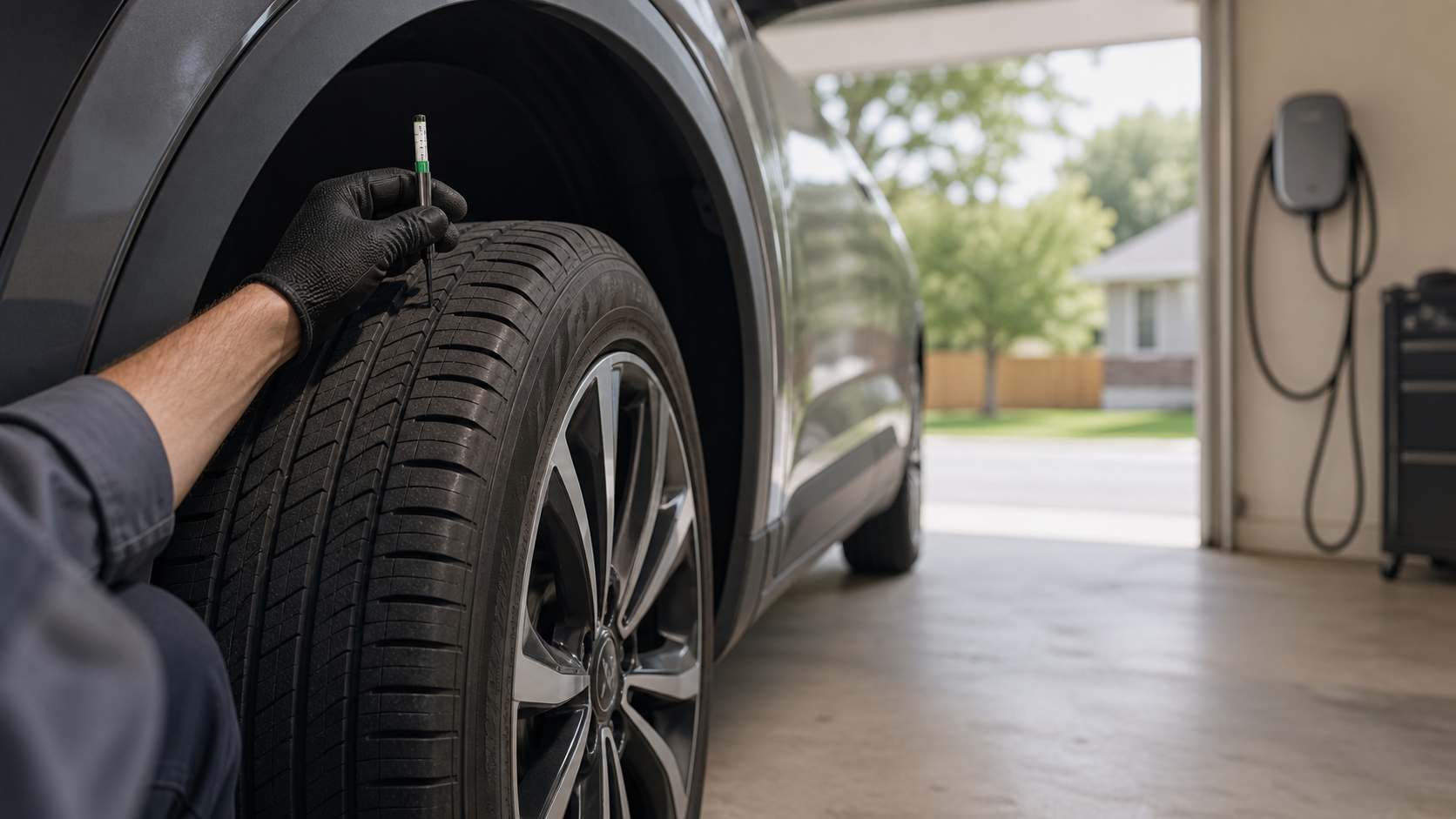
Do Electric Cars Need Special Winter Tires? A Canadian EV Buyer’s Guide
Electric cars do not automatically need EV-branded winter tires, but the replacement set must match the vehicle’s size, load capacity and approved fitment. Here is what Canadian drivers should check before winter.
Electric vehicles do not create a new category of winter weather. Snow is still slippery, ice still punishes abrupt inputs, and summer tires do not become useful because the car has two motors and all-wheel drive.
The confusing part arrives at the tire shop. One winter tire carries an EV badge. Another promises low rolling resistance. A third is available in the right diameter but not the same load index. Then a less expensive wheel-and-tire package drops an inch in wheel size and adds a taller sidewall.
Which details actually matter?
The short answer is that an electric car does not automatically need an EV-branded winter tire. It does need a properly specified winter tire that can support the vehicle, fit the approved wheel package and preserve safe handling. Range, noise and wear matter, but they come after fitment and winter grip.
This guide is aimed at Canadian passenger-EV and electric-crossover owners planning a seasonal tire change. It is not a substitute for the vehicle manual, tire placard or advice from a qualified installer. Provincial requirements were checked on September 7, 2026.
Quick Verdict
Buy four matching winter tires with the three-peak mountain snowflake symbol, in a fitment approved for the vehicle. Transport Canada recommends winter tires on all four wheels and says matching type, size, speed rating and load index improves control and stability.
Do not pay extra for an EV logo without checking the specification. Some EV-focused tires target lower rolling resistance, extra load capacity and reduced cabin noise. Those can be useful benefits, but an ordinary winter tire can also be suitable if it meets every required specification.
Treat the load index as a hard requirement, not a suggestion. Check the tire-information label at the driver’s door and the owner’s manual. A replacement should not fall below the manufacturer’s required load capacity merely because it is the correct diameter or happens to be on sale.
Ask about an approved smaller-wheel winter package. A manufacturer-approved package with more sidewall can be cheaper and better protected from winter potholes than a large, low-profile setup. It is not an automatic downsizing exercise: brake clearance, wheel dimensions, load capacity and tire-pressure monitoring all have to work.
| Check | Why it matters | Where to verify it |
|---|---|---|
| Approved size and wheel fitment | Prevents clearance, handling and speedometer problems | Owner’s manual, tire placard, manufacturer fitment data or qualified installer |
| Load index and load range | Confirms each tire can carry the required vehicle load | Tire sidewall, driver-door placard and owner’s manual |
| Winter certification | Identifies a tire that meets defined severe-snow traction requirements | Three-peak mountain snowflake symbol on the sidewall |
| Four matching tires | Preserves predictable braking, cornering and stability | Match size, construction, type and tread pattern across the set |
| Rolling resistance and noise | Can affect range and cabin comfort | Independent testing and tire-maker specifications after fitment is confirmed |
What Makes an EV Different at the Tire Shop?
The winter-grip requirement is not unique to an EV, but the vehicle can place different demands on the tire.
Many battery-electric vehicles are heavy for their footprint. They can also deliver immediate torque and may rely on carefully tuned stability, traction-control and regenerative-braking systems. That makes the correct load capacity and a balanced set of tires especially important.
An EV’s quiet powertrain also makes tire noise easier to hear. Tire makers may use tread design, casing construction or acoustic treatments to reduce that noise. Low rolling resistance can help preserve efficiency, while a robust compound can address wear.
Those are real design priorities, but they do not mean every EV needs a tire with “EV” printed in its marketing. Michelin’s Canadian guidance, for example, says there are tires suitable for both combustion and electric vehicles and identifies load capacity, range, torque and noise as additional considerations.
The correct buying order is straightforward:
- verify fitment and load capacity
- choose genuine winter performance for the conditions
- compare braking, wear, efficiency, noise and price
- consider EV-specific branding only as evidence of useful engineering, not proof of suitability
Start With the Door Placard, Not the Online Filter
The driver’s-door tire label normally lists the original tire size and recommended cold inflation pressure. The owner’s manual may add minimum load and speed ratings, alternate sizes, staggered-fitment details and instructions for changing the tire configuration in the vehicle’s software.
The string on a tire sidewall carries several pieces of information. In a size such as 235/55R19 105H XL:
235is the nominal section width in millimetres55is the sidewall height as a percentage of the widthR19means radial construction for a 19-inch wheel105is the load indexHis the speed ratingXLidentifies an extra-load construction
A matching wheel diameter alone is not enough. Two 19-inch tires can have different overall diameters, widths and load capacities.
Tesla’s Model Y manual illustrates the point clearly: its listed fitments include minimum load indexes and Extra Load specifications, and it says replacement tires should equal or exceed the original load and speed ratings. Other manufacturers express the requirement differently, so use the documents for the exact model, trim and wheel package.
Do not assume that choosing a higher load index authorizes carrying more cargo. The vehicle’s own axle and gross-weight ratings do not increase when stronger tires are installed.
Look for the Mountain and Snowflake
Transport Canada tells buyers to look for the three-peak mountain snowflake symbol. It identifies tires that meet specific snow-traction performance requirements and are designed for severe snow conditions.
That symbol is more useful for winter shopping than vague words such as “all-season,” “snow capable” or “EV ready.” Some all-weather tires carry the mountain-snowflake symbol and can be a year-round compromise. A dedicated winter tire generally puts a stronger priority on cold-weather grip, but actual ice, wet-road, snow and dry-road performance still varies by model.
Install winter tires as a set of four. Mixing two winter tires with two all-seasons can create different grip levels at each axle, making the vehicle less predictable when braking or changing direction. All-wheel drive may help the car accelerate, but it does not create tire grip while stopping.
Transport Canada also advises against using tires worn close to 4 mm of tread depth on snow-covered roads. Legal minimums and recommended winter replacement points are not always the same, so planning before the first storm is smarter than trying to extract one more season from a marginal set.
When Should You Switch in Canada?
Do not use the first snowfall as the appointment reminder. Tire-shop calendars can fill quickly, and cold dry pavement arrives before accumulated snow in much of Canada.
Transport Canada says all-season and summer tires begin losing elasticity below 7°C, while winter tires retain flexibility at lower temperatures. A useful practical trigger is a forecast pattern that stays near or below 7°C, especially during the times of day when the vehicle is driven.
Provincial rules add fixed dates in some places:
- Quebec: most motor vehicles registered in Quebec must use compliant winter tires from December 1 through March 15. The province says a compliant winter tire must carry the prescribed pictogram or be studded, subject to its rules and exceptions.
- British Columbia: winter tires or chains are required on most designated routes from October 1 to April 30. Requirements end March 31 on some signed routes, and many coastal roads are treated differently.
- Elsewhere in Canada: winter-tire laws and insurance conditions vary. A lack of a province-wide mandate does not make summer or all-season tires effective on cold, icy roads.
The best appointment date depends on local temperatures, travel routes and storage. A Vancouver driver who never leaves the lower mainland faces a different schedule from someone regularly crossing the Coquihalla, just as Toronto and Timmins do not share the same autumn.
Can You Downsize the Wheels for Winter?
Sometimes, and it can be a smart value play.
Many EVs arrive with large wheels because they sharpen appearance and steering response. A smaller approved winter wheel can use a tire with a taller sidewall while preserving nearly the same overall tire diameter. That may reduce package cost and provide more cushioning against damaged winter pavement.
But the word approved does the heavy lifting. A smaller wheel must still:
- clear the brake calipers and suspension
- have the correct width, offset, bolt pattern and centre bore
- support the vehicle’s required load
- work with the required fasteners
- accept compatible tire-pressure monitoring sensors where needed
- use a tire that preserves the approved overall diameter and load specification
Performance trims often have larger brakes that rule out wheel sizes offered on lower trims. Some EVs use different front and rear tire sizes. Others need a software setting changed after a wheel swap.
Ask the manufacturer, dealer or specialist for an approved winter fitment by exact trim and model year. Do not build a package by copying the base model’s wheel size from a classified ad.
Will Winter Tires Reduce EV Range?
Possibly, but one universal range-loss number would be misleading.
Winter tires may use softer compounds and more aggressive tread patterns that increase rolling resistance. At the same time, cold batteries, cabin heating, denser air, snow, slush, wind and low tire pressure can all increase energy use. The consumption change seen after a seasonal swap is therefore not solely a tire test.
A low-rolling-resistance winter tire can help, but efficiency should not outrank safe winter braking. Compare tires that already satisfy the vehicle’s fitment and load requirements, then use credible testing to balance snow and ice grip against rolling resistance, wet braking, noise and wear.
Owners can also protect winter efficiency by:
- checking pressure when the tires are cold and following the vehicle label
- correcting alignment problems that create drag and uneven wear
- removing unnecessary roof racks or cargo boxes
- preconditioning the cabin while plugged in when practical
- using smooth acceleration and leaving more space on slippery roads
The EV battery preconditioning guide explains the battery side of winter efficiency in more detail.
Pressure Changes Still Matter
Cold air reduces tire pressure, whether the vehicle uses gasoline or electricity. Underinflation can worsen handling, increase energy consumption and accelerate wear.
Check pressure with cold tires and use the value on the vehicle’s tire label for the installed approved size. Do not use the maximum pressure molded into the tire sidewall as the normal target.
Some EVs need the driver to select a new wheel or tire configuration through the centre display after a seasonal swap. Tire-pressure monitoring sensors may also need time or a relearn procedure before readings appear correctly. Follow the exact manual rather than assuming every system auto-detects immediately.
If the pressure warning returns after adjustment, inspect for a puncture, damaged valve, rim leak or sensor problem instead of repeatedly adding air.
Studded, Studless or All-Weather?
The answer depends more on roads than propulsion.
Studless winter tires are the mainstream choice for mixed Canadian driving. Their compounds and tread designs target snow, slush, cold pavement and ice without metal studs.
Studded tires can add bite on persistent polished ice, but provincial dates and restrictions vary. They can be noisier and are unnecessary for many urban drivers. Verify local rules and the vehicle manufacturer’s guidance before buying.
All-weather tires can suit drivers in milder regions who want one mountain-snowflake-rated set year-round and accept a compromise between dedicated summer and winter performance. They should not be confused with ordinary all-season tires, and they are not automatically the best choice for frequent rural, northern or mountain travel.
Choose for the worst conditions the vehicle regularly encounters—not the conditions outside the tire shop on purchase day.
A Practical EV Winter-Tire Checklist
Before paying a deposit, confirm all of the following:
- The package is approved for the exact EV model, trim and model year.
- Each tire meets the required size, load index, load range and applicable speed rating.
- All four tires match in type, construction and tread pattern.
- The tires carry the three-peak mountain snowflake symbol.
- The wheels have the correct dimensions, fasteners and brake clearance.
- Tire-pressure monitoring sensors and vehicle software settings are included in the plan.
- The quote states installation, balancing, valves, sensors and seasonal storage costs clearly.
- The tread design and test results suit the driver’s real mix of ice, snow, slush, wet pavement and highways.
- Efficiency and noise are compared only after safety and fitment requirements are met.
- The swap is booked before local temperatures settle below 7°C or a legal deadline arrives.
The broader EV tire wear guide covers rotation, alignment and driving habits that can help a new set last.
Bottom Line
Electric cars need good winter tires for the same basic reason every vehicle does: traction comes from four small contact patches, not the powertrain badge.
The EV-specific part of the decision is mainly about load capacity, fitment, efficiency, noise and wear. A winter tire does not need special branding to work on an EV, but it must meet the vehicle’s actual requirements. Verify the door placard and manual, buy four matching mountain-snowflake tires, and use only an approved wheel package.
That approach is less glamorous than shopping by logo. It is also the difference between a winter setup designed around the car and one assembled from whatever happened to fit the rim.
FAQ
Do electric cars need special EV winter tires?
Not necessarily. A conventional winter tire can be suitable if it meets the vehicle’s required size, load index, speed rating and fitment. EV-focused products may prioritize efficiency, noise and load capacity, but branding does not replace specification checks.
When should Canadian EV drivers install winter tires?
Plan the change when temperatures consistently approach or fall below 7°C, not after the first major snowfall. Follow provincial dates as well, including Quebec’s December 1 to March 15 rule and signed British Columbia route requirements beginning October 1.
Do winter tires reduce electric-car range?
They can increase rolling resistance, but winter energy use is also affected by battery temperature, cabin heating, snow, wind and tire pressure. There is no trustworthy universal percentage for every vehicle and tire combination.
Can an EV use smaller wheels for winter?
Only with an approved fitment. The wheel must clear the brakes and meet width, offset, bolt-pattern and load requirements, while the tire must preserve the correct overall diameter and capacity.
Is all-wheel drive enough without winter tires?
No. All-wheel drive can improve acceleration by distributing power, but braking and cornering still depend on tire grip. Four matching winter tires give the stability and cold-weather traction that the drivetrain cannot create by itself.
Sources
- Transport Canada: Using winter tires
- Gouvernement du Québec: Requirements for winter tires
- Government of British Columbia: Designated winter tire and chain routes
- Michelin Canada: Winter tire guide for hybrid and electric cars
- Tesla Model Y Owner’s Manual: Tire care and maintenance