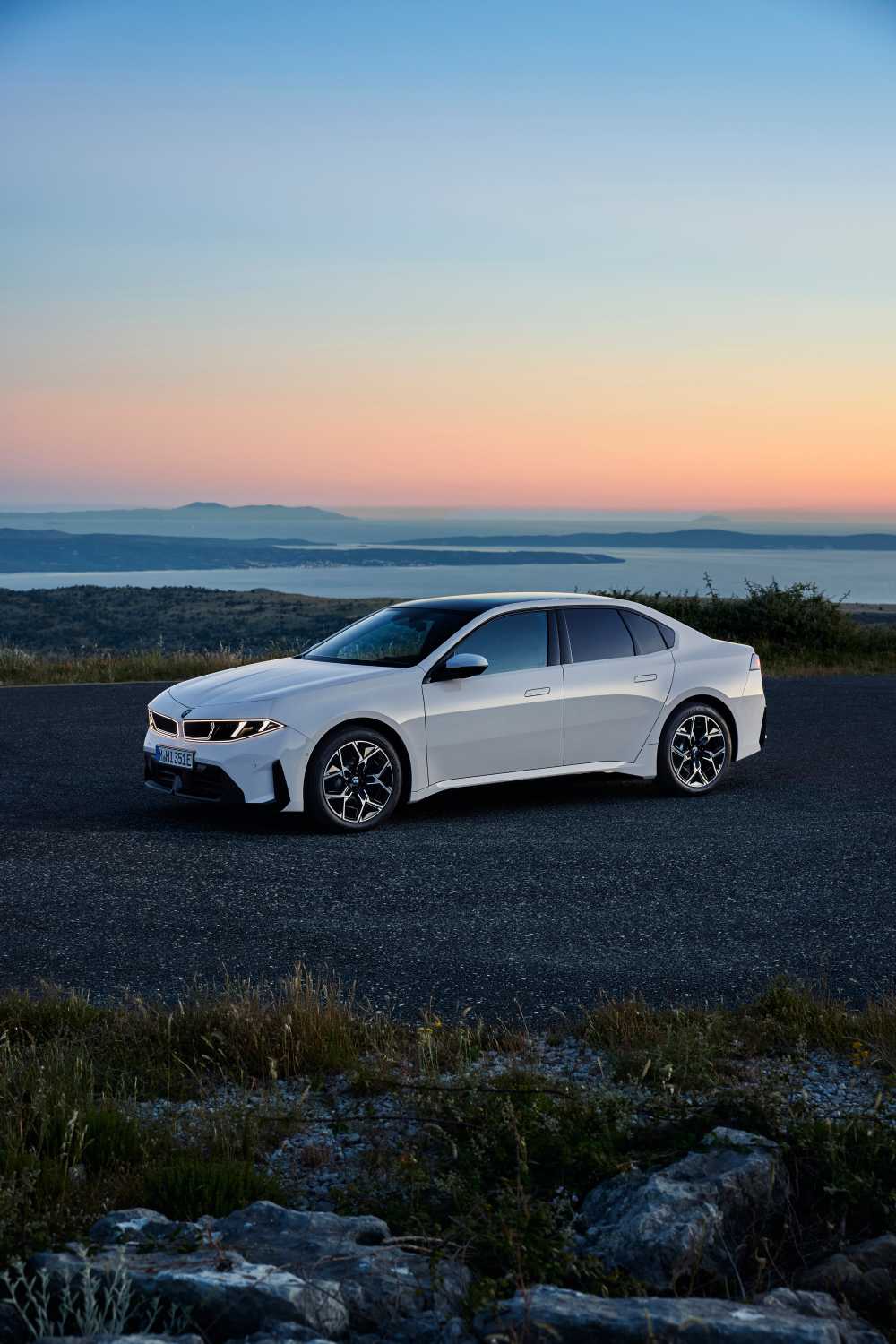
2027 BMW i3 Starts at C$74,900 With Up to 750 Km of Preliminary Range
BMW Canada's first electric 3 Series, the 2027 i3 50 xDrive, arrives in Q1 2027 from C$74,900 with a preliminary 750-km range estimate and 400-kW charging.
Photo: BMW
Manufacturer estimates, market scope and other evidence limits remain explicit.
The electric 3 Series is finally a concrete Canadian proposition. BMW has announced the 2027 i3 50 xDrive at a C$74,900 base MSRP, with Canadian sales scheduled to begin in the first quarter of 2027. Its attention-grabbing figure is an estimated up to 750 km of range—but that is BMW’s preliminary result using EPA test procedures, not a finalized government rating or a winter-driving promise.
The new i3 is not a battery conversion of the gasoline 3 Series. It is the first fully electric 3 Series on BMW’s Neue Klasse architecture, with dual-motor all-wheel drive and an 800V electrical system. BMW is launching gasoline 330 xDrive and M350 xDrive variants alongside it, giving the familiar sport-sedan nameplate a genuine powertrain split.
Canadian Price and Key Numbers
According to BMW Canada’s 3 Series announcement, the i3 50 xDrive is the initial electric model. It produces a combined 463 hp, delivers 476 lb-ft of torque, and is claimed to reach 100 km/h in 4.7 seconds. BMW also plans an i3 M60 xDrive, but says that version will join the range later in 2027.
| Item | 2027 BMW i3 50 xDrive |
|---|---|
| Canadian base MSRP | C$74,900 |
| Canadian launch | First quarter of 2027 |
| Drive and output | Dual-motor all-wheel drive; 463 hp and 476 lb-ft |
| Acceleration | 0-100 km/h in a claimed 4.7 seconds |
| Estimated range | Up to 750 km, based on preliminary BMW testing using EPA procedures |
| DC fast charging | Up to 400 kW at a suitable 800V station |
| Ten-minute charging claim | Up to 335 km of range added under BMW’s stated conditions |
| AC charging | Up to 15.4 kW |
For price context, BMW lists the gasoline 330 xDrive at C$61,500 and the M350 xDrive at C$78,500 before options. The i3’s base price therefore sits C$13,400 above the 330 xDrive and C$3,600 below the M350 xDrive. Canadian shoppers should also check the current EV incentive and affordability guide rather than assuming the i3 qualifies for a particular rebate.
2027 BMW i3 50 xDrive official BMW gallery
13


The i3 is the first electric 3 Series built on BMW’s Neue Klasse architecture. Photo: BMW.
A Big Range Claim, With Important Fine Print
BMW’s Canadian release says up to 750 km, based on its own preliminary testing using EPA procedures. That is a notably ambitious figure for an all-wheel-drive electric sport sedan, but it should be treated as a target until an official rating and Canadian configuration details are available. Wheel and tire selection, highway speed, temperature and cabin heating will change real-world range.
The technical story is broader than the number alone. BMW says the i3 uses its sixth-generation electric-drive system, cylindrical battery cells and an 800V architecture. The company has not given buyers a reason to treat a peak charging-power number as a guaranteed stop time: charger output, pack temperature and the battery’s state of charge will determine what happens on a particular trip.
At a compatible 800V DC station, BMW claims up to 400 kW and as much as 335 km added in 10 minutes. The car can also charge at 400V DC stations, according to BMW, but the 400-kW peak and ten-minute range claim should not be projected onto every public charger. The i3 supports bidirectional functions too; BMW says a Vehicle-to-Load adapter can power external devices at a combined output of up to 3.7 kW. The value of home-backup functions will depend on compatible equipment and local installation.
Why This Matters for Canadian Buyers
The i3 gives Canadian shoppers something that has been missing from the new-EV market: a mainstream luxury sport sedan from BMW’s core 3 Series family, rather than another tall electric crossover. Its promised range, charging hardware and price put it into a serious long-distance conversation, while the familiar sedan shape may appeal to drivers who never wanted an SUV.
There is still a sensible wait-and-see list. BMW has supplied a Canadian MSRP and launch window, but the final range rating, detailed Canadian equipment combinations and real-world charging curve will matter more than the largest preliminary numbers. Until those are available, the i3 looks promising on paper—not proven on Canadian highways.
The first Canadian arrivals are scheduled for Q1 2027. For now, BMW’s announcement answers the big questions of what it is and where it starts on price; winter range and charging performance remain questions for independent testing after launch.