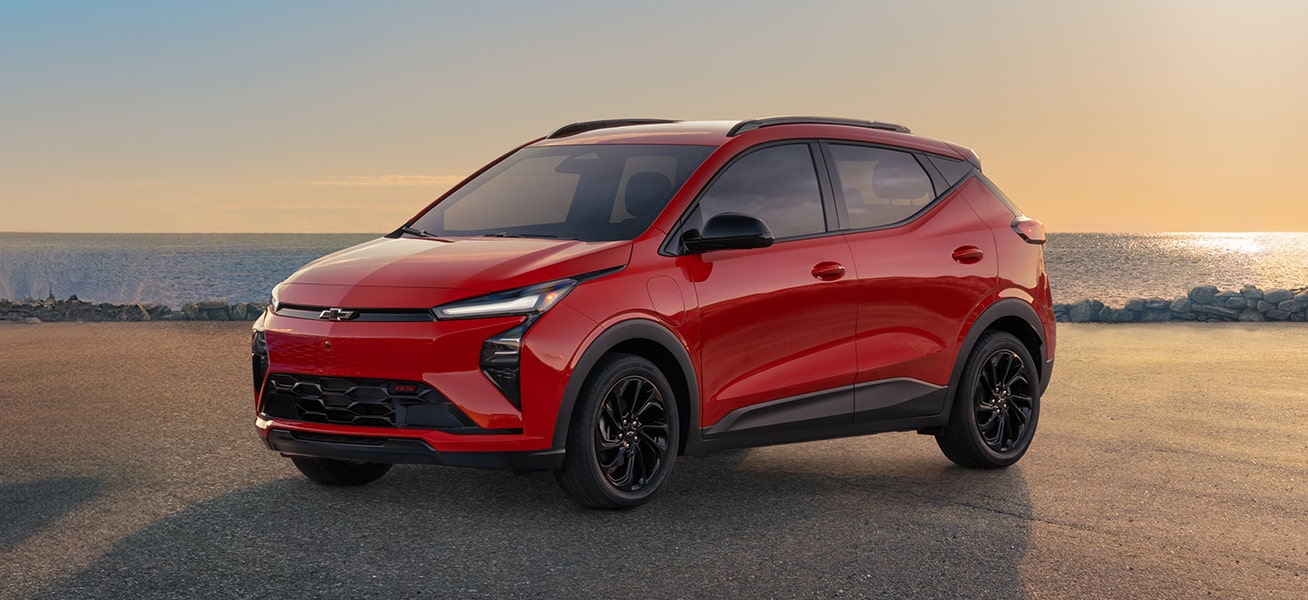
2027 Chevrolet Bolt vs Hyundai Kona Electric in Canada: Which Affordable EV Wins?
The 2027 Chevrolet Bolt undercuts the Hyundai Kona Electric and charges faster, while the Kona counters with a proven Canadian winter package.
Canada’s affordable-EV market has reached the point where 400-plus kilometres of range no longer requires a luxury-car budget.
The revived 2027 Chevrolet Bolt LT starts at $39,999 MSRP, offers an estimated 422 km of range and can charge from 10 to 80 percent in as little as 25 minutes. The 2026 Hyundai Kona Electric Preferred starts at $43,999 MSRP, lists 420 km of range and brings a well-established Canadian winter package built around a heat pump and battery preconditioning.
The range numbers are essentially tied. The buying decision is not.
Quick Verdict
Buy the Chevrolet Bolt LT if value, charging speed and simple Tesla Supercharger access are the priorities. It costs $4,000 less at the headline-MSRP level, has a native NACS port and cuts Hyundai’s manufacturer-estimated 10-to-80-percent charging time by 18 minutes.
Buy the Hyundai Kona Electric Preferred if you want the more familiar ownership bet. Its range is effectively identical, Canadian winter equipment is clearly explained, and the current generation has already spent time in customer hands. The Kona is easier to recommend to a risk-averse buyer when its dealer quote is competitive.
For most shoppers comparing clean, similarly structured quotes, the Bolt is the stronger value. The Kona needs to win on availability, financing, dealer support or personal preference to overcome the Chevrolet’s lower price and faster charging.
| Category | 2027 Chevrolet Bolt LT | 2026 Hyundai Kona Electric Preferred |
|---|---|---|
| Published price | $39,999 MSRP; Chevrolet build tool shows roughly $43,433 with freight and listed fees before taxes | $43,999 MSRP; Hyundai lists roughly $46,790 including freight and listed fees before taxes |
| Listed range | Up to 422 km, GM-estimated | Up to 420 km |
| Motor output | 210 hp | 150 kW, or about 201 hp |
| Drive layout | Front-wheel drive | Front-wheel drive |
| DC fast charging | Up to 150 kW; GM-estimated 25 minutes from 10-80% | Hyundai-estimated 43 minutes from 10-80% on a compatible Level 3 charger |
| Charge port | Native NACS | CCS; compatible adapter needed for supported NACS chargers |
| Cold-weather story | Automatic battery preconditioning when routing to a DC charger; heated seats and steering wheel standard on LT | Heat pump, battery pre-warming while plugged in and heated charge-port door |
| Driver assistance | More than 20 standard and available features; Super Cruise optional | Hyundai SmartSense suite with adaptive cruise control and blind-spot warning |
| Best fit | Value-focused buyer who road-trips or uses NACS charging | Buyer prioritizing proven winter hardware and an established product |
2027 Chevrolet Bolt and 2026 Hyundai Kona Electric official gallery
14
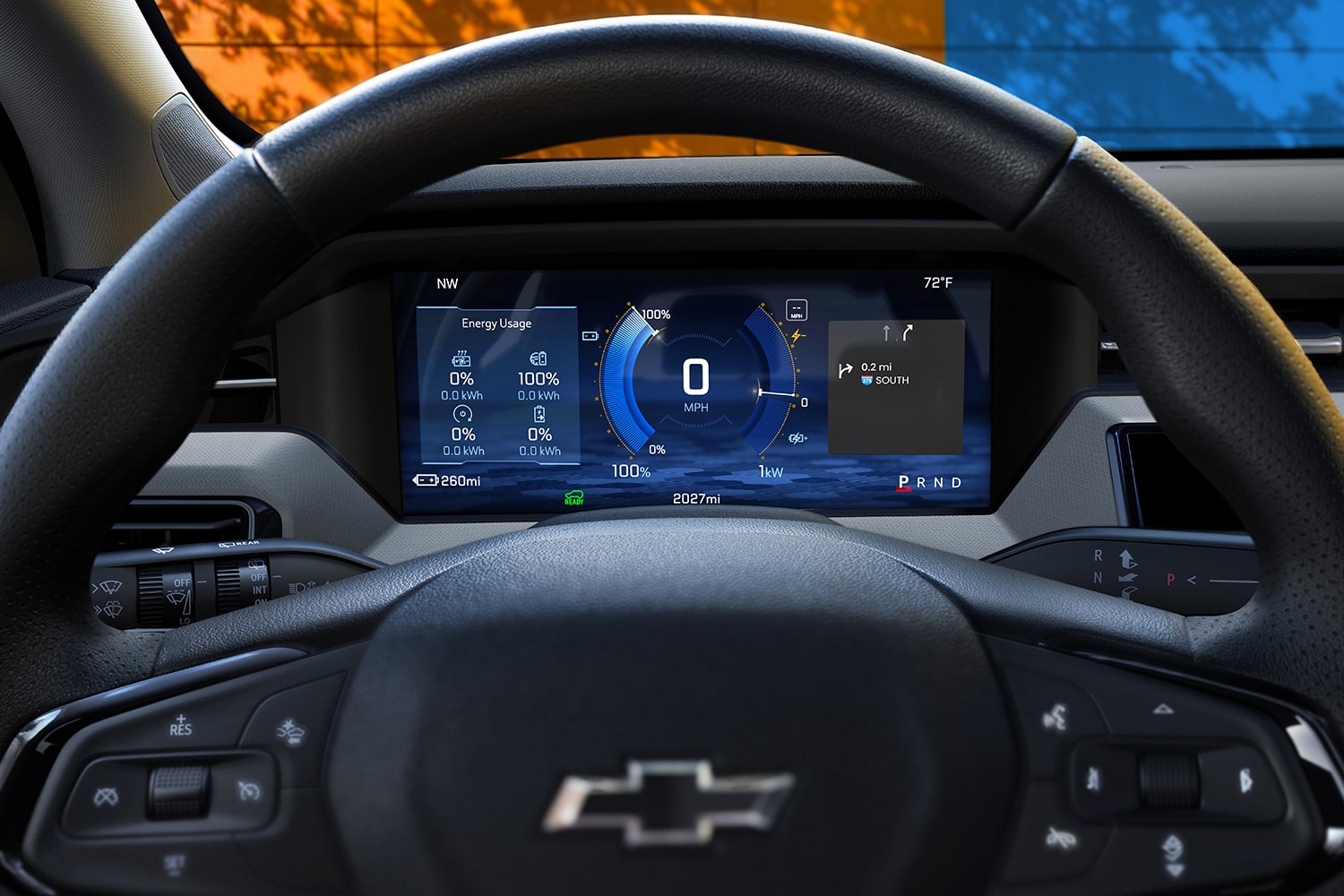


The revived Bolt keeps the compact crossover shape but adds faster charging, native NACS and a cleaner cabin. Image: Chevrolet Canada.
Range Is a Tie, and That Is Good News
Chevrolet Canada estimates up to 422 km for the Bolt. Hyundai Canada lists 420 km for the Kona Electric. A two-kilometre paper difference is meaningless once temperature, highway speed, elevation, tires, wind and cabin heating enter the picture.
That makes this a healthier comparison than a simple range contest. Both vehicles offer enough published capacity for a typical week of commuting with home charging, and both can cover regional trips without the constant charger-hopping associated with older affordable EVs.
Canadian buyers should still build a cold-weather buffer into their route planning. Neither 420 nor 422 km should be treated as a February highway guarantee. The important point is that one vehicle does not ask you to accept a major range sacrifice to get the better price.
The Bolt’s Charging Upgrade Changes the Argument
The old Bolt was affordable and efficient, but slow DC charging made long trips feel longer than they needed to. Chevrolet has addressed that weakness directly.
The 2027 model can accept up to 150 kW at a compatible DC fast charger. GM estimates 25 minutes from 10 to 80 percent, helped by automatic battery preconditioning when the navigation system routes the vehicle to a fast charger. That is not 800-volt Hyundai IONIQ 5 territory, but it is finally competitive for an affordable crossover.
Hyundai estimates about 43 minutes for the Kona Electric to move from 10 to 80 percent on a compatible Level 3 charger. A 43-minute stop is manageable for occasional road trips, yet the 18-minute gap becomes meaningful over a day with two or three charging stops.
The connector difference matters too. The Bolt is Chevrolet’s first vehicle with a native NACS port, simplifying access to compatible Tesla Superchargers. The 2026 Kona Electric uses CCS and needs a compatible adapter for supported NACS sites.
If you mostly charge at home, that advantage may rarely change your week. If you live in a condo, depend on public charging or regularly cross provinces, it pushes the Bolt well ahead.
The Price Gap Is Real, but Compare Complete Quotes
Chevrolet lists the Bolt LT at $39,999 MSRP. Hyundai lists the Kona Electric Preferred at $43,999 MSRP. On the headline numbers, the Chevrolet is $4,000 less.
Manufacturer websites do not always present freight, administration charges, levies and incentives in the same way. Chevrolet’s current build tool lands around $43,433 before tax for a base LT after listed freight and fees. Hyundai shows roughly $46,790 before tax for the Kona Electric Preferred with its listed charges included. Location and dealer pricing can change both totals.
Ask for written quotes that separate:
- Vehicle MSRP and factory options
- Freight and pre-delivery inspection
- Air-conditioning charge, tire levy and registration
- Dealer administration fees and accessories
- Cash rebates, lease support or subsidized finance rates
- Federal and provincial EV incentives, if applicable
Do not hard-code an old rebate into your decision. Program eligibility, transaction-price limits and available funding can change. Use the current Canadian EV incentive and affordability guide, then confirm the exact vehicle and transaction with the dealer.
If the Bolt remains several thousand dollars cheaper after comparable fees and financing, the Kona’s case becomes difficult. If Hyundai can erase much of the gap with inventory discounts or a better rate, the established product deserves another look.
The Kona Has the Clearer Winter Story
Hyundai has spent years explaining and refining the Kona Electric for Canadian use. The 2026 model includes a heat pump, can pre-warm its battery while plugged in and even uses a heated charge-port door to reduce one of winter’s smaller but more irritating problems.
The Bolt brings useful cold-weather hardware of its own. LT equipment includes heated front seats and a heated steering wheel, while route-aware battery preconditioning should improve charging consistency when the navigation system knows a DC stop is coming.
What Chevrolet has not yet built is the same ownership history for this new battery-and-charging combination. The revived Bolt uses newer GM EV hardware and a substantially faster charging system than its predecessor. Those are welcome changes, but they are still new changes.
Choose the Kona if proven winter familiarity matters more than winning every value metric. Choose the Bolt if the larger charging-network advantage and lower payment are worth accepting a newer product cycle.
Cabin and Technology: Different Kinds of Familiar
The Bolt’s cabin is a significant step forward. Chevrolet fits an 11.3-inch centre touchscreen, an 11-inch driver display, Google built-in navigation and a redesigned centre console. The LT also includes a dual-level charge cord, heated front seats and a heated steering wheel. Available Super Cruise adds hands-free driver assistance on compatible roads, though the option changes the value equation.
The Kona Electric answers with dual 12.3-inch displays, adaptive cruise control with stop-and-go capability, Bluelink connected services and a conventional small-SUV layout. Its controls and interface will feel familiar to anyone coming from another recent Hyundai.
Neither cabin needs an apology. The Chevrolet feels newer and more price-aggressive; the Hyundai feels more settled. Sit in both and pay attention to rear-seat access, cargo shape, sight lines and control placement. Those details will matter longer than a screen-size comparison.
Who Should Buy the Chevrolet Bolt?
Start with the Bolt LT if:
- You want the lowest purchase price without dropping below roughly 400 km of listed range.
- You regularly use public fast charging or make regional road trips.
- Native NACS access is more appealing than carrying an adapter.
- A 25-minute manufacturer-estimated charging stop fits your travel pattern better.
- You value available Super Cruise and GM’s route-aware charging software.
The RS trim adds appearance equipment rather than a different range or performance mission. For a value-focused buyer, the LT is the important version.
Who Should Buy the Hyundai Kona Electric?
Start with the Kona Electric Preferred if:
- You want an EV with a longer-established Canadian ownership record.
- Heat-pump operation and winter-specific details are high priorities.
- Your local Hyundai dealer offers the stronger inventory, finance or service experience.
- You mostly charge at home and rarely care about an 18-minute fast-charging difference.
- You prefer Hyundai’s controls, seating position or cabin layout after trying both vehicles.
The Kona is not the spec-sheet winner, but it can still be the better household fit. A known 420-km crossover at the right payment is a strong product even when a newer rival is cheaper and quicker to charge.
Bottom Line
The 2027 Chevrolet Bolt LT is the better default recommendation. It matches the Kona Electric’s range, costs less, charges much faster and arrives with native NACS hardware. Chevrolet has fixed the old Bolt’s biggest road-trip weakness without turning the replacement into an expensive premium EV.
The 2026 Hyundai Kona Electric Preferred remains the lower-risk alternative. Its 420-km range, heat pump, battery pre-warming and established Canadian presence make it easy to understand and easy to live with.
At comparable rates and fees, buy the Bolt. Choose the Kona Electric when Hyundai’s dealer support, winter familiarity or real transaction price makes the ownership experience more convincing than Chevrolet’s stronger paper value.
FAQ
Should Canadians buy the Chevrolet Bolt or Hyundai Kona Electric?
Choose the Bolt LT for its lower price, native NACS port and quicker charging. Choose the Kona Electric Preferred for its proven Canadian winter package and established ownership record.
Which has more range?
They are effectively tied. Chevrolet estimates up to 422 km for the Bolt, while Hyundai lists 420 km for the Kona Electric.
Which charges faster?
The Bolt. Chevrolet estimates 25 minutes from 10 to 80 percent at up to 150 kW. Hyundai estimates about 43 minutes for the Kona Electric on a compatible Level 3 charger.
Do both vehicles use NACS charging?
No. The 2027 Bolt has a native NACS port. The 2026 Kona Electric uses CCS and needs a compatible adapter at supported NACS fast chargers.