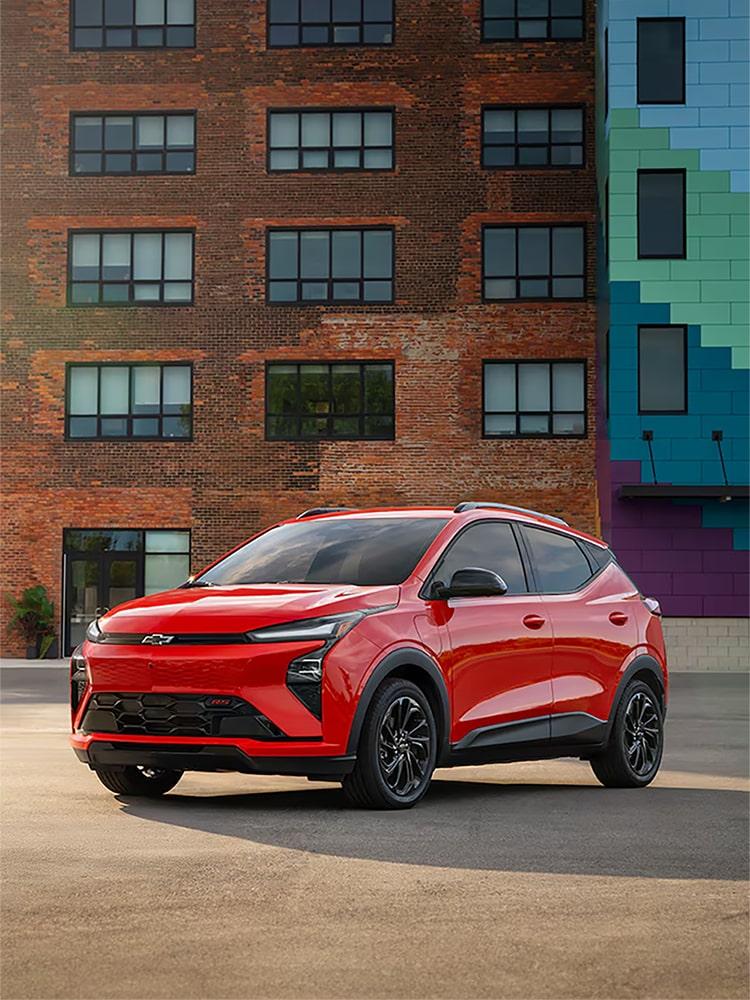
2027 Chevrolet Bolt vs 2026 Nissan LEAF: Canada's Budget EV Fight Gets Serious
The 2027 Chevrolet Bolt and 2026 Nissan LEAF both target affordable-EV shoppers in Canada, but range, charging, pricing clarity, and EVAP eligibility point to different buyers.
Affordable EVs are finally getting interesting again in Canada.
The 2027 Chevrolet Bolt returns with a familiar small-EV footprint, but the business case is very different from the old car. GM Canada says the Bolt LT starts at $39,999 MSRP, offers up to 422 km of GM-estimated range, uses a native North American Charging Standard port, and can DC fast charge from 10 to 80 percent in 25 minutes under GM’s estimate.
The 2026 Nissan LEAF is a much bigger reset than its name suggests. Nissan Canada lists the LEAF S+ with a 75-kWh liquid-cooled battery, 214 hp, up to 488 km of estimated range, and a 35-minute 10-to-80-percent quick-charge estimate using NACS.
That sets up a useful Canadian question: if you want an affordable new EV with real range, do you take the Bolt’s clearer local value play or wait for the LEAF’s stronger range pitch to settle into Canadian transaction pricing?
Quick Verdict
Start with the 2027 Chevrolet Bolt if you want the cleaner Canadian buying story. GM Canada has published the key local numbers: price, range, EVAP context, native NACS, charging speed, and trim positioning. If the exact dealer quote stays EVAP-friendly, the Bolt is the more straightforward affordability play.
Wait on the 2026 Nissan LEAF if range is your top concern and you do not need to sign this week. The LEAF S+ range estimate is stronger, the battery is larger, and the redesign finally moves the LEAF away from the old short-range image. But shoppers still need a written Canadian quote, fees, trim equipment, delivery timing, and incentive eligibility before treating it as the better deal.
The short version: Bolt for price clarity and native NACS simplicity; LEAF for range potential if the Canadian quote lands sharply.
Canada Snapshot
| Item | 2027 Chevrolet Bolt | 2026 Nissan LEAF |
|---|---|---|
| Canadian price clarity | GM Canada lists Bolt LT from $39,999 MSRP; $43,470 with freight and certain fees | Nissan Canada lists specs, but shoppers should confirm final Canadian pricing and fees by province and trim |
| Best listed range | Up to 422 km GM-estimated range | Up to 488 km estimated range for LEAF S+ |
| Battery and output | GM focuses on the X76 drive unit and 210 hp in Canadian retail materials | 75-kWh liquid-cooled battery and 214 hp for S+ |
| Fast charging | Native NACS; GM estimates 10-80% in 25 minutes at up to 150 kW DC | NACS quick charging; Nissan estimates 10-80% in 35 minutes |
| Daily charging | NACS port; confirm home-charger setup and adapter needs before delivery | J1772 for Level 1/2 charging, NACS for quick charging |
| Best buyer | Price-sensitive Canadian shopper who wants a confirmed local EVAP-friendly deal | Range-focused shopper willing to wait for final local transaction math |
The comparison is not as simple as “new Bolt versus new LEAF.” It is price certainty versus range upside.
Chevrolet has already planted the Bolt firmly in the Canadian affordability conversation. Nissan has made the LEAF technically compelling, but the final decision depends on how the Canadian deal sheet looks beside the Bolt after freight, fees, incentives, financing, and dealer availability.
2027 Chevrolet Bolt and 2026 Nissan LEAF gallery
13
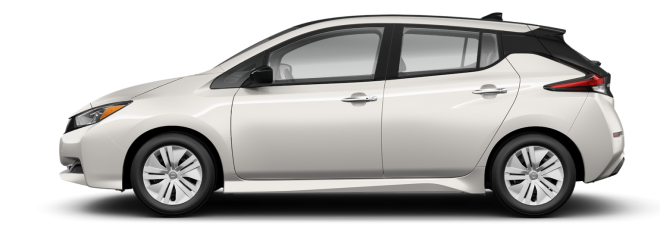
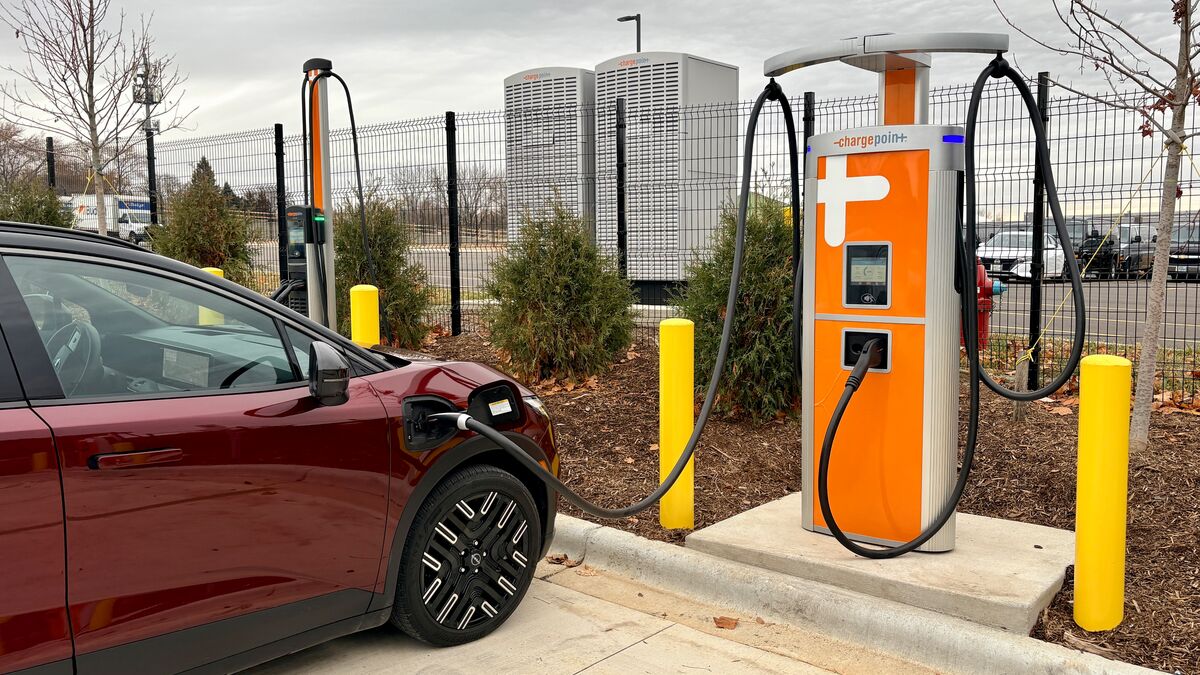
The returning Bolt is the clearer Canadian price story, with GM Canada quoting $39,999 MSRP for the 2027 Bolt LT and up to 422 km of estimated range.
Why The Bolt Is Easier To Recommend First
The Bolt’s strength is that Canadian shoppers can see the outline of the deal.
GM Canada calls the 2027 Bolt Canada’s lowest-priced EV with more than 400 km of estimated range, using industry comparison pricing as of May 25, 2026. The company lists the LT from $39,999 MSRP and says eligible customers on select models configured at $50,000 or less may be able to apply federal EVAP support.
That matters because affordable-EV shopping gets messy quickly. A car can look cheap in a headline and then lose the argument after freight, dealer fees, accessories, financing, and incentive rules. The Bolt does not make those variables disappear, but it gives buyers a clearer starting point.
Native NACS helps too. If you are buying a new EV in 2026, the cleanest ownership story is the one that avoids adapter confusion as much as possible. The Bolt is Chevrolet’s first model with a factory NACS charge port, and GM says it can use DC public fast charging up to 150 kW.
The caution is that the Bolt is still a small EV. It is likely the smarter commuter, second vehicle, urban runabout, or first EV for a household with home charging. It is not the obvious pick for buyers who need crossover cargo space, available all-wheel drive, or a larger family vehicle.
Why The LEAF Still Deserves Attention
The LEAF has one job: prove it is no longer the compromised affordable EV people remember.
The redesign goes a long way. Nissan Canada lists a 75-kWh liquid-cooled battery, up to 488 km of estimated range for the S+ grade, and improved cold- and hot-weather charging development. That liquid-cooling detail matters because older LEAFs carried a reputation for battery-temperature compromises that hurt confidence among used-EV shoppers and road-trippers.
The charging setup is also practical for Canada. Nissan says the LEAF uses NACS for quick charging and J1772 for Level 1 and Level 2 charging. That means a buyer can use a lot of existing home, workplace, condo, and public Level 2 hardware while still moving toward the fast-charging connector North America is standardizing around.
If Nissan Canada prices the LEAF aggressively, it could become the better range-per-dollar answer. A compact EV with up to 488 km of listed range, decent power, liquid thermal management, and modern charging hardware is exactly the kind of car that can make gasoline compact crossovers feel old.
The unresolved piece is the local transaction. Until a shopper has the exact trim, province, freight, fees, dealer accessories, EVAP treatment, and delivery timing in writing, the LEAF is promising rather than settled.
EVAP Could Decide This More Than Horsepower
Both cars sit in the part of the market where incentives can swing the answer.
Canada’s federal Electric Vehicle Affordability Program can make an eligible battery-electric vehicle meaningfully cheaper, but shoppers should not treat a model name as proof that the final deal qualifies. The transaction value, trim, options, dealer participation, lease term, delivery timing, and available program funding can all matter.
That is especially important for the Bolt because GM Canada is already tying its strongest Canadian value story to eligible configurations and EVAP support. It is also important for the LEAF because a small difference in final price can decide whether the longer range is worth waiting for.
Before comparing monthly payments, read the MotorLinks Canadian EV incentive guide, then ask each dealer for the same written details:
- The exact trim and configuration.
- The pre-tax transaction value used for EVAP.
- Which fees, factory options, or required accessories are included in that value.
- Whether the dealer is enrolled and submitting the incentive.
- The lease-term incentive amount if you are not buying or leasing for 48 months or longer.
The best affordable EV is not the one with the best brochure number. It is the one whose signed quote still makes sense.
Which One Should Canadians Shortlist?
Choose the Chevrolet Bolt if your priority list starts with price, clear Canadian availability, native NACS, and easy daily use. It is the cleaner recommendation for commuters, retirees, two-car households, urban drivers, and first-time EV buyers who have home charging or reliable workplace charging.
Choose the Nissan LEAF if range matters more than immediate buying certainty. The LEAF S+ estimate gives it a useful buffer for winter, highway driving, and households that do not want to plug in every night. It also feels like the more complete technical reset, especially with liquid battery cooling and a crossover-style body.
Skip both as your only vehicle if you regularly need big cargo space, three-across family duty, all-wheel-drive confidence, towing, or cottage-trip luggage room. A Chevrolet Equinox EV, Kia EV4 Wind Long Range, Hyundai IONIQ 5, Toyota bZ, Kia EV5, or a strong plug-in hybrid crossover may be a better fit.
Bottom Line
The 2027 Chevrolet Bolt is the budget EV Canadians can evaluate more confidently today. Its published Canadian price, 422-km estimate, native NACS hardware, faster charging claim, and EVAP-friendly positioning give it a clean reason to exist.
The 2026 Nissan LEAF is the one that could make the fight harder. Its 488-km estimate and larger battery make it more appealing for shoppers who want range first, but the Canadian value story needs the final quote to back up the spec sheet.
That is a good problem for buyers. A few years ago, affordable EV shopping often meant accepting obvious range or charging compromises. Now the question is sharper: do you want the cheaper known quantity, or the longer-range challenger whose Canadian price still has to prove itself?
FAQ
Should Canadians buy the 2027 Chevrolet Bolt or the 2026 Nissan LEAF?
Buy the 2027 Chevrolet Bolt if price clarity, native NACS, and a confirmed local deal matter most. Wait on the 2026 Nissan LEAF if you want more listed range and can hold off until Canadian pricing, incentives, and delivery timing are clear.
Which has more range, the Bolt or the LEAF?
GM Canada lists the 2027 Chevrolet Bolt at up to 422 km of GM-estimated range. Nissan Canada lists the 2026 LEAF S+ at up to 488 km of estimated range.
Do both cars use NACS?
Yes, but differently. The 2027 Chevrolet Bolt has a native NACS charge port. Nissan Canada says the 2026 LEAF uses NACS quick charging and a J1772 port for Level 1 and Level 2 charging.
Is the Chevrolet Bolt cheaper than the Nissan LEAF in Canada?
The Bolt is easier to price right now because GM Canada lists the 2027 Bolt LT from $39,999 MSRP. The LEAF’s Canadian value depends on the final trim price, freight, fees, dealer quote, and incentive treatment.