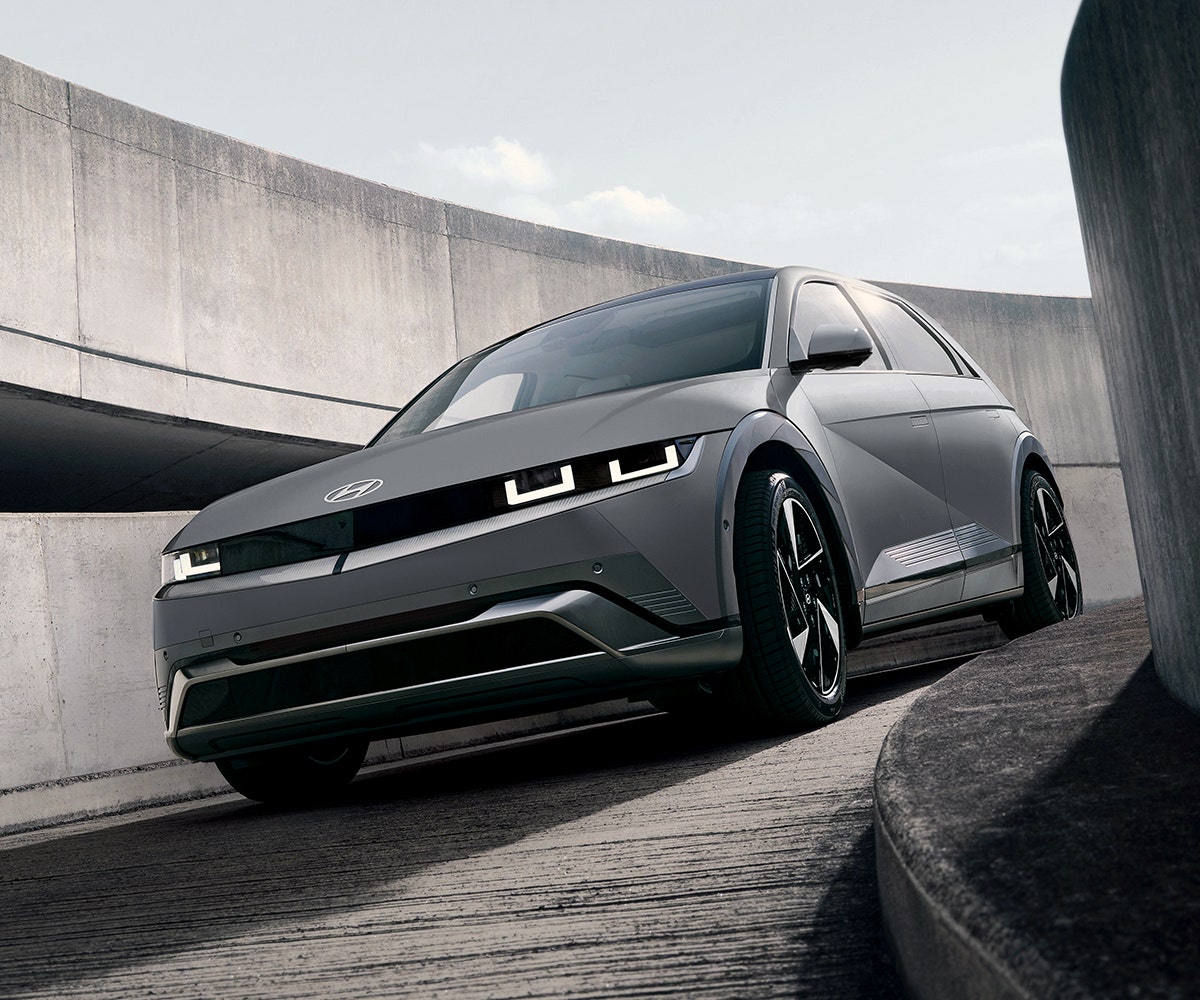
2026 Hyundai IONIQ 5 vs Ford Mustang Mach-E: Range or Faster Charging?
The IONIQ 5 charges faster, while the Mustang Mach-E offers slightly more maximum range and a lower advertised entry price. Here is the Canadian buyer verdict.
The 2026 Hyundai IONIQ 5 and 2026 Ford Mustang Mach-E reach the same destination by very different roads.
Hyundai makes charging speed and cabin space the centre of the IONIQ 5 experience. Ford gives the Mach-E a more conventional cockpit, a broad powertrain menu and a slightly longer maximum range. Both can be ordered with rear- or all-wheel drive, both have heat pumps for Canadian winters, and both offer access to compatible Tesla Superchargers. The way they get that access is different.
This is not a simple win for the car with the biggest battery or the highest range number. The right choice depends on whether a buyer values shorter charging stops, longer distance between stops, or a lower-priced route into the vehicle.
Quick Verdict
Choose the Hyundai IONIQ 5 Preferred Long Range RWD if rapid road-trip charging, a native NACS port and an airy cabin matter most. Its 504-km listed range is only 11 km behind the longest-range Mach-E, while Hyundai estimates approximately 18 minutes from 10 to 80 percent on suitable 350-kW CCS equipment with the included adapter. It is the better long-distance tool when fast, compatible chargers are available along the route.
Choose the Mustang Mach-E Premium extended-range RWD if maximum listed range and a sportier, more conventional driving environment lead the list. Its 515-km rating is the best number in this comparison. Ford also advertises a lower starting price for the Premium trim, although the extended-range battery and drivetrain choices raise the complete quote.
For most road-trip-focused buyers, the IONIQ 5 is the stronger EV because its charging hardware can save more time than an extra 11 km of rated range. The Mach-E is the stronger alternative for drivers who prefer its shape, cockpit and handling character or find a meaningfully better written deal.
| Item | Hyundai IONIQ 5 Preferred Long Range | Ford Mustang Mach-E Premium |
|---|---|---|
| Advertised starting price | $55,499 MSRP before additional fees and tax | $48,590 starting price; extended-range battery and drivetrain options extra |
| Battery | 84 kWh | 73 kWh standard; 88 kWh extended range |
| Longest listed range | 504 km with RWD | 515 km with extended-range RWD |
| Listed AWD range | 463 km | 483 km with extended-range battery |
| Output in comparable long-range AWD form | 320 hp and 446 lb-ft | 370 hp and 500 lb-ft |
| DC charging highlight | About 18 minutes from 10–80% on suitable 350-kW CCS equipment with included adapter | No equivalent 18-minute manufacturer claim on the Canadian model page |
| Charging connector | Native NACS; Hyundai says CCS AC and DC adapters are included | CCS vehicle inlet; Ford lists a NACS fast-charging adapter as optional equipment |
| Cold-weather hardware | Heat pump and battery temperature management | Vapour-injection heat pump |
| Best fit | Fast charging, cabin space and simple long-range choice | Maximum range, broader configuration choice and sportier feel |
2026 Hyundai IONIQ 5 and Ford Mustang Mach-E official gallery
14
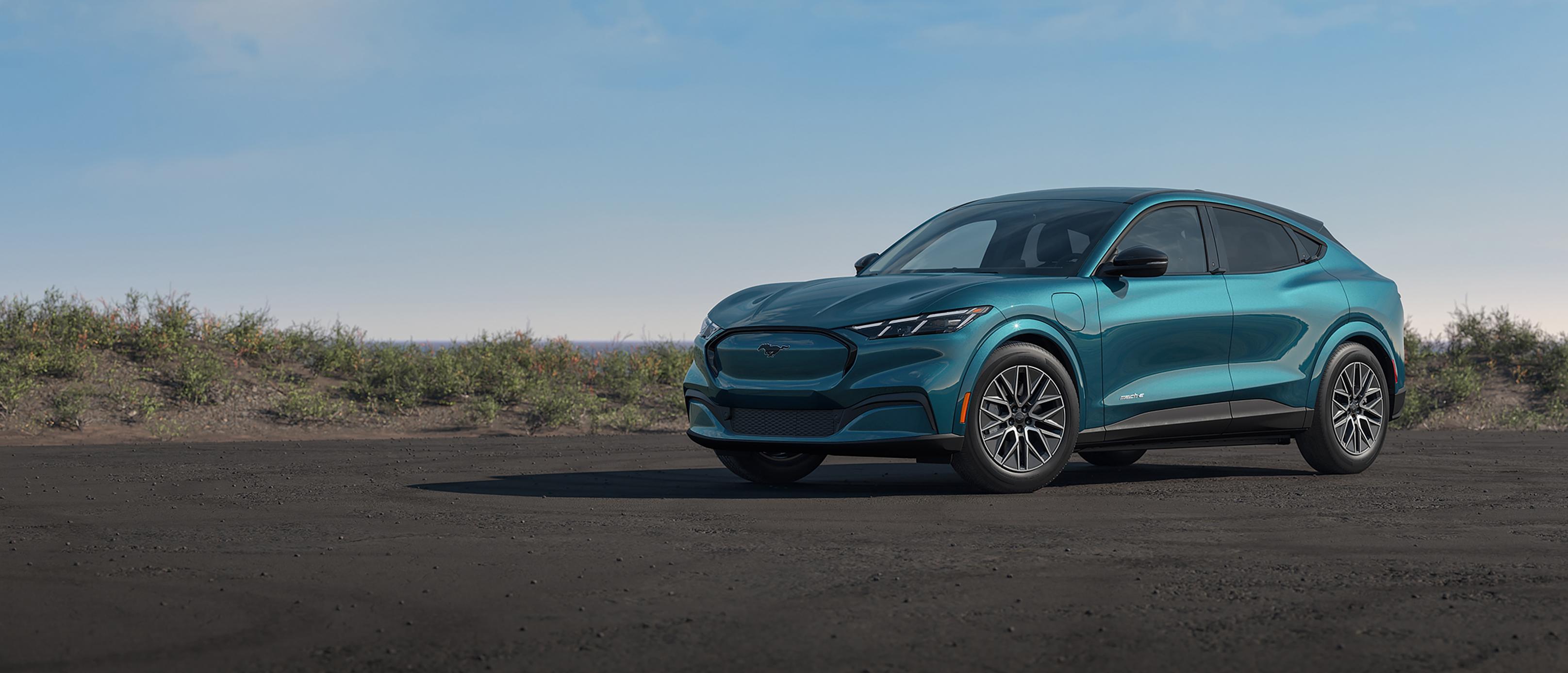
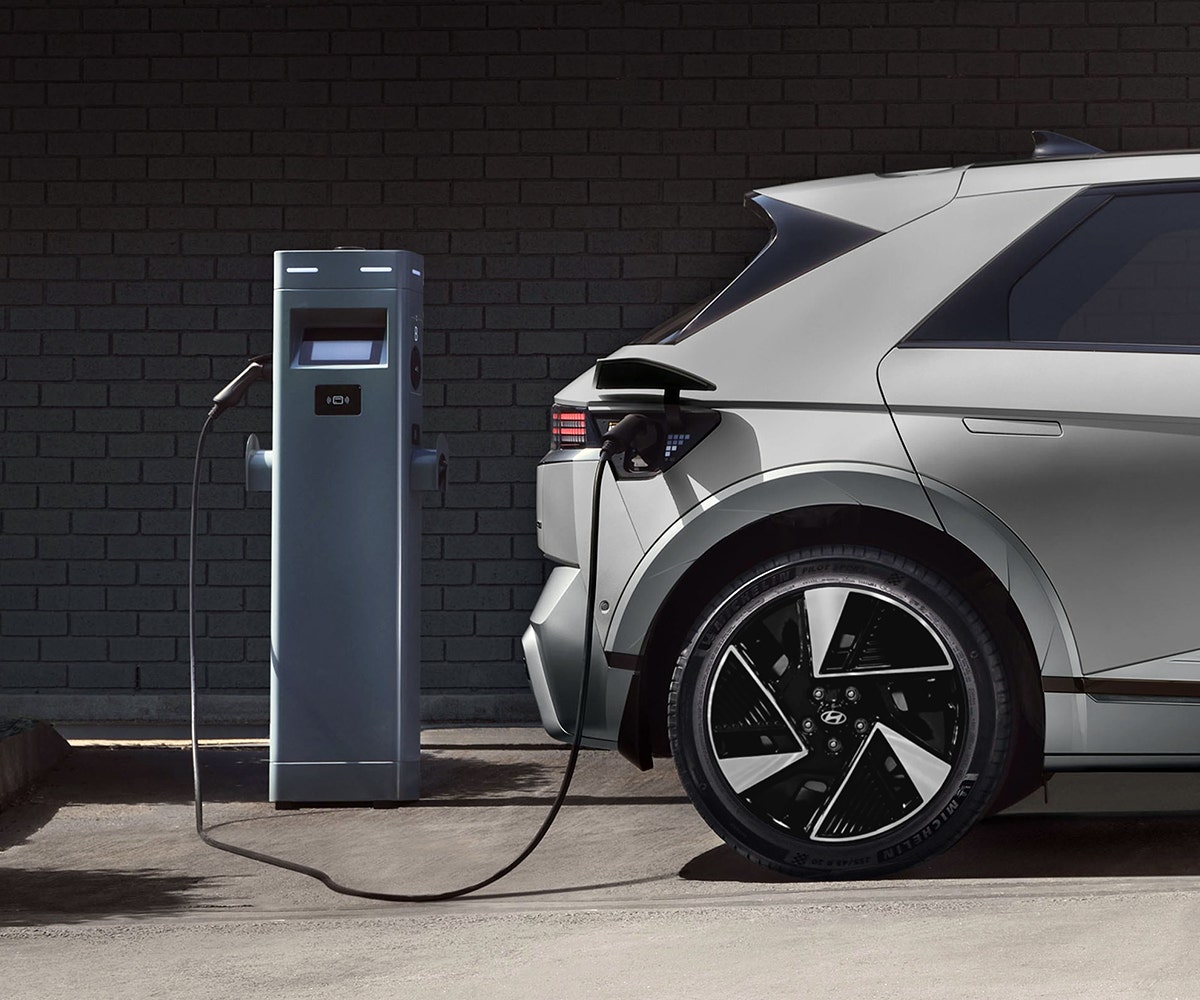
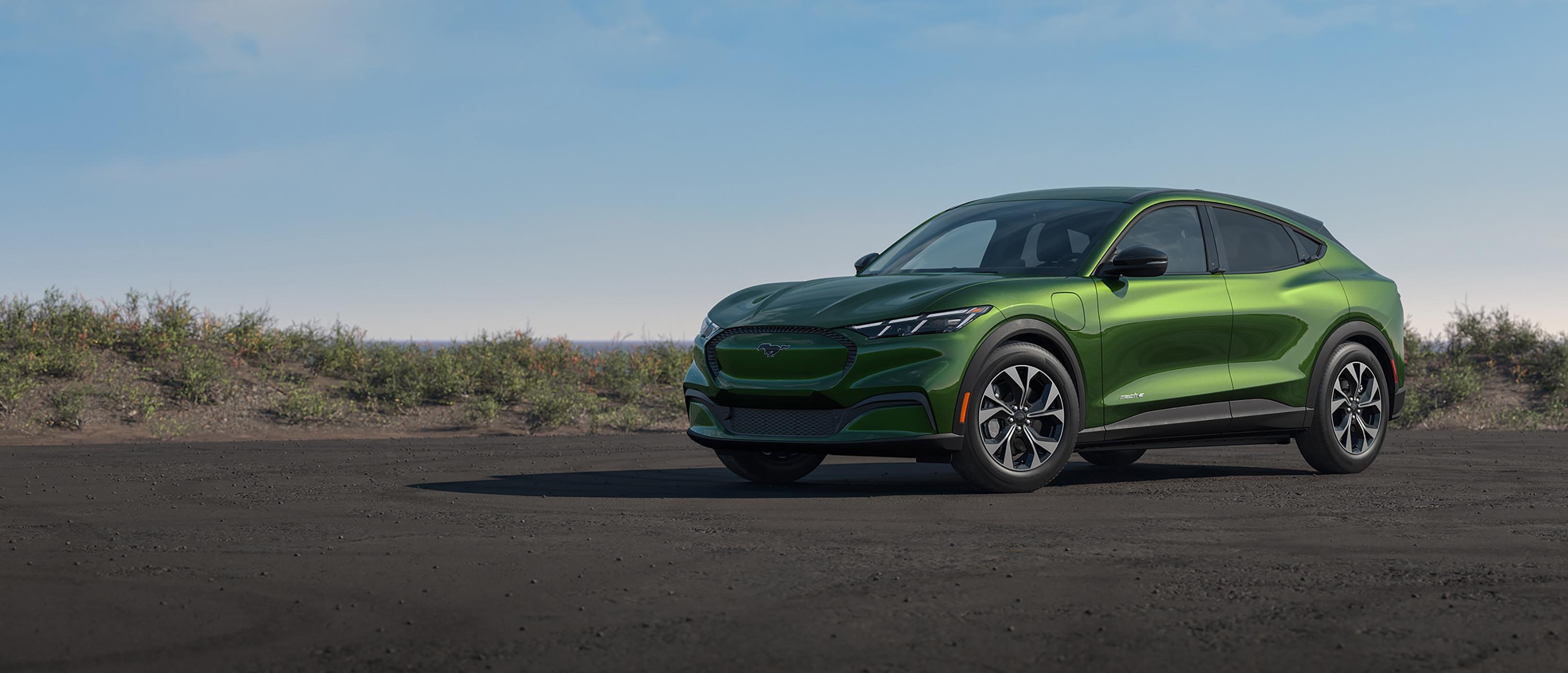
The IONIQ 5 counters its retro-futuristic shape with thoroughly modern 800-volt-class charging hardware and a native NACS port.
Range: Ford Wins the Number, but Not by Much
The longest-range Mach-E Premium combines its 88-kWh extended-range battery with rear-wheel drive for a listed 515 km. The equivalent rear-drive IONIQ 5 Preferred Long Range uses an 84-kWh battery and is listed at 504 km.
An 11-km advantage is too small to decide a purchase by itself. Temperature, speed, wind, tires, elevation and cabin heat can move real-world results by far more than that. Both rear-drive versions offer enough published range for normal commuting and credible regional travel.
The gap grows with all-wheel drive. Ford lists 483 km for an extended-range Mach-E Premium eAWD, while Hyundai lists 463 km for the dual-motor IONIQ 5. The Mach-E also raises output to 370 hp and 500 lb-ft, compared with the Hyundai’s 320 hp and 446 lb-ft.
That makes Ford’s long-range AWD configuration the more muscular spec-sheet choice. Hyundai’s rear-drive model remains the efficiency play, and its 225 hp is entirely adequate for normal merging and passing. Shoppers should resist paying for a second motor simply because Canada has winter. AWD helps the vehicle accelerate on a slippery surface; proper winter tires help it steer and stop.
Charging: The IONIQ 5 Has the Hardware Advantage
The IONIQ 5’s most important advantage appears when the battery is low rather than full. Hyundai uses an 800-volt-class electrical architecture and estimates a 10-to-80-percent charge in approximately 18 minutes on compatible 350-kW DC equipment.
There is a connector wrinkle. The Canadian 2026 IONIQ 5 has a native NACS port, but Hyundai ties its fastest published charging estimate to suitable CCS equipment used through the included DC adapter. Compatible Tesla Superchargers are convenient, yet not every NACS charger can deliver the voltage and charging curve that lets the Hyundai show its best number.
The Mach-E is a 400-volt-class vehicle. Ford gives owners access to compatible Tesla Superchargers through a NACS fast-charging adapter, listed as optional equipment on its Canadian model page. Before delivery, confirm whether the adapter is included with the exact vehicle, which sites support it and how payment is activated.
Connector shape and maximum charging speed are separate questions. The Hyundai has the neater native-NACS setup and the higher charging ceiling, while the Ford’s adapter route still opens a large and useful network. MotorLinks’ native NACS versus adapter guide explains why that distinction matters on the road.
Price: Compare Configurations, Not Headline Figures
Hyundai Canada lists the IONIQ 5 Preferred Long Range RWD at $55,499 MSRP and the AWD version at $57,499 before additional fees and sales tax.
Ford’s Canadian Premium page advertises a $48,590 starting price, but that is not the price of every powertrain shown in this comparison. Moving to the 88-kWh extended-range battery, selecting eAWD and adding packages can materially change the total. A low headline number beside a 515-km range claim does not mean those two figures belong to the same base configuration without options.
The fair comparison is an itemized dealer quote for the exact battery, drivetrain, colour and package combination. Ford may win on transaction price if incentives or inventory discounts are strong. Hyundai may make the complete equipment list easier to understand because the Preferred Long Range decision is primarily RWD versus AWD.
Do not assume either vehicle qualifies for a Canadian purchase incentive based only on its model name. Eligibility can depend on final transaction value, buyer, lease term, delivery date, dealer participation and available program funding. Check the current Canadian EV incentive and affordability guide, then make the dealer identify any claimed incentive on the written agreement.
Cabin and Daily Use: Airy Lounge or Driver-Focused Cockpit?
The IONIQ 5 has the more unusual proportions. Its long wheelbase, flat floor and sliding rear seat create a cabin that feels larger than the exterior footprint suggests. Dual 12.3-inch displays keep essential information in front of the driver, while wireless Apple CarPlay and Android Auto cover familiar phone integration.
The Mach-E wraps its cabin more tightly around the driver. A 15.5-inch portrait centre screen dominates the dashboard, backed by a separate 10.2-inch cluster. Ford lists 840 litres of cargo space behind the rear seat and a 73-litre front trunk, useful numbers for a five-seat family crossover.
Neither layout is objectively better. The Hyundai feels open and lounge-like; the Ford feels more like a conventional sporty crossover with an oversized centre display. Anyone deciding between them should sit in the rear seat, load the stroller or hockey bags they actually carry and test the screen workflows before discussing horsepower.
Winter: Both Have the Right Starting Equipment
Hyundai equips the Preferred Long Range with a heat pump and battery temperature management. Ford lists a vapour-injection heat pump across the 2026 Mach-E range. Those systems help, but neither vehicle can ignore Canadian winter physics.
Cold air is denser, cabin heat uses energy, winter tires add rolling resistance and a cold battery may charge more slowly until it reaches a suitable temperature. The published range figures should be treated as comparison points, not promises for a windy February highway run.
For most southern-Canadian drivers on well-cleared roads, either rear-drive version with high-quality winter tires is a credible setup. Choose AWD when steep driveways, rural roads, ski routes or frequent unplowed conditions make the extra traction useful. In both cases, budget for tires and home charging before stretching for a performance package.
Which One Should Canadians Buy?
Buy the IONIQ 5 Preferred Long Range RWD if:
- fast-charging stops matter more than the last 11 km of listed range
- a native NACS inlet and included CCS adapters simplify the charging plan
- an open cabin and sliding rear seat suit the household
- 504 km covers normal travel without paying the AWD range penalty
Buy the Mach-E Premium extended-range RWD if:
- the longest listed range is the priority
- a more driver-focused cockpit and sportier character appeal
- Ford’s inventory or financing produces the better complete written quote
- adapter-based Supercharger access is acceptable
Choose either long-range AWD version when extra traction solves a route you can name. Ford offers 20 km more listed AWD range and stronger output; Hyundai counters with the faster peak charging case.
The final verdict goes to the IONIQ 5 for buyers who regularly road-trip. Its 800-volt-class charging system is a benefit that can be felt at every suitable fast-charging stop. The Mach-E remains compelling because it travels slightly farther on a full battery, offers more configuration choice and may cost less depending on the deal. This is close enough that a strong quote and a comfortable test sit can reasonably overturn the spec-sheet result.
FAQ
Should Canadians buy the IONIQ 5 or Mustang Mach-E?
Choose the IONIQ 5 for faster peak charging, a native NACS port and an airy cabin. Choose the Mach-E for slightly more maximum range, broader configuration choice and a more conventional sporty cockpit.
Which has more range?
The longest-range Mach-E Premium is listed at 515 km, 11 km more than the 504-km IONIQ 5 Preferred Long Range RWD. In AWD form, Ford lists 483 km and Hyundai lists 463 km.
Which charges faster?
The IONIQ 5 has the stronger peak charging specification. Hyundai estimates about 18 minutes from 10 to 80 percent on suitable 350-kW CCS equipment using the included adapter. Actual results depend on the charger, temperature and starting charge.
Do both vehicles have heat pumps?
Yes. Hyundai lists a heat pump on the IONIQ 5 Preferred Long Range, and Ford lists a vapour-injection heat pump across the 2026 Mach-E lineup.
Sources
- Hyundai Canada: 2026 IONIQ 5 overview, charging and pricing
- Hyundai Canada: 2026 IONIQ 5 specifications
- Ford Canada: 2026 Mustang Mach-E range, battery and power specifications
- Ford Canada: 2026 Mustang Mach-E Premium