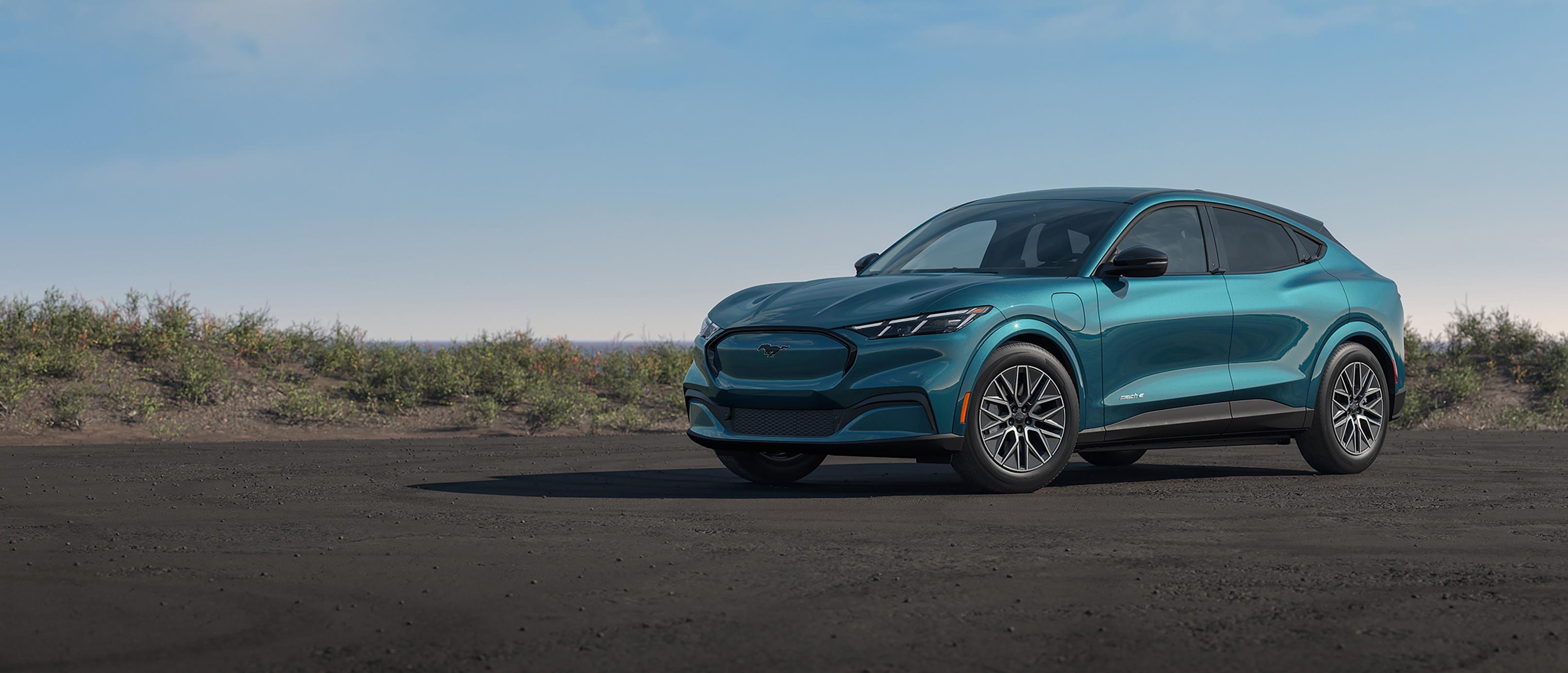
2026 Ford Mustang Mach-E Trim Guide: Premium Is the Smart Canadian Pick
The 2026 Ford Mustang Mach-E spans Select, Premium, GT and Rally trims. Premium is the best all-rounder, while Select is the value play.
The 2026 Ford Mustang Mach-E presents a more complicated choice than its four trim names suggest. Select and Premium can each be configured with different batteries and drivetrains, while GT and Rally use their own 91-kWh performance setup. The result is a lineup stretching from a sensible rear-drive commuter to a 480-hp electric crossover built to play on loose surfaces.
There is a clear centre to that range. The Premium costs only modestly more than Select before powertrain options, adds equipment Canadians will use every day and unlocks the longest-range Mach-E configuration. GT is properly quick, and Rally is the most distinctive version, but neither is the rational answer for a buyer primarily concerned with range and value.
Quick Verdict
Choose the Mustang Mach-E Premium for the best balance. It offers the broadest powertrain choice, more cabin comfort than Select and up to 515 km of listed range with the 88-kWh extended-range battery and rear-wheel drive. For Canadian buyers who want all-wheel drive, the extended-range Premium is rated at 483 km and produces 370 hp.
Choose Select when the lowest purchase price matters more than luxury equipment. Its standard 73-kWh battery and rear-wheel drive deliver 264 hp and a listed 406 km. It can also be configured with all-wheel drive and the larger battery, so the entry trim is not automatically the short-range trim.
The GT is the road-performance choice. The Rally is for shoppers who specifically want MagneRide suspension, underbody protection and RallySport mode. Both are enthusiast variants, not better answers to the everyday EV question.
| Item | Select | Premium | GT | Rally |
|---|---|---|---|---|
| Ford configurator starting price | $45,778 | $47,638 | $62,878 | $67,993 |
| Battery choices | 73 or 88 kWh | 73 or 88 kWh | 91 kWh usable | 91 kWh usable |
| Drivetrain | RWD or eAWD | RWD or eAWD | eAWD | eAWD |
| Longest listed range | 483 km | 515 km | 451 km | 410 km |
| Output range | 264–370 hp | 264–370 hp | 480 hp | 480 hp |
| Quickest listed 0–100 km/h | 4.4 sec | 4.4 sec | 3.5 sec with upgrade | 3.6 sec |
| Wheels | 19-inch | 19-inch | 20-inch | 19-inch |
| Best for | Lowest entry cost | Range and daily comfort | Road performance | Loose-surface fun |
2026 Ford Mustang Mach-E Canadian trim gallery
14
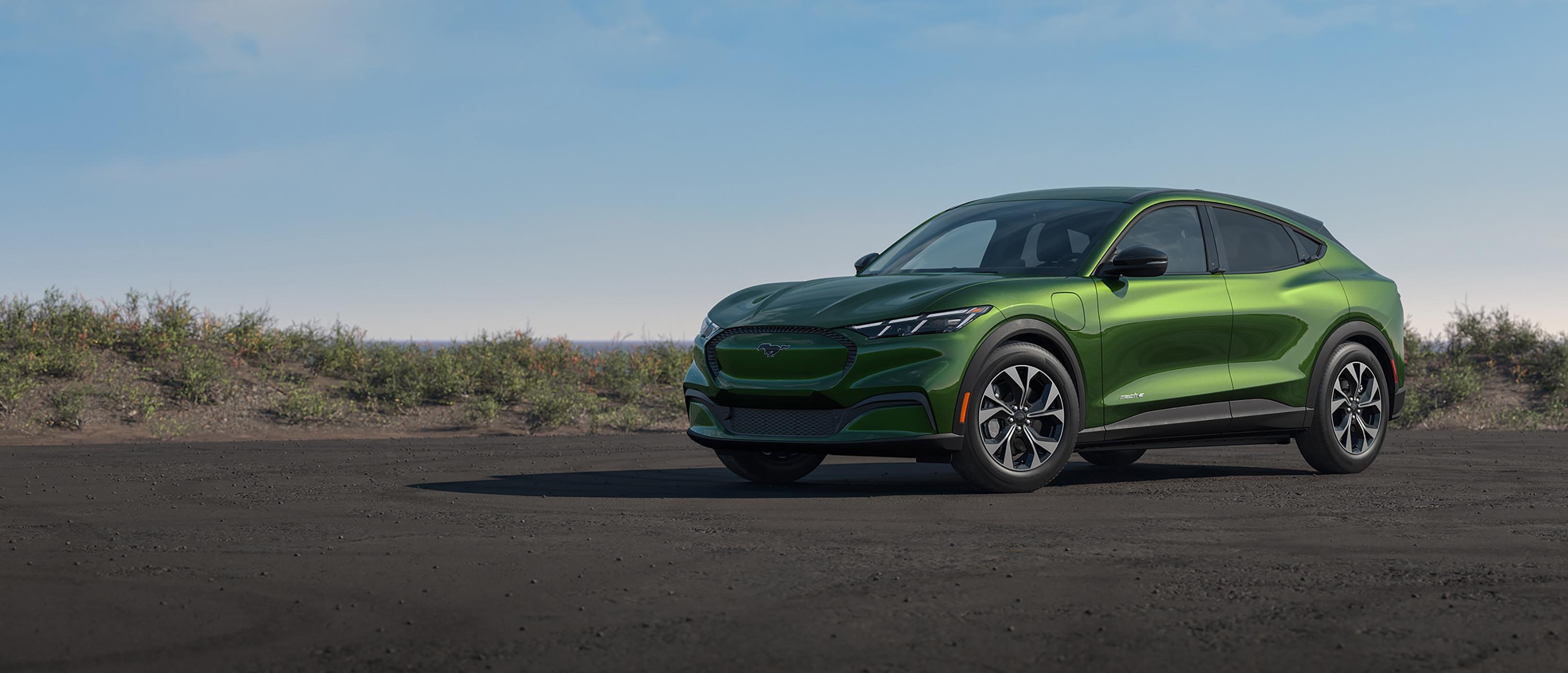
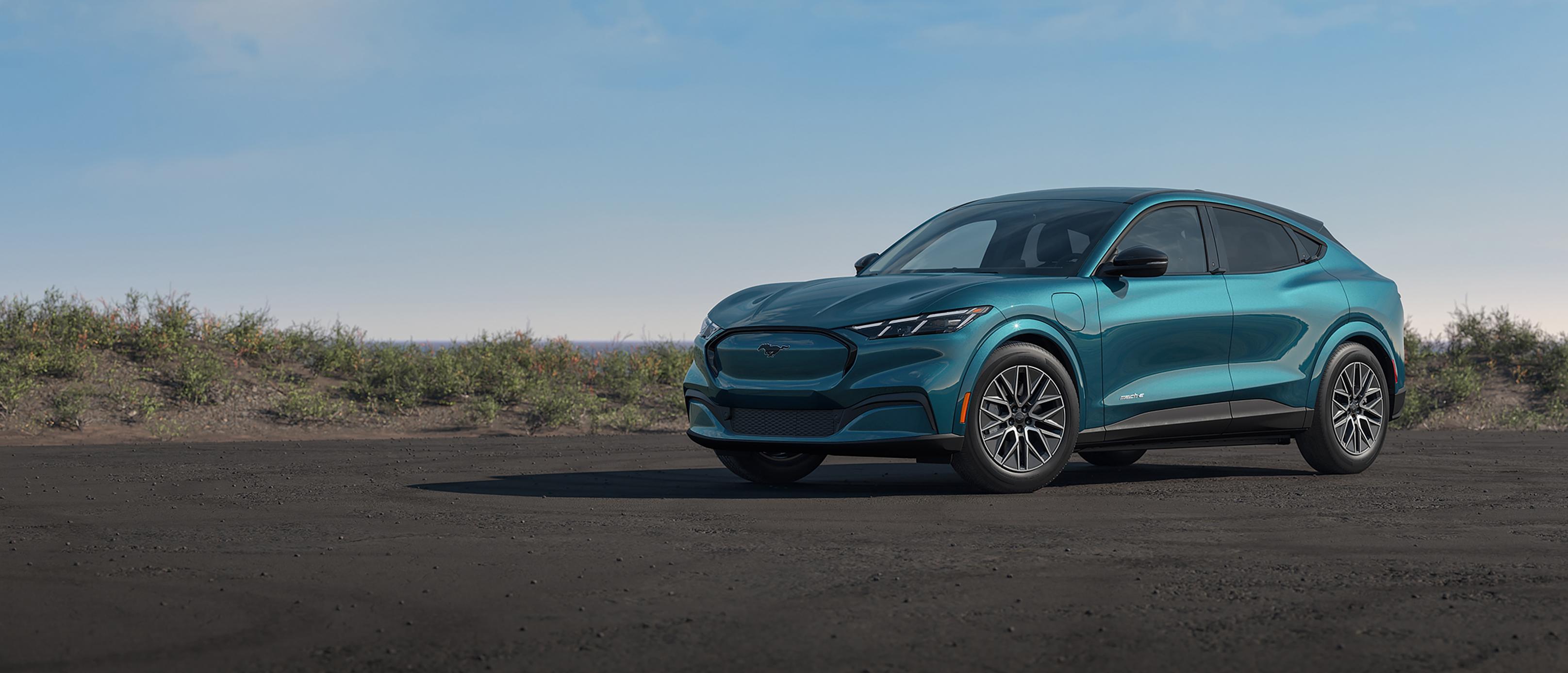
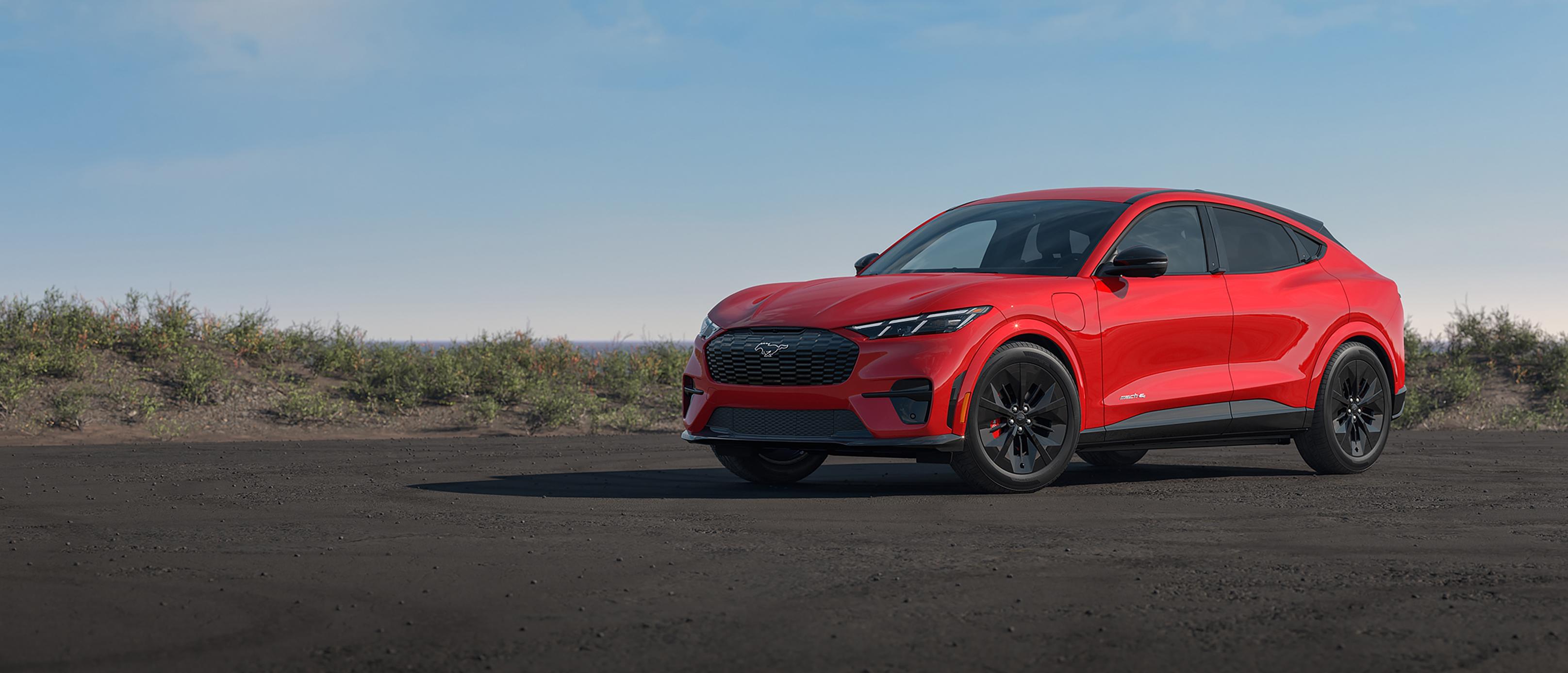
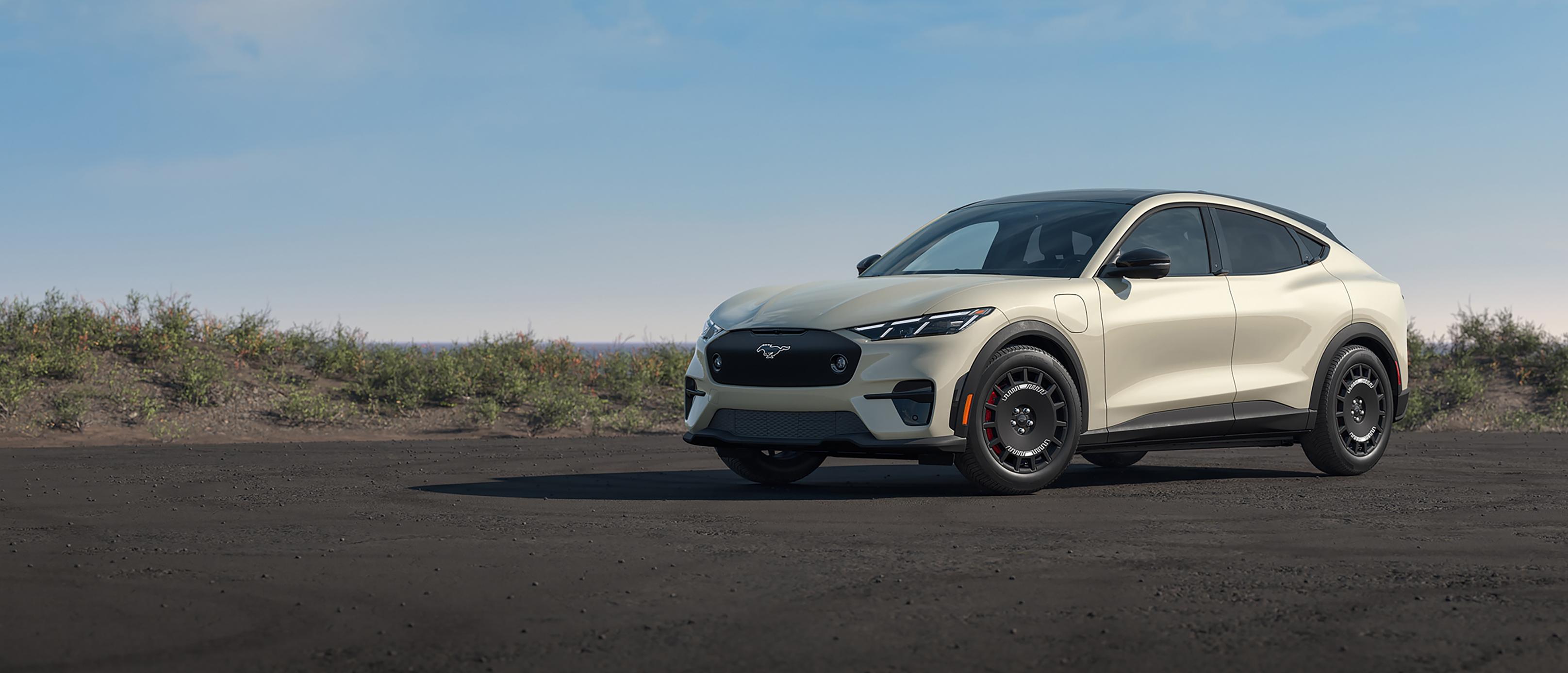
The Select is the value trim, with a 73-kWh battery and rear-wheel drive as its simplest configuration.
Ford’s Canadian configurator displayed those starting prices when checked on August 11. They are useful for showing the spacing between trims, but they are not complete drive-away quotes. Battery and drivetrain upgrades, freight, tax, dealer pricing and changing offers can move the final number. Get an itemized quote for the exact vehicle rather than comparing only the four headline figures.
Select: The Value Choice Is Not a Penalty Box
The Select begins with the 73-kWh standard-range battery, rear-wheel drive and 264 hp. Ford lists that combination at 406 km, enough for a broad range of commuting and regional travel if charging is available at home. It also carries 387 lb-ft of torque and reaches 100 km/h in 5.9 seconds, so the basic Mach-E is hardly sluggish.
Select becomes more interesting because Ford does not lock it to the base powertrain. A standard-range eAWD configuration makes 325 hp and 500 lb-ft, cutting the 0-to-100-km/h time to 4.9 seconds, although range falls to 380 km. The extended-range eAWD version combines an 88-kWh battery, 370 hp and 483 km of range.
That gives value-oriented buyers three different ways to build the same trim. The rear-drive standard-range model is the simple city-and-commute answer. Standard-range eAWD prioritizes traction and acceleration over distance. Extended-range eAWD is the road-trip configuration, though its option price can narrow the gap to a similarly equipped Premium.
Standard equipment includes a 15.5-inch centre screen with SYNC 4A, wireless Apple CarPlay and Android Auto, ActiveX seating, a power driver’s seat, dual-zone climate control and 19-inch wheels. The 2026 model also has Ford’s vapour-injection heat pump, an important piece of hardware in a Canadian EV because heating the cabin can otherwise consume a meaningful share of winter energy.
The compromises are visible in the convenience list. A power liftgate, heated front seats, heated steering wheel, driver memory and a 360-degree camera depend on packages or moving up the range. If adding those items to Select brings its quote close to Premium, stop and compare the two complete builds rather than assuming the lower trim remains the bargain.
Premium: The Best Range and the Best Balance
Premium is the sweet spot because it expands both ends of the Mach-E experience. It offers the same standard-range choices as Select while also making the lineup’s most efficient long-distance configuration possible: 88-kWh extended-range battery with rear-wheel drive, rated at 515 km.
That 515-km figure is 32 km better than the extended-range eAWD setup. The rear-drive model also avoids the mass and energy draw of a second motor. Buyers with predictable urban snow clearing and good winter tires may reasonably prefer that extra range to all-wheel drive.
Extended-range eAWD remains the more conventional Canadian selection. Its 483-km rating, 370 hp, 500 lb-ft and 4.4-second sprint provide a strong combination of winter traction, passing power and road-trip buffer. The standard-range eAWD version is available too, but its 380-km rating is the hardest configuration to justify when the larger battery fits the budget.
Premium adds the comfort features that make the price step from Select easier to defend: heated and ventilated front seats, a heated steering wheel, driver memory, power-folding mirrors, a B&O sound system and a more flexible package structure. Ford lists a 90-day BlueCruise trial as standard, with longer access requiring a plan or one-time purchase. Buyers should treat the subscription decision separately from the vehicle itself.
The practical recommendation is to compare two Premium quotes: standard-range RWD for value and extended-range eAWD for maximum all-weather versatility. The 515-km extended-range RWD model is the range champion, but its final option price determines whether the extra distance is worth paying for.
GT: Buy It for Performance, Not the Badge Alone
The GT changes the character of the Mach-E. Its dual-motor system produces 480 hp and 600 lb-ft in standard form, while the available Performance Upgrade raises torque to 700 lb-ft and cuts the 0-to-100-km/h time from 4.0 to 3.5 seconds.
Ford pairs that output with a 91-kWh usable battery, 20-inch wheels, Brembo front brakes, Ford Performance front seats and an available MagneRide damping system. A Technology Package with the 360-degree camera and longer BlueCruise access is standard equipment on GT, as is the 10-speaker B&O system.
Its 451-km range is respectable for a performance EV and 41 km better than Rally. It still gives up 64 km to the longest-range Premium, while the wider 20-inch tires will generally cost more to replace than the 19-inch sets on Select and Premium.
The key question is whether the extra acceleration and chassis hardware will be enjoyed often enough to justify the price jump. A Premium extended-range eAWD already has 370 hp and reaches 100 km/h in 4.4 seconds. GT makes sense for the buyer who specifically wants a faster, sharper Mach-E—not for someone merely trying to avoid the entry badge.
Rally: The Specialist With the Clearest Mission
Rally is easier to understand than GT because its purpose is so specific. It uses the 480-hp, 700-lb-ft performance powertrain, but adds RallySport mode, rally-tuned MagneRide suspension, underbody protection, integrated fog lamps and 19-inch wheels wearing Michelin CrossClimate2 tires.
Those changes are intended to make the car more controllable and durable on gravel and other loose surfaces. The 19-inch tire package also provides more sidewall than GT’s 20-inch setup. Rally is not a conventional off-roader—it remains a low, road-based electric crossover—but its hardware goes beyond an appearance package.
The cost is efficiency. Ford lists 410 km of range, the lowest maximum in the 2026 lineup, and a 3.6-second 0-to-100-km/h time. That is still plenty of distance for many owners, yet the 105-km gap to the longest-range Premium is impossible to ignore on remote winter routes.
Buy Rally because gravel-road handling, its distinctive stance and the complete 700-lb-ft powertrain are the point. If the vehicle will spend its life on pavement, GT offers more range and Premium makes the stronger everyday case.
Charging and NACS: Check the Connector Details
The 2026 Mach-E remains a 400-volt-class EV, so it does not deliver the ultra-short 10-to-80-percent sessions available from the quickest 800-volt Hyundai and Kia products. Ford’s strength is a large integrated public-charging network and access to compatible Tesla Superchargers through a NACS fast-charging adapter.
That distinction matters: adapter access is not the same thing as a native NACS inlet. Ford lists the fast-charging adapter as optional equipment on the 2026 model pages. Before signing, confirm whether the exact vehicle includes the adapter, which Superchargers are compatible and how charging is activated in the Ford app. MotorLinks’ native NACS versus adapter guide covers the practical differences.
For home charging, Ford lists roughly 7.7 to 7.8 hours from empty for the 73-kWh battery using a 48-amp, 240-volt charger. The extended-range pack takes longer, but most owners will refill only the energy used that day. A correctly sized home circuit matters more to daily convenience than chasing the maximum public DC number.
The standard heat pump is also relevant to charging planning. It can reduce the energy required to warm the cabin compared with resistance heat alone, but it cannot eliminate winter range loss. Cold batteries, highway speed, snow, wind and cabin temperature still matter, so plan long winter legs against real conditions rather than the official mixed-driving figure.
Which Mach-E Should Canadians Buy?
The Premium extended-range eAWD is the easiest all-round recommendation. Its 483-km rating provides a healthy travel buffer, while 370 hp and all-wheel drive make it quick and winter-friendly. The added comfort equipment also suits a vehicle likely to serve as a household’s primary car.
For maximum range, choose Premium extended-range RWD and its 515-km rating. Rear-wheel drive with proper winter tires can be a sensible southern-Canadian setup, especially for drivers whose roads are cleared promptly. For the lowest entry cost, the standard-range Select RWD keeps the core Mach-E experience and 406 km of listed range.
Shoppers looking at a low-priced configuration should check MotorLinks’ Canadian EV incentive guide. Program rules depend on the final transaction rather than a model’s headline starting price, and options can move a build across an eligibility threshold.
GT and Rally are emotional decisions, and that is their appeal. GT is the quicker road car; Rally is the more playful loose-surface specialist. Neither makes Premium less convincing as the trim for most people.
FAQ
Which 2026 Ford Mustang Mach-E trim is best for Canadian buyers?
The Premium is the best all-rounder. It offers rear- or all-wheel drive, a 73- or 88-kWh battery, meaningful comfort upgrades and the lineup’s longest-range 515-km configuration.
Which 2026 Mustang Mach-E has the longest range?
The Premium extended-range RWD has the longest listed range at 515 km. Extended-range eAWD Select and Premium models are rated at 483 km.
Does the 2026 Mustang Mach-E have a heat pump?
Yes. Ford lists a vapour-injection heat pump across the 2026 lineup. It is useful for cold-weather cabin heating, although winter conditions still reduce real-world range.
Can the 2026 Mustang Mach-E use Tesla Superchargers?
It can use compatible Tesla Superchargers with Ford’s NACS fast-charging adapter and the required account setup. Confirm adapter inclusion and current charger compatibility for the exact vehicle before delivery.