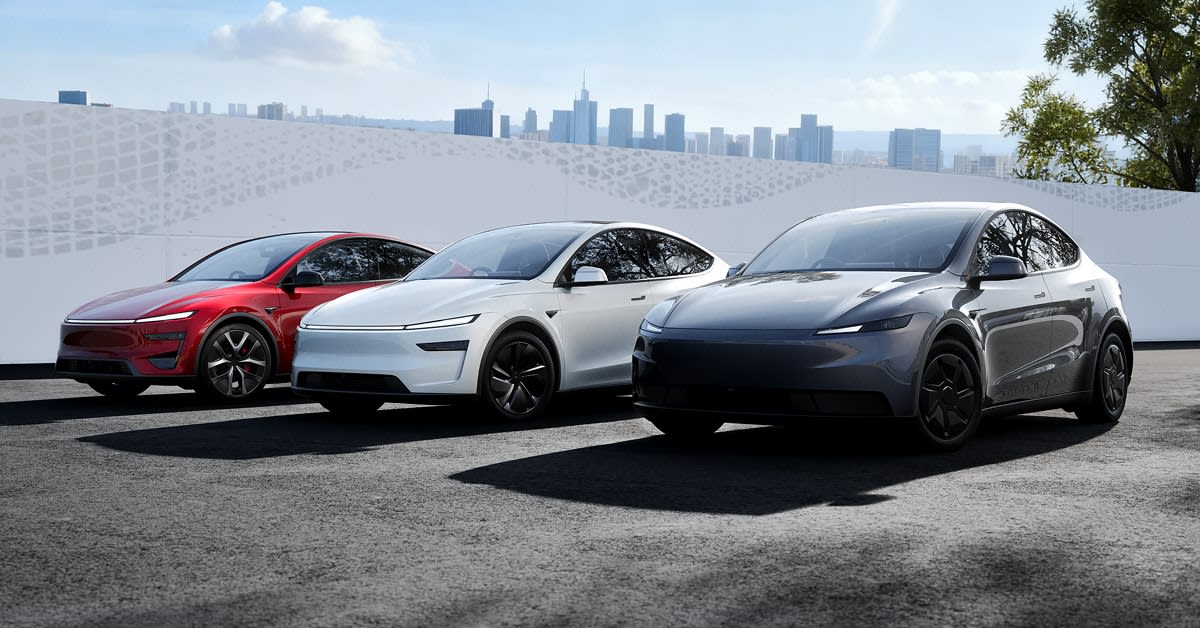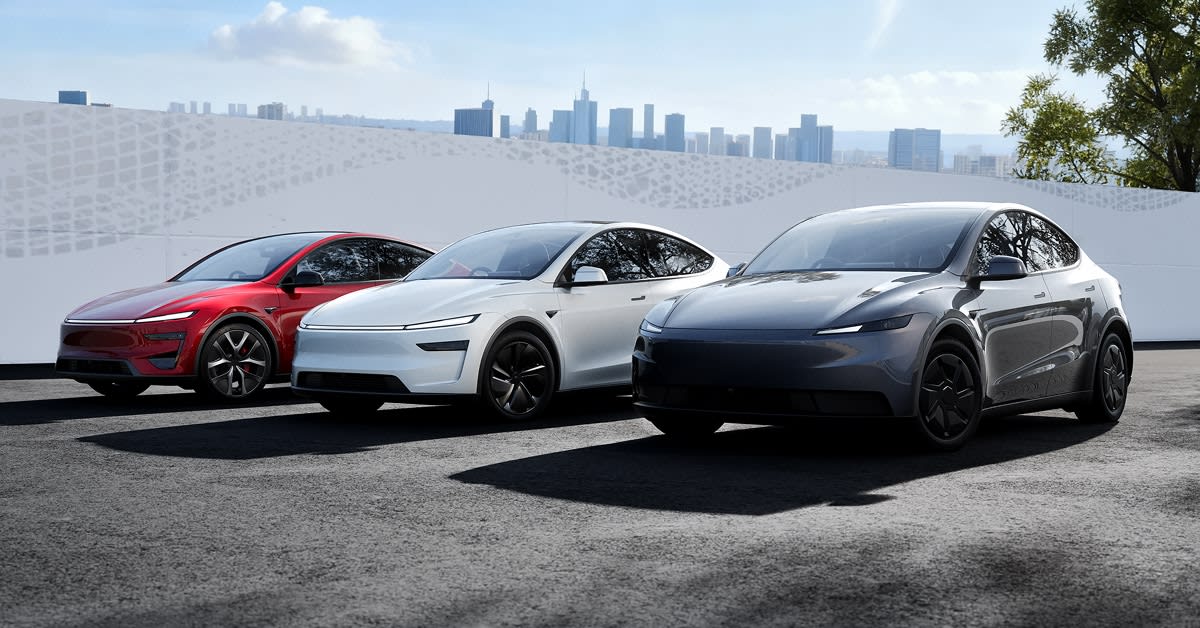
Tesla Model Y vs. Ford Mustang Mach-E: The Mainstream EV SUV Showdown
The two best-selling electric SUVs in America go head-to-head in our comprehensive comparison: range, charging, tech, driving dynamics, and real-world ownership costs.
The Tesla Model Y has been the best-selling electric vehicle in the United States for two consecutive years. The Ford Mustang Mach-E has been the best-selling electric vehicle from a legacy automaker for most of that same period. They start within $2,000 of each other, they have similar range and performance, and as of late 2025, they charge at the same network.
This is the comparison that matters for most mainstream EV buyers — and after driving both back-to-back over 600 miles, here’s the breakdown.
Side-by-Side Specifications
| Ford Mustang Mach-E Select RWD | $39,840 | 300 | — | 264 |
| Tesla Model Y RWD | $44,990 | 321 | 3,500 | 295 |
| Ford Mustang Mach-E Extended Range RWD | $47,495 | 320 | — | 325 |
| Tesla Model Y Long Range AWD | $51,000 | 327 | 3,500 | 375 |
| Tesla Model Y Performance AWD | $52,490 | 303 | 3,500 | 460 |
| Ford Mustang Mach-E GT AWD | $58,500 | 260 | — | 480 |
Pricing and Trims
Tesla Model Y (2025): Starting at $44,990 (before destination), the Model Y Long Range RWD starts there. The Dual-Motor AWD starts at $49,990, and the Performance AWD starts at $52,490. After the federal EV tax credit’s expiration in September 2025, no Model Y variant qualifies — meaning no $7,500 credit for buyers.
Ford Mustang Mach-E (2025): Starting at $42,495 for the Select RWD, with the Extended Range RWD at $47,495, the Extended Range AWD at $52,495, and the GT AWD at $58,495. The Extended Range RWD and AWD versions with LFP batteries may qualify for partial credit depending on battery sourcing.
At current pricing, the Mach-E undercuts the equivalent Model Y by roughly $2,500-$3,000 depending on configuration.
Range and Efficiency
The Tesla Model Y Long Range delivers an EPA-estimated 330 miles of range in RWD form and 318 miles in AWD. The Performance AWD comes in at 303 miles. In real-world mixed driving at 70 mph on the highway, expect 270-290 miles from the Long Range AWD.
The Ford Mustang Mach-E Extended Range RWD is EPA-rated at 310 miles, dropping to 290 miles for the Extended Range AWD. The GT AWD manages 260 miles. In real-world testing, the Mach-E Extended Range RWD delivers 265-280 miles in similar conditions.
Both are practical for long-distance travel, but the Model Y’s range advantage — roughly 20-40 miles depending on configuration — is meaningful on longer routes.
Charging
This comparison has been transformed by NACS. Both vehicles now charge at Tesla Superchargers, eliminating the Model Y’s previous advantage in network quality. Tesla’s V3 stalls deliver 150 kW to the Mach-E (pegged to the vehicle’s DC charging acceptance) and up to 250 kW to the Model Y.
On 800V-class architecture vehicles: neither the base Model Y nor the Mach-E uses 800V — both are 400V systems. The Hyundai IONIQ 5 and Kia EV6 have a genuine advantage here for ultra-fast charging stops. That said, both Tesla and Ford have optimized their thermal management to sustain high-speed charging better than most CCS-era vehicles.
Home charging: the Mach-E comes with the Ford Mobile Charger (120V/240V) as standard, with an optional Connected Charge Station (48-amp Level 2) available for $795 installed. The Model Y comes with the Mobile Connector (120V/240V) but the Wall Connector is $475.
Technology and Infotainment
The Model Y continues to use the single central touchscreen — 15.4 inches — for virtually all vehicle controls. No instrument cluster. No head-up display. Everything through the screen. Tesla’s software is genuinely class-leading: the navigation with Supercharger integration, the real-time traffic-aware routing, over-the-air update cadence, and the Tesla app experience are all best-in-class. But the complete absence of CarPlay and Android Auto remains a significant omission for buyers who want their phone’s interface mirrored.
The Mustang Mach-E uses Ford’s SYNC 4A system on a 15.5-inch touchscreen, with wireless CarPlay and Android Auto standard. The instrument cluster is a separate 10.2-inch display behind the steering wheel. Ford’s BlueCruise hands-free driving assist (available on the Mach-E for $2,400) is competitive with Tesla’s Autopilot on divided highways, though FSD remains Tesla’s differentiator.
Both vehicles offer regular over-the-air software updates, though Tesla’s frequency and breadth of updates — including functional improvements — exceed what Ford provides.
Driving Dynamics
The Model Y is fast and composed. The Performance AWD version hits 60 mph in 4.2 seconds and feels planted at speed. The steering is precise but heavily assisted, and the regenerative braking calibration in “Hold” mode is the benchmark for one-pedal driving. The ride is firm — more sports sedan than cushioned SUV.
The Mach-E feels more like a traditional driver-focused vehicle. The GT Performance Edition, in particular, delivers 480 hp and 700 lb-ft of torque (in overboost), hitting 60 mph in 3.5 seconds — genuinely faster than the Model Y Performance. The chassis tuning from Ford’s performance team shows; the Mach-E is more playful than the Tesla, with better-weighted steering and more body control in corners.
Neither is as practical as the Model Y for interior packaging — the Tesla’s lower floor and higher roofline give it more rear passenger and cargo space.
The Verdict
Choose the Model Y if: You want the longest range, the most refined charging network experience, and you don’t need CarPlay. The software ecosystem — navigation, app, and updates — is the best in the business.
Choose the Mustang Mach-E if: You prefer Apple CarPlay, want more driving engagement, or simply prefer buying from a brand with a traditional dealer service network. The value proposition is strong, particularly in the Extended Range RWD trim.
Both are genuinely good vehicles. The EV market has matured to the point where neither is obviously wrong.
We think you might be interested in…
Tesla Wall Connector (NACS, 44 mi/hr, 48A) — NACS plug, up to 48 amps, WiFi-enabled scheduling. Works with any NACS EV (Amazon)
Lectron J1772-to-NACS Adapter — J1772-to-NACS adapter enabling non-Tesla EVs to charge at Tesla Level 2 equipment. (Amazon)
Fanttik Slim V8 APEX Car Vacuum — Compact car vacuum with strong suction for keeping your vehicle’s interior clean. (Amazon)
We may earn a small commission from qualifying purchases.
Motorlinks has tested and reviewed both vehicles in depth. See our Ford Mustang Mach-E long-term review and Tesla Model S/X refresh comparison for more.
Recommended Products
MotorLinks may earn a commission from qualifying purchases.