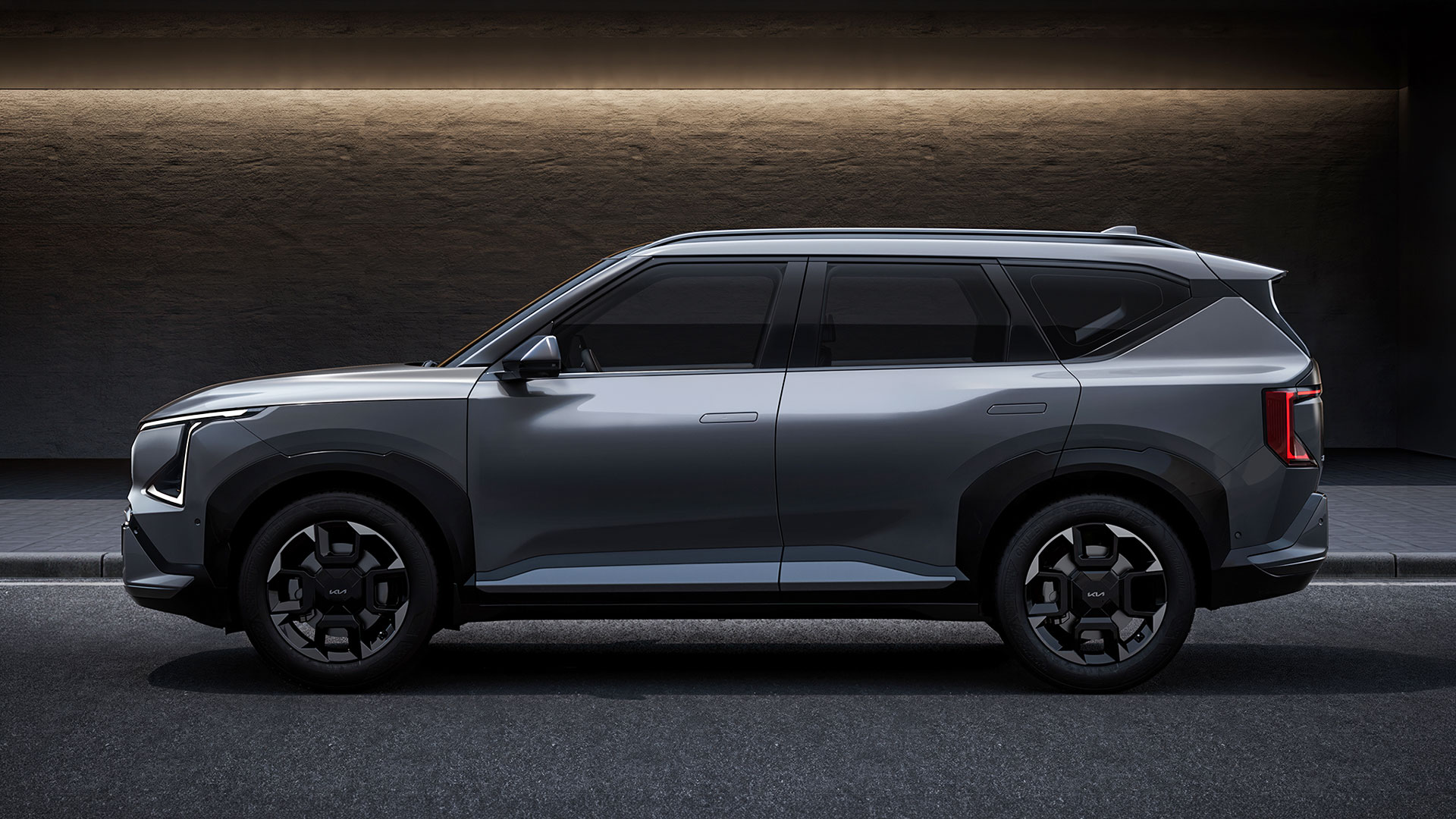
2027 Kia EV5 vs Tesla Model Y in Canada: Price, Range and Charging Compared
The Kia EV5 arrives with a lower Canadian entry price and family-SUV packaging, while the Tesla Model Y counters with longer-range AWD, mature software and integrated Supercharging. Here is which one fits which buyer.
Photo: Kia
The 2027 Kia EV5 is arriving in Canada with a difficult assignment: give families a convincing reason not to default to a Tesla Model Y.
On paper, it has one. The EV5 starts at $43,495 MSRP, looks and packages itself like a traditional two-row SUV, and includes a native NACS DC fast-charge port on every trim. Its long-range Wind FWD model lists 457 km and starts at $47,495, putting it remarkably close to the base Model Y’s range for less money.
Tesla counters with a product that is already on sale, a mature charging-and-route-planning ecosystem, a quicker software-first ownership experience and a much stronger long-range AWD number. The Model Y is not automatically the value winner anymore, but it remains the simpler benchmark for buyers who road-trip often and want the car to manage charging stops for them.
This is a specification and buying-context comparison, not a road test. Prices, equipment, ranges and availability reflect manufacturer information published as of August 2, 2026.
Quick Verdict
Choose the Kia EV5 Wind FWD if value and family usability lead the list. At $47,495 MSRP, it combines an 81.4-kWh battery, a listed 457-km range, a heat pump, conventional phone integration and native NACS charging. It is the strongest EV5 trim for Canadian shoppers who can live without all-wheel drive.
Choose the Tesla Model Y RWD if the charging workflow and software ecosystem matter more than saving the last few thousand dollars. Tesla lists it at $49,990 MSRP before delivery-related and other fees, with 463 km of range, integrated Supercharger routing and a 175-kW listed charging maximum.
For AWD shoppers, the answer changes. The EV5 Wind AWD is the price play at $49,995 MSRP, but its listed 439-km range trails the Model Y Premium AWD’s 542 km by a wide margin. The Tesla costs substantially more at a listed $64,990 MSRP, so this is a range-versus-budget decision rather than a direct tie.
The short answer is EV5 for family packaging, familiar controls and price; Model Y for software, route planning and long-range AWD capability.
| Item | 2027 Kia EV5 | Tesla Model Y |
|---|---|---|
| Advertised entry point | $43,495 MSRP for Light FWD; originally planned for Q4 2026; confirm actual stock | $49,990 MSRP for RWD before delivery-related and other fees |
| Most relevant value trim | Wind FWD at $47,495 MSRP | Model Y RWD at $49,990 MSRP |
| Battery context | 60.4 kWh on Light FWD; 81.4 kWh on Wind and higher trims | Tesla does not publish a comparable usable battery-capacity figure on its Canadian product page |
| Base or value-trim range | 335 km target for Light FWD; 457 km published estimate for Wind FWD | 463 km listed for Model Y RWD |
| AWD range context | 439 km published estimate on Wind and Land AWD; 439 km on GT-Line AWD trims | 542 km listed for Model Y Premium AWD |
| Fast-charge connector | Native NACS DC port on every trim | Native NACS port with integrated Supercharger route planning |
| Charging claim | Current Canadian material gives 150-kW peak and about 30 minutes from 10–80% under stated conditions | 175 kW maximum for RWD; up to 243 km added in 15 minutes under Tesla’s stated conditions |
| Cabin interface | Dual 12.3-inch displays plus 5-inch climate display; wireless Apple CarPlay and Android Auto | Confirm the display on the exact RWD model year/trim; Tesla navigation without Apple CarPlay or Android Auto |
| Best fit | Buyer prioritizing price, upright packaging and familiar controls | Buyer prioritizing integrated charging, software and stronger long-range AWD numbers |
Kia EV5 and Tesla Model Y exterior comparison
11
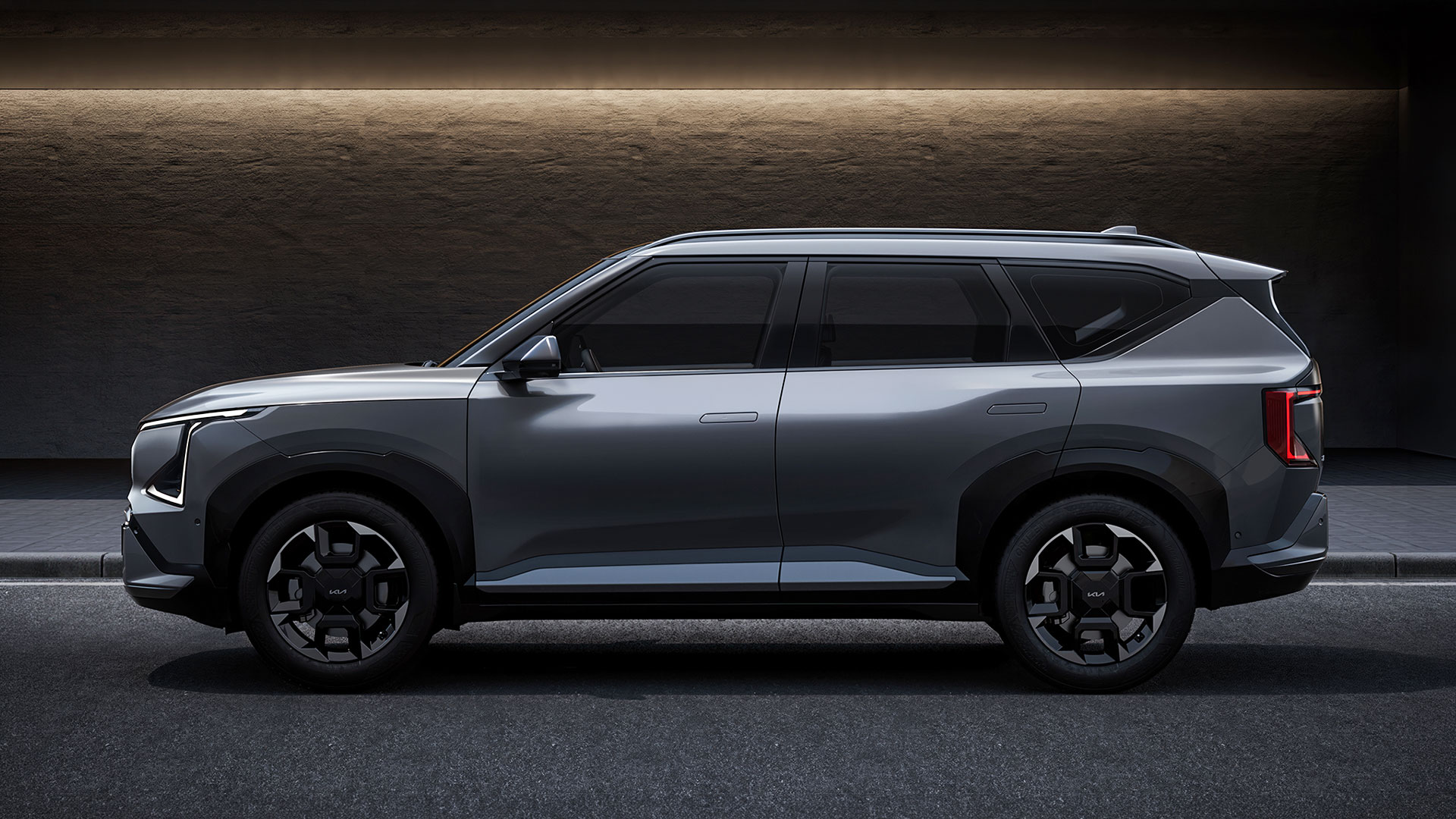
The EV5 takes the upright family-SUV route, with front- or all-wheel drive and a native NACS fast-charge port. Image: Kia Canada.
The EV5 Has The Better Entry-Price Story
Kia’s $43,495 starting MSRP is the headline, but it comes with two qualifications.
First, the Light FWD uses a 60.4-kWh battery and targets 335 km of range. That is enough for many commuters, especially with reliable home charging, but it is not the version to choose for frequent long-distance Canadian driving.
Second, Kia Canada’s EV5 trim guide schedules that Light FWD for the fourth quarter of 2026. The original August launch advice said buyers should focus on the trims they can actually order and receive, not build a decision around a late-arriving base model.
That makes the EV5 Wind FWD the meaningful value comparison. It starts at $47,495 MSRP, moves to the 81.4-kWh battery, lists 457 km and includes a heat pump. The Model Y RWD is listed at $49,990 MSRP on Tesla Canada’s incentive page, before delivery-related and other fees.
The Kia appears to have a modest price advantage, but the final difference depends on freight, pre-delivery inspection, order or dealer fees, paint, accessories, discounts, financing and incentives. Tesla and Kia do not necessarily display every charge in the same format. Compare complete, same-province written quotes rather than subtracting the two homepage numbers.
Range Is A Tie Until AWD Enters The Picture
For the value trims, the range contest is essentially a draw.
Kia now lists 457 km for the EV5 Wind FWD. Tesla lists 463 km for the Model Y RWD. A six-kilometre difference between published figures is not a reason to choose either vehicle. Temperature, winter tires, speed, wind, snow, elevation and cabin heating can erase that gap before the first highway exit.
The more useful question is how each vehicle fits the household. A driver covering 60 km most weekdays and charging overnight has ample buffer in either one. Someone travelling between smaller communities should map dependable fast chargers, consider winter range loss and decide whether the route-planning experience matters more than the shape of the cabin.
AWD produces a much bigger split. Kia now lists 439 km for EV5 Wind and Land AWD trims and 439 km for the GT-Line AWD models. Tesla lists 542 km for the Model Y Premium AWD. That 103-km gap between the Wind AWD and Premium AWD is substantial, even after acknowledging that official estimates are not guaranteed real-world results.
Price is the counterweight. The EV5 Wind AWD starts at $49,995 MSRP, while Tesla lists the Model Y Premium AWD at $64,990 MSRP. Buyers are paying much more for the Tesla’s range, performance and software package. If 439 km is already enough, the Kia can keep a meaningful amount of money in the budget for winter tires, home charging and insurance.
Both Use NACS, But The Experience Is Not Identical
The connector debate is refreshingly simple: both vehicles use a native NACS port.
Kia says every 2027 EV5 has the connector built in, removing the need for a bulky DC adapter at compatible Tesla Superchargers. That is a meaningful convenience advantage over EVs that still use CCS and require owners to buy, store and remember an adapter.
Tesla still holds the integration advantage. The Model Y combines its NACS port with Tesla navigation, Supercharger routing, charger availability, payment and battery preparation. The system can plan stops and condition the battery as the vehicle approaches a charger.
Tesla lists a 175-kW Supercharging maximum for the Model Y RWD and says up to 243 km can be added in 15 minutes under its stated conditions. Kia’s current Canadian material gives a 150-kW peak and about 30 minutes from 10 to 80 percent.
A native port does not guarantee identical access or performance. Network permissions, station generation, cable reach, payment setup, battery temperature, state of charge and charger output all matter. EV5 buyers should confirm compatible networks and ask Kia for the charging curve of the exact battery and trim before delivery.
MotorLinks’ native NACS versus adapter guide explains why the plug shape is only one part of the road-trip experience.
The Cabins Serve Different Kinds Of Buyers
The EV5 makes a deliberate case for familiarity.
Its dashboard uses dual 12.3-inch displays with a separate 5-inch climate display. Wireless Apple CarPlay and Android Auto are standard, so drivers can bring an existing phone workflow into the vehicle. Heated front seats are included, and higher trims add equipment such as ventilated seats, heated rear seats, a head-up display, a panoramic roof, advanced parking hardware and available vehicle-to-load power.
The Model Y is cleaner and more centralized. Many functions run through the centre touchscreen; verify its size on the exact RWD model year and trim, while Tesla navigation, charging, phone-key controls and vehicle settings operate within the same software environment. Buyers who enjoy Tesla’s interface may find it faster and more cohesive. Drivers who want a conventional instrument display, more visible climate information or Apple CarPlay and Android Auto may prefer the Kia immediately.
The body shapes also tell the story. The EV5 has an upright roof, square rear opening and traditional compact-SUV stance. The Model Y is lower and more aerodynamic, with a sweeping glass roof and sloping hatch. Published cargo measurements are not always calculated consistently between manufacturers, so the best test is practical: bring the stroller, hockey bags, dog crate or camping bins that the vehicle must carry.
Neither is a three-row SUV. Families needing six or seven seats should move up to vehicles such as the Kia EV9, Hyundai IONIQ 9 or another appropriately sized alternative.
Canadian Winter Changes The Priorities
The EV5 Wind and higher trims include a heat pump, a useful efficiency tool when the cabin needs regular heating. The Model Y also manages battery and cabin temperature through its integrated thermal system and supports scheduled preconditioning.
Neither system cancels winter range loss. Cold-soaked batteries, cabin heat, dense air, slush and winter tires all increase energy use. Home charging is the biggest quality-of-life improvement because the vehicle can warm while plugged in and start the day with a predictable charge.
AWD can help the vehicle put power down on a slippery surface, but it does not replace winter tires. The EV5 Wind FWD and Model Y RWD remain credible Canadian choices when fitted with appropriate tires and driven within their limits. Shoppers should pay for AWD because their routes, terrain or preferences justify it, not because a badge makes winter physics disappear.
Incentives Could Change The Final Recommendation
Both base-price conversations sit near Canada’s current affordability threshold. Transport Canada’s Electric Vehicle Affordability Program uses the final transaction value and applies buyer, vehicle, lease, timing and funding rules. Tesla warns that incentives are not guaranteed, and Kia’s late-arriving base trim introduces additional timing uncertainty.
Do not count an incentive because a salesperson mentions it or a marketing page displays it. Ask for the exact amount, eligible transaction value and vehicle configuration on the purchase or lease agreement before making a deposit non-refundable.
The MotorLinks Canadian EV incentive guide tracks the framework shoppers should verify. A lower trim can lose its value advantage quickly if options or fees push the transaction beyond a program ceiling, while a discount can pull a more expensive configuration back into consideration.
Which One Should Canadians Buy?
Choose the Kia EV5 Light FWD if:
- the lowest entry price is the priority
- 335 km covers normal driving with a realistic winter buffer
- the dealer’s actual delivery date is acceptable
- the household wants a familiar SUV cabin and phone interface
Choose the Kia EV5 Wind FWD if:
- the strongest balance of price and range matters
- 457 km is sufficient for normal regional trips
- a heat pump, native NACS and upright packaging are priorities
- integrated Tesla software is less important than conventional controls
Choose an EV5 AWD if:
- a lower AWD purchase price matters more than maximum range
- 439 km fits the household’s longest regular routes
- Kia’s family-focused equipment and V2L options add real value
Choose the Tesla Model Y RWD if:
- integrated Supercharger routing is a major priority
- the household prefers Tesla’s app and software-first interface
- 463 km is enough and the written quote is competitive
- current availability matters more than waiting for an EV5 trim
Choose the Model Y Premium AWD if:
- 542 km of listed range materially improves regular trips
- stronger performance and AWD are worth the price jump
- the household is comfortable paying well beyond the EV5 Wind AWD price
Bottom Line
The Kia EV5 Wind FWD is the value sweet spot. It nearly matches the base Model Y’s listed range, costs less on paper, includes the cold-weather equipment Canadians should want and packages the cabin like a traditional family SUV.
The Tesla Model Y RWD remains the cleaner technology and road-trip choice. Its price premium is not enormous, and the integrated charging workflow can be worth it for drivers who regularly depend on public fast charging.
AWD buyers face a sharper trade-off. Kia offers a much lower entry price, while Tesla offers far more listed range. Get complete quotes, map the chargers used on real trips and test the cabin with the family’s actual gear. That will reveal more than choosing by badge or one headline number.
Should Canadians buy the Kia EV5 or Tesla Model Y?
Choose the Kia EV5 for a lower entry price, upright family-SUV packaging, familiar controls and native NACS charging. Choose the Model Y for integrated Supercharger routing, stronger long-range AWD numbers and Tesla’s software ecosystem.
Which has more range, the Kia EV5 or Tesla Model Y?
The value trims are almost tied: Kia now lists 457 km for the EV5 Wind FWD, while Tesla lists 463 km for the Model Y RWD. In AWD form, Tesla lists 542 km for the Model Y Premium AWD, compared with Kia’s 439-km published estimate for EV5 Wind and Land AWD trims.
Which is cheaper in Canada?
Kia lists the EV5 Light FWD from $43,495 MSRP, although it was originally planned for Q4 2026; confirm actual stock. The long-range Wind FWD starts at $47,495 MSRP. Tesla lists the Model Y RWD at $49,990 MSRP before delivery-related and other fees. Compare complete written quotes because the advertised formats and fees can differ.
Do both vehicles have native NACS ports?
Yes. Kia says every 2027 EV5 has a native NACS DC fast-charge port, and the Tesla Model Y also uses native NACS. Tesla still has the more integrated route-planning, payment and battery-preparation workflow.
Sources
- Kia Canada: 2027 EV5 pricing, trims, batteries and targeted range
- Kia Canada: 2027 EV5 overview and technology
- Tesla Canada: Model Y specifications
- Tesla Canada: incentives and listed Canadian MSRP
- Transport Canada: Electric Vehicle Affordability Program
Related Articles
- 2027 Kia EV5 Trim Guide: The Canadian Buyer Sweet Spot Is Not the Cheapest One
- Tesla Model Y vs Chevrolet Equinox EV in Canada: Range, Price and Charging Compared
- Kia EV5 vs Hyundai IONIQ 5: Which Canadian Electric SUV Makes More Sense?
Update, October 2026: Kia Canada now lists 457 km for the EV5 Wind FWD and 439 km for Wind AWD, and a 60.3-kWh battery for Light. Prices are the advertised figures at publication.