Ford's Apple Maps EV Bet: What It Fixes Before the $30,000 Truck Arrives
Ford is putting Apple Maps directly into its 2027 affordable EV platform. Here is what built-in routing, battery preconditioning, CarPlay, and BlueCruise mean for buyers.
Ford’s planned affordable electric pickup still has no final range, battery size, towing rating, Canadian price, or production name. It does, however, have a navigation system—and that detail is more important than it sounds.
Apple and Ford announced on July 23 that Apple Maps will be embedded directly into Ford’s Universal Electric Vehicle platform beginning in 2027. The system will handle turn-by-turn directions, traffic and incident information, destination search, EV route planning, and battery preconditioning without requiring an iPhone.
CarPlay is not going away. Apple Maps will also provide road-level information to Ford as it develops the next generation of BlueCruise hands-free highway driving.
For shoppers, the useful part is not the Apple badge. It is Ford treating route planning, charging preparation, and driver-assistance mapping as core vehicle systems before the first affordable UEV-platform model reaches customers.
Quick Verdict
Built-in Apple Maps is a meaningful positive for Ford’s next EVs because it should make charging stops easier to plan and help the battery arrive ready to fast-charge. It also avoids forcing drivers to connect an iPhone just to get the platform’s main navigation experience.
This announcement is not a reason to reserve the truck on its own. Buyers should still wait for range, charging speed, payload, towing, final trim pricing, data-plan details, software-support terms, and Canadian availability.
The smart takeaway is simple: Ford has filled in one important ownership-system blank. Most of the vehicle blanks remain.
Built-In Apple Maps Is Not The Same As CarPlay
The distinction is easy to miss.
CarPlay projects supported apps and phone functions into a vehicle display. Ford’s new arrangement uses Apple’s MapKit for Automotive software tools to make Apple Maps part of the vehicle’s native interface. The maps can be styled to fit Ford’s screens and connected to vehicle data that a normal phone projection cannot always use as deeply or reliably.
That means a driver should be able to start the truck, enter a destination, and use Apple-powered navigation without plugging in, pairing, or even owning an iPhone. Ford says CarPlay will remain available, so iPhone users can still choose the familiar phone-connected experience.
| System | What It Does | What Buyers Should Know |
|---|---|---|
| Built-in Apple Maps | Runs directly on the vehicle displays with traffic, incident information, destination search, EV routing, and battery preconditioning | Does not require an iPhone, but Ford has not yet detailed connectivity subscriptions, offline behaviour, or long-term map-update support |
| Apple CarPlay | Lets an iPhone provide apps, communications, media, and a familiar phone-connected interface | Ford says CarPlay will remain available; it is an option alongside the built-in system, not a replacement for it |
| Ford BlueCruise | Provides Ford-developed hands-free highway driving on compatible roads and under defined driver-supervision conditions | Apple Maps road-level information will support the next generation, but Ford—not Apple—is building and responsible for the driving system |
That choice matters. GM has moved away from offering CarPlay in some newer EVs, while Tesla and Rivian have built their ownership experiences around proprietary interfaces. Ford’s approach is more open: use Apple mapping at the vehicle level, keep CarPlay, and connect both to Ford’s own app and software.
The result could be less friction for drivers who like Apple products without turning the vehicle into an iPhone accessory.
Battery Preconditioning Is The Feature That Matters In Canada
The most useful line in the announcement is not about natural-language directions or place cards. It is intelligent EV routing, including battery preconditioning.
A battery charges fastest when its temperature is in the right window. If the pack is too cold or too hot, the vehicle may reduce charging power to protect it. Preconditioning uses the thermal-management system to warm or cool the battery while the vehicle is heading toward a DC fast charger.
In practice, good navigation can do three jobs together:
- estimate whether the vehicle can reach the destination;
- add compatible charging stops when necessary; and
- prepare the battery before arrival so the charging stop has a better chance of matching the vehicle’s intended performance.
That integration is especially valuable in a Canadian winter. A cold-soaked battery can turn an acceptable charging stop into a long one if the vehicle reaches the charger unprepared. Buyers should still judge the truck by its complete charging curve rather than a peak kilowatt number, but automatic preconditioning removes one piece of guesswork.
Ford already explains on its battery-preconditioning support page that current compatible EVs can use connected navigation or supported phone-based EV routing to prepare for a fast charger. Embedding the maps into the next platform should make that relationship more consistent from the start.
Better Routing Cannot Fix A Slow-Charging Vehicle
Software can help a good charging system perform properly. It cannot rescue weak hardware.
Ford has not announced the affordable pickup’s battery capacity, maximum DC rate, 10-to-80-per-cent time, charging curve, range, or port location. Those details will decide whether its road-trip performance is genuinely competitive.
A route planner can identify a charger, but it cannot:
- shorten the stop if the battery accepts high power only briefly;
- move the charge port closer to a short cable;
- guarantee that a suggested charging stall is working;
- prevent queues on a holiday weekend; or
- make expensive public charging cheap.
That is why the Apple Maps news should be viewed as plumbing, not proof. Ford appears to be building the right plumbing. The first vehicle still has to deliver the range, efficiency, and charge performance that make the software useful.
MotorLinks’ guide to EV road trips and NACS charging covers the wider checklist, including adapters, cable reach, payment friction, public charging prices, and weather.
What Apple Maps Adds To BlueCruise
Ford also plans to use road-level Apple Maps information in its next-generation BlueCruise system. The stated goal is a more seamless hands-free experience from a highway on-ramp to the off-ramp.
That does not mean Apple is building an autonomous Ford.
Ford told The Verge that Apple Maps is a mapping enabler, while Ford’s Latitude AI subsidiary owns the vehicle hardware, software, and driving system. That division of responsibility matters because polished mapping data and automated-driving decisions are not the same thing.
BlueCruise remains a driver-assistance product, and the driver must follow Ford’s supervision and operational rules. Better map context may help the system anticipate roadway geometry and manage highway transitions more smoothly, but buyers should wait for final capability, compatible-road coverage, subscription terms, and independent testing before treating it as a purchase-deciding feature.
Privacy And Connectivity Still Need Clear Answers
Apple says the embedded system follows the privacy principles used by Apple Maps and that it does not collect vehicle-map location details and activity in a way that can be tied to an individual user.
That is encouraging, but Ford still needs to explain the complete data path. An embedded navigation and driver-assistance system can involve Apple, Ford, cellular providers, charging networks, voice services, and account credentials. Buyers deserve a plain explanation of what each party receives, how long data is stored, and which features work without signing into extra services.
Connectivity cost is another open question. Real-time traffic, charger status, map updates, and cloud search depend on data. Ford and Apple have not yet said whether the vehicle’s purchase price includes that connectivity for a fixed period, whether some functions require a subscription later, or how useful the system remains with weak cellular coverage.
Those are normal pre-launch unknowns. They are also worth resolving before calling the software “free.”
What This Says About Ford’s Affordable EV Strategy
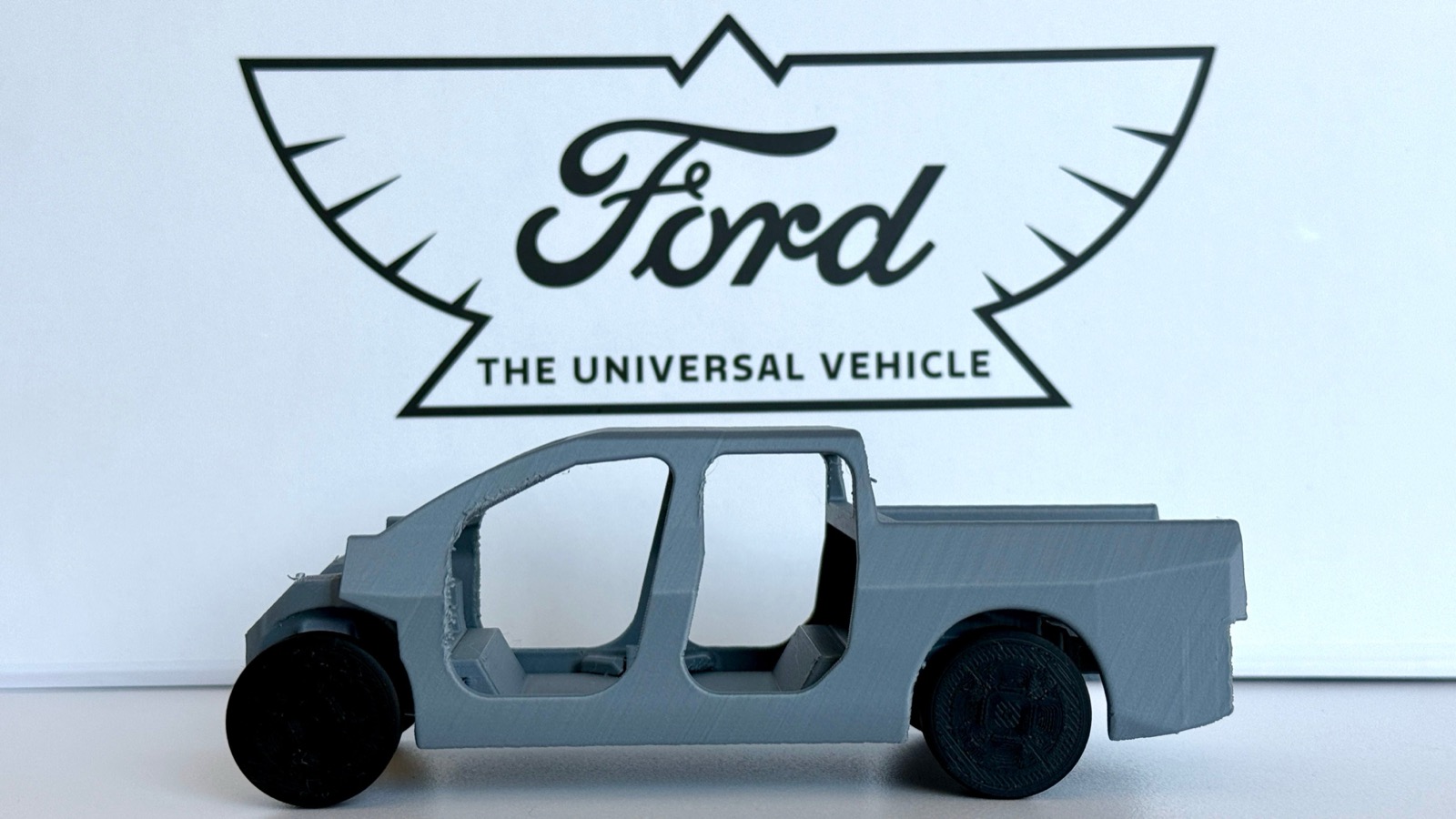
Ford’s Universal EV plan is built around a smaller, cheaper vehicle architecture rather than a cut-price version of a large existing EV. The company says its first UEV-platform product will be a midsize electric pickup priced around US$30,000, with the new platform arriving in 2027.
The maps announcement suggests Ford is also simplifying its software stack by choosing a mature navigation layer instead of trying to recreate every customer-facing system alone. That can be a smart use of resources when the larger engineering challenge is delivering an affordable battery, efficient structure, useful truck capability, and reliable production.
It also gives Ford a point of differentiation. Buyers who want familiar Apple navigation but dislike losing CarPlay will have both options. Buyers who do not use an iPhone can still get the embedded maps.
For Canadians, the price remains the much larger uncertainty. Ford’s public figure is a U.S. target, not a Canadian MSRP. Currency, freight, trim strategy, availability, incentives, and winter equipment can all change the real deal. The Canadian EV incentive guide is the safer place to track current program eligibility once Ford releases local details.
What Buyers Should Wait To Learn
The software box now looks promising. The buyer checklist is still long.
Before making plans around Ford’s affordable EV pickup, wait for:
- final U.S. and Canadian pricing by trim;
- certified range and cold-weather efficiency;
- battery size, peak charge rate, and 10-to-80-per-cent time;
- payload, towing, bed dimensions, and curb weight;
- charging-port type and location;
- included connectivity and subscription terms;
- BlueCruise hardware, capability, coverage, and pricing;
- production timing and real dealer availability.
Ford’s built-in Apple Maps system should make a good electric truck easier to own. It will not determine whether the truck itself is good.
Bottom Line
Ford and Apple are solving a real EV problem before the first Universal EV platform model arrives. Native route planning tied to battery preconditioning can reduce charging uncertainty, particularly in cold weather, while continued CarPlay support preserves customer choice.
The announcement also draws a useful boundary: Apple supplies mapping technology, while Ford remains responsible for BlueCruise and the vehicle around it.
That is the right architecture on paper. Now Ford has to put competitive range, charging, capability, privacy controls, and an attainable price around it.
FAQ
Will Ford’s future EVs require an iPhone to use Apple Maps?
No. Apple Maps will be embedded directly into Ford’s Universal Electric Vehicle platform, so the built-in navigation will work without an iPhone. CarPlay will remain available separately.
Why does battery preconditioning matter on an EV road trip?
Preconditioning warms or cools the battery before a DC fast-charging stop so it can accept power more effectively. It is particularly useful in cold Canadian conditions.
Is Apple building Ford’s self-driving system?
No. Ford says its Latitude AI team owns the vehicle hardware, software, and driving system. Apple Maps provides road-level mapping information that can support Ford’s next-generation BlueCruise.
When will built-in Apple Maps arrive in Ford EVs?
Ford and Apple say the integration will arrive with the Universal Electric Vehicle platform in 2027. The first announced model is an affordable midsize electric pickup, but final Canadian timing and pricing are still unconfirmed.