Volvo EX60 vs BMW iX3 in Canada: Range or Performance?
The 2027 Volvo EX60 and BMW iX3 arrive in Canada at nearly the same price, but their range, performance, cargo and charging priorities are very different.
Canada’s two newest premium electric SUVs have landed almost on top of each other in price—and nowhere near each other in certified range.
The 2027 BMW iX3 50 xDrive starts at $75,900 CAD and is rated for up to 698 kilometres. The 2027 Volvo EX60 P10 AWD has a $77,500 vehicle price and is rated for up to 531 km with its range-friendly wheel choices.
That makes the BMW look like the obvious winner. It costs $1,600 less before destination and fees while carrying a 167-km range advantage. Yet the rest of the comparison is closer. Both have dual-motor all-wheel drive, 800-volt electrical systems and 400-kW peak DC charging. The Volvo is quicker, has a little more cargo room, can tow slightly more and arrives with a native NACS port.
This is not a review or a substitute for driving both. It is a Canada-focused buying comparison based on current manufacturer specifications, pricing and certification data as of July 25, 2026.
Quick Verdict
Choose the BMW iX3 50 xDrive if range is the first filter. Its 698-km NRCan figure is the decisive number in this comparison, and its $75,900 starting MSRP is slightly lower. The BMW is also the more compelling choice for buyers interested in Panoramic iDrive, bidirectional-energy features and the first generation of BMW’s Neue Klasse technology.
Choose the Volvo EX60 P10 AWD if you value stronger acceleration, a slightly larger cargo area, a 2,040-kg tow rating and native NACS charging. Its 531-km rating is still substantial, and Volvo’s estimated 18-minute 10-to-80-percent charge is three minutes quicker than BMW’s claim despite both listing a 400-kW peak.
The short answer is iX3 for maximum distance per charge; EX60 for performance, packaging and native charging convenience.
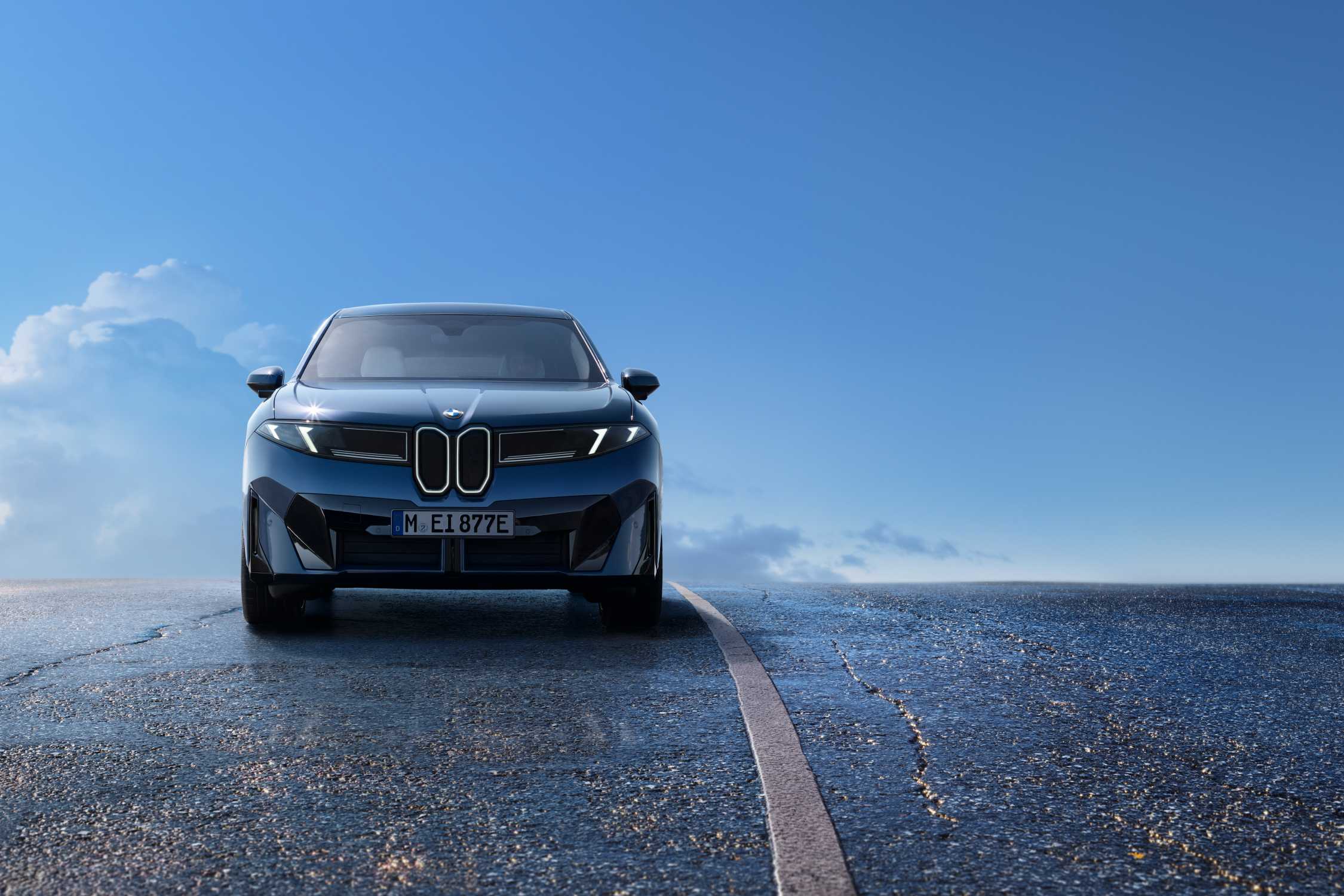
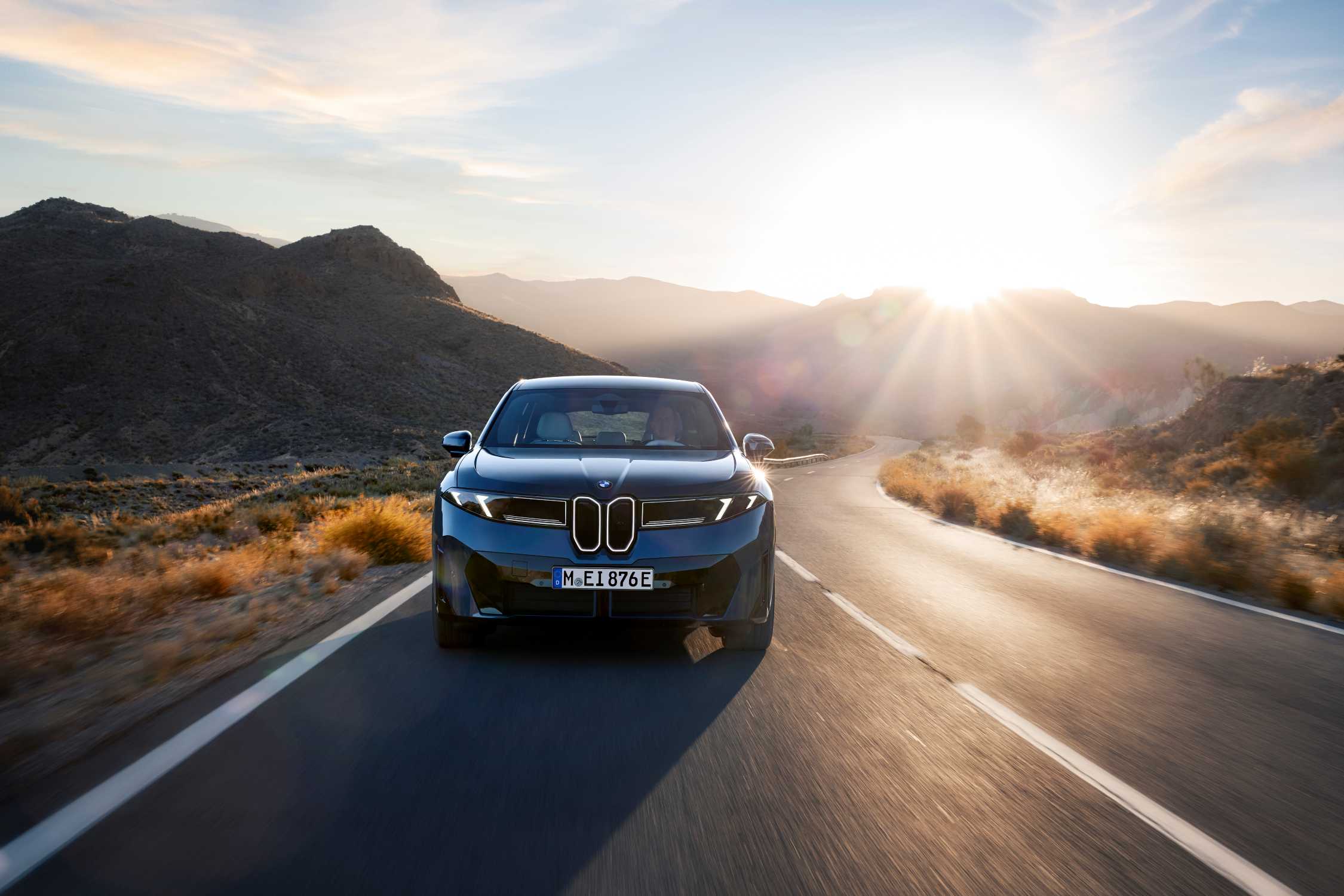
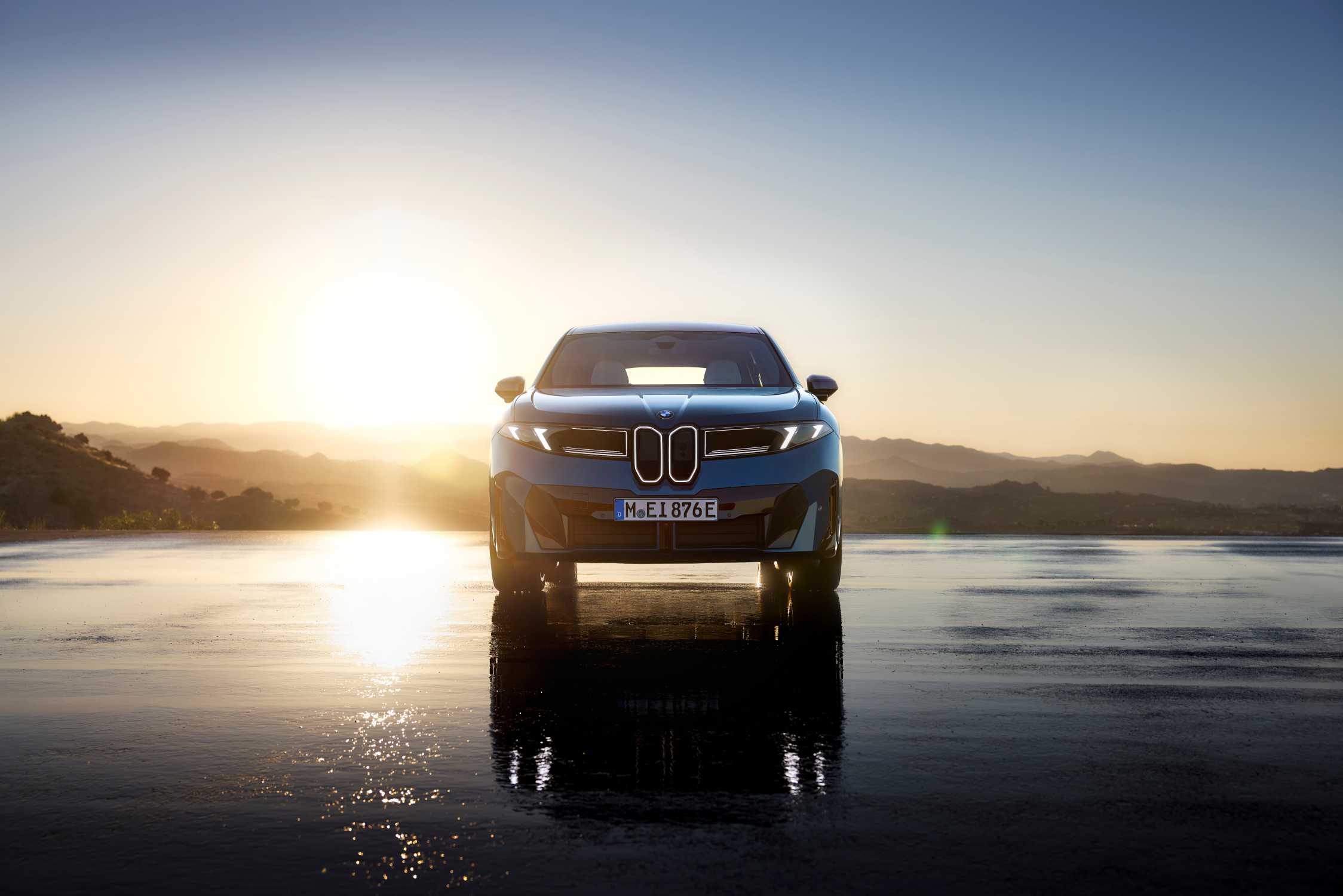
Volvo EX60 and BMW iX3 official comparison gallery
13
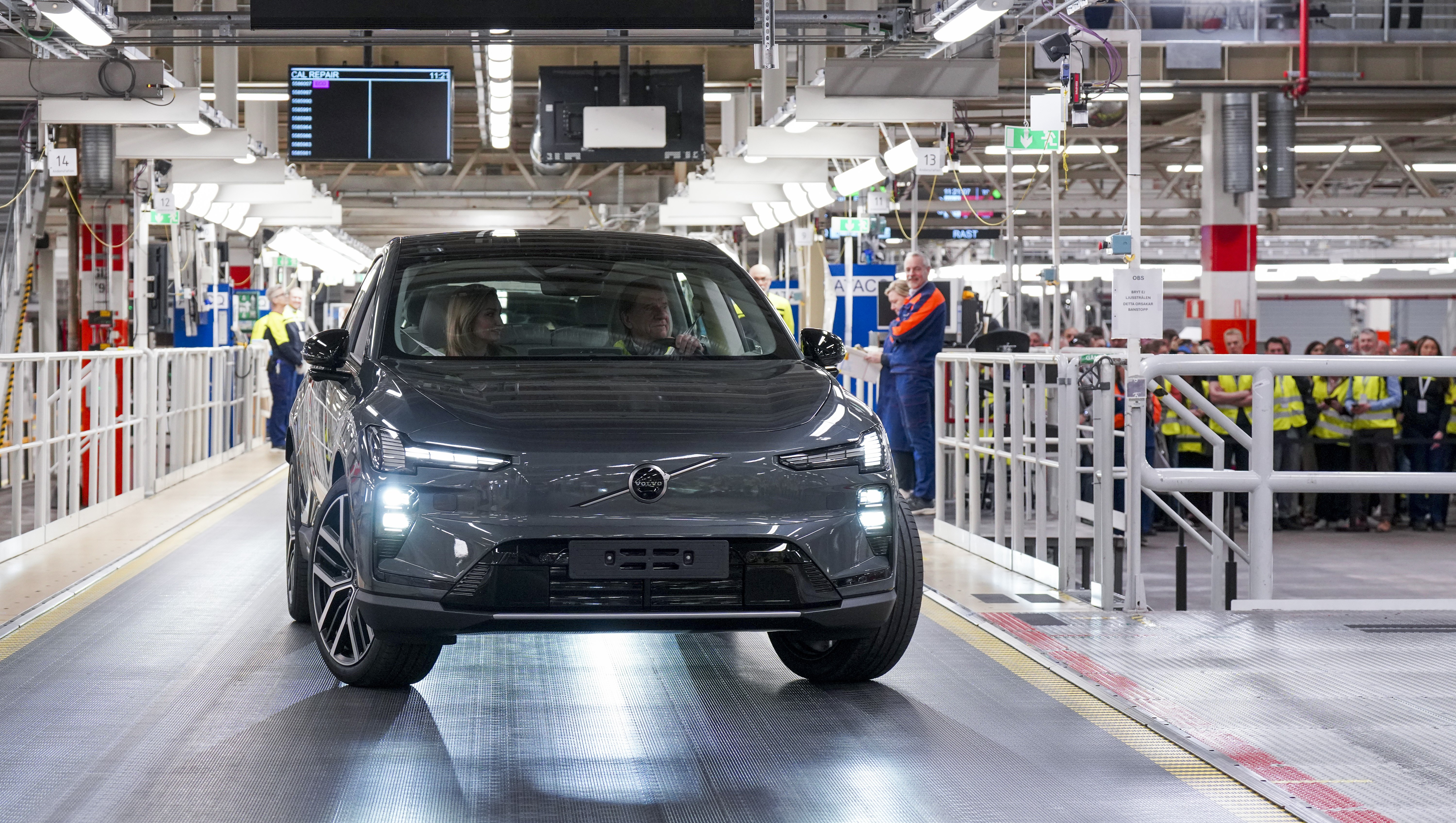
The EX60 is built at Volvo’s Torslanda plant in Sweden on the new SPA3 electric architecture.
Canada Spec and Price Snapshot
| Item | 2027 Volvo EX60 P10 AWD | 2027 BMW iX3 50 xDrive |
|---|---|---|
| Starting price | $77,500 vehicle price; $78,895 including Volvo’s listed $1,395 destination fee, before taxes | $75,900 starting MSRP before freight, fees, taxes and options |
| Canadian arrival | Customer deliveries expected to begin in late 2026 | On sale in fall 2026 |
| Certified range | 531 km with 20- or 21-inch all-season tires; 502 km with 22-inch all-season tires | Up to 698 km with 20-inch summer tires |
| Drive | Dual-motor all-wheel drive | Dual-motor xDrive all-wheel drive |
| Power | 503 hp and 524 lb-ft; figures described by Volvo as preliminary | 463 hp and 476 lb-ft; figures described by BMW as estimated |
| 0-100 km/h | 4.6 seconds | 4.9 seconds |
| Electrical architecture | 800 V | 800 V |
| Peak DC charging | Up to 400 kW; estimated 10-80% in 18 minutes | Up to 400 kW; estimated 10-80% in 21 minutes |
| Battery | 95 kWh nominal | BMW Canada does not state capacity on its consumer product page |
| Charging connector | Native NACS | NACS/Supercharger access should be confirmed for the exact Canadian vehicle and network |
| Cargo behind rear seats | 523 litres; Volvo also lists 52 litres under the hood | 520 litres; BMW also lists 58 litres under the hood |
| Maximum cargo | 1,647 litres | 1,750 litres |
| Maximum trailer rating | 2,040 kg | 2,000 kg with the optional tow hitch |
| Best fit | Performance-leaning buyer who wants useful packaging and native NACS | Range-first buyer who wants Neue Klasse tech and a lower base MSRP |
The BMW’s 167-Km Range Lead Is The Main Event
BMW Group Canada says the iX3’s 698-km figure is NRCan-certified using the EPA cycle. It applies to the 2027 iX3 50 xDrive with 20-inch wheels and summer tires.
Volvo Car Canada lists 531 km for the EX60 P10 AWD with 20- or 21-inch all-season tires. Choosing 22-inch all-season tires lowers that to 502 km.
The iX3 therefore leads by 167 km, or about 31 per cent, when each vehicle is compared in its headline configuration. That is large enough to matter beyond marketing. It provides more buffer for winter, highway speed, headwinds, elevation and the normal desire not to arrive at a charger near zero.
There is an important tire caveat. BMW’s best figure is tied to summer tires, while Volvo’s is quoted with all-seasons. Neither number predicts a January highway trip on winter rubber. A Canadian buyer should ask the retailer for the certified range attached to the exact wheel-and-tire package on the order, then plan the hardest regular trip with a conservative cold-weather margin.
Even with that caution, the BMW remains the range winner. If the household regularly drives between cities, visits a cottage beyond the fast-charging network or cannot charge every night, 698 km is the stronger starting point.
Both Are 800-Volt EVs, But Charging Needs Context
The two SUVs share the kind of charging hardware that would have looked exotic a few years ago. Both use an 800-volt architecture and advertise a 400-kW maximum DC charge rate.
Volvo estimates the EX60 can move from 10 to 80 per cent in 18 minutes at a compatible 400-kW station. BMW estimates 21 minutes for the iX3 under suitable conditions. These are manufacturer claims, not guaranteed roadside results, and BMW says its charge-time figure is not yet an official certification result.
Peak power also does not tell the whole story. Actual time depends on charger voltage and output, battery temperature, starting state of charge, weather, station sharing and how long the vehicle holds high power after the initial peak. A well-shaped charging curve at a reliable 350-kW station can matter more than briefly touching 400 kW.
Connector access may be the practical separator. Volvo identifies the EX60 as its first vehicle with a native NACS port, removing adapter friction at compatible Tesla Superchargers. BMW’s Canadian product material emphasizes charging speed and route planning, but buyers should confirm the connector fitted to the exact Canadian vehicle, compatible Supercharger access and whether any adapter is included.
For home charging, the decision is less dramatic. Either vehicle can cover normal daily use overnight on a properly installed Level 2 station. Get an electrical assessment before delivery and compare the included cable, wallbox support, charging schedule controls and cold-weather preconditioning.
The Volvo Wins The Straight-Line Numbers
The EX60 P10 AWD is rated at 503 hp and 524 lb-ft of torque, with a claimed zero-to-100-km/h time of 4.6 seconds. BMW lists the iX3 50 xDrive at an estimated 463 hp, 476 lb-ft and 4.9 seconds.
That gives the Volvo 40 more horsepower, 48 more lb-ft and a three-tenths advantage to highway speed. Neither SUV will feel remotely slow. The meaningful question is how each handles its weight, brake blending, steering and rough Canadian pavement—questions that a spec sheet cannot settle.
BMW’s pitch centres on its new Heart of Joy control computer, which coordinates the drivetrain, braking, regeneration and chassis systems. Volvo’s SPA3 platform uses cell-to-body battery integration and a new core-computing approach. Both are first-wave products on important new architectures, which makes software quality and early production consistency worth watching.
Do not choose between them on acceleration alone. A winter-ready tire package, predictable brake response, good outward visibility and a comfortable seat will matter on every drive. Four-tenths to the speed limit will not.
Cargo Space Is Almost A Draw
The EX60 is 4,803 mm long, 1,908 mm wide and 1,635 mm tall. The iX3 is 4,782 mm long, 1,895 mm wide and 1,646 mm tall. In plain language, the Volvo is 21 mm longer and 13 mm wider, while the BMW is 11 mm taller.
Their cargo numbers are just as close with all seats in use:
- Volvo: 523 litres behind the second row plus a 52-litre front compartment
- BMW: 520 litres behind the second row plus a 58-litre front compartment
The BMW opens a bigger advantage with the rear seats folded, listing 1,750 litres to Volvo’s 1,647 litres. Published cargo methods are not always perfectly identical, so the shape of the opening and load floor still deserves an in-person check.
The Volvo edges towing at 2,040 kg, compared with 2,000 kg for an iX3 fitted with the optional trailer hitch. That 40-kg difference will rarely decide a purchase. Payload, hitch hardware, tongue-weight limits and the large range penalty from towing matter much more.
Bring the actual stroller dimensions, hockey bags, dog crate or mobility equipment to the retailer. A nearly identical litre figure can hide a much more useful cargo shape.
Cabin Choice: Scandinavian Calm Or BMW’s New Screen Layout
Volvo gives the EX60 a 15-inch landscape centre display, Google built-in, over-the-air updates and a cabin designed around restrained surfaces and storage. The Plus package includes a 360-degree camera and Bose audio; the more expensive Ultra adds equipment including Bowers & Wilkins audio, ventilated upholstery and an electrochromic roof.
BMW makes a bigger interface statement. The iX3 combines a 17.9-inch central display with Panoramic Vision, which projects configurable information across the lower windshield area. It runs BMW Operating System X and keeps the cabin focused toward the driver.
Neither approach is automatically easier. Before ordering, use the interface to change temperature, set a charging limit, find a fast charger, turn driver assistance on and off, pair a phone and locate the camera view. The better system is the one that makes routine actions obvious without demanding too much attention.
The iX3 also advertises future bidirectional charging with compatible BMW equipment. That could let the vehicle support home backup power or other energy uses, but installation requirements, Canadian availability and utility compatibility need confirmation before treating it as a purchase-day feature.
What Canadian Buyers Should Put In Writing
These vehicles arrive close together and use new platforms, so the order sheet matters as much as the headline specifications.
Ask both retailers for:
- a complete cash price with freight, PDI, mandatory fees, options and taxes separated
- the certified range for the exact wheels and tires
- winter wheel-and-tire availability, load rating and total installed price
- the physical charging port, included cable or adapter and compatible Supercharger access
- delivery timing for the exact configuration, not just the model line
- deposit refund terms
- battery and vehicle warranty details
- bidirectional-charging hardware and activation requirements
- an insurance quote using the exact trim and vehicle identification details when available
Neither base price qualifies as an affordable EV, and incentive rules can change. Check MotorLinks’ Canadian EV incentive guide before signing rather than assuming either SUV receives a federal or provincial rebate.
Bottom Line
The BMW iX3 50 xDrive is the rational range-first choice. It starts $1,600 below the EX60’s vehicle price and carries a 167-km certified-range advantage in the two headline configurations. For a Canadian buyer worried about winter reserve, sparse rural charging or frequent intercity travel, that is hard to ignore.
The Volvo EX60 P10 AWD makes its case elsewhere. It is quicker, slightly more powerful, marginally roomier with the seats up, rated to tow a little more and fitted with native NACS. Its 531-km rating is not class-leading beside the BMW, but it remains enough to put range anxiety well down the priority list for many households.
Choose the BMW if fewer charging stops define premium EV value. Choose the Volvo if its packaging, performance, safety-led identity and charging-port simplicity fit better. In either case, compare the exact wheel package and complete delivered price—the two details most likely to change this unusually close decision.
FAQ
Should Canadians buy the Volvo EX60 or BMW iX3?
Choose the BMW iX3 for maximum certified range, the lower starting MSRP and Neue Klasse cabin and energy technology. Choose the Volvo EX60 for stronger performance, slightly more cargo room behind the rear seats, a higher tow rating and native NACS charging.
Which has more range?
The BMW iX3 50 xDrive is rated for up to 698 km with 20-inch summer tires. The Volvo EX60 P10 AWD is rated for 531 km with 20- or 21-inch all-season tires and 502 km with 22-inch all-seasons.
Which is cheaper in Canada?
The iX3 starts at $75,900 CAD. The EX60 has a $77,500 vehicle price, or $78,895 with Volvo’s listed $1,395 destination charge before taxes. Compare complete quotes because BMW’s freight and fees, options and standard equipment can change the final gap.
Which charges faster?
Both advertise up to 400-kW DC charging. Volvo estimates 10 to 80 per cent in 18 minutes; BMW estimates 21 minutes. Suitable battery conditions and a compatible high-power station are required, and real charging curves still need independent measurement.
Sources
- Volvo Car Canada: EX60 overview, range and charging
- Volvo Car Canada: EX60 specifications and dimensions
- BMW Canada: iX3 specifications, dimensions and technology
- BMW Group Canada: iX3 pricing, certified range and timing