Volvo EX60 Beats Its Range Estimate With a 531-Km NRCan Rating
The 2027 Volvo EX60 P10 AWD has earned a 531-km NRCan range rating in Canada, beating Volvo's earlier estimate ahead of late-2026 deliveries.
The 2027 Volvo EX60 has cleared one of the most important pre-delivery hurdles with a better number than Volvo originally promised.
Volvo Car Canada says the EX60 P10 AWD is now rated for up to 531 kilometres on a full charge under Natural Resources Canada testing. That applies to versions fitted with 20- or 21-inch all-season tires. Choosing the available 22-inch wheels lowers the official figure to 502 kilometres.
The new certification improves on Volvo’s earlier 514-km estimate for the P10 AWD by 17 km. That is not a dramatic reinvention of the vehicle, but it is the right kind of surprise: a production EV arriving with more certified range than the number used during its launch campaign.
For Canadian shoppers, the bigger story is that Volvo now has a firm range figure to attach to a firm starting price. The P10 AWD starts at $77,500 CAD before freight, PDI, fees and taxes, with Canadian customer deliveries scheduled to begin in late 2026.
The Certified Range Numbers
The wheel choice makes the EX60’s range story easy to understand:
- P10 AWD with 20- or 21-inch all-season tires: up to 531 km
- P10 AWD with 22-inch all-season tires: up to 502 km
- Difference: 29 km, or about 5.5 per cent
Those figures are based on NRCan-approved test cycles, according to Volvo Car Canada’s EX60 page. The U.S. version of the same P10 AWD has also received an EPA estimate of up to 330 miles with 20- or 21-inch wheels, which converts neatly to roughly 531 km.
That alignment is useful. Canadian and American certification results are not always presented in exactly the same way, but the EX60’s headline number is now consistent on both sides of the border.
The wheel penalty is also worth taking seriously. Large wheels can sharpen the look of an electric SUV, but the wider tire and added aerodynamic drag usually cost range. A 29-km difference may not matter on a normal commute. It can matter on a cold highway trip when the next reliable fast charger is not where you would like it to be.
For most Canadian buyers, the 20- or 21-inch setup looks like the sensible choice. It preserves the best certified range, should provide more tire sidewall for rough pavement, and may make winter-tire shopping less painful than the biggest available wheel package.
What the P10 AWD Includes
The P10 AWD is not a slow, range-first special. Volvo lists a 95-kWh nominal battery, dual-motor all-wheel drive, 503 horsepower, 524 lb-ft of torque and a claimed 0-to-100-km/h time of 4.6 seconds.
It is also the first Volvo built on the company’s dedicated SPA3 electric architecture. The platform uses an 800-volt electrical system, cell-to-body battery integration and a simplified manufacturing approach intended to reduce weight and production complexity.
Volvo says the P10 can charge from 10 to 80 per cent in about 16 minutes when connected to a compatible 400-kW DC fast charger and when battery and charging conditions cooperate. That is a best-case claim, not a promise for every roadside stop, but it puts the EX60 in the modern fast-charging conversation rather than asking buyers to accept flagship pricing with last-generation charging hardware.
The EX60 is also Volvo’s first vehicle with a native North American Charging Standard port. In the U.S., Volvo says that provides adapter-free access to more than 29,000 compatible Tesla Superchargers. Canadian owners will still need to check individual station compatibility and route coverage, but the built-in NACS port removes one piece of adapter friction from long-distance travel.
A Range Rating Is Not a Winter Guarantee
The 531-km figure is a standardized comparison number. It is not what every driver will see on every trip.
Cold temperatures can reduce available battery energy and increase cabin-heating demand. Highway speed, wind, elevation, winter tires, roof boxes, towing, heavy cargo and repeated short trips can all move the real result away from the certification figure.
Volvo makes that caveat clear. The company says actual range and charging time will vary with ambient and battery temperature, charging equipment, driving conditions, vehicle configuration and battery condition.
That does not make the rating meaningless. A standardized test is still the cleanest way to compare two vehicles before independent Canadian winter testing is available. It simply means a shopper should treat 531 km as the EX60’s certified ceiling under the specified configuration, not a guaranteed January road-trip result.
The more reassuring point is the buffer. An EV that begins with 531 km of certified range has more room to absorb winter and highway losses than one that begins close to 400 km. Fast charging and useful route planning matter just as much on a long trip, but starting with a larger range envelope helps.
Why This Matters for Volvo
The EX60 is not a niche electric flagship. It sits in the same mid-size family-SUV territory that made the XC60 central to Volvo’s business.
That puts unusual pressure on the new EV. It needs to be comfortable and recognizably Volvo, but it also has to make a straightforward technical case against newer premium electric SUVs. Range, charging speed, software stability, price and delivery quality will determine whether the EX60 becomes a volume product or another interesting EV that shoppers admire without ordering.
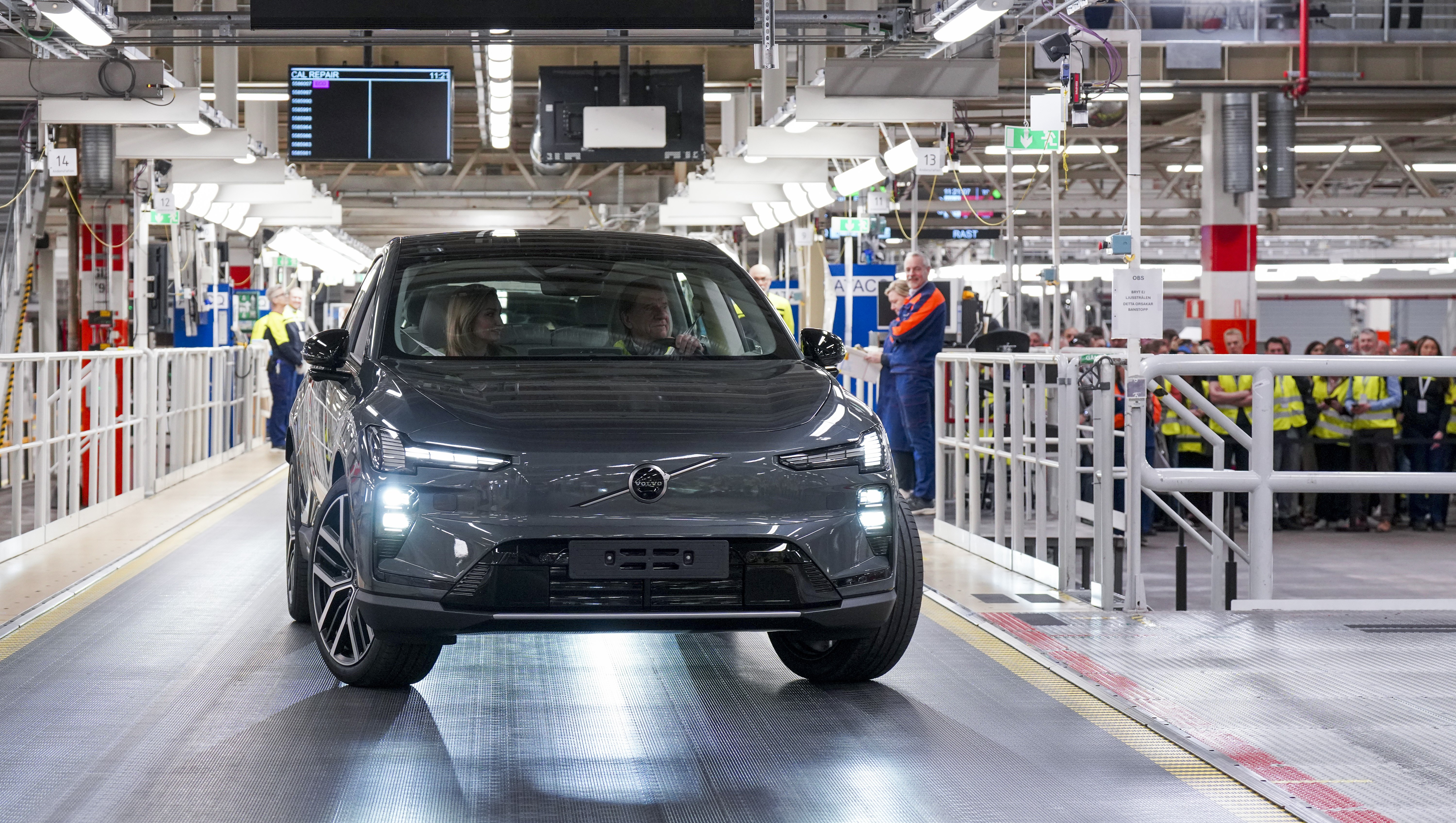
The certified P10 result removes one uncertainty. In April, when EX60 production began in Sweden, the official Canadian range number was still pending. Volvo has now delivered a rating above its earlier estimate while keeping the starting price and late-2026 delivery plan visible.
There are still questions. The 531-km figure applies to the P10 AWD rather than every possible future EX60 powertrain. Real-world charging curves and winter efficiency need independent testing. Canadian insurance costs, lease rates, freight and dealer-installed extras will also affect the actual buying equation.
But the first certified number is a strong one. A 531-km AWD electric SUV with 800-volt charging and native NACS hardware gives Volvo a credible technical answer in the heart of the premium crossover market.
What Canadian Buyers Should Watch Next
Anyone considering an EX60 should ask for the exact wheel and tire specification on the written quote. The difference between 531 km and 502 km is tied directly to that configuration.
Buyers should also confirm:
- the final freight, PDI and dealer-fee total
- which home-charging cable or equipment is included
- compatible Tesla Supercharger access in the regions they travel
- winter-wheel availability and pricing
- the delivery estimate for the exact colour and equipment level
- battery, vehicle and connected-service warranty terms
Volvo has now supplied the range number shoppers were waiting for. The next test is whether Canadian deliveries arrive on schedule—and whether the EX60 can turn that strong certification result into equally convincing real-world efficiency.