Should Canadians Buy an EV Now or Wait for Chinese Imports?
China-origin EV imports are accelerating, but model names, retail prices and support plans remain unclear. Here is when Canadian buyers should buy now and when waiting makes sense.
Canada’s new China-origin EV quota has moved from trade-policy theory to a real shopping question. Federal data shows 9,235 electric vehicles imported from China between March 1 and July 17, including 4,657 passenger cars declared at $35,000 or less.
That sounds like a reason to stop shopping and wait for a flood of bargains. It is not that simple. The report does not identify the vehicles, a low import value is not a Canadian sticker price, and China-built models do not automatically qualify for Ottawa’s purchase incentive.
Quick Verdict
Buy now if you need a vehicle within the next six months and an EV already on sale meets your range, charging, space and budget requirements. Canada has several EVs listed around or below $45,000 before incentives and negotiation, while the Electric Vehicle Affordability Program can provide up to $5,000 on an eligible battery-electric vehicle.
Wait until the fall if your current vehicle is reliable, your biggest priority is a lower purchase price, and you are comfortable with uncertainty. The current first-come, first-served import period ends August 31. By then, buyers should have a clearer view of which vehicles produced July’s surge, how the next quota period will be allocated and whether new brands have credible Canadian sales and service plans.
Do not wait indefinitely for an unannounced model. A customs count is not a product launch. Until a manufacturer confirms Canadian pricing, certification, warranty coverage, parts supply, charging hardware and delivery timing, it is not a usable alternative to a vehicle that can be ordered today.
| Your situation | Better move | Why |
|---|---|---|
| You need a replacement within 3-6 months | Buy now | Available models, incentives and support networks can be verified today |
| Your current vehicle is reliable and price is the priority | Wait until fall | More quota and product details may sharpen competition |
| You qualify for up to $5,000 through EVAP | Compare now | A confirmed incentive can outweigh an uncertain future discount |
| You want a specific unannounced Chinese-brand EV | Wait cautiously | No Canadian price, service plan or delivery date means no dependable purchase case |
| You depend on one vehicle and live far from a service centre | Buy established | Parts and repair access matter more than a headline specification |
What the 9,235-Import Figure Actually Tells Buyers
Global Affairs Canada’s quota-utilization report shows a sharp acceleration. July accounted for 5,104 vehicles through July 17, versus 621 in June. The $35,000-or-less passenger-car category supplied 4,192 of July’s total.
The numbers prove that lower-valued China-origin EV supply is reaching Canada in volume. They do not reveal brands, trims, ports, retail channels or final prices. Earlier China-built arrivals have included Shanghai-made Tesla Model 3 sedans, while the Lotus Eletre covers the expensive end of the market. Neither example proves what sits inside July’s lower-valued batch.
The price label also needs careful reading. The government’s threshold is an import classification, not an MSRP promise. Freight, regulatory compliance, distribution, options, dealer costs and taxes all sit between a vehicle’s declared value and the amount on a buyer’s contract.
That makes the import surge a competitive signal, not a clearance sale. Established automakers may respond with incentives or price changes before unfamiliar brands even open Canadian order books. Shoppers should watch the whole market rather than assuming the best deal must carry a new badge.
Canada Already Has Sub-$45,000 EV Choices
Waiting has an opportunity cost because the affordable end of Canada’s EV market has improved. The Canadian Automobile Association’s current availability list includes several models with starting prices below $45,000.
| Vehicle | Listed model year / trim | CAA listed price |
|---|---|---|
| Kia EV4 | 2026 Light FWD | $38,995 |
| Tesla Model 3 | 2026 Premium RWD | $39,490 |
| Chevrolet Bolt | 2027 LT | $39,999 |
| Hyundai Kona Electric | 2026 Preferred | $43,999 |
| Toyota C-HR | 2026 SE FWD | $44,900 |
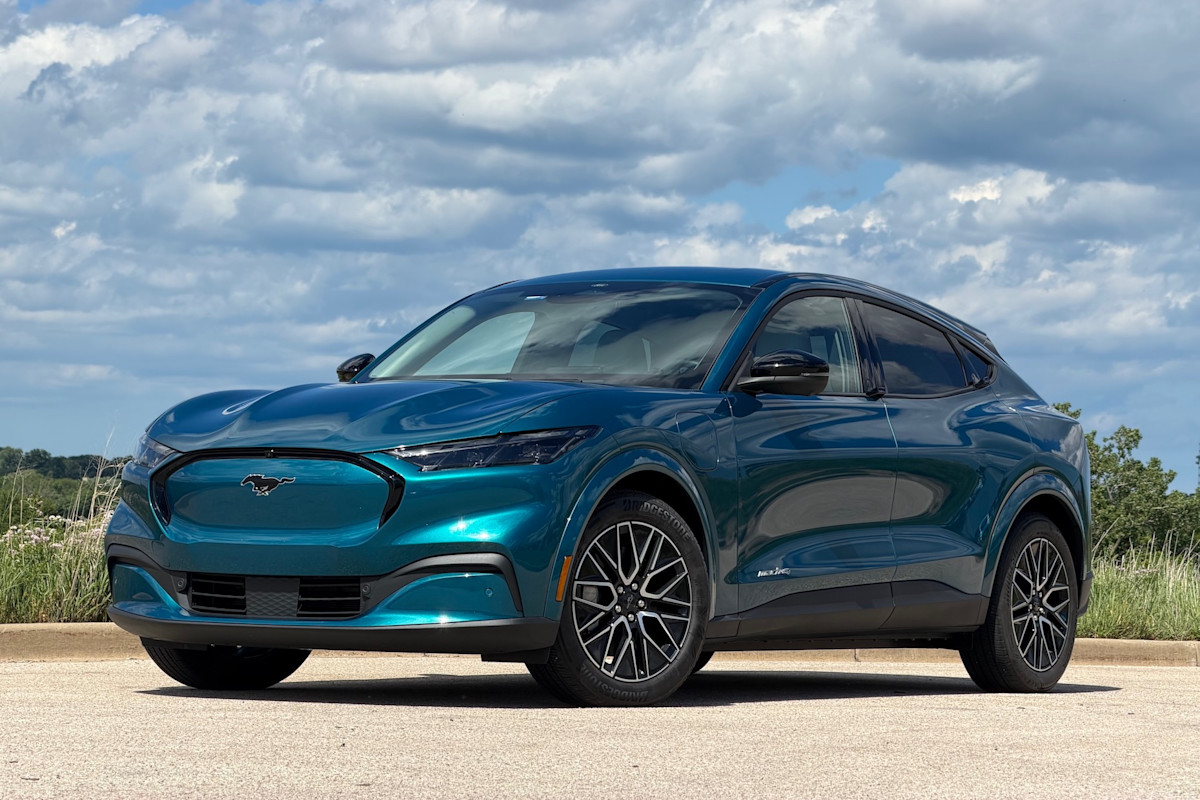
| Ford Mustang Mach-E | 2026 Select RWD | $44,995 |
These are starting points, not recommendations based on a road test. Inventory, delivery timing, freight, financing, insurance and winter range can change the value equation. The CAA list also does not replace Transport Canada’s model-and-trim eligibility check.
Transport Canada says its Electric Vehicle Affordability Program offers up to $5,000 for a qualifying battery-electric or fuel-cell vehicle when the final transaction value is $50,000 or less. Vehicles made in Canada are exempt from that transaction-value ceiling. The program had $2.08 billion remaining as of July 1, so funding was not close to exhaustion when this guide was published.
A confirmed $5,000 incentive is meaningful. A future China-built EV would need to undercut an eligible current model by enough to offset that amount, then survive comparison on financing, insurance, winter efficiency, charging, warranty and resale value.
Three Reasons to Buy an EV Now
1. You Can Verify the Whole Ownership Package
The purchase price is only one line. An established Canadian model comes with a published warranty, known service locations, parts channels, insurance history and at least some independent testing. Those factors matter when the vehicle is your household’s only transportation.
New entrants may eventually offer excellent support, but a factory warranty is only as useful as the repair network behind it. Ask who stocks collision parts, how high-voltage repairs are handled, whether roadside assistance reaches your region and how long common components take to arrive.
2. Current Incentives Can Beat Future Sticker Savings
EVAP eligibility depends partly on where a vehicle is made. Transport Canada requires eligible EVs to be built in Canada or in a country with which Canada has a free-trade agreement. China-built vehicles do not gain eligibility simply because they enter under the 6.1 per cent in-quota tariff.
Compare transaction prices after every confirmed incentive and fee. A $43,000 eligible EV with the full federal incentive can cost less before tax than a future $40,000 import that does not qualify.
3. More Competition Can Help Today’s Models Too
You do not necessarily need to buy a Chinese-brand EV to benefit from Chinese imports. More supply can encourage established brands to improve finance rates, add dealer discounts or adjust pricing. The smartest near-term move may be to request written quotes on two or three available vehicles and give dealers a chance to compete.
Three Reasons Waiting Could Pay Off
1. The July Shipment Surge Needs Time to Reach Showrooms
The jump to 5,104 July imports is too large to dismiss, even though the model mix is unknown. If those vehicles are intended for retail customers, product announcements, certification details or inventory changes should eventually make the customs data visible to shoppers.
Waiting until after August 31 is a sensible checkpoint, not a guarantee. It gives the current 24,500-vehicle quota period time to close and reduces the risk of making a decision immediately before new pricing or supply appears.
2. Affordable Imports Could Reset the Value Benchmark
Canadian EV shoppers have often been asked to pay compact-luxury money for mainstream transportation. China has built enormous scale in batteries, motors and vehicle electronics, and lower-cost imports could put pressure on that pricing structure.
The opportunity is especially interesting below $40,000, where every few thousand dollars changes monthly payments materially. A genuinely affordable hatchback or small crossover with competitive winter range could fill a gap that the Canadian market still has not completely solved.
3. New Brands Need to Reveal Their Canadian Plans
Waiting is useful when it produces information. Canadian launch announcements should answer questions that the quota report cannot:
- Which company is the legal importer and warranty provider?
- Where will vehicles be sold and serviced?
- Which charging connector is fitted, and what fast-charging networks can be used?
- Are the battery warranty and corrosion warranty competitive?
- Are cold-weather range, battery preconditioning and heat-pump equipment standard?
- What happens to connected services if the brand changes distributors?
If a launch does not answer those questions, the low price deserves more scrutiny, not less.
A Better Way to Decide Than Guessing at Future Prices
Start with a written needs list. Set a maximum all-in payment, minimum winter range, seating and cargo requirements, home-charging plan and realistic service radius. Then compare an available EV with the future model you are considering.
For the available vehicle, collect a written cash price, finance cost, insurance quote, incentive confirmation and expected delivery date. For the future vehicle, mark every unknown rather than filling gaps with overseas specifications. A model sold in Europe or China may reach Canada with different equipment, charging hardware, software or battery certification.
Set a deadline for waiting. September or October 2026 is a reasonable first reassessment point because the initial quota period will have ended and July’s shipments will have had time to work through distribution. If no credible product, retail and service announcement exists by your deadline, compare the Canadian vehicles actually on sale again.
The key is to wait for evidence, not a rumour. China’s EV industry has the scale to change Canadian pricing, but a good car in another market is not automatically a good Canadian ownership proposition.
FAQ
Should Canadians wait for cheaper Chinese electric vehicles?
Wait if your current vehicle is reliable, price is your main concern and you can tolerate uncertainty around brands, timing, service and resale value. Buy now if you need a vehicle soon and an available EV already fits your budget, range and charging needs.
Does a China-built EV with an import value under $35,000 cost less than $35,000 in Canada?
Not necessarily. The federal quota category is based on import value, not the final Canadian sticker price. Freight, distribution, compliance, options, dealer costs and taxes can raise the retail price.
Do China-built EVs qualify for Canada’s EVAP incentive?
China-built vehicles do not meet EVAP’s manufacturing-location rule because eligible vehicles must be made in Canada or a country that has a free-trade agreement with Canada. Always confirm the current list for the exact model and trim before signing a contract.
Which Chinese EV brands are confirmed for Canada?
The federal import report does not identify brands or models. Shanghai-built Tesla Model 3 sedans and the China-built Lotus Eletre have reached Canada, but the report does not confirm which vehicles account for the latest lower-valued shipments.
Sources
- Global Affairs Canada: China-origin EV quota utilization
- Transport Canada: Electric Vehicle Affordability Program
- CAA: Electric vehicles available in Canada