Canada's China EV Imports Hit 9,235 as Lower-Priced Shipments Surge
Canada's latest official quota report shows 9,235 China-origin EV imports since March, including a July surge in passenger cars valued at $35,000 or less before shipping and retail costs.
Canada’s controlled opening to China-built electric vehicles is suddenly moving real volume. A new federal report shows 9,235 EVs from China entered under the current tariff quota between March 1 and July 17, using 37.7 per cent of the 24,500-vehicle allowance for the first six-month period.
The biggest change came in July. Global Affairs Canada’s official quota-utilization report, executed on July 17, records 5,104 vehicles for the month so far. That is more than eight times June’s 621 vehicles and represents over half of all quota use since the program started.
The most interesting line is the price category. Of July’s total, 4,192 were passenger cars with a declared value of $35,000 CAD or less. That does not mean 4,192 sub-$35,000 EVs are about to appear in Canadian showrooms, but it is the first strong evidence that lower-valued China-origin supply is moving through the program in scale.
The July Import Surge in Numbers
| Import category | May | June | July to July 17 | Total |
|---|---|---|---|---|
| Passenger cars valued at $35,000 or less | 0 | 465 | 4,192 | 4,657 |
| Passenger cars valued above $35,000 | 3,510 | 135 | 908 | 4,553 |
| SUVs and passenger vans valued above $35,000 | 0 | 21 | 4 | 25 |
| All reported China-origin EVs | 3,510 | 621 | 5,104 | 9,235 |
March and April both show zero utilization in the report. By July 17, the lower-valued passenger-car category had reached 4,657 vehicles, narrowly exceeding the 4,553 higher-valued passenger cars recorded since March. Only 25 imported vehicles appear in the separate higher-valued SUV and passenger-van category.
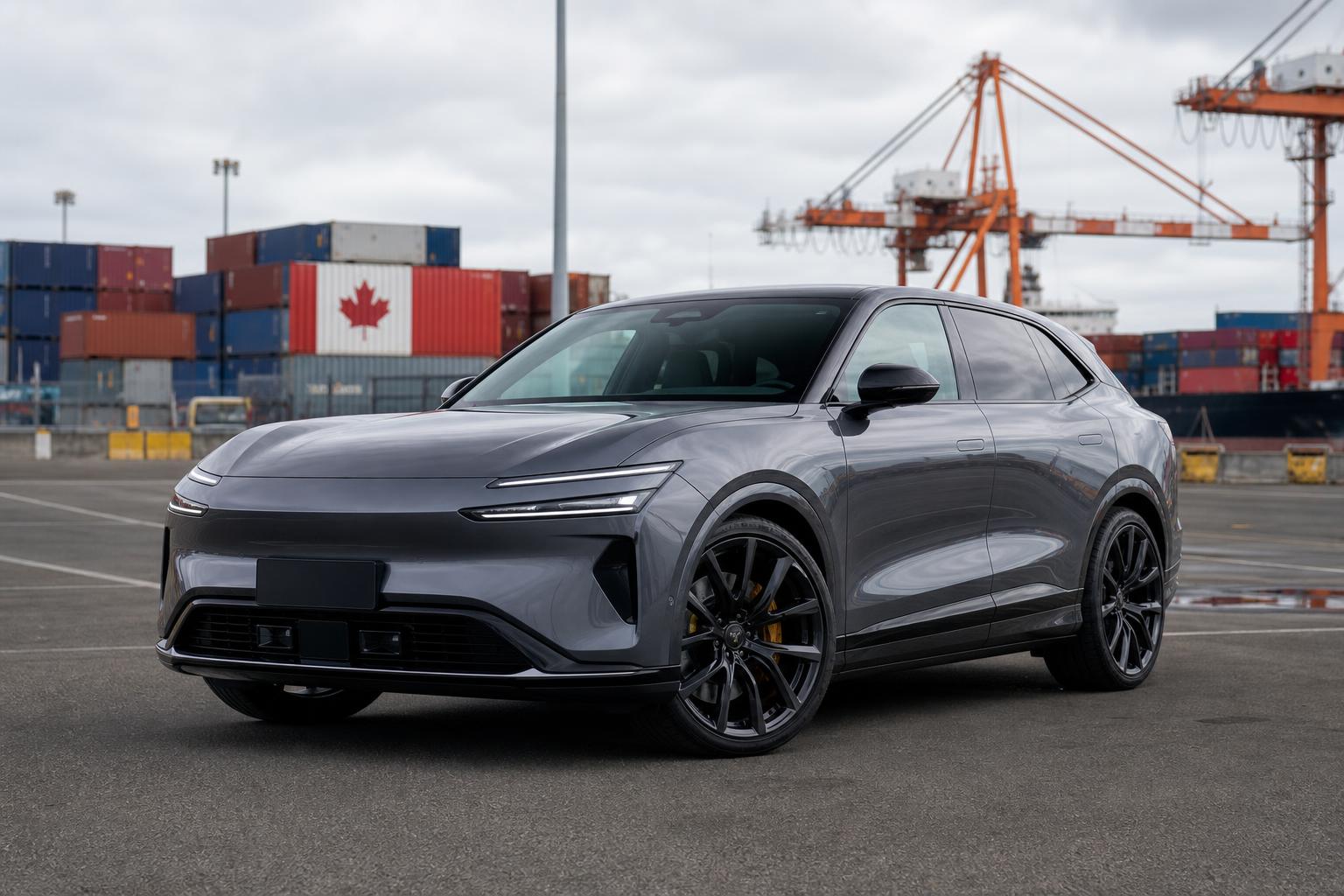
The report does not identify brands, models, Canadian retail prices, ports, or final buyers. It would be a mistake to turn those customs categories into a confirmed showroom list. Earlier arrivals have included Shanghai-built Tesla Model 3 sedans, while Lotus has also begun bringing its China-built Eletre electric SUV to Canada. The latest federal table does not say which vehicles account for the July jump.
Why $35,000 Does Not Mean a $35,000 Sticker Price
The government’s wording matters. The threshold applies to the vehicle’s value for import classification, not necessarily the manufacturer’s suggested retail price a Canadian shopper will see.
Freight, distribution, regulatory compliance, dealer costs, options, taxes, and other charges can all sit between an import value and the final transaction price. A vehicle counted in the $35,000-or-less line can therefore reach a showroom with a materially higher sticker price.
There is also a separate incentive issue. Transport Canada’s Electric Vehicle Affordability Program requires eligible EVs to be made in Canada or in a country with which Canada has a free-trade agreement. China-built vehicles do not become rebate-eligible simply because they enter under the lower-tariff quota.
That distinction is important for buyers. The 6.1 per cent most-favoured-nation tariff inside the quota can lower the cost of importing an EV, but it is not a federal purchase rebate and does not guarantee an affordable retail price.
Canada Has Used 37.7% of the First-Half Allowance
Ottawa’s broader arrangement calls for an initial annual quota of 49,000 EVs from China. The current first-come, first-served period covers March 1 through August 31 and has a maximum of 24,500 vehicles, effectively half of that annual figure.
With 9,235 vehicles recorded, 15,265 spots remain in the current period. At the July pace shown in the latest report, quota use is no longer theoretical, although the remaining allowance is still substantial.
Global Affairs Canada says the full annual quota is planned to grow by 6.5 per cent per year. The portion formally reserved for vehicles with a free-on-board price of $35,000 or less is scheduled to rise from 10 per cent in year two to 50 per cent in year five. The current surge in the lower-valued category is happening before those later reservation requirements take effect.
What This Means for Canadian EV Buyers
In the short term, the report shows supply moving faster than the product announcements around it. Thousands of lower-valued passenger cars have now cleared the quota, but the government data does not tell shoppers which brands will offer them, when inventory will reach dealers, or what the final price will be.
That makes three things worth watching next:
- Whether Tesla changes Canadian Model 3 supply, pricing, or incentives as more Shanghai-built cars arrive
- Which China-based automakers secure Canadian certification, retail partners, service coverage, and parts support
- How Ottawa administers the quota after the initial first-come, first-served period ends on August 31
The last point could shape the market as much as the import count. Canada’s consultation on longer-term allocation asked whether import access should reflect investment, Canadian pricing, new entrants, and penalties for unused quota. Those rules will influence whether a few established importers dominate the program or more brands get room to launch.
For shoppers, the July numbers are encouraging but not yet a buying guide. More lower-cost supply can pressure prices across the market, including EVs built outside China. But a compelling Canadian EV still needs transparent pricing, safety certification, warranty coverage, winter-range information, charging compatibility, service capacity, and parts availability.
The headline is no longer that China-built EVs might come to Canada. They are arriving quickly. The next test is whether that import momentum produces genuinely affordable, supportable choices on Canadian dealer lots.