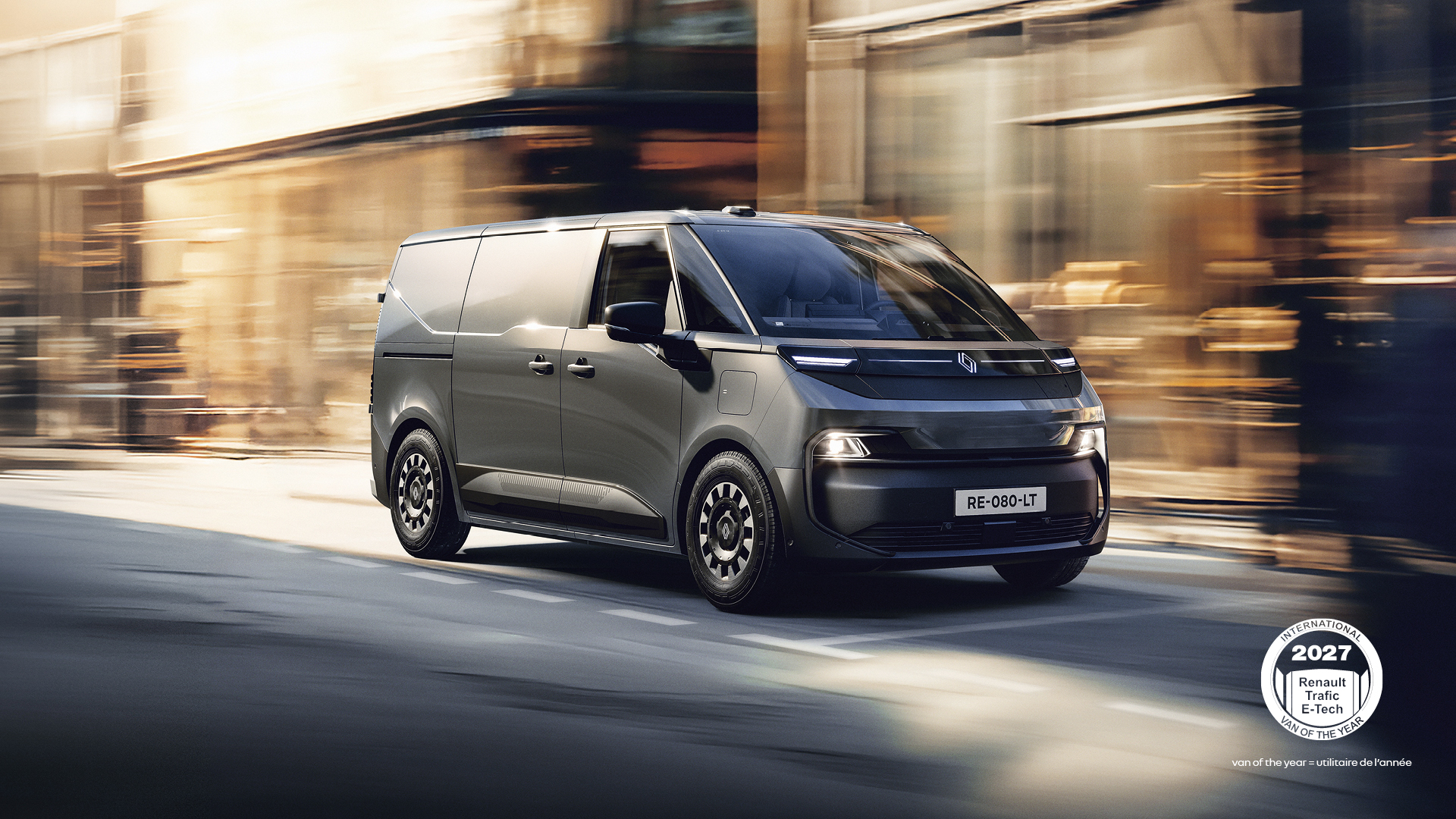
Renault's New Trafic E-Tech Electric Van Gets 800V Charging and 470 Km of Range
Renault is showing the new Trafic Van E-Tech electric with an 81-kWh battery, 800V charging, a targeted 470 km WLTP range and V2L support.
Renault’s next electric work van is getting a more serious technical brief. The new Trafic Van E-Tech electric, shown to the Dutch public during EV Experience at Circuit Zandvoort from September 24 to 26, uses an 800V electrical architecture, offers a targeted 470 km WLTP range in Long Range form and brings bidirectional-energy features to Renault’s light-commercial lineup.
That matters because electric vans live or die on downtime. A delivery van with a big range number but slow charging can still be hard to schedule. Renault is clearly aiming this Trafic at operators that need a van to work all day, recharge quickly and keep the familiar packaging advantages of a midsize commercial vehicle.
What Renault Has Confirmed
The official Renault Netherlands release says the Long Range version uses an 81-kWh NMC battery and targets 470 km WLTP range. Renault also says urban range can climb to nearly 690 km, though that city figure should be treated as use-case dependent rather than a highway-road-trip promise.
The 800V charging system is the headline hardware change. Renault says the Trafic can add up to 280 km of range in 20 minutes at a suitable DC fast charger, or up to 380 km of additional city-use range. As always, the useful number will depend on charger output, pack temperature, load, route speed and where the van sits in its charge curve.
| Item | Renault Trafic Van E-Tech electric |
|---|---|
| Long Range battery | 81 kWh NMC |
| Targeted Long Range driving range | 470 km WLTP; nearly 690 km in city use |
| Urban Range version | LFP battery; targeted 350 km WLTP, due later |
| Charging architecture | 800V; up to 280 km added in 20 minutes at a suitable DC charger |
| Motor output | 150 kW and 345 Nm |
| Payload and towing | Up to 1.3 tonnes payload and 2.0 tonnes towing, pending homologation |
| Cargo volume | 5.1 cubic metres in L1; 5.8 cubic metres in L2 |
| Energy features | V2L support, with V2G planned later |
Renault Trafic Van E-Tech electric official gallery
13


Renault is positioning the new Trafic Van E-Tech electric as the first of five new electric commercial vehicles due by 2028.
The Packaging Looks Work-Ready
Renault says the Trafic Van E-Tech electric will be offered in two lengths. The L1 measures 4.87 metres and carries 5.1 cubic metres of cargo. The longer L2 measures 5.27 metres and raises cargo volume to 5.8 cubic metres. Both keep the height to 1.90 metres, which should help with parking garages and urban loading docks.
The company also claims space for three Europallets, a 53-cm loading sill and a tight 10.3-metre turning circle. That last number is not as exciting as an 800V spec sheet, but it may be more important to drivers threading a van through narrow streets and job sites every day.
Renault is also building out body-style flexibility. The Trafic is described as the first of five new Renault commercial vehicles due through 2028, with later versions including chassis-cab, platform-cab, tipper and open or closed body configurations.
V2L Now, V2G Later
The Trafic will support Vehicle-to-Load, meaning the traction battery can power external devices such as tools or a laptop. That is a natural fit for trades and mobile-service users, because the van becomes a rolling battery without requiring the driver to carry a separate generator for light-duty electrical work.
Renault also says Vehicle-to-Grid support will arrive later. V2G allows energy to flow from the vehicle back to the grid, but its practical value depends heavily on local utility programs, charger hardware and fleet-management software. The hardware promise is useful; the real-world payoff will vary by market.
A Software-Defined Renault Van
Renault calls the new Trafic its first model with the group’s Software Defined Vehicle architecture. Instead of relying on a large number of separate electronic control units, the van uses a central-computer approach intended to support over-the-air updates through the vehicle’s life.
Inside, the van gets a 10-inch driver display and a 12-inch central screen running Renault’s openR evo system on Android Automotive OS. Renault says navigation can account for vehicle dimensions and load, which is exactly the sort of feature that matters in a commercial van more than another oversized entertainment screen.
Why It Matters Beyond Europe
Renault has not announced this Trafic for Canada or the United States, so this is not a direct shopping story for North American van buyers. It is still relevant because commercial EVs are quickly becoming a technology race of their own. A practical electric van now needs more than a battery and a badge; it needs charging speed, fleet software, body options, payload, tight urban maneuverability and a credible cost-of-ownership case.
Renault claims the new Trafic can deliver total cost of ownership up to 10 percent lower than a comparable combustion van. That is a company claim, and it will depend on energy pricing, utilization, incentives, maintenance, financing and residual values. Still, the direction is clear: commercial EVs are moving from trial fleets toward work tools that have to beat diesel and gasoline on the spreadsheet.
The Trafic’s 800V architecture is the piece worth watching. Fast charging has often been treated as a premium-car feature, but work vehicles may need it just as badly. If a van can regain a meaningful amount of range during a lunch stop or depot break, electrification becomes easier to schedule and easier to justify.