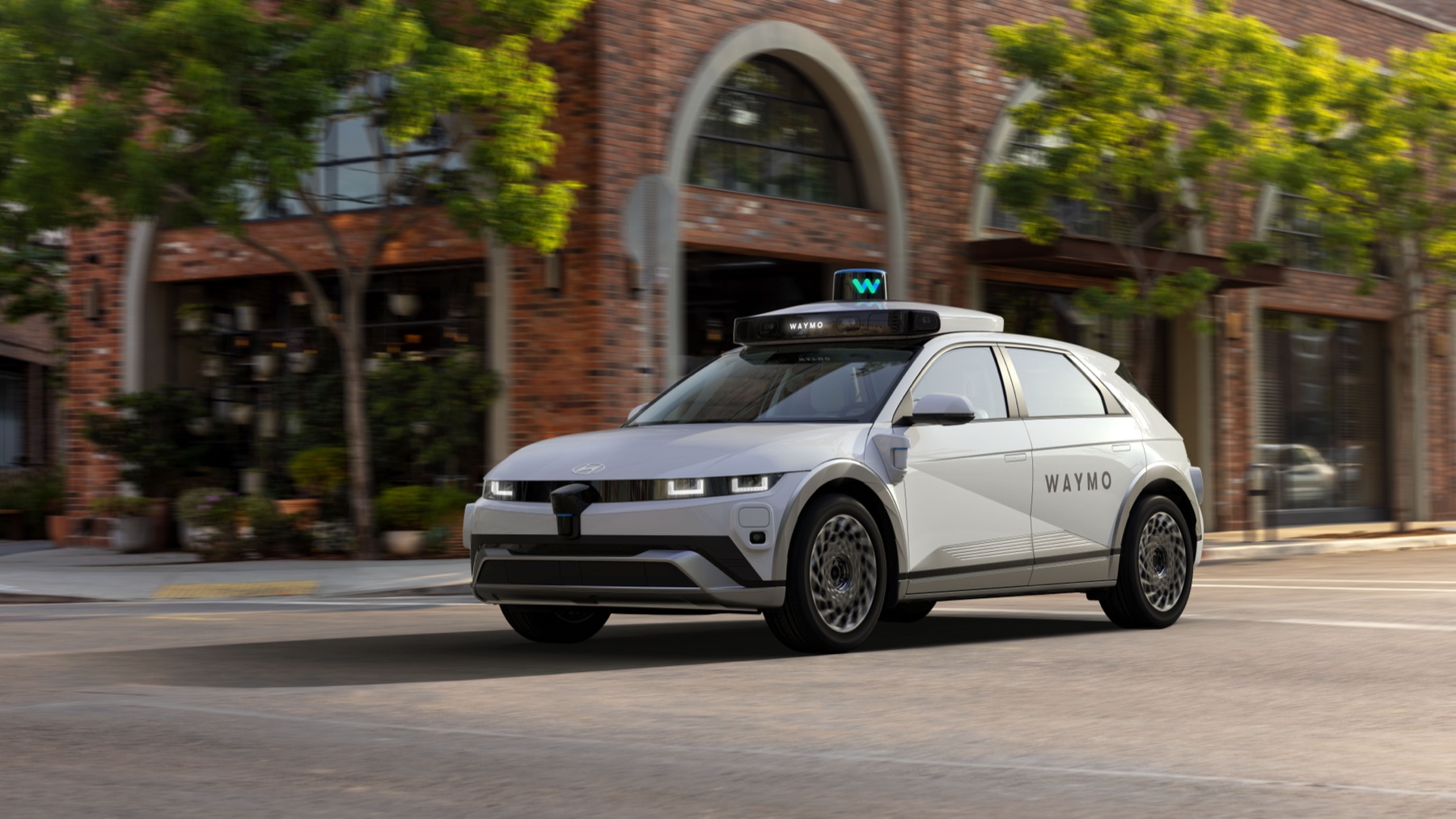
Hyundai Plans Tens of Thousands of IONIQ 5 Robotaxis for Waymo
Hyundai says it plans to build tens of thousands of IONIQ 5 robotaxis for Waymo in Georgia, with first deliveries scheduled for the fourth quarter of 2026.
Hyundai is preparing to turn the IONIQ 5 into something more than a popular retail EV. The automaker says it plans to build tens of thousands of IONIQ 5 robotaxis for Waymo at Hyundai Motor Group Metaplant America in Georgia.
Hyundai CEO José Muñoz disclosed the scale at the company’s Tech Talent Forum in San Jose, California. InsideEVs reported via Yahoo Finance that Muñoz described robotaxis as a way to put Hyundai’s U.S. electric-vehicle manufacturing capacity to work while consumer EV demand grows more slowly than the industry once expected.
The volume target is the headline, but timing matters too. Hyundai’s official 2026 investor-day update says the first Waymo IONIQ 5 robotaxis will be delivered in the fourth quarter of 2026. The company has not published a precise production schedule showing how quickly the program will reach tens of thousands of vehicles.
Built in Georgia, Then Equipped for Waymo
The robotaxis will start as IONIQ 5s assembled at Hyundai’s Georgia plant using a localized U.S. supply chain. They will then receive Waymo’s sixth-generation autonomous-driving system before joining the Waymo One fleet.
This is not simply a retail IONIQ 5 with a roof-mounted sensor pod. Hyundai says the Waymo version includes autonomous-ready changes such as redundant hardware and power-operated doors. Redundancy is essential in a vehicle that cannot depend on a human driver to compensate immediately if a primary system fails.
The IONIQ 5’s basic architecture also suits high-utilization fleet work. Its flat-floor cabin provides useful passenger space, while the 800-volt electrical system can reduce charging downtime when the vehicle is connected to a suitably powerful DC fast charger. A robotaxi that spends less time charging can complete more revenue-generating trips, although fleet uptime will also depend on cleaning, maintenance, sensor calibration and depot operations.
Hyundai and Waymo originally described the partnership as a multi-year program with “significant volume.” The new tens-of-thousands statement gives that earlier language a much clearer sense of scale.
Testing Is Already Underway
Waymo is not waiting for the full production ramp before adapting its software to the Hyundai platform.
In July, Waymo confirmed that it had begun driving a growing fleet of IONIQ 5 vehicles autonomously with a specialist present. That validation phase allows Waymo to tune its sixth-generation Waymo Driver for the IONIQ 5’s dimensions, steering, braking, electrical systems and sensor installation before the vehicles enter fully autonomous passenger service.
Production and deployment are therefore separate milestones. Hyundai can build the vehicles at automotive scale, but each robotaxi still has to be integrated, validated and assigned to a market where Waymo has the operational and regulatory framework to run it.
That distinction is important when the planned volume reaches five figures. Tens of thousands of completed vehicles would represent a huge manufacturing program, but it does not mean tens of thousands will all appear on public roads at once.
Why the IONIQ 5 Matters to Waymo
Waymo’s current expansion requires more than self-driving software. It needs a repeatable supply of EVs that can be built consistently, serviced efficiently and adapted to the same autonomous-driving hardware across multiple cities.
The IONIQ 5 gives Waymo a mass-produced platform from an established global automaker with a large U.S. factory. It also reduces dependence on a single vehicle type as the company expands its fleet.
For riders, the Hyundai’s conventional crossover layout may be an advantage. The cabin has familiar doors, seating and cargo space rather than the more experimental packaging of a purpose-built two-seat robotaxi. That makes it easier to use for airport trips, small groups and passengers carrying luggage.
The compromise is that a converted production vehicle cannot use cabin space as radically as a machine designed from the beginning without a driver. The IONIQ 5 still has a steering wheel, front controls and a conventional body structure. Waymo is effectively choosing manufacturing readiness and versatility over a clean-sheet robotaxi layout.
Hyundai Gets a New Customer for Its EV Factory
The program is strategically useful for Hyundai because robotaxi orders can absorb production capacity independently of normal dealership demand.
Hyundai has invested heavily in U.S. EV manufacturing, yet the American market has become less predictable as incentives, emissions rules and consumer demand shift. A large Waymo contract gives the Georgia plant another volume stream and allows Hyundai to spread its EV manufacturing investment across retail vehicles and commercial autonomy programs.
It also positions Hyundai as an autonomous-vehicle supplier, not only a company developing driver-assistance technology for its own models. If the IONIQ 5 program works, other mobility companies could become customers for Hyundai’s autonomous-ready vehicle platforms.
That does not make robotaxis a simple cure for softer EV demand. Waymo’s orders are substantial, but they remain one fleet program. Hyundai still needs competitive retail EVs, hybrids and combustion models across a much larger global business.
What Happens Next
The first meaningful checkpoint is Hyundai’s planned fourth-quarter delivery start. After that, the important questions are how quickly Waymo can complete vehicle integration, which cities receive the IONIQ 5 first and how rapidly the fleet grows during 2027.
Hyundai’s tens-of-thousands target is ambitious, but it rests on a combination that makes practical sense: an EV already engineered for fast charging and roomy packaging, a U.S. plant capable of high-volume production and an autonomy company that needs more vehicles to support geographic expansion.
The robotaxi race is often framed as a software contest. Hyundai’s role is a reminder that scaling it also requires the less glamorous discipline of building thousands of durable, consistent vehicles — and keeping them moving every day.