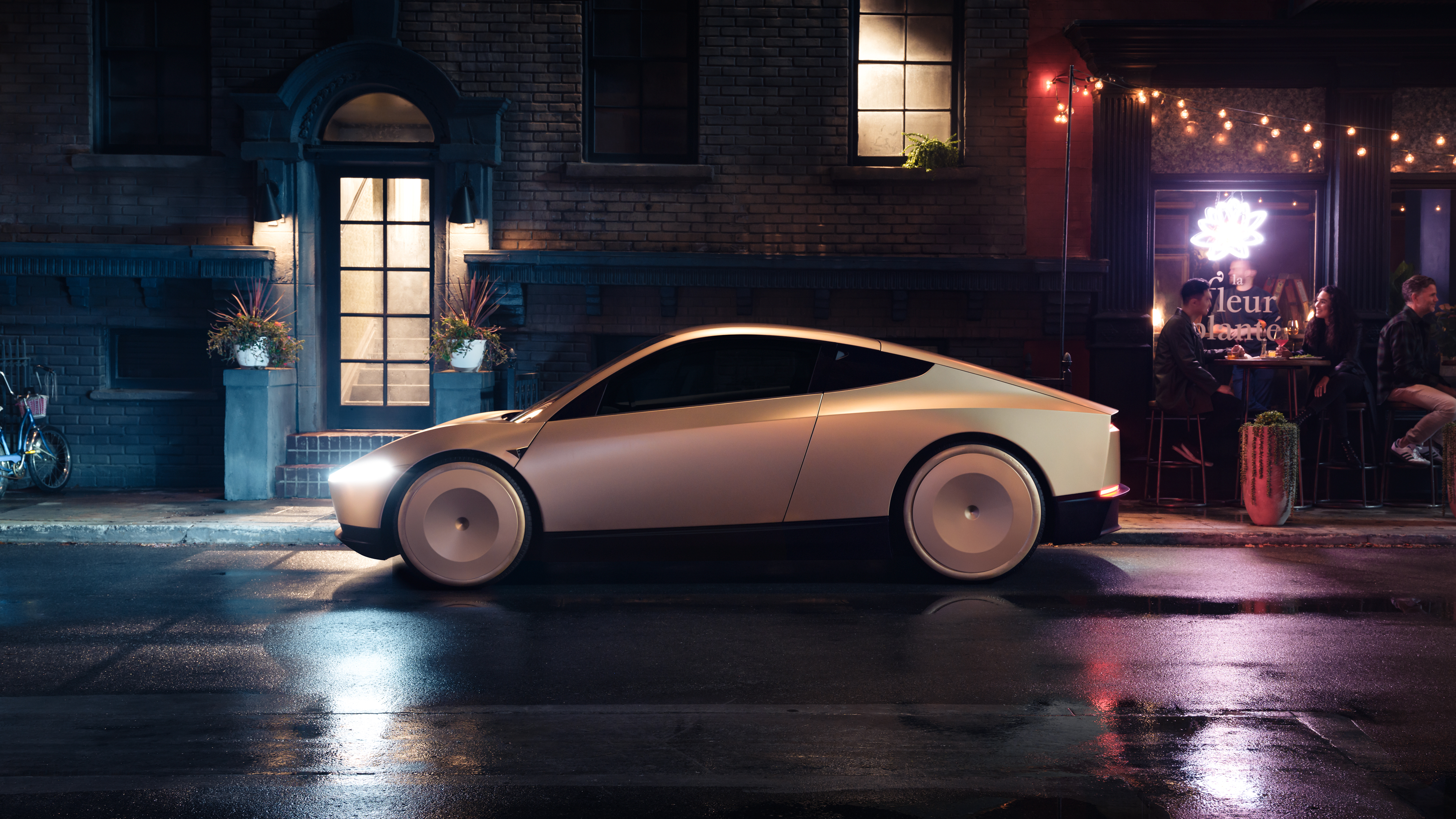
Tesla Cybercab Starts Public Rides in Austin, With Important Limits
Tesla has started offering public Cybercab rides in Austin, but the initial service remains small, geofenced and staffed by safety monitors.
Tesla’s Cybercab has moved beyond launch events and factory sightings. Members of the public began riding in the purpose-built electric robotaxi in Austin, Texas, on September 3, giving Tesla its first real customer-facing deployment of a vehicle designed without a steering wheel or pedals.
That is a meaningful step for a program built around years of ambitious autonomy promises. It is not, however, a mass-market robotaxi launch. The first rides are operating in a limited area, with a small number of vehicles and safety monitors on board.
The distinction matters. Cybercab is finally carrying ordinary riders, but Tesla is still validating the vehicle and service under tightly controlled conditions.
What Has Actually Launched
Tesla opened public Cybercab rides in Austin’s South Congress area on Thursday afternoon, according to Bloomberg’s report from the launch. Riders use Tesla’s Robotaxi app to request a trip, much as they would with a conventional ride-hailing service.
Tesla also published a North American Cybercab rider guide dated September 3. The guide covers the unusual basics of using a car with no human driver position: unlocking the vehicle, opening its large doors, starting a ride from the passenger display and stopping the trip if help is needed.
Unlike the Model Y vehicles Tesla has used in its Austin robotaxi operation, Cybercab was designed around autonomous service from the beginning. Its two-seat cabin does not reserve space for a steering wheel, pedals or a conventional instrument panel. That packaging is the vehicle’s biggest practical difference, not just a futuristic styling exercise.
Removing the driver controls creates more passenger space in a compact footprint, but it also removes the simplest fallback if the automated system cannot complete a trip. Remote assistance, safe-stop behavior and reliable communications therefore become core vehicle functions rather than secondary conveniences.
The Safety Monitor Shows This Is Still a Controlled Rollout
Initial Cybercab rides include Tesla safety monitors. That makes the public debut closer to an expanded validation program than a fully unattended commercial service.
The monitors are not conventional drivers—the Cybercab gives them no steering wheel or pedals—but their presence gives Tesla an on-board representative who can observe the ride, help passengers and respond if the service behaves unexpectedly.
This does not erase the technical significance of the launch. A vehicle without manual controls is now carrying public passengers on real streets. It does mean that claims of a completely unsupervised robotaxi fleet would be premature.
Tesla’s challenge is no longer only whether its autonomy software can complete a demonstration route. The company must show that Cybercab can handle repeated customer trips, pickups, drop-offs, roadworks, emergency vehicles, bad weather, confused passengers and the everyday unpredictability of an urban ride-hailing service.
Production Has Started, but Scale Is the Next Test
Tesla says limited Cybercab production has started and that availability will expand as more vehicles are built. The company began producing early units at its Texas factory in August, less than a month before the public Austin rides.
The wording is appropriately cautious. A handful of customer rides proves that the vehicle and service can operate together. It does not establish a production rate, fleet size or timetable for broad availability.
Cybercab’s economics depend heavily on scale. A purpose-built two-seater can make sense when it spends much of the day carrying paying passengers, but low utilization would leave Tesla with an expensive specialized vehicle that cannot easily be sold as a normal private car.
Manufacturing also has to be unusually consistent. A conventional vehicle can tolerate a trip to a service centre without disrupting an entire mobility network. A robotaxi fleet loses revenue whenever a car is unavailable, and even small issues with doors, charging, cabin cleaning, sensors or connectivity can become major operational costs across thousands of vehicles.
Regulators Are Watching the Missing Controls
The lack of a steering wheel and pedals is central to the Cybercab concept, but it also puts the vehicle outside assumptions built into many existing federal safety standards.
The National Highway Traffic Safety Administration has been reviewing Tesla’s plans and asking for information about Cybercab’s compliance path. That process should not be described as blanket federal approval of the vehicle or of Tesla’s autonomous-driving system. Vehicle-standard compliance, exemptions and permission to operate a driverless ride service involve separate legal and regulatory questions.
Austin gives Tesla room to prove the system in a relatively narrow operating area. Expansion to other cities will require more than shipping cars. Local operating rules, insurance, emergency-response procedures, mapping and weather conditions can all change the difficulty of the service.
Canada would be a later and separate question. Tesla has not announced a Canadian Cybercab launch, and a vehicle built without conventional controls would need to satisfy Canadian safety requirements as well as provincial rules governing automated vehicles and ride-hailing operations.
Why the Austin Debut Matters
Cybercab has spent most of its life as a promise: a low-cost autonomous EV that could turn Tesla’s software into a transportation service. Public rides finally provide evidence that the physical vehicle, app and fleet operation are beginning to connect.
The strongest conclusion is also the narrowest one. Tesla now has a purpose-built Cybercab carrying public riders in Austin. The service remains small, geofenced and monitored, so it is too early to judge reliability, economics or the pace of expansion.
Still, this is more substantial than another unveiling or production target. The Cybercab is doing the job it was designed to do—just under much closer supervision, and at a much smaller scale, than Tesla’s long-term vision requires.