
Kia PV7 Electric Van Debuts With 460-KM Range and 800-Volt Charging
Kia has revealed the PV7 electric cargo and passenger van with up to 460 km of targeted WLTP range, 800-volt charging and a 2027 European launch.
AI-generated illustration
Kia has revealed the PV7, a large electric van that brings passenger-EV charging hardware to a vehicle designed for cargo routes, shuttle work and fleet conversions.
Unveiled at IAA Transportation in Hannover, the PV7 will be offered as Cargo and Passenger models with 71.5-kWh or 96.2-kWh batteries, up to 200 kW (about 268 hp, or 272 PS) and a targeted WLTP range of more than 460 km (286 miles) in the long-range Cargo configuration.
The dedicated E-GMP.S platform uses an 800-volt electrical architecture. Kia says a 10-to-80-percent fast charge should take roughly 25 minutes on a 350-kW DC charger, although that figure and the range claim remain preliminary until homologation.
Kia’s full preliminary release says European and Korean sales are planned for the second half of 2027. Additional markets and derivatives will follow, but Kia has not announced the PV7 for Canada or the United States.
Kia PV7 Preliminary Specifications
| Specification | Kia PV7 |
|---|---|
| Body styles at launch | Cargo and Passenger |
| Battery options | 71.5 kWh or 96.2 kWh NCM |
| Maximum output | 200 kW (about 268 hp, or 272 PS) |
| Maximum torque | 420 Nm (310 lb-ft) |
| Drive | Front-wheel drive; AWD planned later |
| Targeted range | More than 460 km WLTP, Cargo Long Range |
| DC charging | 10–80% in the mid-20-minute range using a 350-kW station |
| Cargo volume | Up to 6.1 m³ Long; 8.0 m³ High Roof |
| Maximum payload | Up to 1,200 kg, depending on configuration |
| Passenger capacity | Up to nine globally; up to 11 in Korea |
| Launch timing | Second half of 2027 in Europe and Korea |
The long-wheelbase PV7 shown at the premiere measures 5,350 mm long, 1,995 mm wide and 1,990 mm tall, with a 3,500-mm wheelbase. That makes it substantially larger than Kia’s PV5 and places it in the heart of the electric commercial-van market rather than the compact urban-delivery niche.
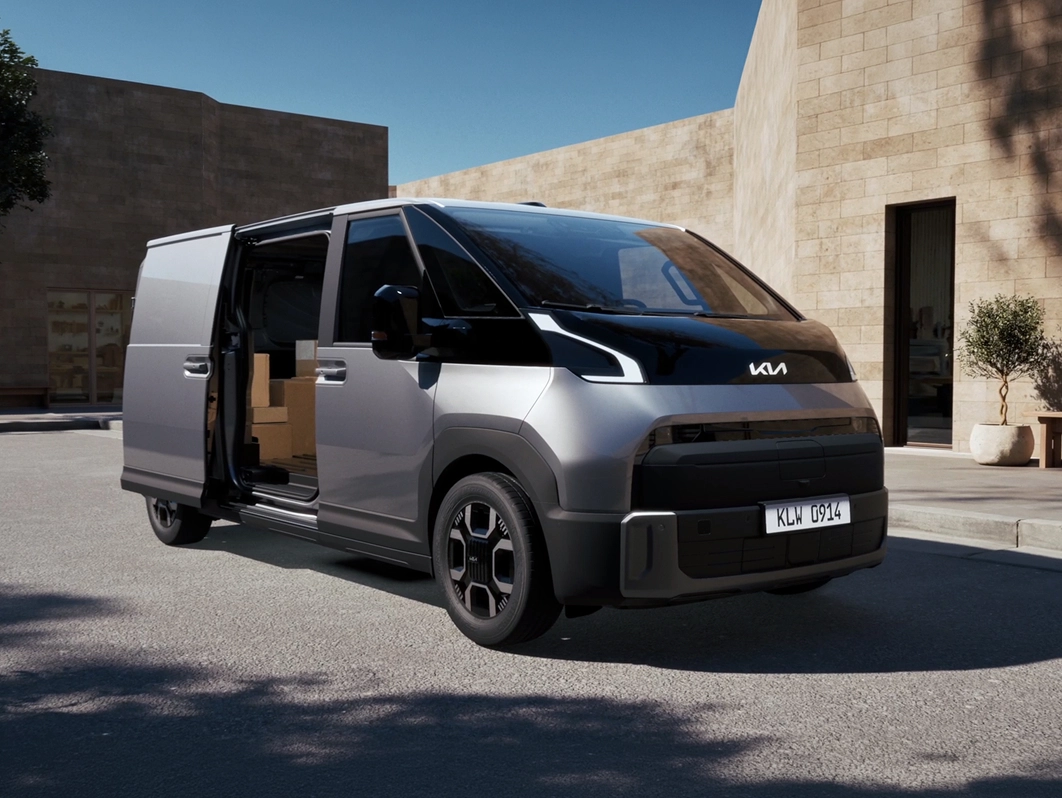
The PV7 Cargo will be offered in Compact, Long and High Roof forms. Image: Kia
The 800-Volt System Is the Headline Feature
A large electric van can carry plenty of battery, but the more important question for a working vehicle is how quickly it can return to service.
Kia’s answer is the same basic strategy that made the EV6 and EV9 stand out: raise the system voltage so the vehicle can accept high charging power without requiring equally extreme current. The PV7’s claimed mid-20-minute 10-to-80-percent stop is quick for a van with a 96.2-kWh pack and could make opportunity charging practical between shifts or during scheduled breaks.
The peak figure needs context. Reaching the advertised time will require a compatible 350-kW charger, suitable battery temperature and a charging curve that holds substantial power beyond the initial peak. Depot operators also need enough grid capacity to charge several vans at once. One PV7 completing a fast session is different from a 30-vehicle fleet doing it at the end of the afternoon route.
Kia is adding two charging-port locations to make parking easier. The standard front port handles AC and DC charging, while an optional rear-side port adds AC charging. That could reduce awkward cable runs in depots where vehicles back into assigned stalls.
Vehicle-to-Load capability will also let the PV7 power tools and other equipment through interior and exterior outlets. For service contractors, mobile workshops and event operators, that feature could replace a separate generator for lighter electrical loads.
Cargo Capacity Reaches Eight Cubic Metres
The PV7 Cargo Long offers up to 6.1 cubic metres of load space under the VDA standard. A High Roof version increases that to 8.0 cubic metres, while the Long can carry as many as three Euro pallets and has a low 550-mm load height.
Payload depends on the body and configuration. Kia lists up to 1,165 kg for the Long and 1,200 kg for the Compact. Those are useful numbers, but fleets will need final curb weights and axle ratings before deciding whether the larger battery is worth its effect on payload.
The Cargo model will be offered with two or three front seats, twin-swing or lift-up rear doors, configurable floor materials and a heavy-load driving mode that adapts vehicle behaviour as payload changes. Replaceable bumper corners, wheel-arch sections and door cladding are designed to make minor damage easier to repair — an unglamorous detail that matters when downtime costs money.
Passenger Versions Seat Up to Nine
The global PV7 Passenger can carry as many as nine people, while an 11-seat version is planned for Korea. Kia describes crew, shuttle, rental, tourism and family use cases, with removable seats and several cabin layouts.
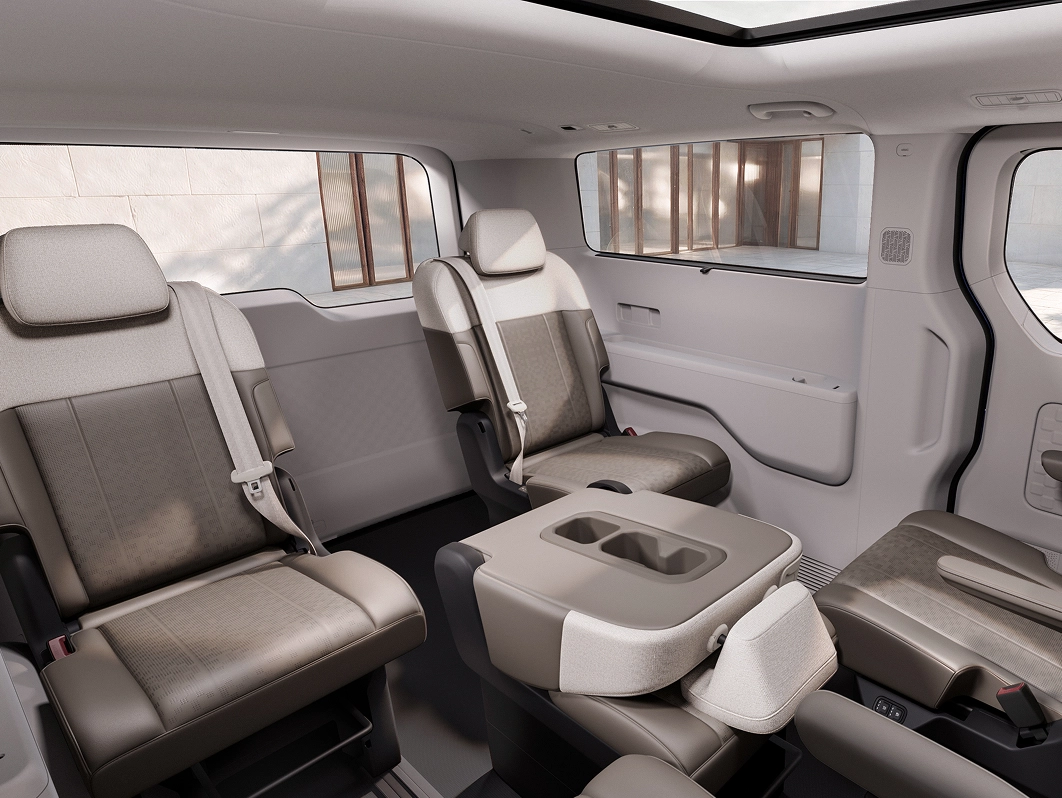
The Passenger model combines removable seating with a flat-floor layout. Image: Kia
The seven-seat model uses long rails and removable seats to create different passenger and cargo arrangements. Available equipment includes rear climate controls, power-sliding doors and 100-watt USB-C ports.
Up front, Kia pairs 12.9-inch and 14.6-inch displays with physical controls for frequently used functions. The Pleos Connect infotainment system runs on Android Automotive OS and supports over-the-air updates, connected navigation and business applications.
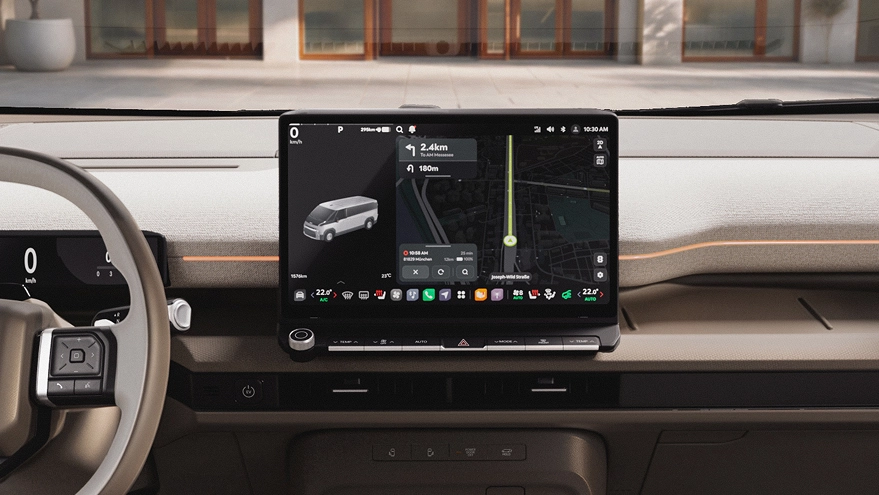
Pleos Connect is intended to combine regular infotainment with fleet and business applications. Image: Kia
Kia also plans a fleet-management portal covering vehicle location, battery status, charging, maintenance and driver data. Predictive diagnostics and proactive maintenance alerts sound less exciting than the 800-volt charging architecture, but they may be just as important to commercial buyers measuring uptime and total operating cost.
Kia Plans 23 PV7 Variants
The initial Cargo and Passenger vans are only the beginning. Kia says the PV7 family will eventually grow to 23 variants, including Compact, Long and High Roof cargo bodies, passenger models, a chassis cab and specialist conversions.
The company’s Flexible Body System uses a standardized vehicle structure to support different upper bodies and equipment. A common connector interface is intended to let conversion hardware communicate with and be controlled through the van.
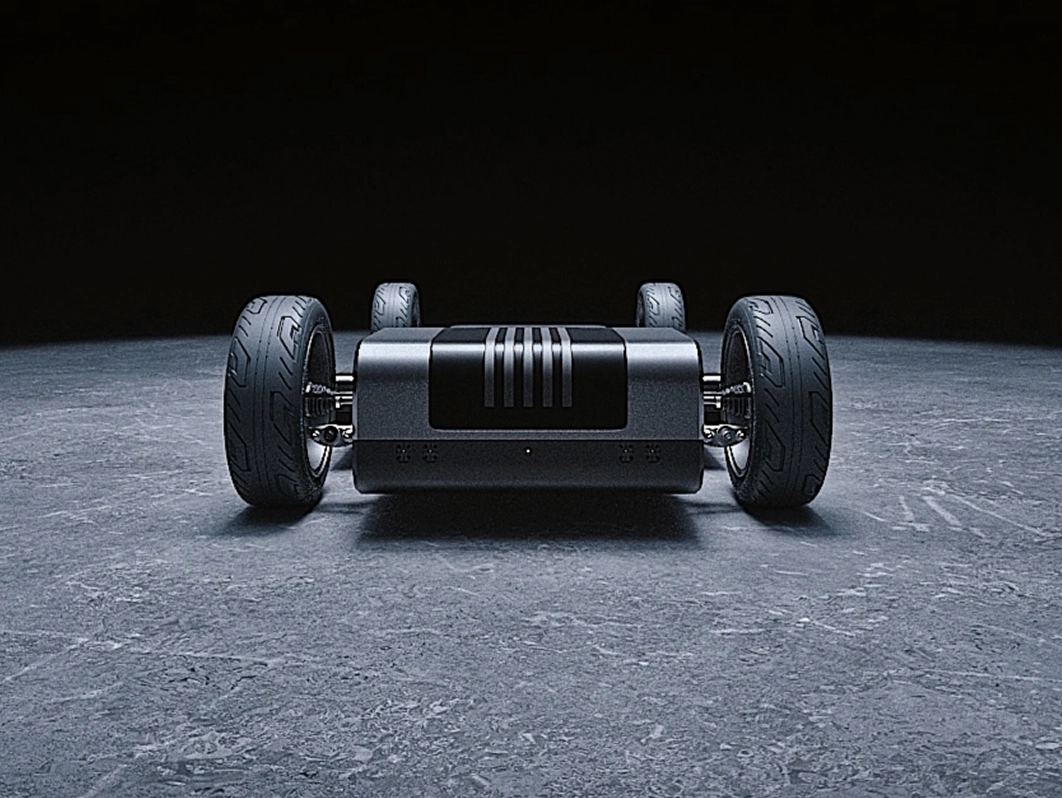
The PV7 uses Kia’s dedicated E-GMP.S electric commercial-vehicle architecture. Image: Kia
That breadth is central to Kia’s “Platform Beyond Vehicle” plan. The smaller PV5 established the formula, the PV7 moves it into a higher-capacity class, and a larger PV9 is scheduled to follow in 2029.
Why the PV7 Matters
The PV7 is not simply a taller passenger EV with the seats removed. Kia is treating charging speed, cargo access, repairability, conversion support and fleet software as parts of the same product.
That integrated approach could make the van a serious competitor in Europe, where electric commercial vehicles already face demanding urban routes and tightening emissions rules. The 460-km target is enough to cover many regional jobs on paper, while the 800-volt platform addresses one of the biggest operational objections to a large battery-powered van: charging downtime.
The unanswered questions are price, real-world efficiency under load, final towing capacity, cold-weather performance and service support. Kia has also left North American availability open. A van this size could suit airport shuttles, delivery fleets and trades in Canada and the U.S., but market-specific charging hardware, certification and dealer support would all need to be confirmed.
For now, the PV7 is a Europe-and-Korea product with unusually ambitious charging specifications and a clear 2027 arrival window. If Kia can deliver the promised range, charge time and conversion ecosystem at a competitive price, established electric vans may have a formidable new rival.