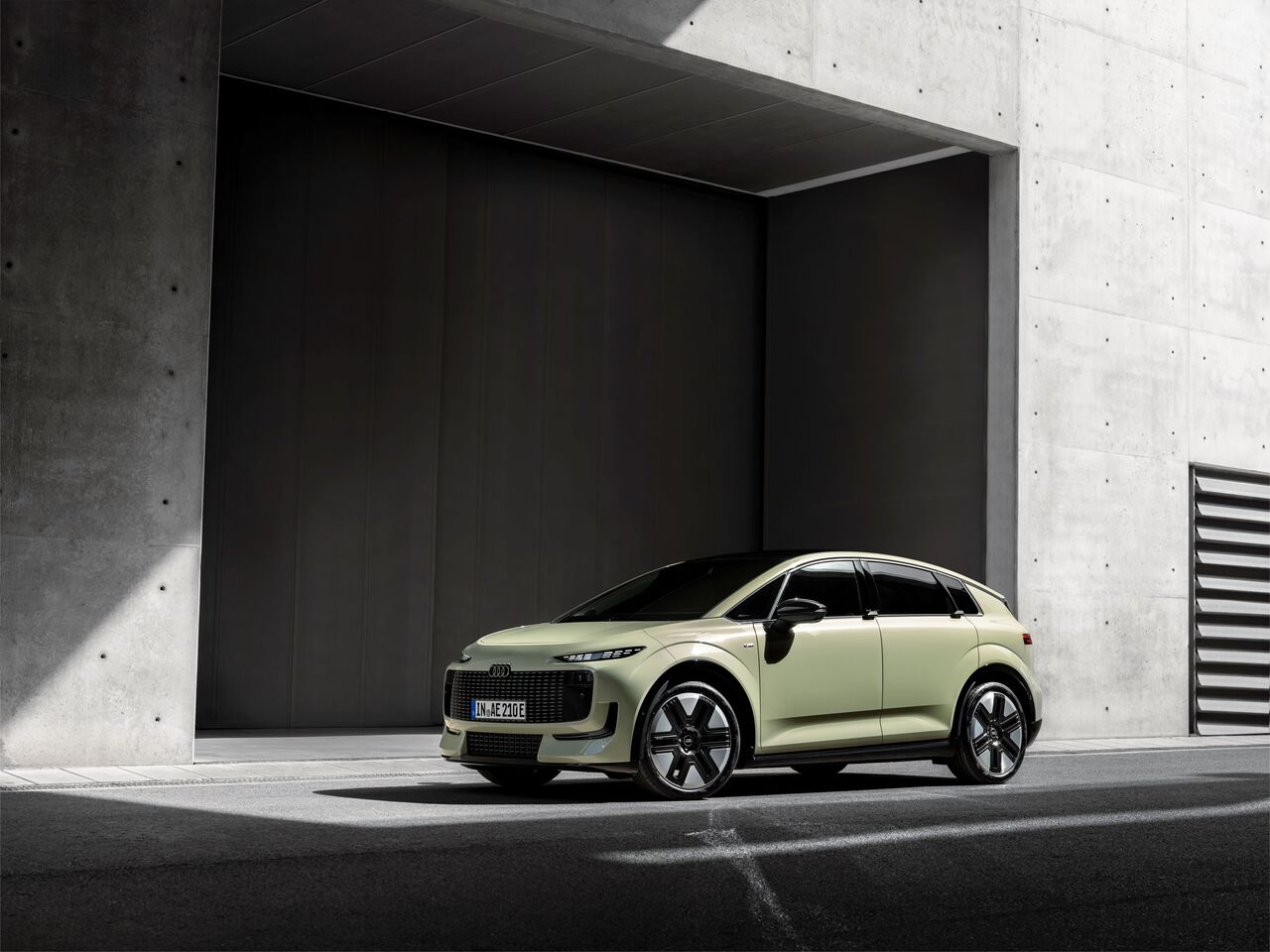
Audi A2 e-tron Debuts With 646-Km Range and €38,200 Price
Audi's new A2 e-tron compact EV offers three battery sizes, up to 646 km of WLTP range and German pricing from €38,200.
Image: Audi
Audi has brought back one of its most unconventional nameplates for its most efficiency-focused electric car yet.
The Audi A2 e-tron made its public debut in Paris on September 8 as a compact, rear-wheel-drive EV developed specifically for European customers. It will offer three battery sizes, four power outputs and as much as 646 kilometres of WLTP range. German prices start at €38,200, orders open September 10 and the first deliveries are scheduled for December 2026.
The headline numbers put the A2 e-tron in an interesting position. It is Audi’s new entry point to fully electric ownership, but it is not a stripped city car. The longest-range version uses an 84-kWh battery and reaches 646 km, while a separate efficiency-focused model consumes just 12.8 kWh/100 km on the WLTP cycle—the lowest figure Audi has claimed for a production vehicle.
Audi’s official technical release also confirms bidirectional charging, a 396-litre trunk and a broad set of standard driver-assistance features. What it does not announce is a Canadian or US launch. For now, this is clearly a Europe-first compact EV.
Four Versions, Three Batteries
The range begins with a 125-kW model using a 52-kWh lithium iron phosphate battery. It is rated for up to 423 km and reaches 100 km/h in 8.8 seconds. Peak DC charging is a modest 100 kW, but the smaller pack needs a claimed 24 minutes to move from 10 to 80 percent.
The 140-kW version is the efficiency leader. Its 61-kWh LFP battery supports up to 515 km of range, while the optional efficiency package produces the standout 12.8-kWh/100-km consumption figure. Charging peaks at 105 kW, with a claimed 10-to-80-percent time of 26 minutes in Audi’s technical table. The same release’s FAQ says 25 minutes for this pack, an internal discrepancy to confirm against final vehicle documentation.
Long-distance buyers get an 84-kWh nickel-manganese-cobalt battery in the two most powerful models. The 170-kW car is the range champion at 646 km, while the 240-kW flagship trades a little distance for much stronger performance. It makes 545 Nm of torque, reaches 100 km/h in 5.7 seconds and tops out at 200 km/h.
| Version | Battery | WLTP range | Peak DC charging | 10-80% | 0-100 km/h | German price |
|---|---|---|---|---|---|---|
| 125 kW | 52 kWh LFP | Up to 423 km | 100 kW | 24 min | 8.8 sec | €38,200 |
| 140 kW | 61 kWh LFP | Up to 515 km | 105 kW | 26 min | 7.9 sec | €41,900 |
| 170 kW | 84 kWh NMC | Up to 646 km | 183 kW | 29 min | 7.0 sec | €48,900 |
| 240 kW | 84 kWh NMC | Up to 630 km | 183 kW | 29 min | 5.7 sec | €51,200 |
2026 Audi A2 e-tron official image gallery
14
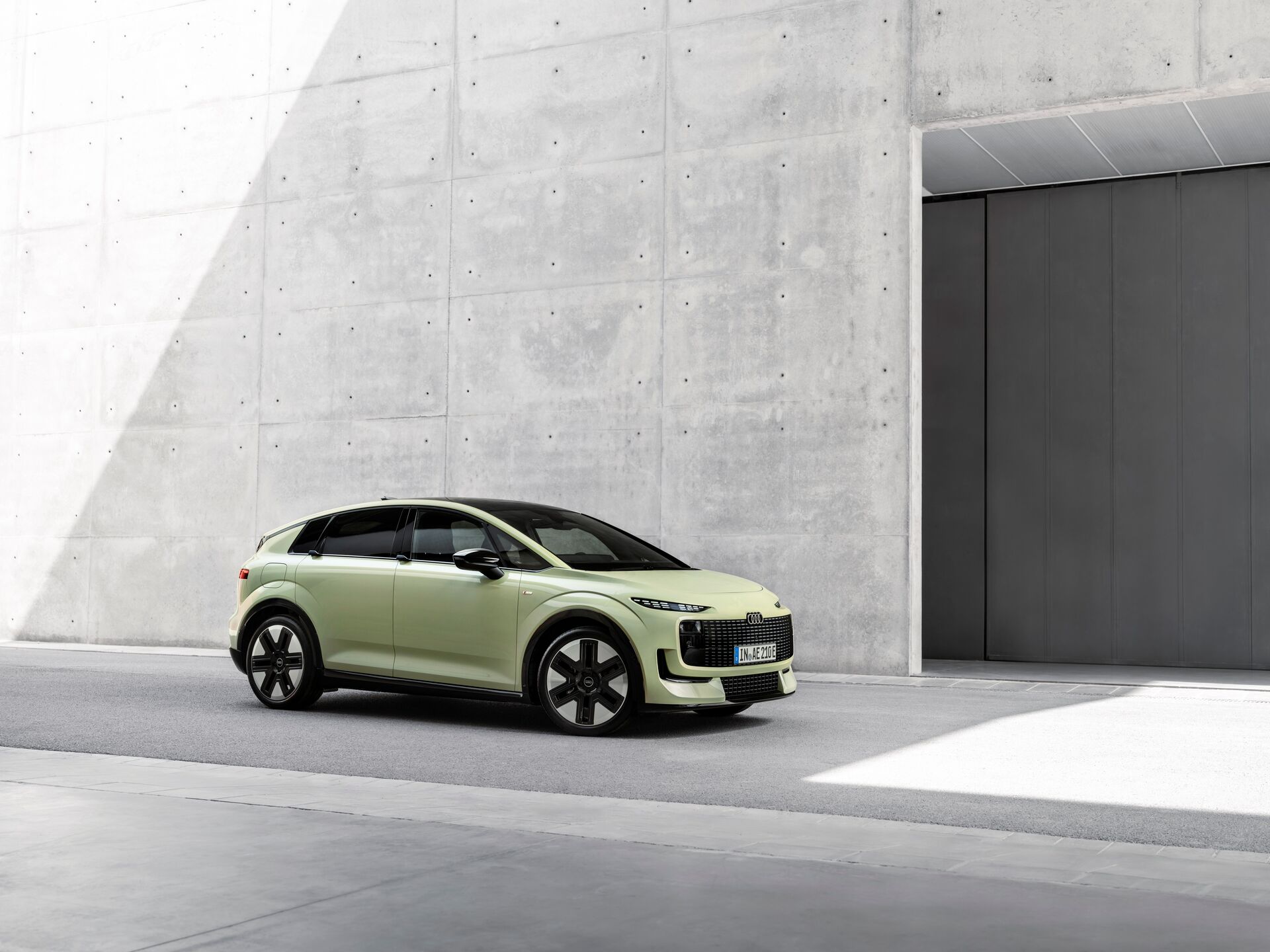
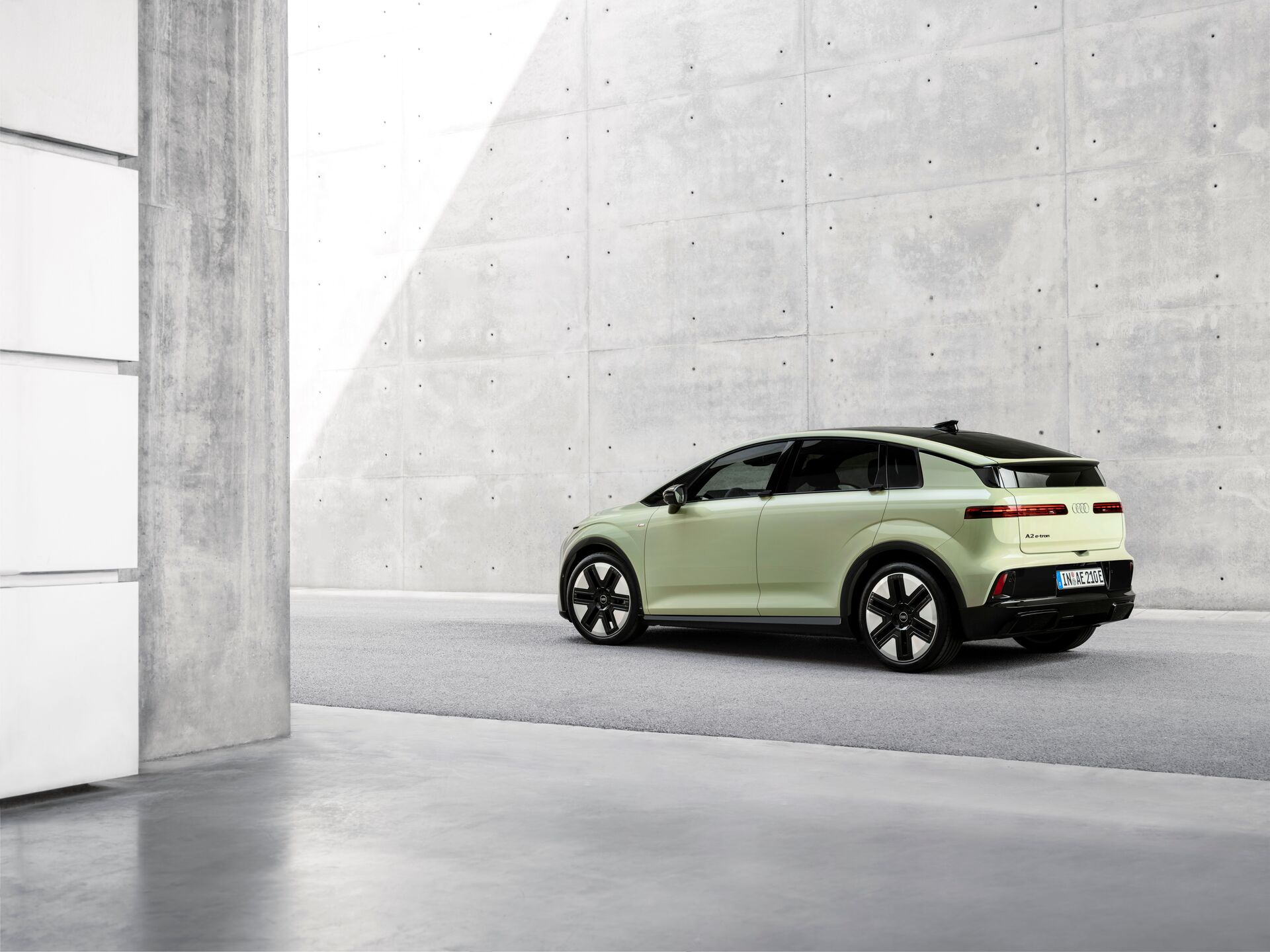


The production A2 e-tron is a five-door compact with short overhangs, a 2.77-metre wheelbase and a drag coefficient of 0.24.
The charging figures show why peak power is only part of the story. The 52-kWh version has the lowest maximum charging rate, yet its smaller pack completes the advertised 10-to-80-percent window five minutes faster than the 84-kWh cars. The larger battery still gives the 170-kW version the strongest road-trip specification because it combines the highest range with 183-kW charging.
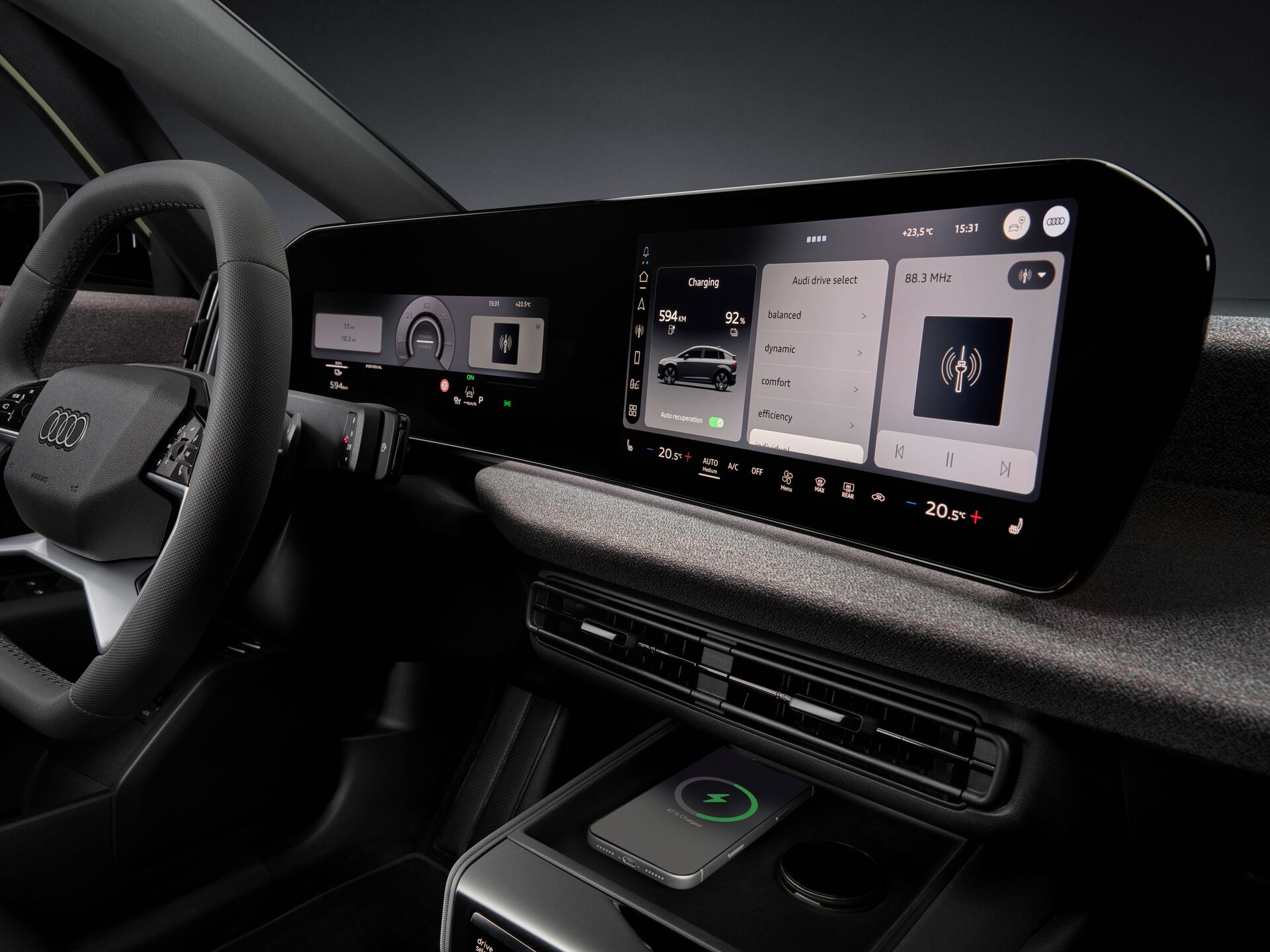
All four versions use permanent-magnet synchronous motors and rear-wheel drive. Audi has not announced a dual-motor quattro model. Four selectable regenerative-braking levels include one-pedal driving that can bring the car to a stop.
Efficiency Is The Main Engineering Story
A 646-km range figure will attract attention, but Audi is making a broader argument: a useful EV should need less energy rather than simply carrying an enormous battery.
The A2 e-tron’s 0.24 drag coefficient is the best in Audi’s compact range. The car combines a largely enclosed underbody, a controllable cooling-air intake, aerodynamically optimized wheels and small devices around the wheel arches that reduce turbulence. Short overhangs and a long wheelbase also help fit more passenger room into a relatively compact footprint.
The most efficient version is not the longest-range one. Audi’s record-setting 12.8-kWh/100-km consumption belongs to the 140-kW model with the 61-kWh battery and optional efficiency package. The 646-km rating belongs to the 170-kW car with the 84-kWh pack. That distinction matters because the two headline figures cannot be combined into one configuration.
Audi is also using different battery chemistries for different jobs. The 52- and 61-kWh packs use LFP cells in a cell-to-pack design, prioritizing durability and efficient packaging. The 84-kWh pack uses higher-energy-density NMC cells for the longest-range and highest-output versions.
A Compact EV With Real Cargo Space
The original A2 earned a following by doing unusual things with space and efficiency. The new car follows that idea more than it follows the old car’s construction.
The A2 e-tron has a 2.77-metre wheelbase, a 396-litre trunk and up to 1,336 litres of cargo room with the rear seats folded. The 170- and 240-kW versions also include a small 13-litre front trunk.
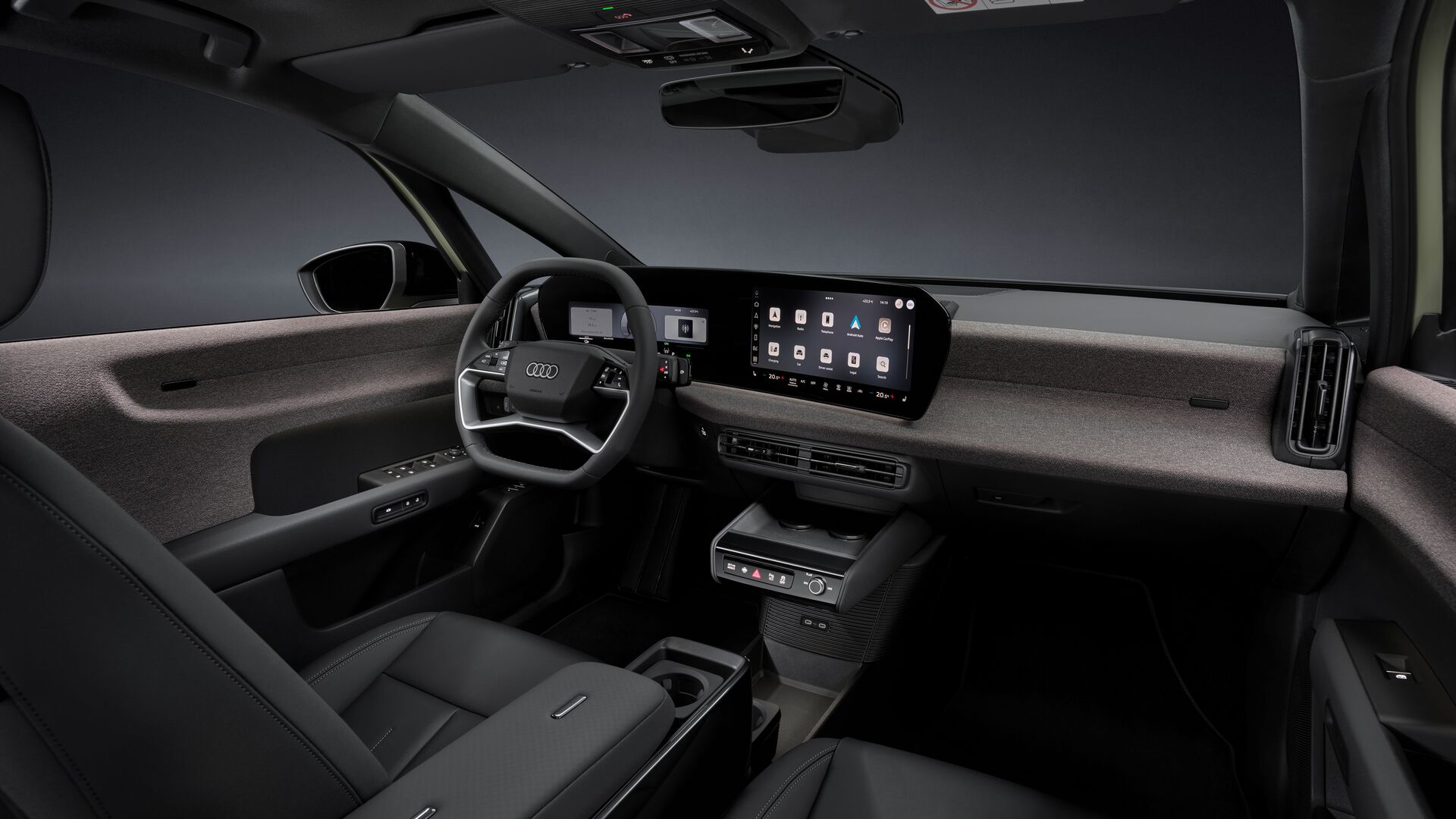
Inside, the standard curved display combines an 11.9-inch Audi virtual cockpit with a 12.8-inch touchscreen. Audi’s e-tron route planner can schedule charging stops and precondition the battery before arrival. The company is also emphasizing physical practicality, including large bottle storage, modular magnetic Fidlock attachment points and an available 1.6-square-metre panoramic glass roof.
Standard driver assistance includes adaptive cruise control, emergency braking assistance, evasive assistance, parking sensors and a reversing camera. Higher equipment packages add features such as Matrix LED headlights, a head-up display and more advanced lane guidance.
It Can Power Devices And A Home
Audi will offer both Vehicle-to-Load and Vehicle-to-Home capability. V2L allows the A2 e-tron to power equipment such as e-bikes or tools from the vehicle. V2H can feed energy into a compatible household electrical system through an approved DC wall box.
There is an important regional limit: Audi currently describes the home-backup function for Germany, Austria and Switzerland. Canadian electrical certification, hardware and market support would need to be announced separately before buyers here could assume the same feature would work.
The vehicle manages home-energy discharge within a 20-to-80-percent battery window, according to Audi, while an instant-charge function can prioritize filling the battery to 100 percent before a longer trip.
Why The A2 e-tron Matters
The A2 e-tron gives Audi something it has lacked: a modern electric model below the Q4 e-tron that still offers credible family-car range and cabin utility. It also arrives as European brands face intense pressure from increasingly efficient and affordable Chinese EVs.
The €38,200 starting price is approachable by Audi standards, but it does not automatically make the base car the best value. The 125-kW model is down more than 200 km of WLTP range compared with the 170-kW version. Buyers who regularly travel long distances will need to decide whether the 646-km model’s €10,700 premium is justified by its bigger battery, faster peak charging and added performance.
For Canadian readers, the reveal is more strategically interesting than immediately actionable. Audi repeatedly describes the vehicle as tailored to Europe, and neither the September 7 technical release nor the September 8 Paris announcement includes North American timing or pricing. The A2 e-tron also uses European CCS charging hardware rather than presenting a North American NACS plan.
That does not rule out a later decision, but it means Canadian shoppers should not delay a purchase on the assumption that an A2 e-tron is around the corner. Anyone comparing current options can use our Canadian EV incentive and affordable-EV guide for the market that exists now.
Audi has nevertheless produced a compelling technical package. The A2 e-tron is not chasing a giant screen, a four-figure horsepower number or an oversized battery. Its most interesting achievement is making a practical compact EV travel farther by wasting less energy. That is exactly the sort of progress the reborn A2 name should represent.