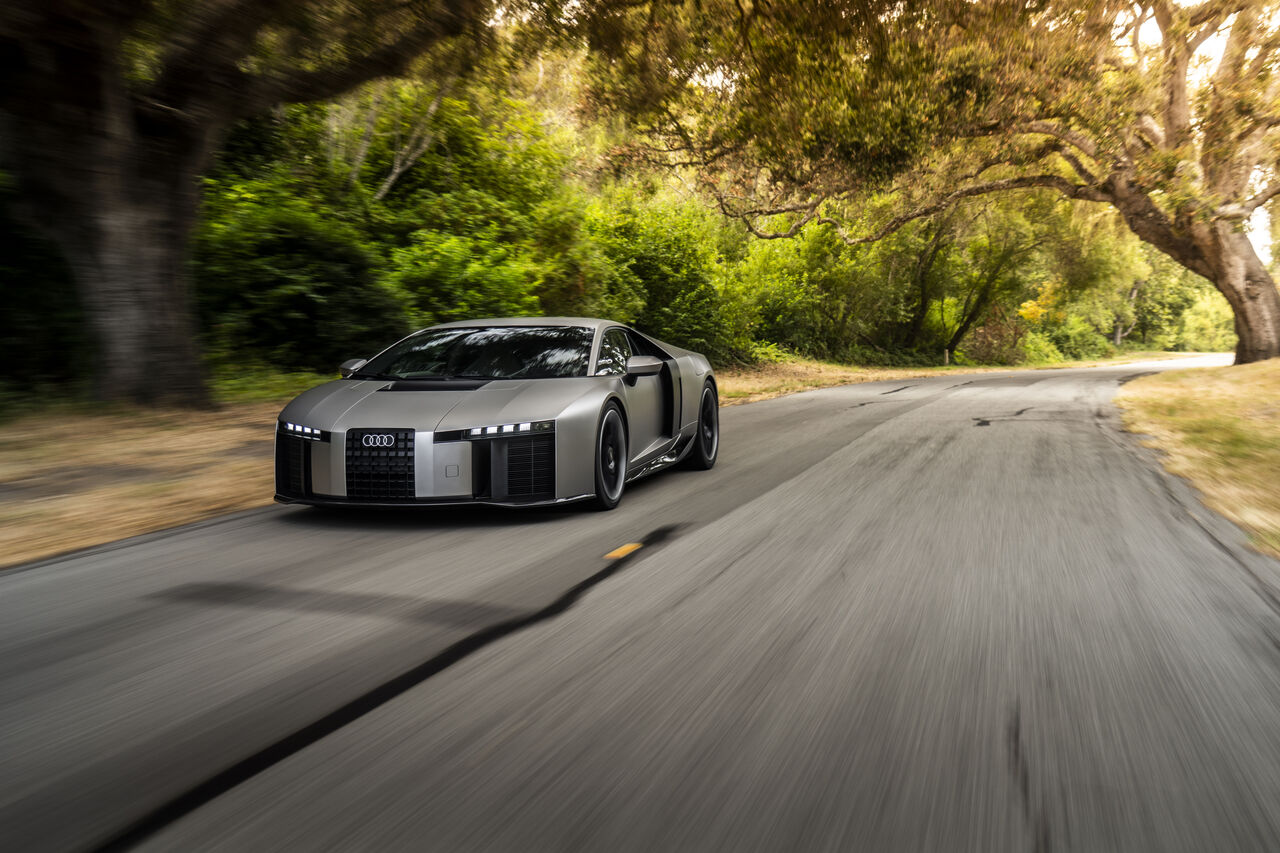
Audi Nuvolari makes North American debut with 1,001 PS
Audi brought its 1,001-PS Nuvolari hybrid supercar to Monterey, but the 499-car flagship still has no confirmed Canadian or U.S. allocation.
Photo: Audi
Audi has brought its most powerful production car yet to North America. The Nuvolari, a limited-run hybrid supercar with 1,001 metric horsepower (PS) and a claimed top speed above 350 km/h, made its regional debut during Monterey Car Week before heading onto public roads around Carmel-by-the-Sea.
The figures are exotic. Audi says the Nuvolari produces roughly 987 hp when its 1,001 PS output is converted to mechanical horsepower, can exceed 217 mph, and will be limited to 499 cars worldwide. It is a near-production prototype, with European presales scheduled for the fourth quarter of 2026 and the first deliveries planned for the first half of 2027.
Canadian and American buyers still lack the local facts. Audi used the California appearance to underline the strategic value of the U.S. market. The August 25 release confirms no North American allocation, no local pricing and no delivery schedule for either country. Output, the 499-car limit and the European timetable are in that release.
Audi Nuvolari at Monterey Car Week and on California roads
13
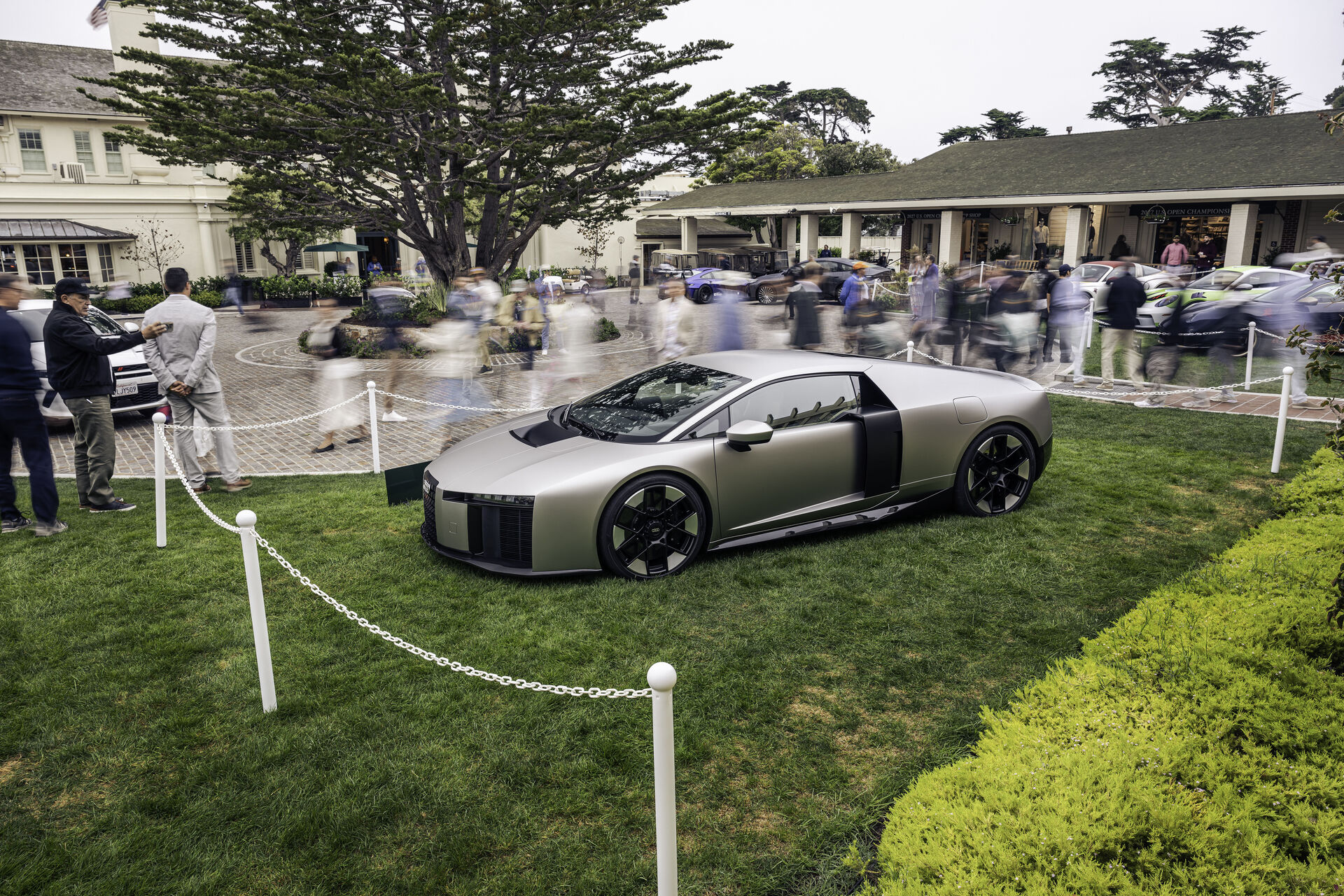
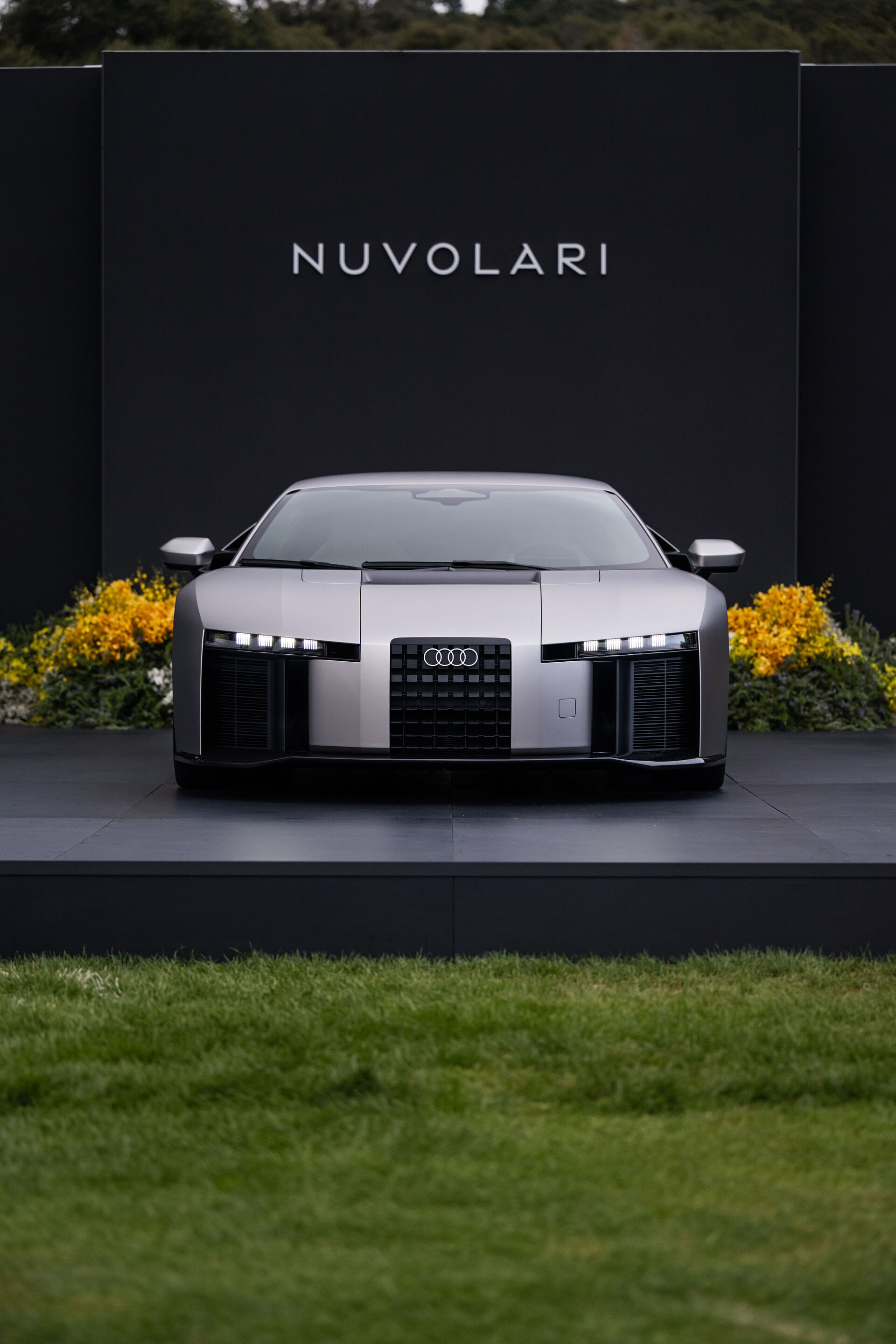
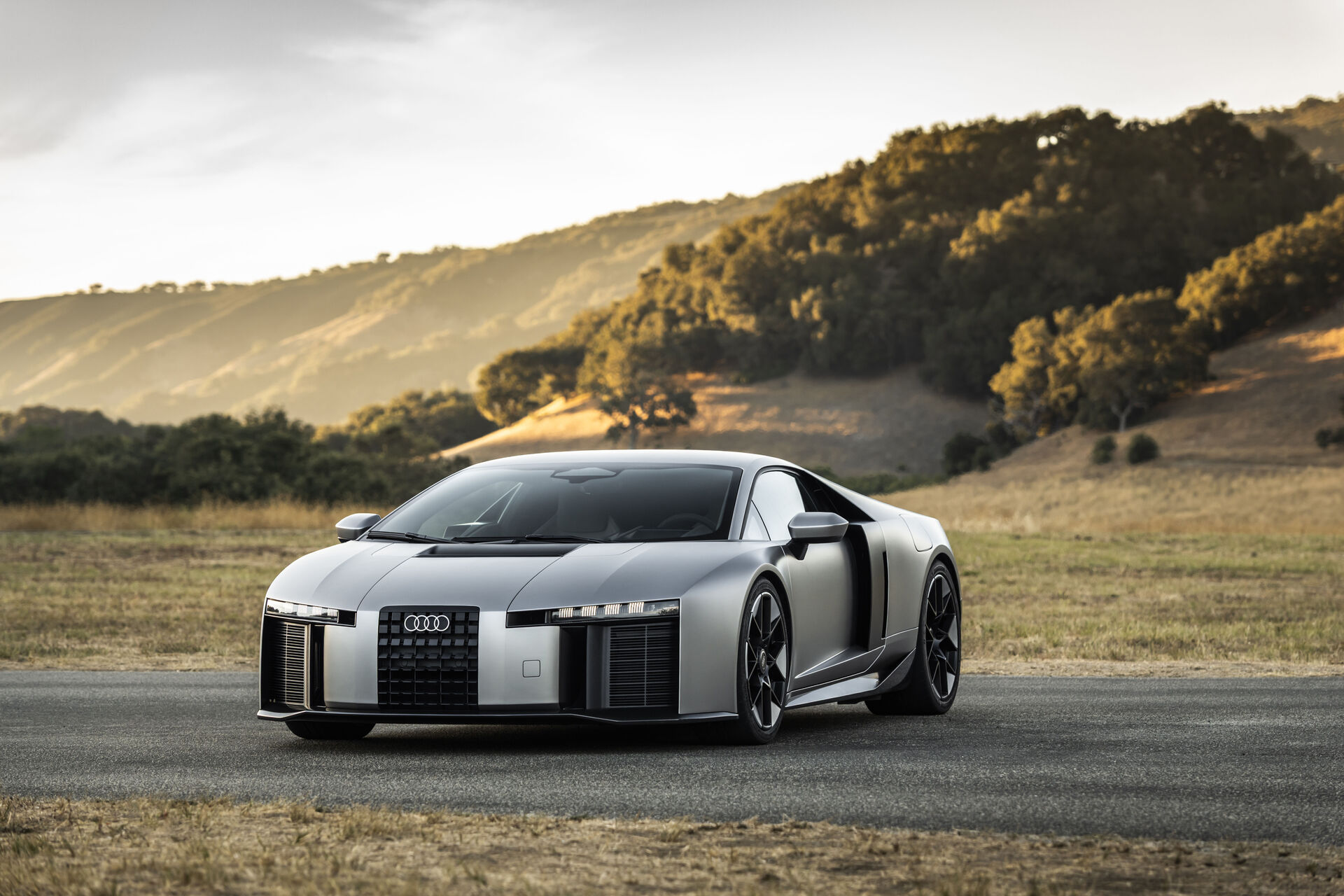
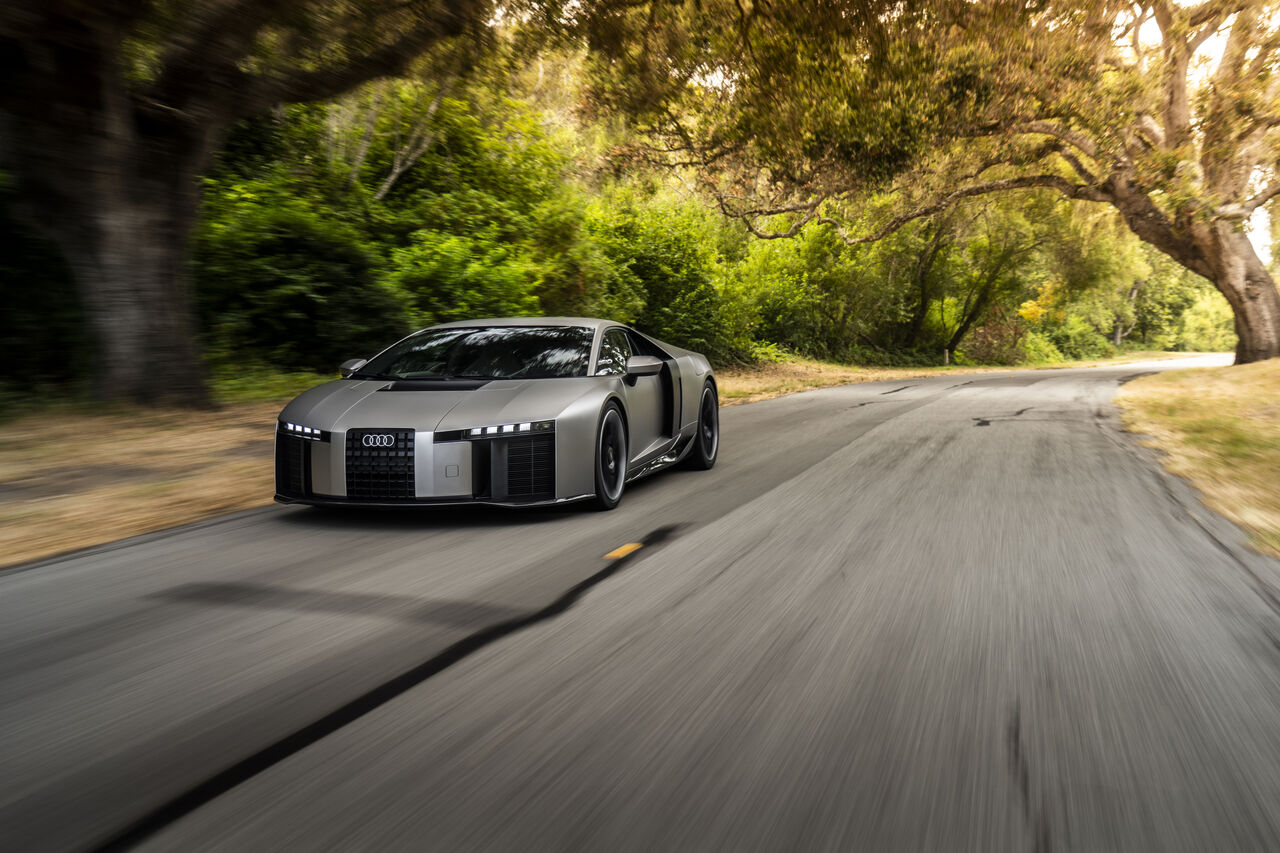
The Nuvolari on display during Monterey Car Week, where it made its North American debut.
A halo car built around hybrid power
The Nuvolari is significant because Audi did not make its new performance flagship fully electric. Instead, it uses what the company calls a high-performance hybrid powertrain.
Audi’s latest release leaves out the engine, electric-motor, battery and electric-range split, so the 1,001-PS system figure is the confirmed output number for now. The company does list preliminary weighted WLTP figures of 11.3 L/100 km for fuel consumption and 7.8 kWh/100 km for electricity use. With the battery discharged, preliminary fuel consumption rises to 14.7 L/100 km.
The hybrid system is there to sharpen response and raise output in a flagship supercar. A long electric range is not the claim Audi is making for this car.
That choice places the car in the same broad engineering conversation as other extreme plug-in and hybrid supercars: electric assistance can fill torque gaps, sharpen response, and help a combustion engine reach output that would have seemed absurd in a road car not long ago. The trade-off is additional complexity and mass, subjects Audi has not yet detailed publicly.
The design is more than an R8 sequel
It would be easy to frame the Nuvolari as a successor to the R8, but Audi is presenting it as something larger: a design and technology flagship for the brand’s renewal.
The proportions still read as mid-engine supercar — low roof, cab-forward stance, huge side openings, and a wide body sitting close to the pavement — but the detailing avoids nostalgia. A narrow strip of segmented lighting stretches across the front, while the deep vertical cooling openings and central grille give the nose an unusually architectural look. The clean silver bodywork is wrapped around a newly developed Audi Space Frame with a carbon-fibre exterior.
The Nuvolari name also carries history. Tazio Nuvolari was one of pre-war motorsport’s defining drivers, and the badge signals that Audi wants this car viewed as more than a styling exercise. The company says the project combines motorsport expertise, active aerodynamic thinking, and lightweight construction in a production-bound package.
Audi previously ran the car at the 2026 Monaco Grand Prix. Monterey marked both its North American public appearance and its first drive on American roads, moving the story one step closer to customer cars.
Why monterey matters
Monterey Car Week is an obvious place to put a 499-unit supercar in front of collectors. The Nuvolari appeared at The Quail and on the Concept Lawn at the Pebble Beach Concours d’Elegance, then took part in private events aimed at potential customers.
That setting tells us something about the business case. This is not intended to be a volume model or a direct answer to the premium EVs most Audi shoppers will cross-shop. It is a halo product designed to generate attention, demonstrate engineering range, and pull some excitement toward the rest of the lineup.
The timing also matters. Audi unveiled the large Q9 SUV in New York only weeks earlier, and the company is deliberately pairing two very different flagships in its North American messaging. The Q9 is about space, luxury, and the needs of affluent SUV buyers. The Nuvolari is about speed, scarcity, and technical theatre.
Together, they show an Audi that does not intend to define its next chapter through battery EVs alone. The brand is expanding its electric lineup, but it is also leaving room for hybrid performance at the very top.
The big unknown is availability
Audi says it has already seen strong global buyer interest, but official European presales do not begin until the fourth quarter. With only 499 examples planned, any North American allocation would likely be small.
For now, a Canadian enthusiast can treat the Nuvolari as a production-bound car with an unfinished regional story. Output, maximum speed, the build limit and the European timetable are confirmed. Canadian pricing, certification, allocation and dealer availability are still unpublished.
A running near-production car on California roads is a long way past a static concept. Until Audi says where the 499 cars will go, North Americans have seen the Nuvolari and still cannot officially buy one.
The MotorLinks take
Collectors who want one of the 499 should ask an Audi dealer whether any Canadian or U.S. allocation, certification and price will exist. European presales in the fourth quarter of 2026 are the path Audi has named, with first deliveries planned for the first half of 2027. Shoppers who want an Audi they can order in Canada should buy the model that already has a Canadian sticker.
Related Articles
- Should Canadian Audi EV Buyers Purchase Now or Wait?
- Audi Confirms the Q7 and A4 e-tron for Its Next Product Wave
- Audi Reveals the A6 allroad e-hybrid
Why we use AI
Car news moves fast and the useful details are buried in recall filings, rate bulletins and spec sheets from around the world. AI lets a small team read all of it, so you get the numbers, the sources and the Canadian angle in one place. Every article is checked against its cited sources and reviewed by our editor before it goes up. Spot a mistake? Tell us and we'll fix it.