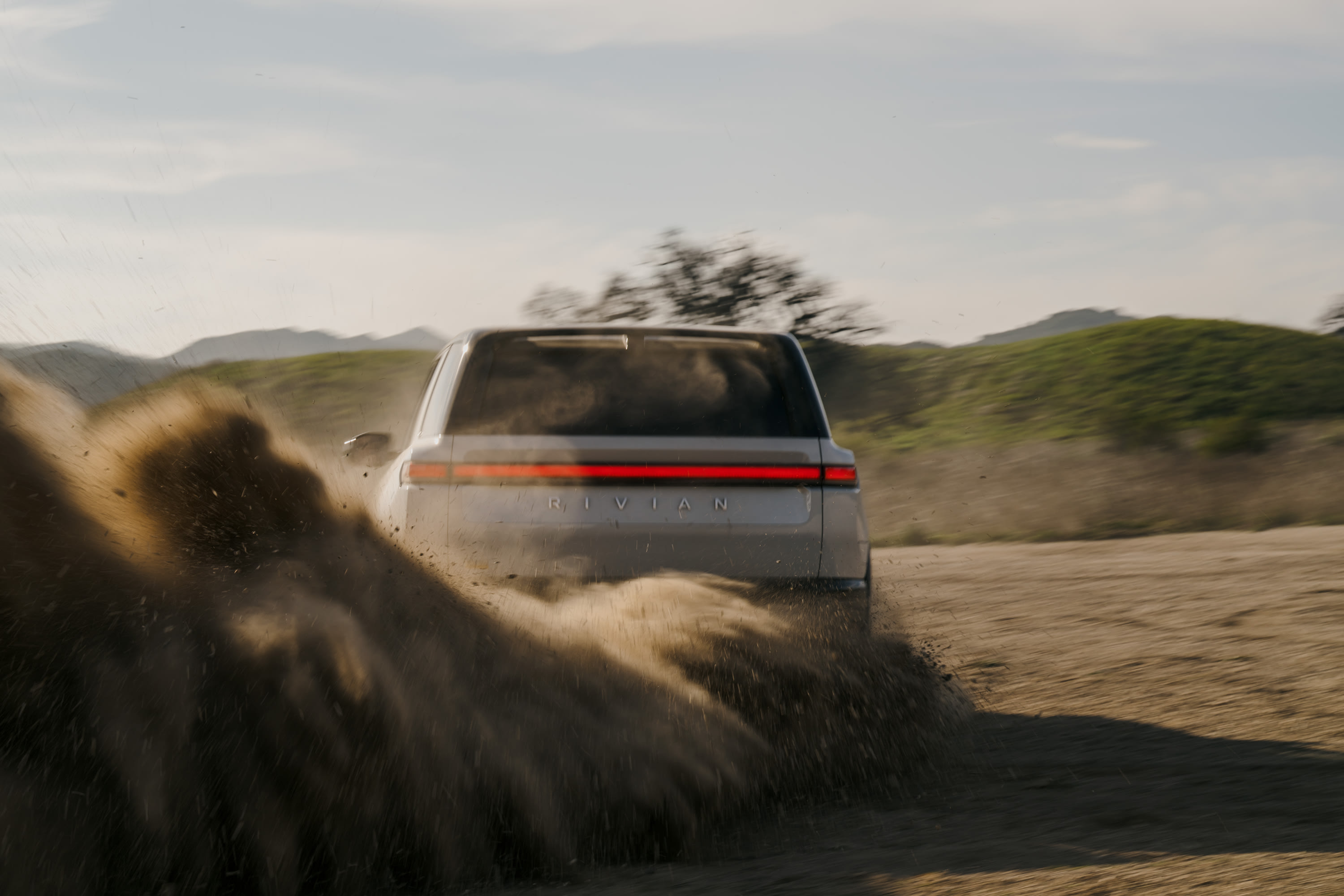
Rivian Posts $179M Q2 Gross Profit as R2 Deliveries Begin
Rivian began external R2 deliveries in Q2 2026, reported $1.658 billion in revenue and $179 million in gross profit, and improved its full-year outlook.
Image: Rivian
Rivian’s R2 launch has moved from promise to measurable business.
The EV maker says it began external deliveries of its smaller electric SUV during the second quarter, while consolidated revenue climbed 27 per cent year over year to $1.658 billion. Rivian also recorded $179 million in consolidated gross profit, a $385 million improvement from the same quarter last year.
Those numbers make Rivian’s second-quarter 2026 results one of its more encouraging updates. The company delivered more vehicles, narrowed its automotive gross loss, and improved its full-year delivery, adjusted EBITDA, and capital-spending outlooks.
They do not mean the R2 ramp is already profitable or Rivian has solved its cash-burn problem. The company still lost $837 million attributable to common stockholders and used $849 million in free cash flow during the quarter.
That tension is the real story: R2 is bringing growth, but scaling it remains expensive.
Official Rivian R2 gallery
11
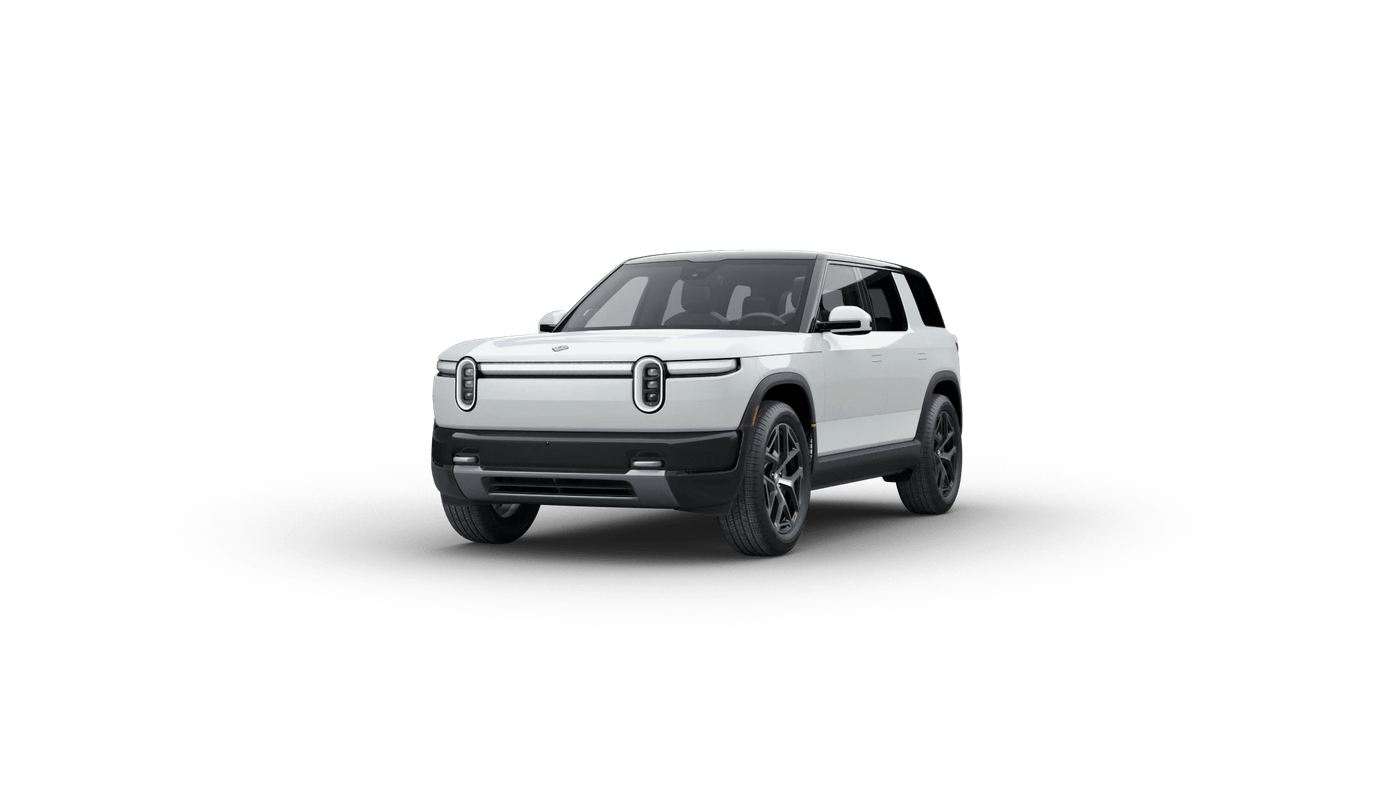
R2 is Rivian's attempt to reach beyond the premium R1T and R1S with a smaller two-row SUV.
R2 Deliveries Are Finally in the Numbers
Rivian says external R2 deliveries began on June 9. The company did not break out R2 volume separately, but it delivered 12,194 vehicles across its consumer and commercial lineups during the quarter, up 14 per cent from a year earlier. Production reached 12,613 vehicles at its Normal, Illinois factory.
The R2 mix is already visible in the financials. Automotive revenue rose 23 per cent year over year to $1.143 billion, although Rivian says average selling prices declined because commercial vans and R2 made up a larger share of deliveries.
That is expected. R2 is designed to sit below the R1S and R1T in Rivian’s lineup, so the company needs higher volume and lower production costs to compensate for the lower selling price.
The quarter included roughly $100 million in incremental R2 ramp costs compared with more normalized production. Rivian still reduced its automotive gross loss to $36 million, down sharply from a $335 million loss in the second quarter of 2025.
That improvement is meaningful, but it deserves context. Rivian recognized $108 million in regulatory-credit revenue, and its automotive results also benefited from a tariff-refund receivable. The vehicle operation is close to gross-profit break-even on paper, not comfortably beyond it.
Software Is Carrying More Weight
Rivian’s positive consolidated gross profit did not come from vehicle manufacturing alone.
The software and services segment generated $515 million in revenue and $215 million in gross profit, good for a 42 per cent gross margin. Of that segment’s revenue, $308 million came from Rivian’s joint venture with Volkswagen Group.
That contribution is central to understanding the $179 million headline. Rivian’s consolidated gross profit combines the $215 million software and services profit with the $36 million automotive gross loss.
The Volkswagen partnership is doing exactly what Rivian needs it to do: turning the company’s electrical architecture and software expertise into revenue while the manufacturing business works through the costly R2 ramp. The risk is that vehicle economics still need to stand on their own as R2 volume grows.
Rivian is also spending heavily on the next layer of that software strategy. Research and development expense rose to $466 million, partly because of AI and autonomy work. The company says it remains on track to begin rolling out point-to-point advanced assisted-driving capability by the end of 2026, though that timing remains a company target rather than a guaranteed launch date.
Rivian Raised Its 2026 Outlook
The stronger quarter gave Rivian enough confidence to improve several full-year targets.
The company now expects to deliver 65,000 to 70,000 vehicles in 2026. That is 3,000 more vehicles at both ends than the 62,000-to-67,000 range Rivian maintained after the first quarter.
Rivian also narrowed its expected adjusted EBITDA loss to $1.8 billion to $2.0 billion, a $50 million improvement at the midpoint. Planned capital expenditures fell to $1.7 billion to $1.8 billion, down $250 million at the midpoint because of project efficiencies and spending timing.
These are forecasts, not completed results. Rivian specifically flagged rising raw-material, memory, and logistics costs as pressures that partly offset its higher delivery volume and better regulatory-credit revenue.
The delivery guidance increase occurred in early July, according to the release. Q2 included only the June 9–30 portion of external R2 deliveries, not a full quarter of customer deliveries. The updated outlook is encouraging but remains a forecast. It suggests the R2 production and delivery plan is progressing well enough for Rivian to add volume to its expectations rather than build in more caution.
Cash Burn Is Still the Hard Part
Rivian ended June with $5.31 billion in cash, cash equivalents, and short-term investments. Including its revolving-credit capacity, total liquidity was $5.846 billion.
The company then raised about $1.3 billion through a July share offering. Rivian also expects another $1 billion in debt financing from Volkswagen Group and a $250 million Uber equity investment later this year, subject to specified conditions.
That funding gives Rivian more runway, but the second-quarter cash figures show why it needs it. Free cash flow was negative $849 million as the company built inventory for R2 and invested in growth. For the first half of 2026, free cash flow was negative $1.924 billion.
Rivian’s challenge is no longer proving it can design a desirable electric SUV. Early R2 deliveries, 57,000 demo drives during the quarter, and higher delivery guidance indicate genuine customer and operational momentum.
The harder test is turning that momentum into repeatable automotive gross profit without consuming cash faster than new funding arrives.
Q2 was a step in the right direction. R2 is now in customer hands, consolidated gross profit stayed positive, and the outlook improved. The next few quarters will show whether those gains strengthen as the R2 ramp matures—or whether launch costs and lower average selling prices keep Rivian’s vehicle business near break-even for longer.