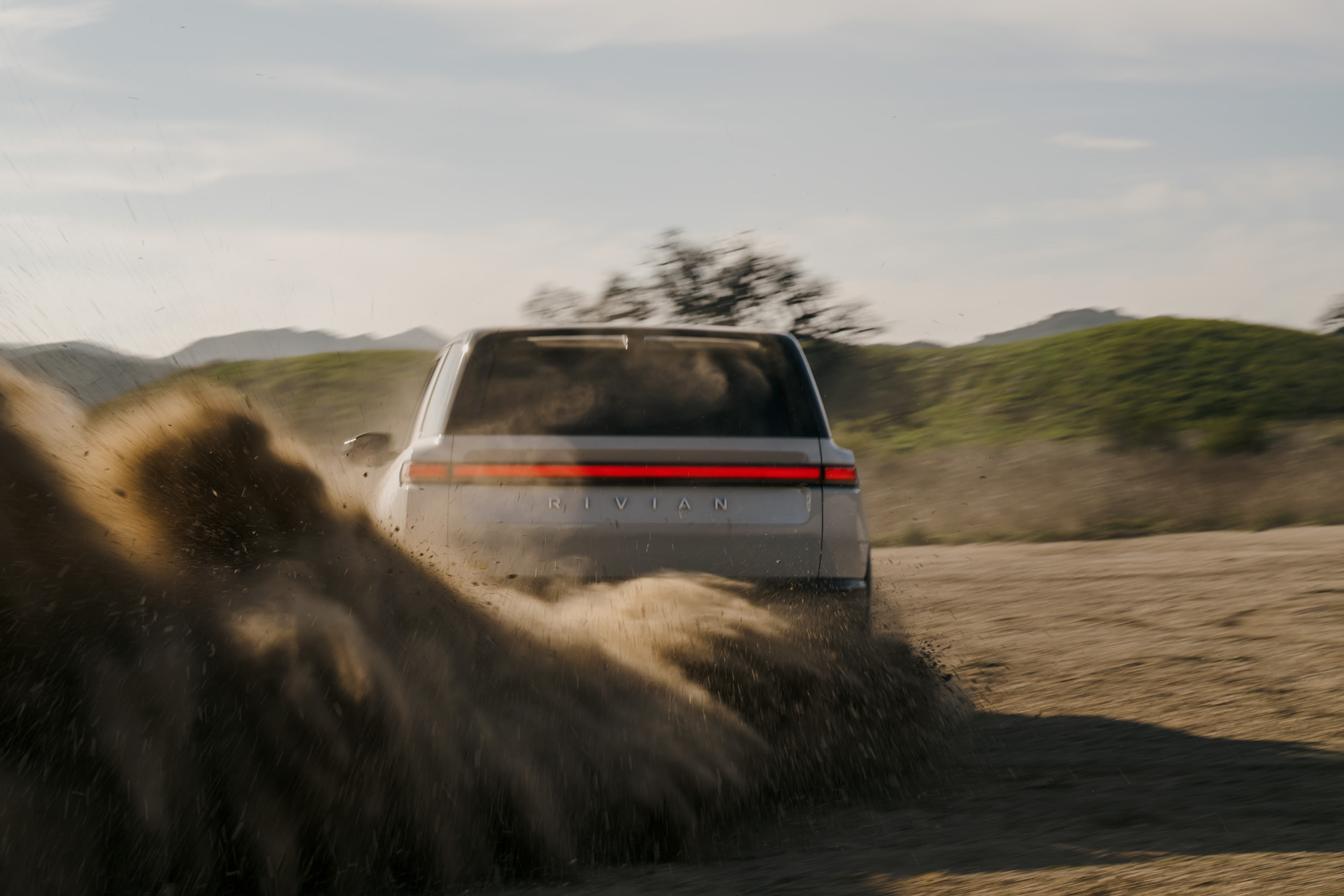
Rivian R2 vs Tesla Model Y: The EV SUV Fight Gets Real
Rivian's R2 is moving from promise to production, putting it on a collision course with Tesla's Model Y. Here's how the latest price, range, charging, size, and buyer logic stack up in 2026.
Photo: Rivian
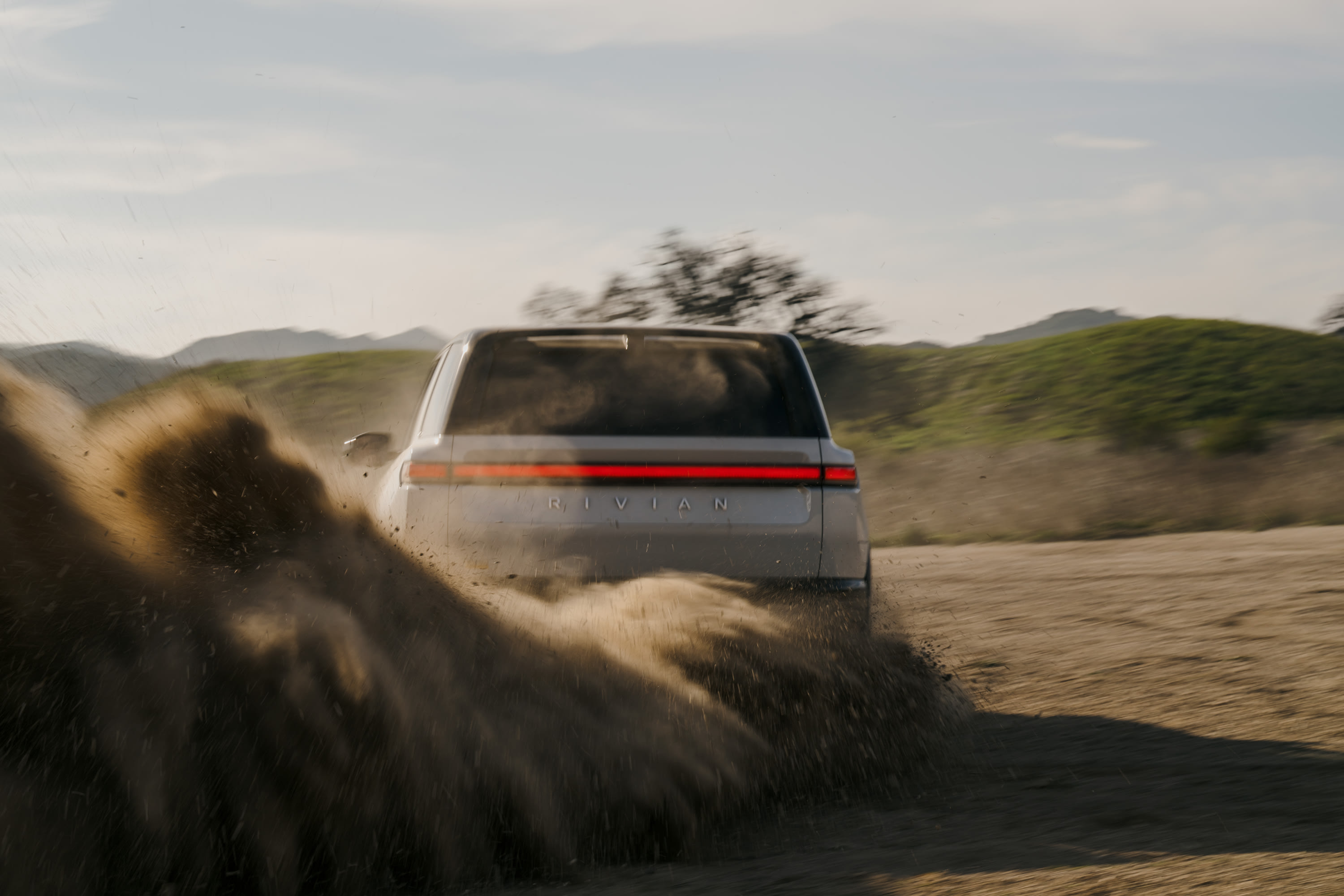
Spring 2026 timing below describes the original launch plan; Rivian later announced June 9 first customer deliveries. Compare current delivered quotes and matched configurations; manufacturer acceleration methods differ.
Rivian’s R2 is finally close enough to the showroom that the comparison stops being theoretical.
For the last two years, R2 has mostly lived as a promise: a smaller, cheaper Rivian that could take the brand beyond early-adopter truck and adventure-SUV buyers. Now that Rivian has started saleable R2 production, the real fight is easier to see. The benchmark is not another boutique EV startup. It is the Tesla Model Y.
That is a tough place to start. Model Y has the charging network, the software familiarity, the efficiency reputation, and the kind of scale Rivian is still trying to build. But the R2 has something Tesla no longer has in quite the same way: novelty, a stronger outdoorsy identity, and a chance to feel less like the default answer.
The question for buyers is not simply which one has the better spec sheet. It is whether Rivian can make the R2 feel distinct enough to pull people away from the safe, known Model Y choice.
Quick Verdict
Buy the Tesla Model Y if you want the safer EV SUV decision: broad availability, proven charging integration, familiar software, and a current delivered quote you can compare with the early R2 trims.
Choose the Rivian R2 if you can work around launch timing and want the more distinctive vehicle. R2’s upright shape, higher ground clearance, and adventure-SUV identity give it a clearer emotional reason to exist than another Model Y clone would have.
Official Rivian R2 gallery: exterior, stance, and cabin
11
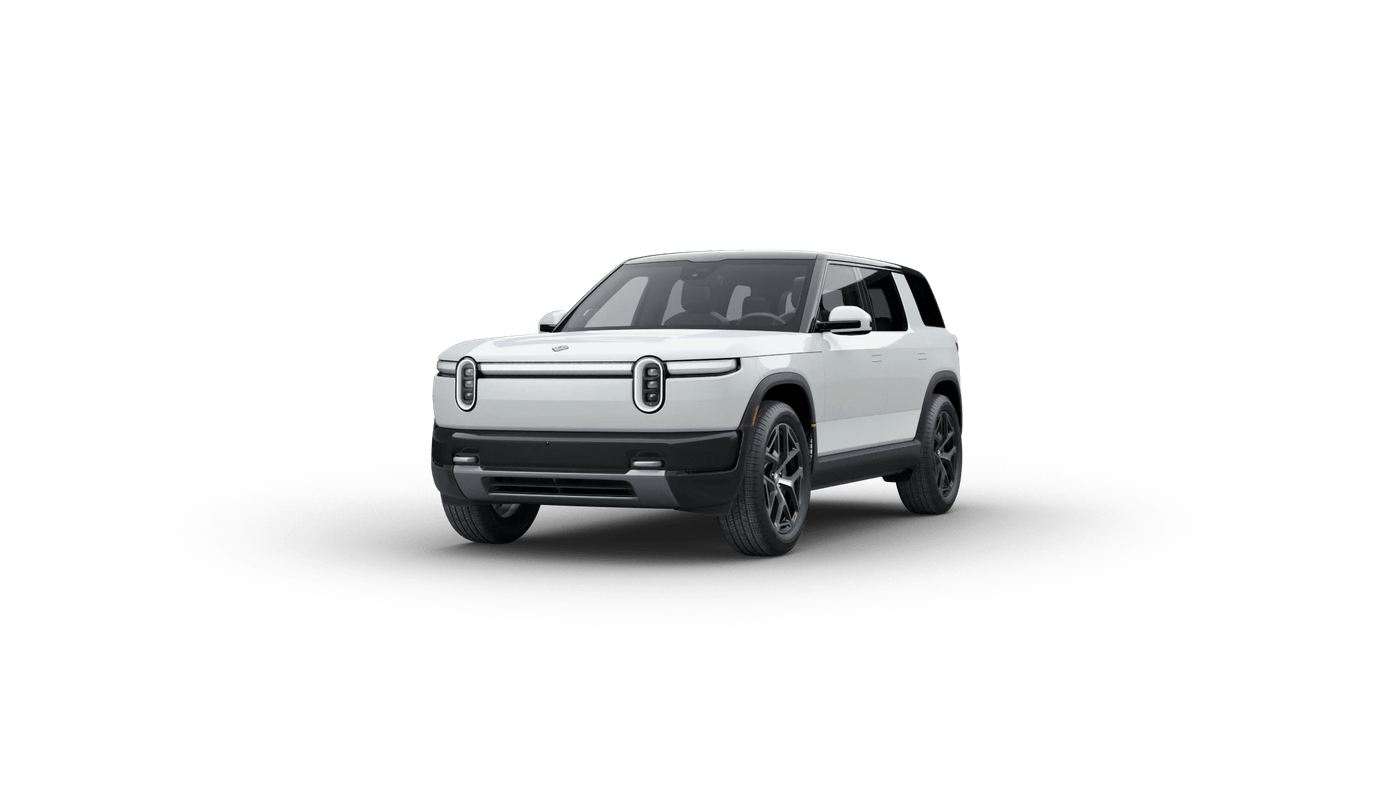
The boxier stance is the obvious visual split from Model Y, which still leans more aero crossover than mini-adventure rig.
The Spec Sheet Is Surprisingly Close Where It Matters
Start with the basics. Rivian’s R2 page now gives shoppers real configuration context rather than only launch-preview numbers. The R2 Performance is listed from $57,990 with spring 2026 availability originally planned, 330 miles of EPA-estimated range, and a 3.6-second 0-60 mph time. The R2 Premium is listed from $53,990 for late 2026 with the same 330-mile estimate and a 4.6-second 0-60 mph time. The first R2 Standard is listed from $48,490 for 2027 with 345 miles of estimated range, while Rivian says an additional Standard variant is planned for late 2027 at around $45,000 with 275+ miles of estimated range.
That puts R2 in the right neighborhood, not off in aspirational concept-land. It is not trying to be a cheap EV. It is trying to be a credible premium-ish electric SUV that lands low enough to matter while still giving Rivian room for a more affordable version later.
EPA records support 327 miles for 2026 Model Y Long Range AWD and 306 miles for Performance AWD. Compare a fresh Tesla quote against Rivian with destination, order charges, options and taxes treated consistently; Rivian’s launch MSRPs exclude applicable fees.
That pricing language matters. Tesla’s lineup keeps shifting, and incentives can change the real transaction math. R2’s value should be assessed using current delivered quotes rather than an unrecovered Tesla offer.
| Current price context | Range / target range | Quickest 0-60 mph | What defines it | |
|---|---|---|---|---|
| Rivian R2 Performance | Rivian lists it from $57,990, with spring 2026 availability originally planned | 330 miles EPA estimated by Rivian | 3.6 seconds listed by Rivian | The launch halo: dual-motor AWD, semi-active suspension, and the strongest adventure-SUV pitch |
| Rivian R2 Standard | Rivian lists the first Standard at $48,490 for 2027; a lower-range $45,000 version is planned for late 2027 | 345 miles estimated for the first Standard; 275+ miles estimated for the later value version | 5.9 seconds for the first Standard | The eventual volume play: RWD, Long Range, and a more attainable Rivian footprint |
| Tesla Model Y Performance | Historical Tesla checkout offer not recovered; obtain current all-in quote | 306 miles estimated by Tesla | 3.3 seconds listed by Tesla with rollout subtracted | The speed-focused Model Y that keeps Tesla ahead on pure acceleration |
| Tesla Model Y Premium AWD | Historical Tesla checkout offer not recovered; obtain current all-in quote | 327 miles estimated by Tesla | 4.6 seconds listed by Tesla | The familiar premium Model Y answer with seven-seat availability and deep charging integration |
Rivian Wins the Personality Test
The R2’s biggest advantage is that it does not feel like another jellybean crossover chasing Tesla’s homework.
The shape is upright, the nose is friendly, and the proportions read more small adventure SUV than melted efficiency pod. Rivian lists the R2 at 185.9 inches long, 66.9 inches tall, with a 115.6-inch wheelbase and 9.6 inches of ground clearance. Tesla lists the Model Y Premium at 188.6 inches long, 63.9 inches tall, and 6.6 inches of ground clearance. That makes the Rivian slightly shorter but meaningfully taller and more trail-ready in stance, which is exactly the point.
This is where Rivian’s brand work matters. R1T and R1S gave the company credibility with buyers who like camping gear, ski weekends, bikes, dogs, trailheads, and the idea of an EV that does not look allergic to dirt. R2 has to carry that same emotional signal at a much more accessible price.
Tesla’s Model Y is many things, but it is not especially romantic anymore. That is not a criticism so much as a sign of success. It has become the normal electric crossover, and normal is powerful. But for shoppers who want their vehicle to feel a bit more personal, R2 has a real opening.
Tesla Still Owns the Easy Button
The Model Y’s counterpunch is not subtle: it is easier to buy, easier to charge, easier to understand, and easier to recommend.
Tesla’s charging advantage has narrowed as more automakers adopt NACS, and Rivian explicitly says R2 is built for Tesla Supercharger access. That is huge. Still, native Tesla ownership remains smoother today because the vehicle, app, navigation, charging route planning, and payment flow were designed as one system from the start.
Model Y also benefits from product familiarity. People know what it is. Friends and neighbors have one. Used inventory exists. Accessories are everywhere. Service experiences vary by region, but the ownership ecosystem is massive.
Rivian does not have to match all of that on day one, but it does have to avoid making early R2 buyers feel like beta testers. Production quality, service capacity, software polish, charging-route confidence, and parts availability matter just as much as the headline range number.
The Real Split: Outdoorsy Utility or Proven Efficiency?
This comparison gets clearer once you stop treating both vehicles as the same kind of EV SUV.
The Model Y Premium AWD is the rational answer. Its manufacturer-quoted acceleration can be compared with R2 Premium’s 4.6 seconds, and has the advantage of broad availability, familiar software, and Tesla’s mature charging flow. If your priorities are commuting, road trips, efficiency, charging confidence, and resale familiarity, Tesla still makes a very strong case.
The Model Y Performance is the speed answer. Its 3.3-second 0-60 mph claim beats Rivian’s quickest R2 Performance estimate, even if the Tesla number uses rollout subtraction. It is not the version most buyers need, but it reminds everyone that Tesla can still turn a family crossover into something absurdly quick when it wants to.
The Rivian R2 is the lifestyle answer, but that phrase should not be dismissed as fluff. Vehicle buying is emotional. If R2 delivers useful cargo packaging, enough range, confident charging access, and Rivian’s cleaner adventure-SUV vibe, it gives buyers a reason to choose something other than the default.
That matters because EVs have reached a point where specs alone do not settle every argument. The best electric SUV is no longer automatically the one with the biggest range number. It is the one that fits how you actually live.
Where Rivian Has to Be Careful
Rivian cannot afford to make R2 feel too expensive too quickly.
The promised roughly $45,000 R2 is attractive for the brand, but it is not the first configuration shoppers will actually see. The spring-2026 Performance version starts near $58,000, and the late-2026 Premium version starts near $54,000 before options. That puts early R2 buyers directly into Model Y Performance, Kia EV9 lease-deal, higher-trim Hyundai IONIQ 5, and discounted-EV territory.
The rollout order matters too. Rivian’s March launch announcement put Performance first in spring 2026, Premium in late 2026, the first Standard in 2027, and the lower-range value Standard in late 2027. Tesla’s advantage is that shoppers can configure and buy a Model Y right now, then compare real delivery timing and financing instead of waiting for the perfect R2 trim to appear.
The other risk is service. Rivian owners tend to be enthusiastic, but R2 will reach a broader audience with less patience for startup growing pains. A $45,000 EV crossover cannot lean too heavily on charm if a family needs predictable service appointments, winter tire support, body-shop availability, and quick fixes.
Why This Fight Is Good for EV Buyers
This is the kind of rivalry the EV market needs.
For years, Model Y has been the obvious answer for a huge slice of electric-SUV shoppers. Some competitors beat it in comfort, some in charging speed, some in interior design, and some in price after incentives, but few have combined enough of those advantages with a brand story strong enough to feel genuinely different.
R2 has a shot because it is not trying to be a Tesla clone. It is trying to be the smaller Rivian people asked for: less expensive than R1S, easier to park, still adventure-coded, and finally built around NACS from the start.
Tesla should still be favored on the practical checklist. Model Y is proven, efficient, fast, and deeply supported by the charging ecosystem. But Rivian does not need every Model Y buyer. It needs the ones who look at Tesla and think, “Good car, wrong personality.”
If R2 lands cleanly, this comparison will not be about whether Rivian can beat Tesla everywhere. It will be about whether an EV SUV can be a little less obvious and still make sense. That is a much more interesting fight.
Should I buy the Rivian R2 or Tesla Model Y?
Buy the Tesla Model Y if you want the proven, easier EV SUV decision. Choose the Rivian R2 if launch timing works for you and you want a more upright, outdoorsy, distinctive electric SUV.
Is the Rivian R2 cheaper than the Tesla Model Y?
Get current quotes on both before you decide. Compare dated delivered quotes on the same fee basis. Rivian’s lower-range roughly $45,000 Standard version was planned for late 2027 in its March 2026 announcement.
What does Rivian R2 do better than Model Y?
R2 has the stronger adventure-SUV personality, more ground clearance, and a boxier utility-first shape. Model Y still has the easier charging and ownership ecosystem.