
BMW and MINI Apps Now Compare EV Charging Prices Before You Plug In
BMW and MINI have added public-charging price comparisons, running cost displays for Neue Klasse EVs, and smarter road-trip planning as their charging network reaches 3.1 million points.
Public EV charging has always had a pricing problem: drivers can often find a charger on a map, but figuring out what a session will actually cost may involve checking the station operator, roaming provider, membership plan and ad-hoc rate separately.
BMW and MINI are trying to make that less messy. In a July 21 announcement, BMW Group detailed new charging-price tools for the My BMW App, MINI App and compatible vehicle displays. Drivers can compare their saved charging plans with available pay-as-you-go operator prices before choosing a station.
For Neue Klasse BMWs running Operating System X, the software goes a step further. Once the car is plugged in, the display and app can show the price per kilowatt-hour, energy delivered and running total cost in real time — essentially the electric equivalent of watching the litres and dollars climb on a fuel pump.
It is not a faster charger or a bigger battery. But it attacks one of the least polished parts of EV ownership: knowing the price before committing to a stop.
What BMW and MINI Are Adding
The headline feature is tariff comparison. When a driver searches for a public charger, the apps can display station power, availability and pricing for the tariffs stored in the user’s Charging Wallet. Where the local network offers an ad-hoc rate, that price can appear as well.
That distinction matters because the same physical charger can cost different amounts depending on how the session is activated. A driver might pay through an automaker charging plan, a network membership, a roaming provider or the charger’s own card-payment rate. BMW’s interface is meant to put those options in one view instead of forcing the driver to search several apps.
BMW says the search and tariff information is also available in vehicles running BMW Operating System 8.5 or later and in the latest MINI models. The running cost display during an active session is more limited: BMW specifies that feature for Neue Klasse vehicles with Operating System X.
That makes this a two-stage rollout rather than one universal update. More BMW and MINI drivers can use the price-search tools, while the fuel-pump-style live total belongs to the newest software generation.
BMW and MINI electric road-trip and charging app gallery
14
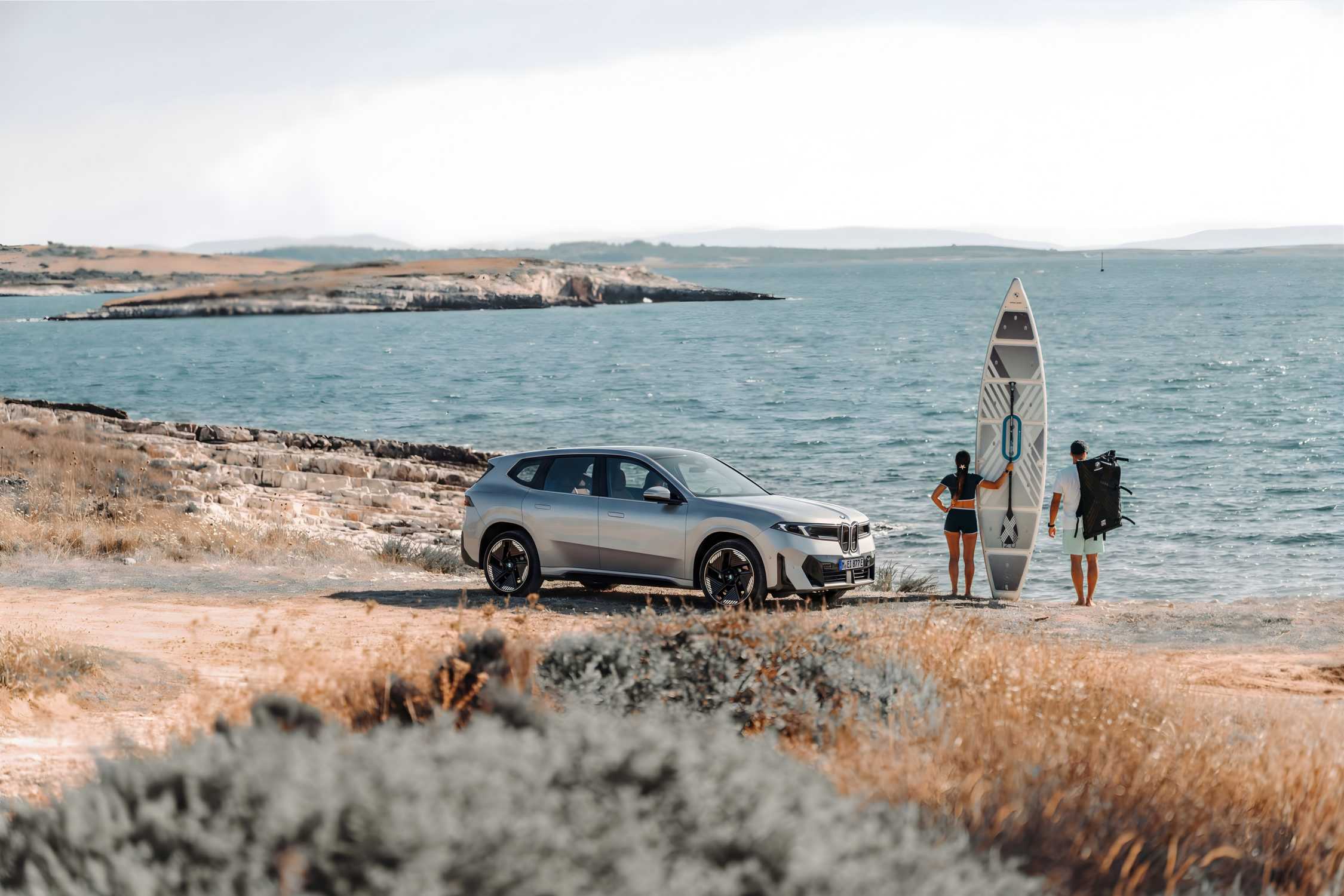
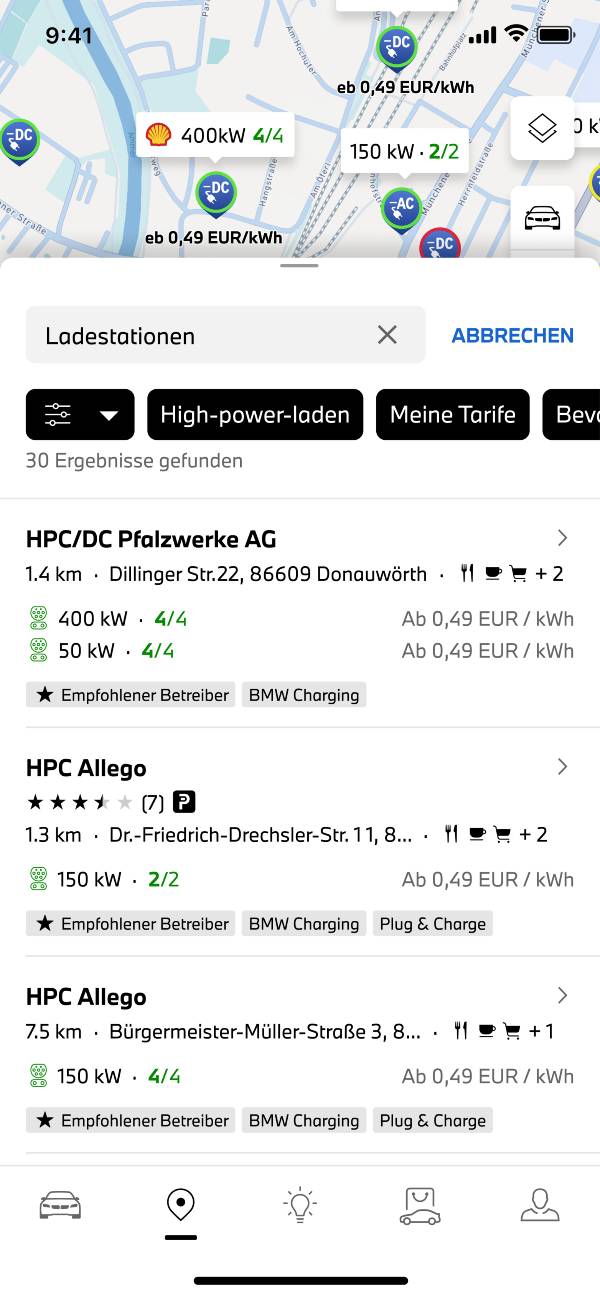
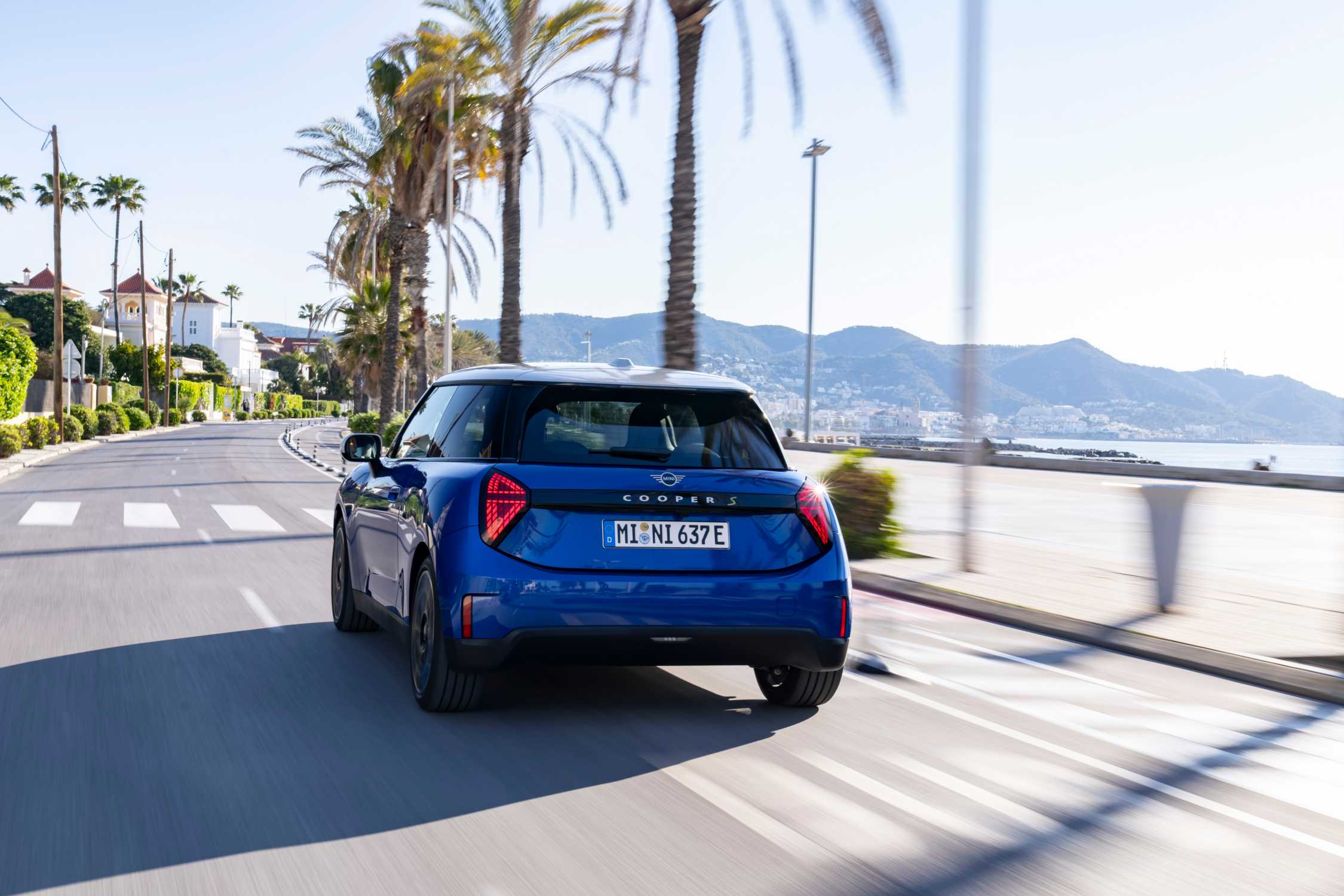
BMW is pairing its Neue Klasse EV hardware with software intended to make public charging costs easier to understand before and during a stop.
Why Charging Price Transparency Matters
Gas stations usually put the price on a large sign visible from the road. Public chargers often do not. The amount an EV driver pays can depend on the network, subscription, time, charging speed, session fee and roaming agreement.
That uncertainty is more than an annoyance on a road trip. Fast charging is often considerably more expensive than charging at home, so a small difference in the per-kWh rate can change the cost of a long journey. It can also make an otherwise convenient stop poor value if a cheaper compatible station is only a few minutes away.
BMW’s approach will not eliminate every surprise. The information still depends on operators and tariff providers supplying accurate data, and the cheapest displayed rate is only useful if the station works, has an open stall and fits the route. But putting price beside power and availability is the right hierarchy. Drivers need all three to make a sensible decision.
The live session total is also more useful than it may sound. A driver can see immediately how much energy has arrived and what it costs, rather than waiting for a receipt or opening a separate network app. That is particularly helpful when a charging curve has slowed and the last few percentage points are becoming expensive in both time and money.
The Network Number Needs Context
BMW says the BMW Group Charging network now includes 3.1 million charging points worldwide, up roughly 300,000 since December 2025. Europe accounts for 1.1 million, an increase of 100,000 over the same period, while Germany alone has about 200,000.
Those figures describe points accessible through BMW Group’s charging ecosystem; they do not mean BMW owns and operates 3.1 million chargers. The company participates in infrastructure ventures including IONITY and connects customers to a much broader collection of partner networks.
In Europe, BMW says 21 per cent of its accessible charging points belong to a Preferred Partner Network that offers reduced rates to customers on the Active tariff. The providers vary by country, but BMW says the preferred-partner benefit travels with the driver across Europe.
That European focus is important. The July 21 release gives detailed European network and tariff information, but it does not announce a matching Canadian rollout date, Canadian pricing plan or a North American equivalent to the Preferred Partner arrangement. Canadian BMW and MINI owners should check their local app and charging-plan terms rather than assuming every announced function is active here.
Road-Trip Planning Is Doing More Work
Price comparison is the new part, but BMW also used the announcement to explain how its route planner handles charging stops.
BMW Maps and MINI Navigation can calculate a charging-optimized route when the battery cannot cover the full trip. Drivers can set a preferred arrival charge level in five-per-cent steps, favour selected charging providers and review the planned stop duration and estimated cost.
As the car approaches a stop, the system checks availability more frequently and can reroute if the selected site becomes unavailable. When navigation includes a DC fast charger, the vehicle can precondition its high-voltage battery on the way. Preconditioning warms or cools the pack toward the temperature at which it can accept power more quickly; it does not change the charger’s maximum output, but it can help the car reach a better charging rate when conditions are hot or cold.
BMW also says completed charging-session data from its fleet helps the route planner assess actual charging performance, while operator data identifies out-of-service equipment. That is the kind of feedback loop EV navigation needs. A 350-kW label is not very helpful if a site routinely delivers much less or has unreliable hardware.
What It Means for BMW and MINI Drivers
The most important change is not the size of the network. It is that BMW is treating charging cost as part of the navigation decision rather than an afterthought.
Tesla set an early benchmark by tightly integrating route planning, charger availability and payment. Other automakers have been closing that software gap, but the wider public-charging market is inherently more complicated because it spans many operators and pricing models. Showing saved tariffs and ad-hoc rates in one place is a practical response to that complexity.
There are still caveats. Availability depends on the vehicle’s operating system, the app version, the market and the quality of data supplied by charging partners. The live running-cost display is initially tied to Neue Klasse BMWs. And North American drivers need locally confirmed support rather than a European press release.
Still, this is exactly the kind of unglamorous software improvement that can make an EV easier to live with. Range and peak charging speed sell the car; clear pricing, reliable routing and useful preconditioning make the road trip work.