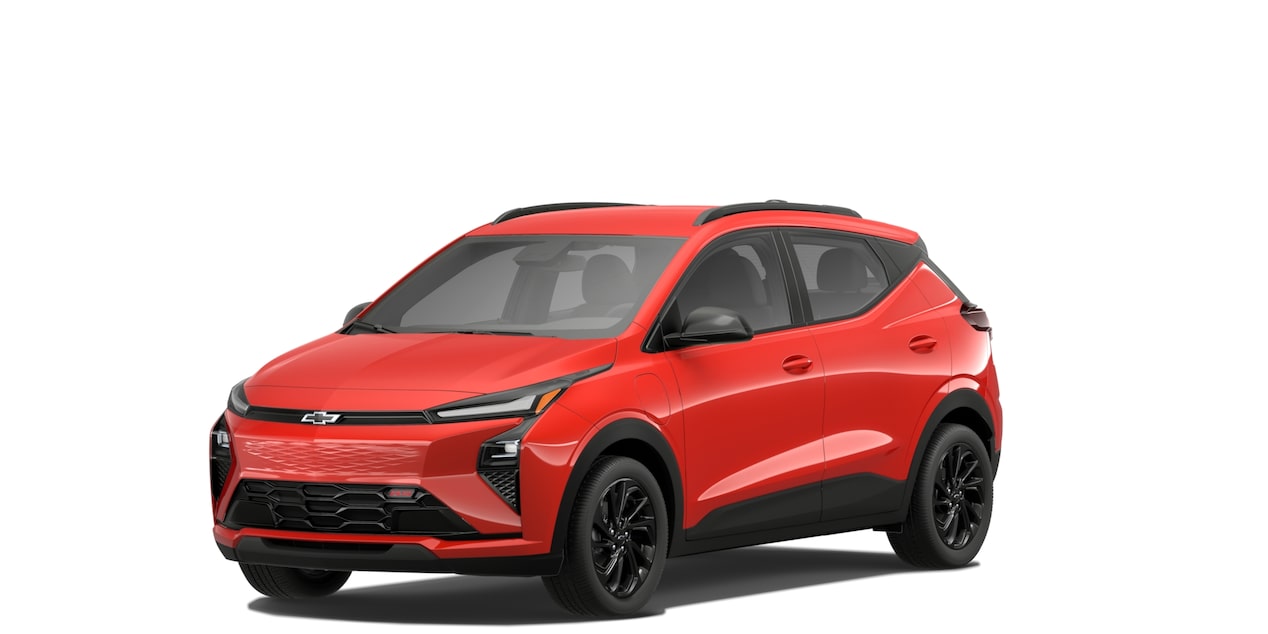
Chevy Bolt's 118-Day Supply Is the First Real Test of America's Cheapest EV
The 2027 Chevrolet Bolt is back with a low price, NACS charging, and 262 miles of EPA range, but fresh inventory data shows dealers holding a 118-day supply.
The 2027 Chevrolet Bolt is exactly the kind of EV the market keeps saying it wants: small, relatively affordable, efficient, and fitted with native Tesla-style NACS fast-charging hardware.
Now comes the awkward part. The Bolt also appears to be sitting on dealer lots longer than a hot comeback car should.
GM Authority reported that Chevrolet sold 3,433 new Bolts in the second quarter of 2026 while roughly 4,505 remained in dealer inventory across the United States. At that pace, the publication calculated a 118-day supply, almost double the 60-day level often used as a healthy industry benchmark. Electrek picked up the same numbers over the weekend and framed the obvious question: did GM build too many, or is this exactly how the limited-run Bolt was supposed to work?
That question matters because the Bolt is not just another compliance EV. It is Chevrolet’s clearest answer to the affordability problem.
A Strong Value Pitch, On Paper
Chevrolet’s own product page now lists the 2027 Bolt from $27,600 before destination, with 262 miles of EPA-estimated range, a 25-minute GM-estimated 10-to-80-percent DC fast-charge time, and NACS as standard equipment. The LT gets a 210-hp front-drive setup, an 11.3-inch center screen, an 11-inch driver display, and more than 20 standard safety and driver-assistance features.
That is a genuinely useful spec mix. The old Bolt was loved for being practical and efficient, but its slow DC fast charging made it a tougher sell for road trips. The new one fixes the biggest charging weakness without pushing the car into luxury-EV pricing.
Chevrolet also has the Equinox EV below the Blazer EV and Silverado EV in the lineup, giving GM two relatively attainable electric nameplates instead of relying on big-ticket models alone. GM Authority noted that the Equinox EV delivered 6,660 units in Q2, nearly twice the new Bolt’s tally, which helps explain where Chevrolet’s volume EV attention may be going.
Why 118 Days Is Not Automatically A Disaster
A 118-day supply sounds bad because dealers generally do not want cars sitting around for months. Inventory ties up floorplan financing, takes up space, and usually leads to heavier discounts if demand does not catch up.
But the Bolt is a strange case. GM has already positioned this generation as a limited-run model, and GM Authority says production is expected to end after the 2027 model year as Fairfax Assembly shifts toward other products, including the Chevrolet Equinox and next-generation compact Buick crossovers.
That means elevated inventory can be read two ways.
One read is simple: shoppers like the idea of an affordable EV, but not enough buyers are signing contracts at the pace GM expected. The US market is still digesting life after federal EV purchase incentives, and entry-level EV buyers are often the most payment-sensitive customers in the showroom.
The other read is more strategic: GM may be front-loading supply because the Bolt is not meant to be a long, slow, multi-year ramp. If the company wants dealers to have enough cars through a short sales window, a few months of inventory is less alarming than it would be for a conventional high-volume model with no planned sunset.
Both can be true. The Bolt can be a strong product and still need sharper pricing, clearer lease support, or better dealer messaging to move at the rate Chevrolet wants.
Buyers May Have Leverage
For shoppers, this is the practical takeaway: the Bolt’s comeback does not look scarce.
That can be good news. A 262-mile EV with native NACS and a sub-$30,000 starting point is already compelling, but real-world affordability depends on the deal sheet. If inventory keeps building, buyers should have more room to ask for dealer discounts, finance support, accessory removals, or better trade-in treatment.
The catch is timing. A limited-run model can be plentiful one quarter and harder to find later, especially if GM actually keeps production short. Anyone shopping the Bolt should compare the final transaction price against the Equinox EV, Nissan LEAF, used Tesla Model 3, and any local utility or state incentives rather than assuming the lowest MSRP wins automatically.
For Canadian readers watching the same affordability fight from the other side of the border, the lesson still applies: compare the written quote, not the headline. MotorLinks has a separate Canadian EV incentive guide and a Bolt-versus-LEAF deal-sheet checklist for that exact reason.
The Bigger Signal For Affordable EVs
The Bolt’s inventory story is a useful reminder that affordable EV demand is not the same thing as unlimited EV demand.
Buyers want lower prices, but they also want certainty: charging access, warranty clarity, winter range confidence, predictable delivery timing, and a payment that makes sense without a disappearing tax credit doing the heavy lifting. The Bolt checks more of those boxes than the old car did. The question is whether that is enough in a market where many shoppers are still cross-shopping hybrids, discounted used EVs, and larger electric crossovers.
GM does not need the Bolt to outsell everything. It needs the car to prove there is still a profitable, dealer-friendly path for smaller affordable EVs in North America.
Right now, the answer looks mixed rather than bleak. The Bolt is moving, but not fast enough to make 118 days of supply disappear. That may hand buyers some leverage this summer, and it gives GM a very public test of how much affordability really matters when the car is finally on the lot.