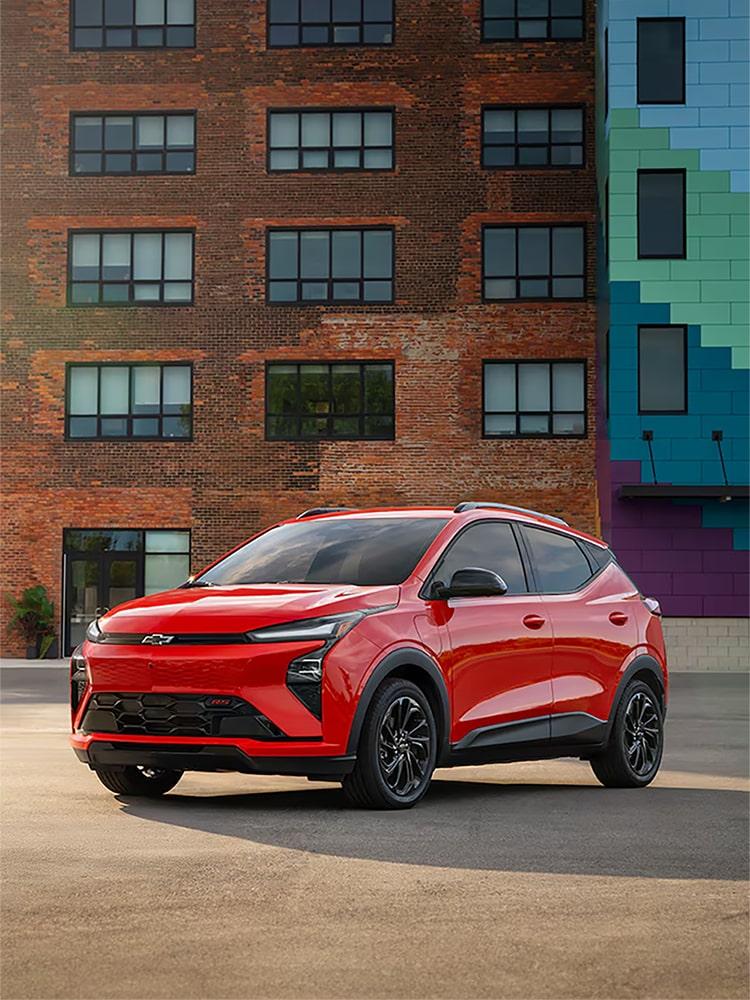
2027 Chevrolet Bolt vs 2026 Nissan LEAF in Canada: Use the Deal Sheet, Not the Headline
The Bolt and LEAF comparison now comes down to EVAP eligibility, dealer fees, charging hardware, and winter range. Here is the Canadian deal-sheet checklist.
The 2027 Chevrolet Bolt and 2026 Nissan LEAF comparison is no longer just a spec-table fight.
MotorLinks already covered the basic Canadian matchup in our earlier Bolt vs LEAF buyer guide: Bolt for clearer price positioning and native NACS, LEAF for the stronger listed range figure. That still holds.
The smarter July 2026 question is sharper: how do you compare the actual dealer quote?
GM Canada says the 2027 Bolt LT starts at $39,999 MSRP, offers up to 422 km of estimated range, has a native NACS charge port, and may pair with federal EVAP support for eligible customers on select configurations. Nissan Canada lists the redesigned 2026 LEAF as a five-seat electric subcompact SUV with up to 488 km of range, while its retail product data shows a $44,998 CAD offer price.
Those numbers are useful. They are not enough to sign on.
Quick Verdict
Use the Bolt as the default value benchmark. If a Chevrolet dealer can show a clean EVAP-eligible transaction, reasonable fees, native NACS, and a payment that stays meaningfully below the LEAF, the Bolt is the easier affordable-EV decision.
Use the LEAF as the range benchmark. If your commute is long, your winter driving is heavy, or you cannot charge at home every night, the Nissan’s higher listed range can be worth paying for, but only if the final quote does not erase the value case.
The winner is not the car with the nicer headline. It is the one whose written deal still makes sense after incentives, fees, charging equipment, winter range, and delivery timing are included.
The Deal-Sheet Checklist
| Question | Why It Matters | What To Ask For |
|---|---|---|
| What is the pre-tax transaction value? | EVAP and other incentive programs can depend on the exact final value, not just MSRP. | Ask the dealer to show the pre-tax transaction value before and after rebates, with accessories separated. |
| Does the exact trim qualify for EVAP? | A model family may be eligible while a specific configuration, timing, or transaction structure changes the result. | Get written confirmation of the trim, EVAP amount, and whether the dealer submits the application. |
| What fees are mandatory? | Dealer fees, freight, accessories, protection packages, and admin charges can shrink the advertised price gap. | Request the full out-the-door quote and have optional products removed from the comparison. |
| How much range do you need in winter? | The Bolt has the stronger price story; the LEAF has the stronger listed range figure. | Estimate a cold-weather highway day, not a perfect summer commute. |
| What charging hardware comes with the car? | NACS, J1772, adapters, portable cables, and home-charger needs can affect convenience and cost. | Ask what ports are on the vehicle, what cables are included, and what adapters are approved. |
| Is the delivery date firm? | An incentive can change before the vehicle arrives, and inventory timing can affect the real deal. | Ask whether the vehicle is in stock, allocated, or factory-ordered, and whether the quote protects incentive assumptions. |
This is the part of EV buying that does not fit cleanly into a social-media spec card. Two vehicles can be close on paper and very different once the quote is real.
Start With The Incentive Math
The federal Electric Vehicle Affordability Program, or EVAP, can swing this decision by thousands of dollars. That is exactly why shoppers should slow down.
GM Canada’s Bolt release says eligible customers on select models configured at $50,000 or less may qualify for up to $5,000 in federal EVAP support, depending on the program rules and deal structure. The same release also shows a cash-purchase example that includes a Chevrolet cash rebate and EVAP support for eligible buyers.
That is useful, but it is not automatic proof that your deal qualifies. EVAP depends on details: the exact configuration, final transaction value, dealer participation, purchase or lease term, funding status, and program rules at the time of delivery.
For the LEAF, the same discipline applies. A higher listed range can justify a higher price, but only if the final transaction still lands where you expect. If accessories, fees, interest, or lease terms push the payment too far above the Bolt, the range advantage has to solve a real problem.
The practical move is simple: ask both dealers for a quote that separates MSRP, freight, mandatory fees, optional products, manufacturer rebates, EVAP treatment, provincial incentives, taxes, and finance or lease terms. Then compare the actual payment and cash price, not the brochure.
Chevrolet Bolt and Nissan LEAF deal-sheet gallery
13

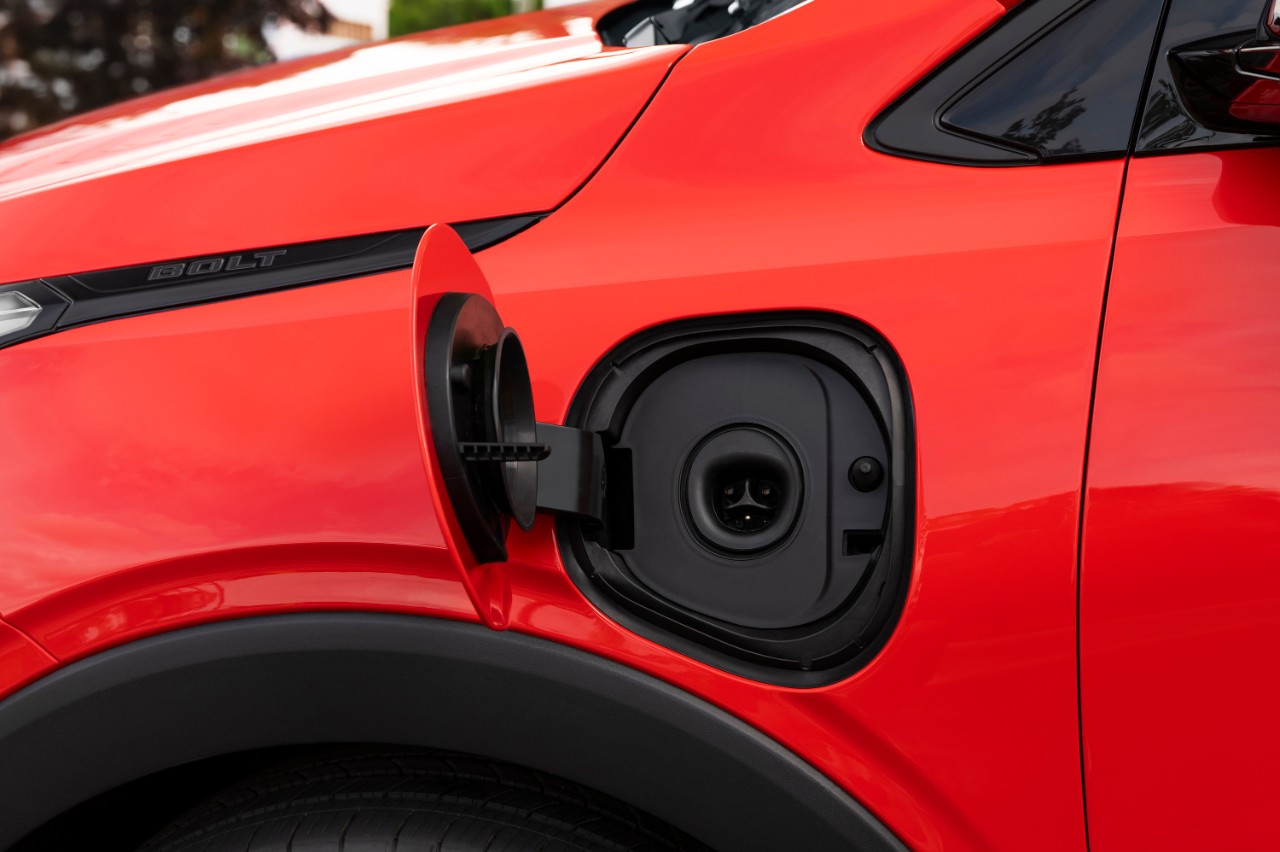
The returning Bolt is the affordability anchor, but Canadian buyers still need the full EVAP and dealer-fee math in writing.
Then Stress-Test Your Range Need
The Bolt’s 422-km estimate and the LEAF’s 488-km figure can both sound generous if your daily drive is 40 km. Canada changes that math quickly.
Cold weather, winter tires, cabin heat, slush, highway speed, roof racks, passengers, and battery preconditioning all reduce real range. The right question is not “which number is bigger?” It is “what is my hardest normal day?”
If your hardest normal day is a suburban commute, school pickup, errands, and a reliable home charger, the Bolt’s lower-cost pitch is hard to ignore. Paying more for unused range is still paying more.
If your hardest normal day is a winter highway run, a rural commute, regular cottage trips, or apartment living without dependable overnight charging, the LEAF’s listed range cushion becomes more meaningful. A cheaper EV that makes you anxious twice a week is not actually the better value.
Charging Is A Cost Item Too
Charging hardware should be on the quote checklist, not left for the delivery walkaround.
The Bolt’s native NACS port is a clean advantage for public DC fast charging. Chevrolet Canada says the 2027 Bolt can use 150-plus-kW DC fast chargers and estimates a 10-to-80-percent charge in as little as 25 minutes.
The LEAF’s setup is different but sensible. Nissan Canada says the 2026 LEAF uses a passenger-side NACS port for fast charging and a driver-side J1772 port for Level 1 and Level 2 charging. That can be handy if your home, condo, workplace, or local public Level 2 charger already uses J1772.
Before choosing, ask what comes in the car. Portable charging cable? Approved adapter? Home-charger credit? Installation offer? App activation? Tesla Supercharger access steps? Warranty language for third-party adapters?
Those details are small until they are not. A $500 to $1,500 home-charging surprise can erase part of the deal you thought you were getting.
Watch The Delivery Date
An affordable EV quote is only as useful as its delivery timing.
If the Bolt is on the lot and the LEAF is weeks away, the Bolt may have the stronger real-world case. If the LEAF is available with a firm quote and the Bolt requires a factory order, the LEAF’s range advantage might become easier to justify.
Timing also matters because incentives can change. EVAP rules, available funds, provincial programs, manufacturer rebates, dealer discounts, and interest rates are not guaranteed forever. A quote that assumes today’s program should say what happens if delivery slips.
That is not pessimism. It is just how incentive-driven car buying works.
Who Should Pick The Bolt First?
Start with the Bolt if this is a commuter EV, second household vehicle, city car, or first EV for someone who wants a low payment and straightforward public fast-charging hardware.
The Bolt also makes sense if you can charge at home most nights and your longest normal trips are occasional rather than weekly. In that use case, the lower purchase target matters more than carrying the biggest possible range buffer.
The risk is buying too small. If you already know you need more cargo room, more highway range margin, or a more modern cabin feel, do not force the Bolt to be something it is not.
Who Should Pick The LEAF First?
Start with the LEAF if range cushion is the reason you are finally comfortable going electric.
The LEAF’s listed 488 km gives it more breathing room on paper, and the redesigned body moves it into a more useful small-crossover lane. It is the one to prioritize if your driving pattern makes the Bolt feel just a little too tight.
The risk is overpaying for range you do not need. If the LEAF quote lands thousands higher and your real driving rarely challenges the Bolt, the Nissan has to win on more than the spec sheet.
Bottom Line
The 2027 Chevrolet Bolt and 2026 Nissan LEAF are close enough that Canadian buyers should stop arguing from headline specs and start comparing dealer paperwork.
The Bolt is the value benchmark: lower published Canadian MSRP, native NACS, faster DC-charging claim, and a clear EVAP-centered pitch.
The LEAF is the range benchmark: a stronger listed range figure, a fresh small-crossover shape, and a dual-port charging setup that may fit existing Level 2 infrastructure nicely.
Get both quotes. Strip out optional extras. Confirm EVAP treatment. Price the charging setup. Stress-test your worst winter day. Then the better affordable EV will usually reveal itself without much drama.
FAQ
What should Canadians compare before choosing the Bolt or LEAF?
Compare the final pre-tax transaction value, EVAP eligibility, dealer fees, lease or finance terms, winter range needs, charging hardware, home-charger compatibility, and delivery timing.
Is EVAP enough to make the Chevrolet Bolt cheaper than the Nissan LEAF?
It can be, but only if the exact Bolt configuration, transaction value, dealer participation, and purchase or lease terms qualify. Ask for the EVAP treatment line by line on the written quote.
Which matters more, the Bolt price or the LEAF range?
The Bolt price matters more if the vehicle is a commuter or second household car. The LEAF range matters more if the EV will regularly handle winter highway driving, longer weekly routes, or limited home-charging opportunities.
Should shoppers still read the earlier Bolt vs LEAF comparison?
Yes. The earlier Bolt vs LEAF guide covers the core spec comparison. This July follow-up is the practical checklist for comparing real dealer quotes.