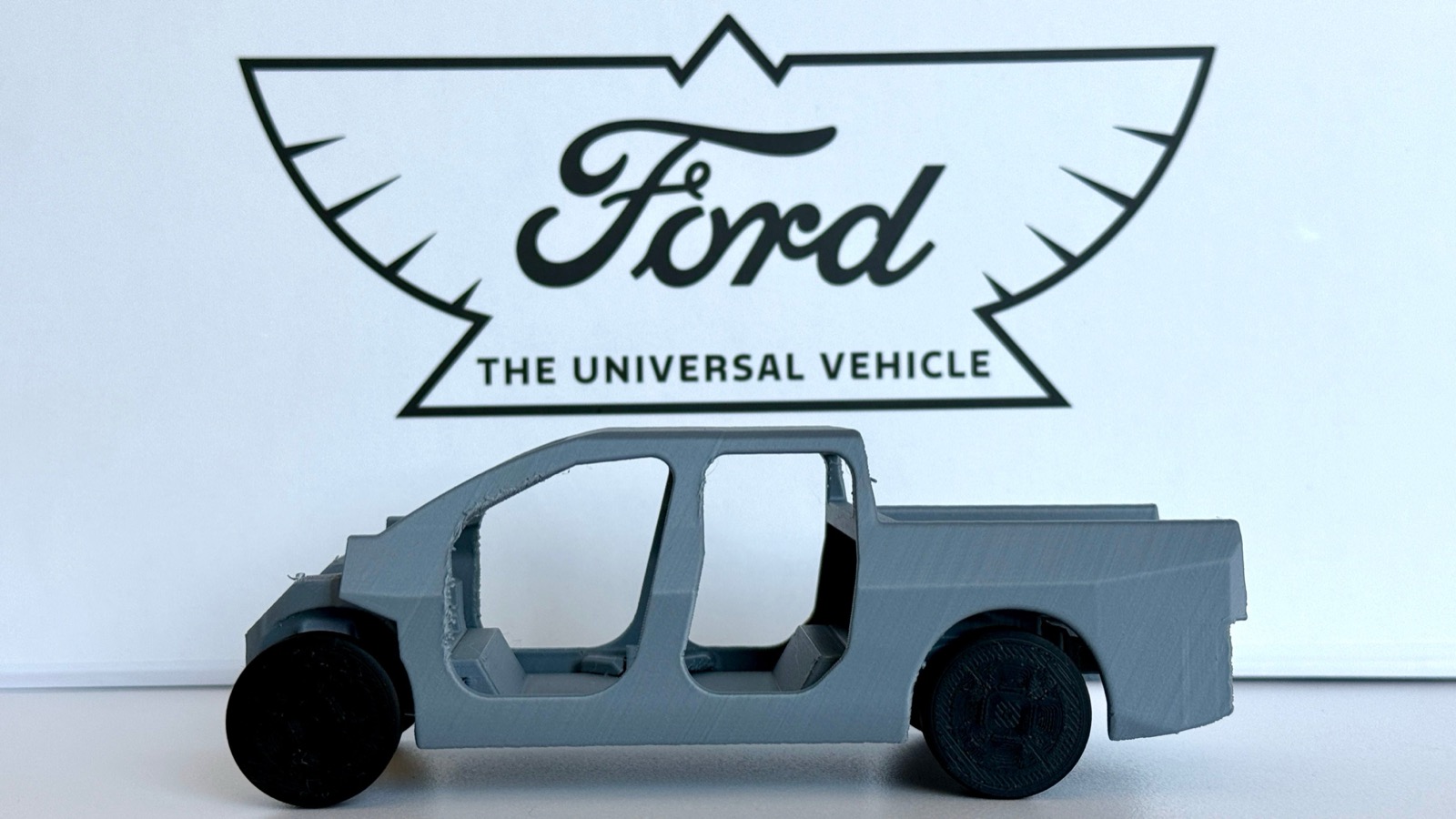
Ford's $30,000 EV Truck Spy Photos Make the Project Look More Real
Fresh spy photos of Ford's affordable Universal EV pickup show public-road testing, interior clues, 19-inch Michelin tires, and a more conventional truck shape ahead of the planned 2027 launch.
Ford’s affordable electric pickup has taken another small but useful step out of the shadows.
Car and Driver published new spy photos of a camouflaged Ford Universal EV pickup testing near Dearborn, Michigan, and the details matter because this truck is not supposed to be another expensive EV flagship. It is the first vehicle from Ford’s lower-cost Universal EV platform, with a targeted starting price of about $30,000 and production planned for 2027.
Ford has already shown controlled development imagery, but independent prototype photos make the project feel more concrete. The truck still appears heavily disguised, yet it looks recognizably pickup-like: four doors, a defined bed, a relatively short hood, and proportions closer to the Maverick side of Ford’s lineup than the F-150 Lightning side.
That is probably the right call. Ford does not need this thing to look like a science project. It needs it to look useful enough for normal truck buyers and efficient enough for the math to work.
What The New Photos Add
The biggest takeaway is that Ford’s affordable EV truck is now clearly in public-road development, not just moving through labs and controlled media teases.
Car and Driver’s photos reportedly show a few practical clues: a front-facing camera, a large center screen visible through the cabin, a rear window with what appears to be a sliding section, and 19-inch wheels wrapped in Michelin E Primacy all-season tires sized 245/55R-19. None of that tells us range, battery size, payload, towing, or charging speed. But it does suggest Ford is tuning a real truck around real packaging decisions.
| Clue | What it suggests | Why it matters |
|---|---|---|
| Maverick-like pickup proportions | Ford is staying close to a familiar compact/midsize truck shape | Mainstream buyers may trust a conventional layout more than a radical EV silhouette |
| 19-inch Michelin E Primacy tires | The prototype appears tuned around low rolling resistance rather than off-road theatre | Efficiency is critical if Ford wants useful range without an expensive battery pack |
| Large center touchscreen | A software-forward cabin is expected, but the final control layout is still unknown | Ford has to balance cost cutting with everyday usability |
| Front-facing camera and detailed lighting | The truck is likely being packaged with modern driver-assist and safety hardware | Affordable cannot mean stripped of core tech buyers now expect |
| Sliding-style rear window detail | Ford may keep familiar pickup features even on the new EV architecture | Small practical touches help the truck feel normal, not experimental |
The tire choice is especially interesting. E Primacy tires are efficiency-focused, which fits the mission. Ford is not trying to make a smaller Lightning with a giant battery and a giant price. It is trying to make an EV pickup cheap enough to sit near mainstream gas and hybrid options, and that means every drag, weight, and rolling-resistance decision counts.
Ford Universal EV pickup development imagery
13
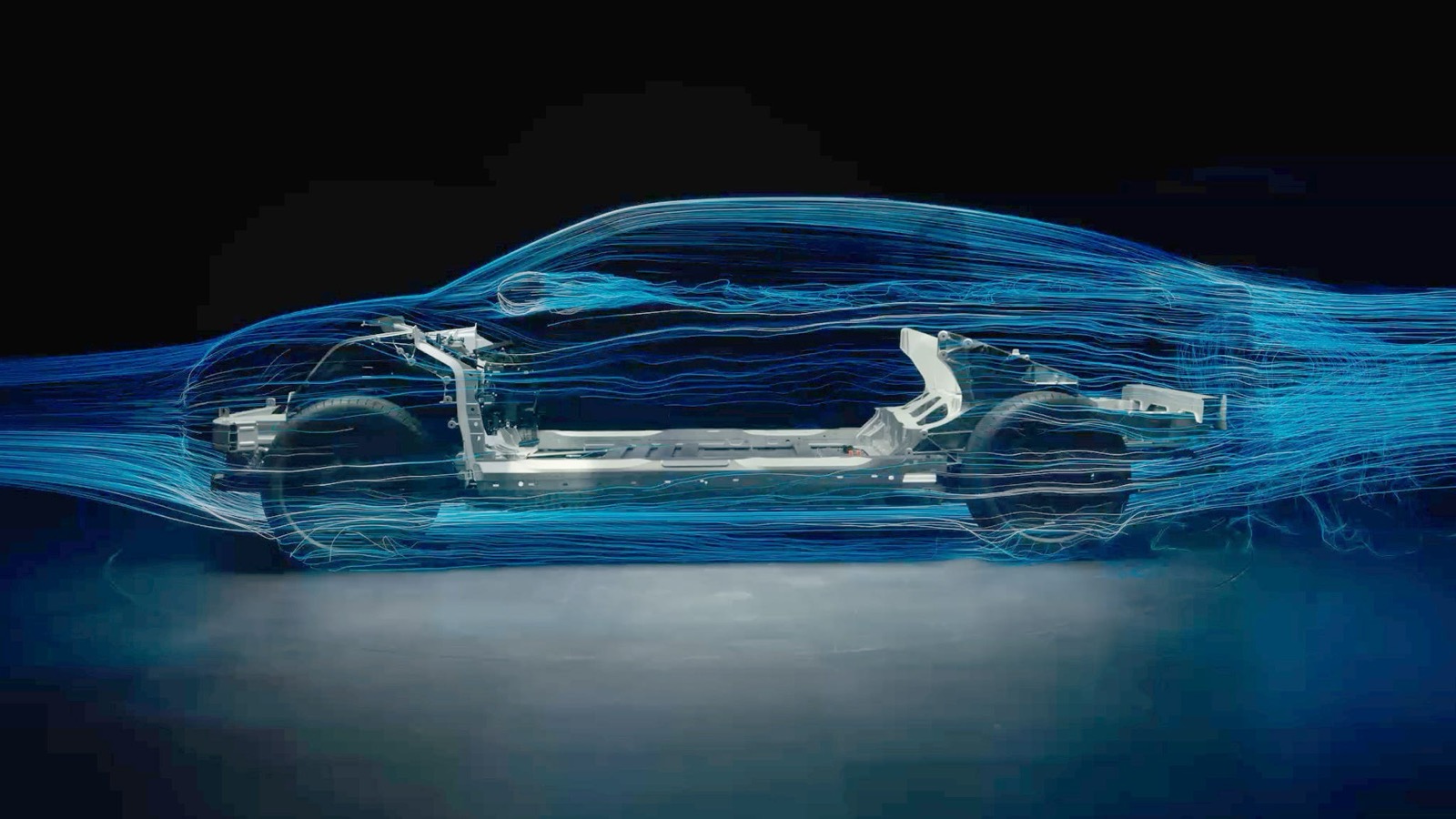
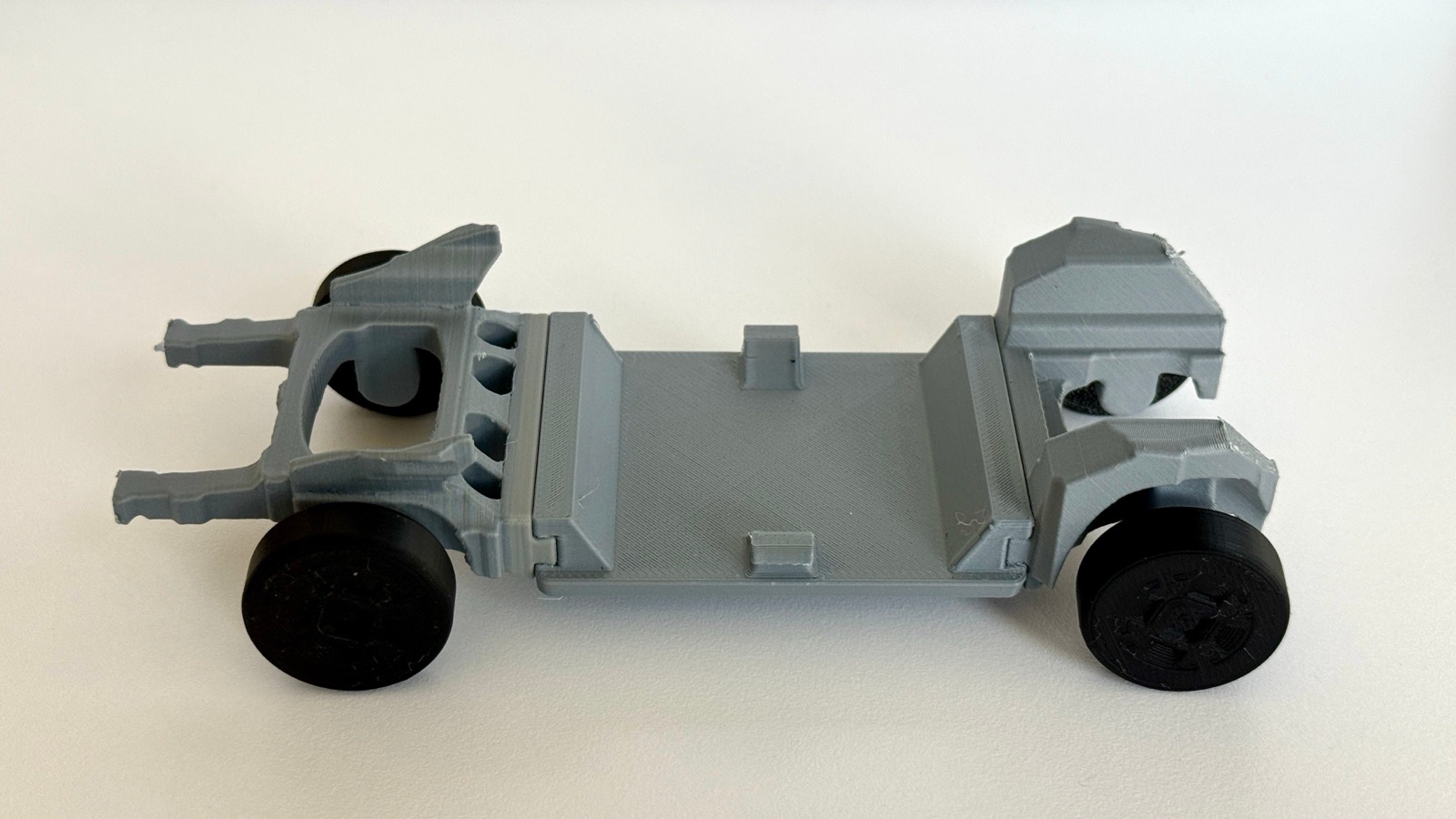
Ford has not revealed the finished truck, but its own development imagery points to a small-to-midsize pickup shape rather than a radical design experiment.
Ford’s Cost Math Is Still The Whole Story
Ford’s official Universal EV announcement from last August framed the truck as the first product from a much bigger manufacturing reset. The company said the platform is designed to reduce parts by 20 percent, cut fasteners by 25 percent, reduce plant workstations by 40 percent, and improve assembly time by 15 percent.
The wiring target is even more telling. Ford says the midsize truck’s wiring harness will be more than 4,000 feet shorter and 10 kilograms lighter than the one in its first-generation electric SUV.
Those are not brochure details. They are the difference between an EV that can be built cheaply and one that needs a luxury-car sticker to survive. A $30,000 electric pickup cannot hide cost problems behind leather, huge battery capacity, or monster horsepower. It has to be engineered lean from the start.
Ford also says the truck will use lithium iron phosphate battery chemistry and a structural battery sub-assembly that doubles as the vehicle floor. LFP is less energy-dense than some nickel-rich chemistries, but it is durable, cobalt-free, nickel-free, and usually cheaper. For a workaday affordable EV, that trade-off makes sense.
The Truck Still Has To Clear The Hard Questions
The spy photos make the program look more real, but they do not solve the big questions.
Ford still has not released the production name, final price, range, battery capacity, charge rate, payload, towing, bed dimensions, trim structure, or Canadian availability. The rumored Ranchero name would be fun, and very Ford, but the badge is less important than whether the base truck actually lands close to the advertised target.
That price target also deserves careful wording. Ford says the truck is targeting about $30,000. Until order banks, destination charges, trims, and real dealer availability exist, that is not the same as a window sticker.
The launch timing needs the same caution. Ford says production is planned for 2027 at Louisville Assembly Plant. That is close enough for prototypes to matter, but still far enough away for battery costs, tariffs, software development, supplier timing, and EV demand to shift the plan.
Why This Matters For Buyers
If Ford gets this right, the Universal EV pickup could be more important than the F-150 Lightning ever was.
The Lightning proved Ford could build a serious electric truck, but it also showed the limits of making a full-size EV pickup affordable for mainstream buyers. Big truck, big battery, big price. The Universal EV truck is chasing a different idea: smaller footprint, lower cost, simpler manufacturing, and enough utility for people who need a bed without needing a full-size hauler.
That puts it in a very interesting lane. It could appeal to Maverick shoppers, small-business fleets, commuters who want open-bed utility, and EV-curious buyers who have been priced out of the current electric truck market. It also gives Ford a cleaner answer to Slate, Telo, and any future compact electric pickups that try to make truck utility feel attainable again.
For Canadian shoppers, the watch item is value rather than hype. A smaller Ford EV pickup would need competitive pricing, winter-ready range, a credible charging setup, and a clear warranty/service story before it becomes an easy recommendation. Incentives may help in some provinces, but buyers should treat rebates as a bonus rather than the foundation of the purchase decision. MotorLinks’ Canadian EV incentive guide is the safer place to track that moving target.
Bottom Line
The latest spy photos do not reveal the finished Ford EV truck, but they do make the project feel more like a real product and less like an affordability slogan.
The good news is that Ford appears to be keeping the shape normal, the mission practical, and the engineering focused on cost. The hard part is still ahead: delivering a useful electric pickup at something close to $30,000, with enough range and capability that buyers do not feel like they are buying the cheap version of an idea.
That is exactly the kind of problem Ford should be trying to solve. Not the fastest EV truck. Not the wildest EV truck. The one regular buyers can actually consider.