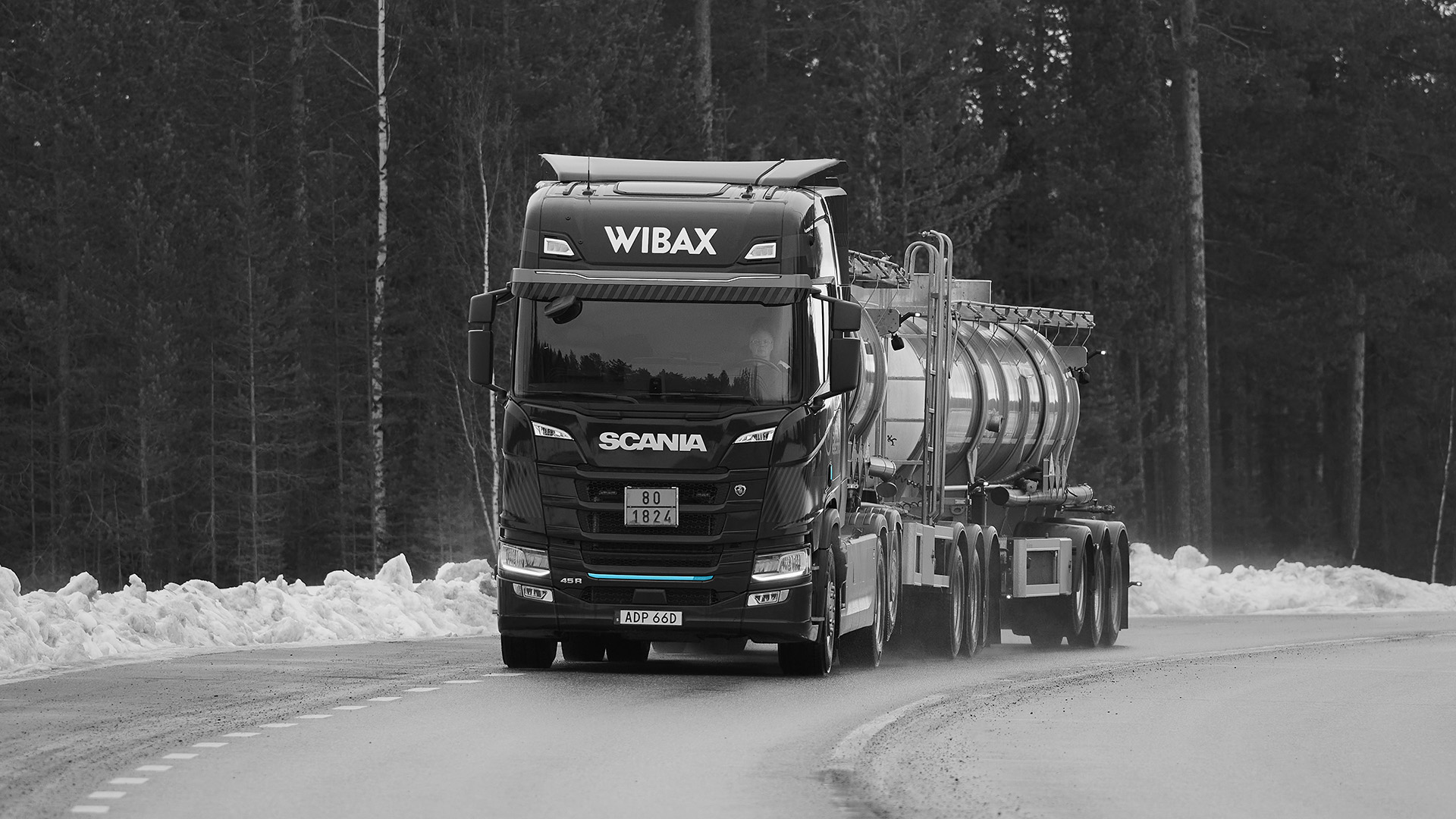
Scania's 105-Truck Wibax Deal Shows Where Electric Semis Work First
Scania will supply 105 battery-electric trucks to Wibax in what it calls the EU's largest electric bulk-transport truck deal, pointing to the early sweet spot for heavy-duty EV fleets.
Scania has landed the kind of electric-truck order that matters more than another concept render or range promise.
The Swedish truck maker says it has signed a deal to sell 105 battery-electric trucks to Wibax, a Nordic company that transports bio-oils and liquid chemicals across Sweden and Finland. Scania calls it the EU’s largest electric truck deal for bulk transport to date, and Wibax says the agreement runs over five years as part of a wider plan to electrify its fleet.
That is the important part. This is not an electric semi being teased for a future highway dream. It is a commercial fleet operator scaling a use case it already understands: heavy, repetitive, regional transport with charging, route planning, maintenance, and digital services bundled into the deal.
What Scania And Wibax Announced
Scania’s official announcement says the agreement covers 105 new electric trucks plus fleet optimization services. The company says the package is aimed at lowering total operating cost and will explore charging solutions, solar power production, and new business models alongside the vehicle order.
Wibax’s own release adds that the agreement includes maintenance, charging solutions, and digital services. The company also says data-driven planning will be central, with analysis of driving patterns, route planning, and energy consumption helping it size and deploy the fleet more efficiently.
The deal builds on a relationship that started before this order. Wibax says active electrification work with Scania began in 2021, while Scania previously put a heavy electric truck into Wibax operations as part of earlier development work.
Scania has not released the full technical specification for the 105 trucks in this new agreement. That is worth noting because the headline is the fleet commitment and operating model, not a spec-sheet fight over peak charging or battery size.
Why Bulk Transport Is A Good EV Test Case
Heavy-duty electric trucks are often discussed as if the only meaningful goal is replacing a diesel long-haul tractor on every route tomorrow. That is the wrong way to judge the early market.
Battery-electric trucks make the most sense first where routes are predictable, loads are understood, daily mileage is manageable, and charging can be planned around real operations. Wibax’s work fits that pattern better than a random cross-continent freight assignment. The company moves industrial liquids and bio-oils in Sweden and Finland, which means a lot of route planning, repeat customers, depot discipline, and asset utilization.
Scania quotes Wibax CEO Jonas Wiklund saying the company believes electrification will be effective for the “heavy, relatively short and repetitive transports” at the core of its logistics. That line gets to the point. Electric trucks do not need to win every use case immediately to be useful. They need to win the right use cases first.
For a fleet operator, the truck itself is only one part of the equation. Charging availability, dwell time, service support, driver scheduling, payload impact, energy cost, and uptime all matter. That is why the Scania-Wibax deal is more interesting than a simple purchase order. It is being framed as an operating-system change, not just a vehicle swap.
The Lesson For North America
This is a European deal, but Canadian and U.S. fleets should still pay attention.
North America’s electric-truck conversation tends to jump between two extremes: expensive consumer pickups on one side and massive highway freight ambitions on the other. The practical middle is less glamorous but probably more important. Regional freight, depot-based commercial vehicles, refuse trucks, port drayage, utility fleets, and predictable bulk or industrial routes are where electrification can prove itself with fewer unknowns.
That lesson already shows up in the charging conversation. MotorLinks recently covered how ChargeHub and AXSO are building an open reservation platform for electric truck charging, because fleets need certainty before they can scale beyond depot-only use. A 105-truck order works only if the charging and routing plan is treated as seriously as the vehicle purchase.
It also puts consumer EV debates in perspective. For private buyers, charging inconvenience can feel like a lifestyle problem. For fleets, it is a scheduling, cost, and uptime problem. The fleets that electrify first will be the ones that can turn charging from a question mark into a planned part of the route.
Electric Trucks Still Need Proof
There are still plenty of unanswered questions.
Scania and Wibax have not published final truck specifications for this order, and battery-electric heavy transport still has hard limits. Weight, winter performance, charging speed, charger availability, grid connection timelines, and vehicle cost can all decide whether a route works. A Nordic liquid-transport fleet is not the same as long-haul freight across Canada in February.
But that is exactly why this order is useful. It does not pretend electric trucks are ready for every job. It shows a major fleet choosing a defined operating lane and pairing the trucks with services, maintenance, charging planning, and data.
That is how heavy-duty electrification is likely to grow: not in one giant leap, but through fleets finding repeatable routes where the economics and operations line up.
The Takeaway
Scania’s Wibax deal is not flashy in the way a new electric pickup or sports EV is flashy. It is better than that. It is a real fleet order with a real use case, backed by a company that has already been working with the technology.
If the rollout goes well, it strengthens the case that electric heavy trucks are not just urban delivery tools. They can move into heavier industrial work when the route, charging plan, and operating model are designed together.
That is the important signal from this 105-truck deal. The electric semi market does not need every route to be ready at once. It needs enough serious operators proving where batteries already make sense.