Volkswagen's Tennessee ID.4 Shutdown Could Trigger a $600 Million Q1 Hit
Volkswagen is expected to take a major first-quarter charge after ending ID.4 production in Chattanooga, and the numbers show just how expensive the U.S. EV reset has become for legacy automakers.
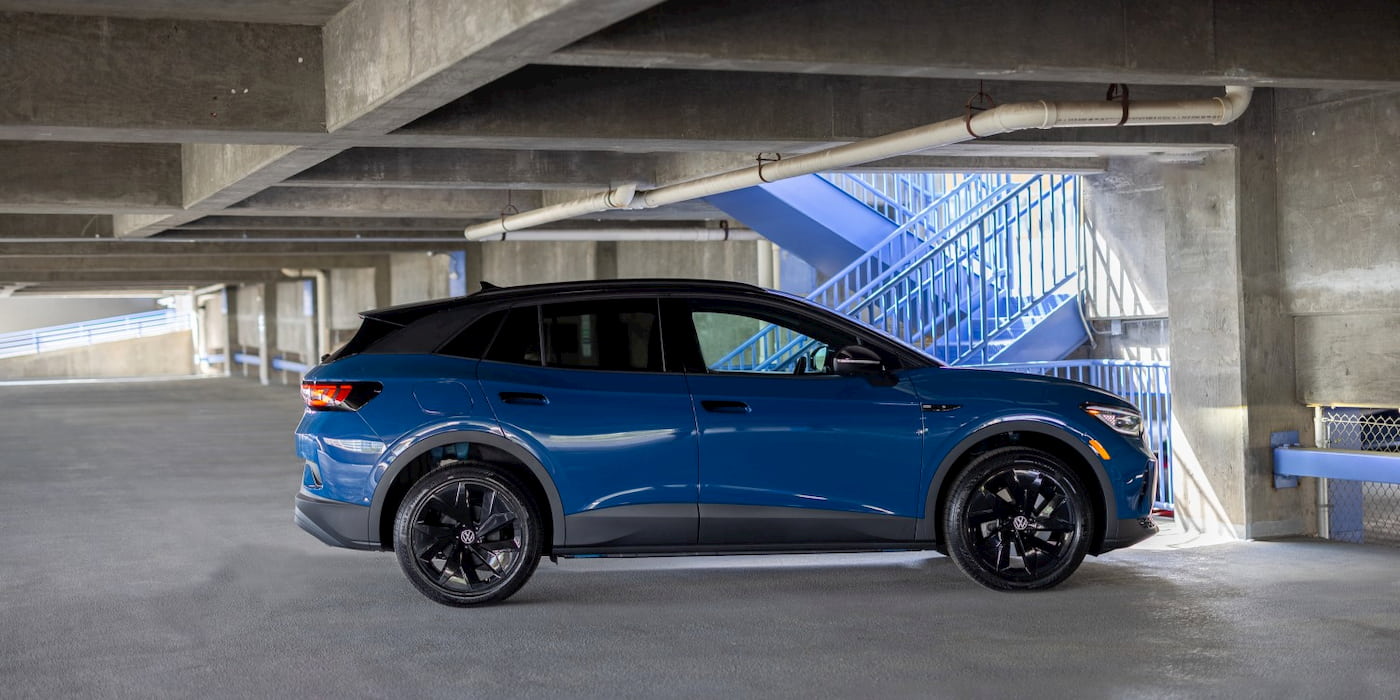
Photo: Volkswagen
Volkswagen’s decision to stop building the ID.4 in Chattanooga, Tennessee is turning into a much bigger story than a single product cancellation.
According to reporting from Reuters on April 14, analysts at Bernstein estimate the move could force Volkswagen to book a first-quarter charge equal to 60% to 75% of the roughly $800 million it invested to retool Chattanooga for EV production. That puts the potential hit at roughly $480 million to $600 million, and it says a lot about how quickly the U.S. EV market has shifted since the ID.4 was supposed to be one of VW’s big American growth plays.
Volkswagen had positioned the Tennessee-built ID.4 as a key part of its U.S. electric push. The plant started local assembly in 2022 after a major factory expansion, and building the crossover in the U.S. was meant to improve supply, pricing, and eligibility under local-content rules. Instead, the program is now ending early, with the financial cleanup landing before the market has even fully stabilized.
Why the Charge Matters
A write-down of this size would not just be an accounting footnote. It would be one of the clearest signs yet that the post-tax-credit EV slowdown in the U.S. is forcing automakers to rethink projects that looked sensible only a couple of years ago.
The problem is not that the ID.4 was a bad vehicle. It was, and still is, one of the more rational mainstream electric crossovers on the market. The issue is timing. For the federal new-clean-vehicle credit, vehicles acquired after September 30, 2025 became ineligible under the IRS cutoff. This was not an end-of-December cutoff; qualifying earlier acquisitions had separate delivery rules. Demand subsequently cooled. The economics of local EV production also became harder to defend. For a company like Volkswagen, that means expensive factory decisions now have to be measured against a market that is buying fewer EVs and leaning harder toward lower-risk hybrids.
If Bernstein’s estimate proves close to the final number, the Chattanooga reset becomes a case study in how punishing that misalignment can be.
The Sales Picture Makes the Decision Easier to Understand
Volkswagen’s own first-quarter delivery update, released this week, showed how much pressure the broader Volkswagen Group was under in North America. The group said its North American deliveries fell 13% year over year, while battery-electric vehicle deliveries in the region dropped 51%.
That is a brutal combination. When total volume is down and EV volume is falling even faster, a dedicated EV production program becomes much harder to defend, especially if it required hundreds of millions of dollars in plant investment.
The ID.4 also sits in one of the most competitive parts of the EV market. Buyers shopping electric compact and midsize crossovers now have more options than ever, even in a softer market. That means an automaker cannot just be present, it has to be compelling on price, incentives, software, charging experience, and brand momentum. Volkswagen has not had enough margin for error there.
This Is Bigger Than One Volkswagen Model
The Chattanooga story matters because it is not really just about Volkswagen. It reflects a broader industry problem in 2026: many legacy automakers committed to EV capacity based on a market that assumed stronger incentive support and faster adoption than what actually showed up.
That does not mean EV demand disappears from here. It means the next phase will look more selective. Automakers will keep backing the programs that can make money, support a wider brand strategy, or anchor a long-term platform. The marginal projects, especially those tied to weaker volumes or expensive retooling, are much more vulnerable.
Volkswagen still has an EV future in the U.S., but the Chattanooga pullback is a reminder that the path is getting narrower. The company now has to show that it can manage the retreat without turning it into a much larger confidence problem for buyers, dealers, and investors.
The Motorlinks Take
For Volkswagen, the real damage here is not only the potential half-billion-dollar-plus charge. It is what that number represents.
A Tennessee-built ID.4 was supposed to be proof that a global automaker could localize EV production, hit the center of the U.S. market, and build momentum from there. Instead, it is becoming a warning about how fast EV math can break when incentives change and demand cools before scale arrives.
That is why this story matters. The U.S. EV slowdown is no longer just showing up in softer sales charts. It is now rewriting factory plans, investment timelines, and product strategies in very expensive ways.