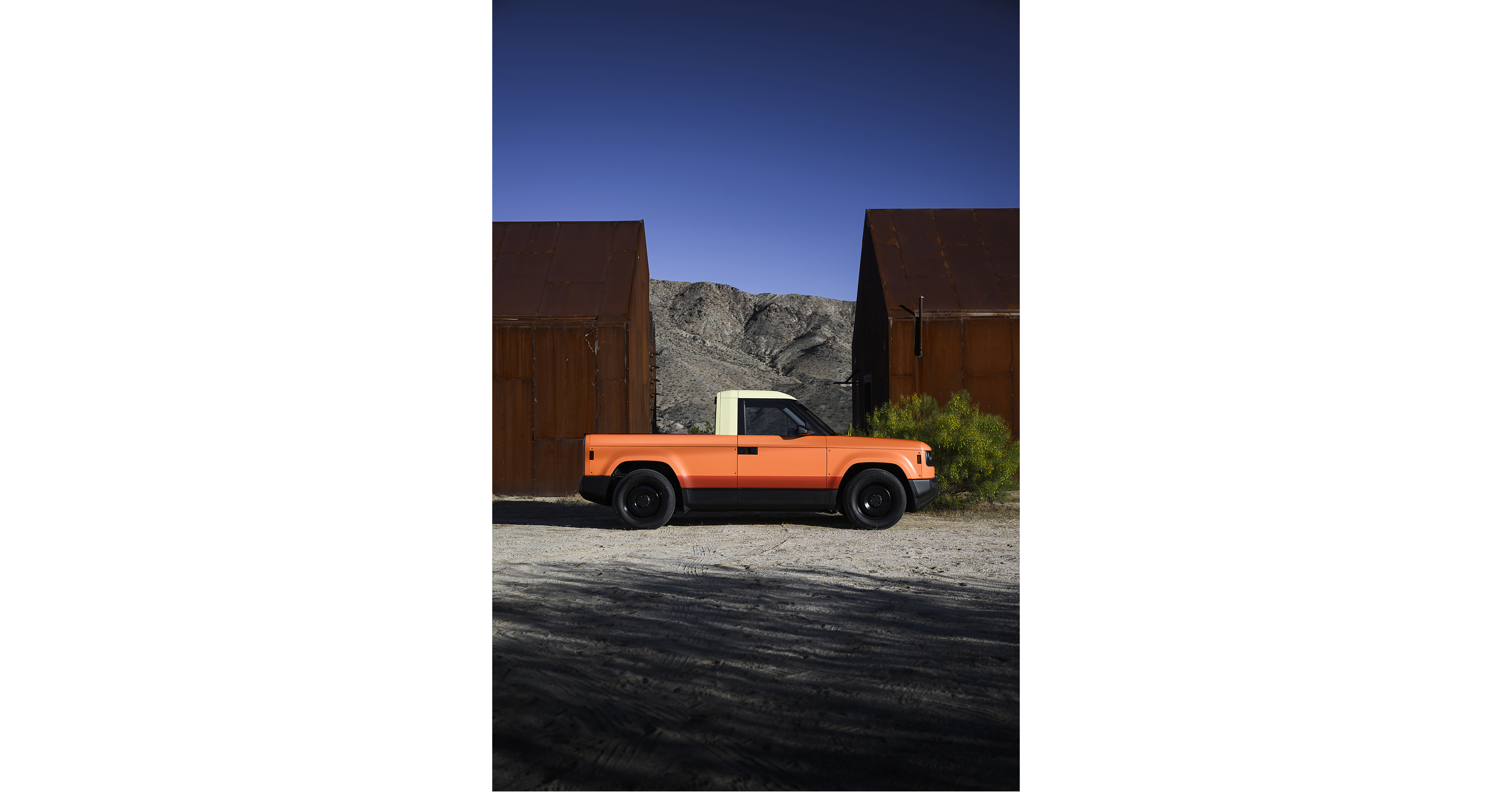
Slate just raised $650 million, and 160,000 reservations make its cheap EV truck look a lot more real
Slate said on April 13, 2026 that it closed a $650 million Series C, has more than 160,000 reservations, and still expects first deliveries in late 2026.
Photo: Slate
On April 13, 2026, the company said it closed a $650 million Series C, had taken more than 160,000 reservations at $50 refundable, and still expected first deliveries in late 2026. Preorders were planned for June 2026, when an MSRP would be announced. The price talk is the mid-$20,000s, not a sub-$20,000 truck after incentives.
A reservation is not a sale. The round answers three questions a buyer can check: how much money came in, how many people put down $50, and when Slate says the first trucks leave the factory in Warsaw, Indiana.
Why this funding round matters
Slate says the new cash gives it the operating capital to reach the next stage of development and keep production plans on schedule this year. That matters because cheap EVs are easy to promise and brutally hard to build. The industry is full of startups that got plenty of attention at reveal time, then hit the ugly wall where tooling, supplier contracts, factory work, and launch logistics start eating real money.
This is why the size of the round stands out. A $650 million raise is the capital investors put behind getting Slate from internet curiosity to vehicles on driveways.
The company also said preorders for the Slate Truck are set to begin in June 2026, which gives us a more specific milestone than the launch hype alone did.
160,000 Reservations is the bigger signal
The reservation total might be the most interesting number here. Slate says it has passed 160,000 reservations, each backed by a $50 refundable deposit. Refundable reservations are not the same thing as locked-in sales, and every startup would love you to forget that. Still, the number matters because it shows there is genuine appetite for a simpler and cheaper electric truck, especially at a time when new vehicle prices keep climbing.
That is the part of the Slate pitch that keeps landing. Instead of chasing giant screens, luxury trim, and six-figure pricing, Slate is leaning into the opposite idea: a basic electric pickup with a low entry point, a modular accessory strategy, and the ability to turn into something closer to an SUV if buyers want that later.
If the company can actually build it at scale, that is a genuinely fresh idea in the current EV market.
The price story got more grounded, too
There is another detail worth noticing. Slate now says the truck will cost in the mid-$20,000s, with final MSRP set to be announced in June 2026. That is a more grounded way to frame the price than the early reveal buzz around a sub-$20,000 figure after incentives.
Honestly, that makes the story more believable, not less.
The average new vehicle transaction price in the US is still far above where most shoppers want it to be, and even a minimalist EV pickup landing somewhere in the mid-$20,000 range would still look unusually aggressive if Slate can hold that line. A cheap EV does not have to be miracle-level cheap to matter.
What still needs to happen
The hard part has not changed. Slate still has to get the Warsaw, Indiana factory ready, ramp production on time, and prove that its stripped-down truck can be profitable enough to survive beyond the first wave of curiosity. Reservation momentum is nice. Funding is essential. Neither one means the launch is already won.
But this update does move the company into a more serious phase. Slate is no longer just the startup with the weirdly appealing blank-slate truck concept. It is now claiming real financial backing, real demand, and a short path to the next commercial milestone.
The MotorLinks take
This is the kind of EV startup update that actually deserves attention. Not because it is loud, but because it is specific.
Slate now has more money, a bigger reservation stack, a clearer preorder timeline, and a more realistic price framing than it did at reveal. That does not make late-2026 deliveries a sure thing, but it does make the company easier to take seriously.
And if Slate can deliver even reasonably close to what it is promising, it could end up doing something the broader EV market badly needs right now: proving there is still room for a simple, attainable electric pickup that is built for buyers who care more about usefulness than flex.
Related Articles
- Slate opens truck preorders at $24,950, and the specs just got more serious
- Ford’s $30K EV Truck Could Be the Breakthrough America Actually Needs
- Best EV Trucks of 2026: What to Buy, What to Wait For, and What to Skip
Why we use AI
Car news moves fast and the useful details are buried in recall filings, rate bulletins and spec sheets from around the world. AI lets a small team read all of it, so you get the numbers, the sources and the Canadian angle in one place. Every article is checked against its cited sources and reviewed by our editor before it goes up. Spot a mistake? Tell us and we'll fix it.