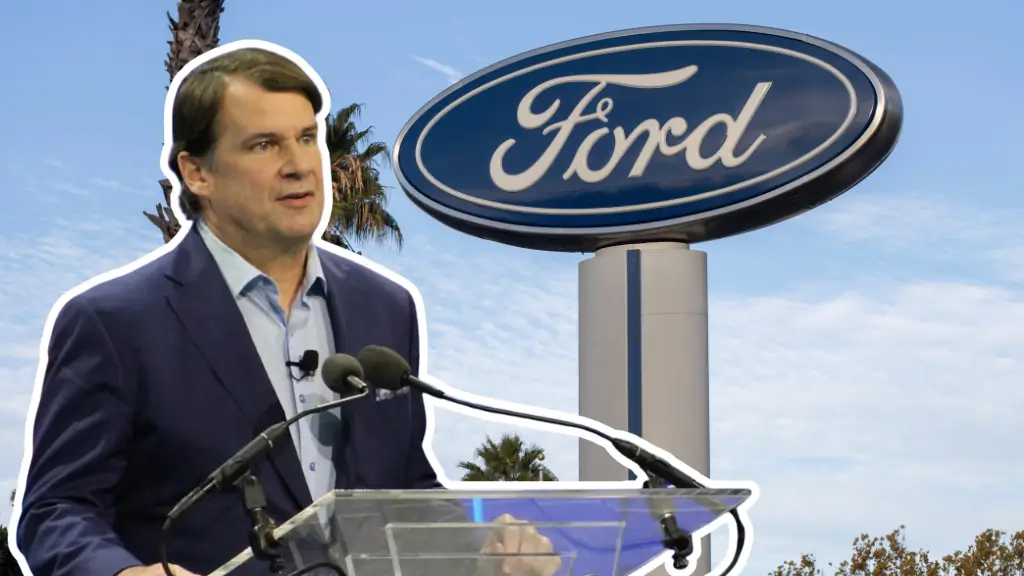
Ford Launches $31.7M Share Buyback as Tesla and LG Energy Confirm $4.3B Battery Plant
On the same day Ford moved to stabilize its stock, Tesla and LG Energy Solution announced a major new U.S. battery production facility — two very different signals from the auto industry on the same March day.
March 17, 2026 was a day of contrasts for the auto industry. While Ford moved to stabilize its stock through a buyback program, Tesla and LG Energy Solution confirmed plans for a major new domestic battery production facility — signaling that even as some legacy automakers pull back on EV ambitions, the infrastructure build-out continues to attract investment.
Ford’s Anti-Dilution Move
Ford on Monday announced a share buyback of up to 31.7 million common shares, designed to offset dilution from 2026 share-based compensation and the conversion of 0.00% convertible notes that matured March 15, 2026. At current prices, the buyback represents roughly $400 million in repurchases — a meaningful but not transformative sum for a company with a market cap in the tens of billions.
The move comes as Ford continues to navigate a tricky stretch. The company took a $19.5 billion EV-related write-down in late 2025, and its EV division remains unprofitable even as hybrid sales surge. Ford has been vocal about the challenges of building affordable EVs at scale, and its F-150 Lightning and other electric programs have underperformed early projections.
The buyback itself doesn’t signal a change in strategy — it’s a financial housekeeping move. But it does underscore how Ford is trying to manage shareholder expectations while it works through the transition.
Tesla and LG Energy’s $4.3 Billion Bet
Separately, Tesla and LG Energy Solution confirmed a joint $4.3 billion battery production project in the United States. The facility will produce lithium-iron-phosphate (LFP) cells — a chemistry Tesla has increasingly favored for energy storage applications and some vehicle programs — using both Megapack-style grid storage products and automotive-grade cells.
The timing is notable. While Ford is managing the financial fallout from an EV market that’s growing more slowly than expected, Tesla and LG are doubling down on domestic battery production. LFP cells don’t use nickel or cobalt, which makes them cheaper and less exposed to supply chain pressures — but they have lower energy density than the NMC cells that dominate Western EV production.
This matters because it signals a bifurcation in the market. Premium EVs continue to push toward higher energy density and longer range, while more cost-focused applications — energy storage, entry-level vehicles — are gravitating toward LFP. Tesla’s Semi program and its utility-scale Megapack business both use LFP chemistry, and this plant would serve all three.
Two Industries, Two Plays
What you’re seeing here is really two different bets on the EV future. Ford is hedging its near-term financial exposure while it works through years of EV investments that haven’t yet paid off. Tesla and LG are betting that battery production at scale — particularly the cheaper LFP format — will be a competitive advantage regardless of how quickly the overall EV adoption curve steepens.
Neither strategy is obviously wrong. Ford needs to protect its balance sheet while the transition plays out. Tesla needs cheap, domestically produced cells to stay competitive on cost as more affordable EVs come to market.
The one thing that’s clear: the auto industry’s EV investment cycle isn’t stopping. It’s just becoming more selective.
Stay on top of battery tech developments:
Related reading:
- Ford’s $19.5 Billion EV Write-Down — the financial backdrop to Ford’s current strategy
- Tesla Gigafactory Shanghai’s 4 Million Unit Milestone — Tesla’s production scale advantage