Honda Scraps Three U.S. EVs, Books Up to $15.8 Billion in Losses
Citing weak demand and mounting losses, Honda is cancelling the 0 Series SUV, 0 Series Saloon, and Acura RSX — and taking one of the biggest EV retreat charges in the industry.
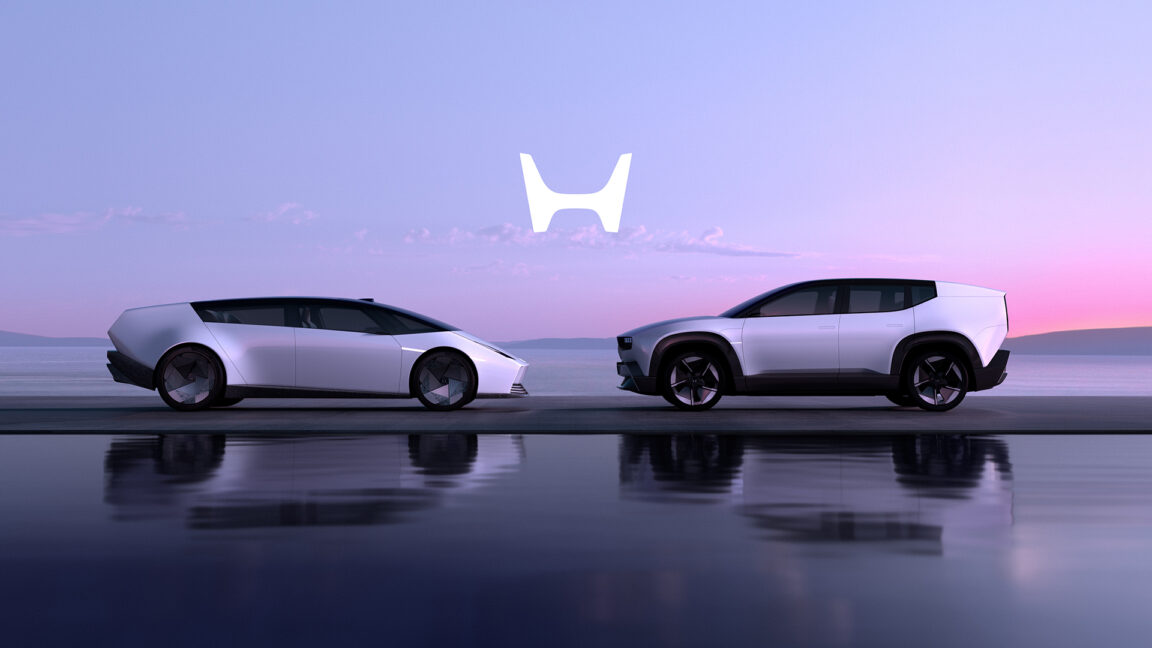
Honda announced on March 12, 2026 that it is cancelling three planned electric vehicles for the North American market — the 0 Series SUV, 0 Series Saloon, and the Acura RSX — and will book between $5.2 billion and $15.8 billion in losses as a result. The announcement marks one of the most significant retreats yet in the auto industry’s ongoing EV recalibration.
What Honda Was Planning
The now-cancelled 0 Series was Honda’s serious attempt at a dedicated EV platform for the U.S. The SUV and Saloon were targeting the heart of the mainstream EV market — roughly the same territory the Hyundai Ioniq 5 and Kia EV6 occupy. The Acura RSX was positioned as the premium halo, a sportier take on the same architecture.
None of these vehicles made it to production. Honda confirmed in its March 12 corporate announcement that it is restructuring its EV business and will redirect capital toward hybrids — a pivot that mirrors what several legacy automakers are doing in the face of slower-than-expected EV adoption.
The Numbers Are Staggering
Honda’s projected losses of up to $15.8 billion represent the cost of a full strategy do-over. Development costs on the cancelled models are being written off, alongside supply chain commitments and manufacturing setup expenses. The company acknowledged the move will result in substantial losses for the fiscal year ending March 2026.
To put that in context: the entire EV industry’s retreat charges are approaching $70 billion across all manufacturers, according to Automotive News reporting. Honda’s chunk is among the largest single-company announcements yet.
The Industry Context
Honda’s cancellation is the latest in a string of EV program trims. Stellantis, GM, Ford, and others have all taken major charges or revised plans downward over the past 18 months. The core issue is consistent: EVs are more expensive to build than equivalent ICE vehicles, charging infrastructure gaps persist, and consumer adoption has slowed from the aggressive projections automakers used to justify their investments.
Hybrid sales, meanwhile, are hitting record highs — Honda’s own CR-V Hybrid and Accord Hybrid have been strong performers, which makes the pivot to hybrids as a profit strategy more straightforward than forcing a premature full-EV transition.
What It Means for Honda’s Electric Future
Honda is not abandoning EVs entirely — it will continue selling the recently launched 0 Series in China and other markets where EV adoption is further along. But for U.S. buyers, the electric Honda future just got a lot less immediate. The company’s U.S. electrified strategy now leans heavily on hybrid variants of existing models rather than dedicated EVs.
For a company that spent years talking up its EV ambitions, it’s a notable recalibration — and a cautionary tale about the cost of moving too fast on a technology transition the market wasn’t ready to accept.
Stay charged while the industry figures itself out:
Related reading:
- Stellantis Scraps PHEVs, Doubles Down on Hybrids — same industry trend, different brand
- Nissan LEAF, Ford Energy Pivot — legacy brands navigating the same currents