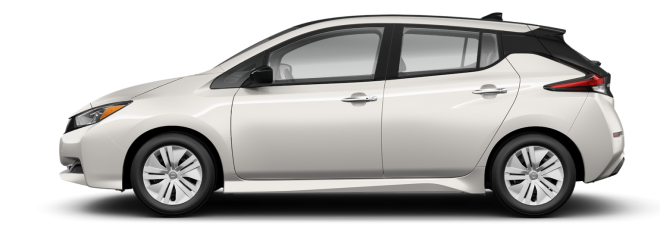
Nissan LEAF Wins Women's World Car of the Year as Ford Pivots a Plant to Energy Storage
The Nissan LEAF took home the Supreme Winner award at the 2026 Women's Worldwide Car of the Year competition — a remarkable vindication for a model that's been in production since 2010. Meanwhile, Ford is converting a Michigan plant to produce grid-scale battery storage.
Two pieces of news on March 7, 2026, illustrated something important about the electric vehicle transition: it’s not just about cars anymore.
Nissan LEAF: A Comeback Story
The Nissan LEAF was crowned Supreme Winner at the 2026 Women’s Worldwide Car of the Year awards, an annual competition judged exclusively by female automotive journalists and industry professionals from around the world.
The win is notable for a vehicle that launched back in 2010 as the world’s first mass-market electric car. The 2026 LEAF builds on that legacy with an updated 62 kWh battery pack, improved thermal management, and a refreshed interior — but the real story is the LEAF’s longevity. More than 650,000 units have been sold globally since launch, making it one of the best-proven EV platforms on the road.
The Women’s Worldwide Car of the Year jury cited the LEAF’s combination of practicality, proven reliability data, and accessible pricing as factors that set it apart from newer — and sometimes flashier — competitors. It’s a reminder that not every EV needs 400 miles of range and a 0-60 time under four seconds to win fans.
Ford’s Michigan Energy Pivot
Separately, Ford confirmed on March 7 that it is converting a portion of its Michigan manufacturing footprint to produce grid-scale energy storage systems — essentially large battery packs designed for utilities and commercial customers rather than vehicles.
The move reflects a broader recognition inside Ford that the transition to electrification creates demand well beyond passenger cars. Energy storage is a fast-growing market, driven by renewable energy adoption, grid stability needs, and — in the U.S. — growing interest in residential and commercial backup power.
Ford’s energy storage products use lithium-iron-phosphate (LFP) chemistry, a cell type the company has been developing in-house for several years. LFP batteries are less energy-dense than nickel manganese cobalt (NMC) alternatives but offer longer cycle life and lower risk of thermal runaway — important characteristics for stationary storage applications.
The plant conversion is a modest but symbolically significant shift. Ford, like most legacy automakers, built its reputation on internal combustion engines. A Michigan factory making grid storage batteries doesn’t make the front pages the way an EV truck launch does, but it represents a quiet recognition that electrification extends far beyond the driveway.
The Week’s Other Notable Stories
- Supply chain concerns: CBT News reported that the escalating U.S.-Israel conflict was rattling auto supply chains, with shipping delays and component cost pressures compounding existing tariff impacts
- Oil price spike risk: Automotive News’ Weekend Drive podcast explored how potential oil price increases — triggered by geopolitical instability — could paradoxically help or hurt EV adoption depending on how consumers respond to fuel price swings
- Used EV surge: Cox Automotive data showed used EV sales approaching near-record levels even as new EV sales struggled, suggesting a secondary market is developing as first-generation LEAFs, Model 3s, and Bolts come off lease in volume