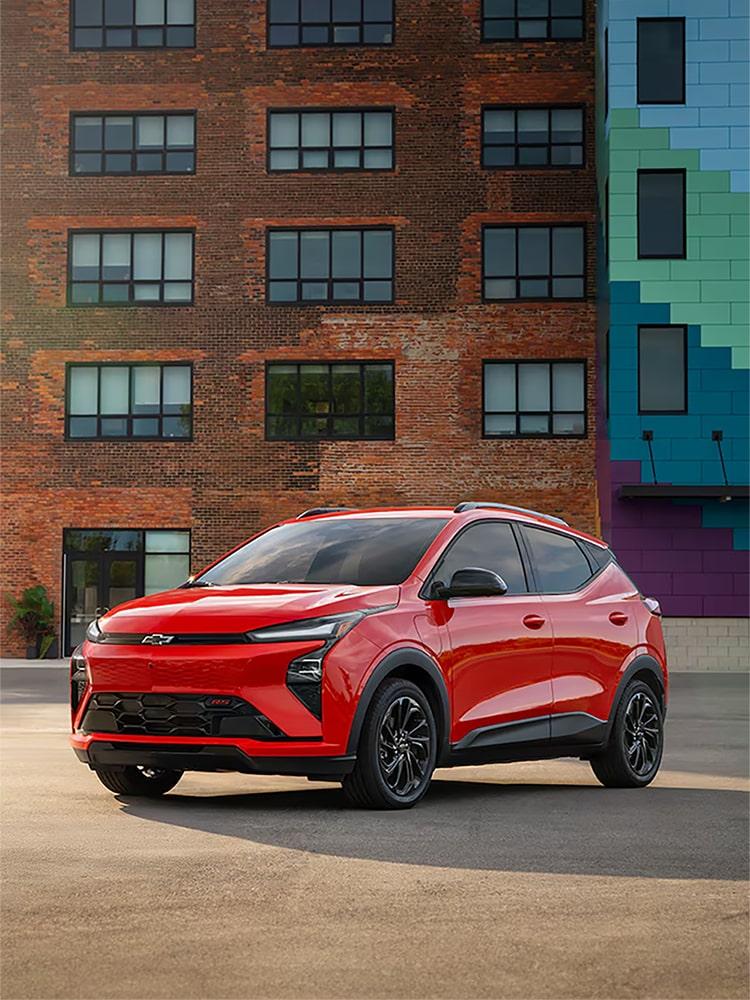
GM Begins Production of Next-Generation Chevrolet Bolt at Kansas Factory
General Motors has started building the redesigned Bolt EV at its Fairfax, Kansas assembly plant, with the new model targeting a sub-$30,000 price and over 300 miles of range using Ultium batteries.
General Motors has begun production of the redesigned Chevrolet Bolt EV at its Fairfax, Kansas assembly plant, the company confirmed on November 13, 2025. The next-generation Bolt — built on GM’s Ultium battery platform rather than the original BEV2 architecture — is positioned as the automaker’s answer to the affordability question that has stymied mainstream EV adoption in the United States.
What We Know About the New Bolt
GM confirmed the new Bolt will use Ultium cells — the same battery technology deployed across the Hummer EV, Cadillac Lyriq, and Chevrolet Blazer EV — but in a simplified, lower-cost configuration. The company has not released final specifications, but executives have indicated a target of over 300 miles of EPA-estimated range and a starting MSRP under $30,000 after the now-expired federal tax credit.
That pricing would put the Bolt below the average transaction price for a new compact car and competitive with the Toyota Corolla Hybrid, Honda Civic, and Mazda3. For an EV with 300 miles of range, it would be a first in the U.S. market.
The design is said to be an evolution of the original Bolt’s tall-hatch proportions, with a more refined interior featuring a new 11-inch infotainment screen and Super Cruise driver-assistance capability on higher trims.
Why the Bolt Matters — Again
The original Chevrolet Bolt was a remarkable vehicle that arrived too early and without enough support from GM. Launched in 2017 at $37,500, it delivered 238 miles of range in a compact, practical package — years before any comparable competitor from a legacy automaker. But GM’s subsequent decisions, including killing the Bolt (then reviving it), slow rollout of the Ultium platform, and a series of recall issues with the original battery, damaged consumer confidence.
The next-generation changes that calculus. By moving to Ultium, the Bolt gains access to GM’s growing battery supply chain and manufacturing scale. It also gets V2H (vehicle-to-home) capability, which the original lacked, and faster charging at up to 150 kW on DC fast chargers.
“This is the Bolt we always wanted to build,” GM President Mark Reuss said at a plant event in Kansas. “Affordable, real-world range, and built here in America.”
Competitive Context
The new Bolt enters a market that has grown more crowded but not more affordable. The base Tesla Model 3 starts at $40,000. The Hyundai IONIQ 5 and Kia EV6 start above $41,000. The Chevrolet Equinox EV — GM’s other mainstream Ultium offering — starts at $34,995 but with a more modest 285-mile range estimate.
Toyota’s bZ4X and Subaru Solterra remain below $35,000 but are widely considered compromised in range and charging speed. The new Bolt’s combination of sub-$30,000 price, 300+ mile range, and GM’s nationwide dealer network for service could be a significant competitive advantage, particularly in markets where EV purchase consideration is high but price sensitivity is the primary barrier.
Timeline and Availability
GM says initial production units are rolling off the Fairfax line now, with broad dealer availability expected by early 2026. The company has not specified exact timing for the first customer deliveries, but U.S. sales launch is widely expected in Q1 2026.
The Bolt will also spawn an EUV (electric utility vehicle) variant — similar to how the original had both Bolt and Bolt EUV — though that model is expected later in 2026.
For more on GM’s EV strategy, see our coverage of the Chevy Equinox EV and GM Ultium platform developments.