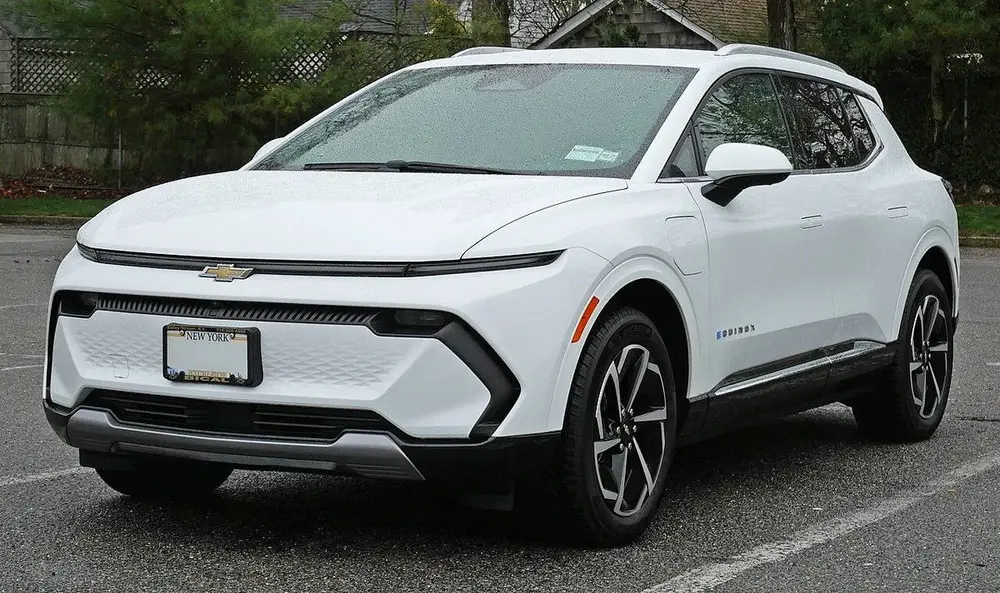
GM Takes $1.6 Billion Hit as EV Strategy Gets Rewired
General Motors will record a $1.6 billion impairment charge in Q3 2025 as it reshapes its electric vehicle strategy following the elimination of federal EV tax credits and a reassessment of factory capacity.
General Motors on October 14, 2025 filed documents with the Securities and Exchange Commission revealing a $1.6 billion impairment charge tied to its electric vehicle manufacturing capacity — a direct consequence of the expiration of federal EV tax credits and a broader realignment of its electrification timeline.
The charge, approved by GM’s Audit Committee on October 7, will hit the third quarter income statement as a non-cash impairment. The company said it is “realigning EV capacity to consumer demand,” signaling that its manufacturing footprint built for a high-incentive environment is now being scaled back to match a slower-growth reality.
“Following the elimination of the federal EV tax credit and in light of slower-than-expected EV adoption, we are taking decisive action to align our production capacity with market demand,” GM said in a statement. “This charge reflects the reduced value of certain EV-related assets and manufacturing investments that no longer support our revised outlook.”
The move is the most significant financial admission yet that the post-credit EV market is fundamentally different from what GM — and much of the industry — had planned for as recently as 2024. When the credit was worth up to $7,500 per vehicle, models like the Chevrolet Equinox EV and the Chevrolet Blazer EV were positioned as high-volume, margin-accretive products. Without it, those economics have shifted materially.
The Equinox Equation
The Chevrolet Equinox EV, launched at $34,995, was perhaps the most anticipated affordable EV of the year. After the credit, an eligible buyer could effectively purchase it for $27,495. Without the credit, the full MSRP stands — and for many buyers comparing against equivalent gasoline crossovers or hybrids, the math is tighter.
GM had tooled its Orion Assembly plant in Michigan to build the Equinox EV at significant volume. The plant, which also produces the Chevrolet Silverado EV, has been running below its designed capacity in recent months. Industry analysts estimate that the Equinox EV has been selling at roughly 40% below GM’s internal targets.
“We expected the credit expiration to create headwinds,” said one analyst familiar with GM’s production planning. “But the magnitude of the volume shortfall has been larger than most models predicted. The Equinox is a good product at the wrong price point without incentives.”
What GM Is Actually Changing
GM has not disclosed specific production cuts but has hinted at a revised launch timeline for future EVs. The company had previously committed to launching 12 new Ultium-based EVs by the end of 2025 — a target that has been quietly walked back. Several planned models, including an electric Corvette variant and a new entry-level Chevrolet EV, are now expected in 2026 or later.
The company has also slowed its battery joint venture with LG Energy Solution. The joint venture, which operates facilities in Lordstown, Ohio, and other locations, had been scaling to supply hundreds of thousands of vehicles annually. Some of that capacity is now being deferred.
UAW workers at EV-focused plants have been watching the situation closely. GM’s Orion Assembly, which builds the Equinox EV and Silverado EV, has seen downtime added to its schedule in recent weeks. The union has been in ongoing conversations with GM about the pace of the EV transition and what it means for employment levels.
The Bigger Picture
The $1.6 billion charge is notable not just for its size but for what it represents: a industry-wide recalibration of EV investments that has been building since early 2025. Ford took a similar approach earlier in the year, delaying or canceling several EV programs. Volkswagen and Stellantis have likewise signaled a more cautious approach to BEV volume targets.
What GM’s disclosure underscores is that the old model — building capacity first, then counting on incentives and scale to make the math work — is no longer valid. The new model requires pricing, product planning, and manufacturing capacity to all align without the subsidy buffer.
For GM, that means fewer EVs, more slowly, priced more carefully. For consumers, it means the affordable EV future everyone was waiting for is taking longer to arrive.