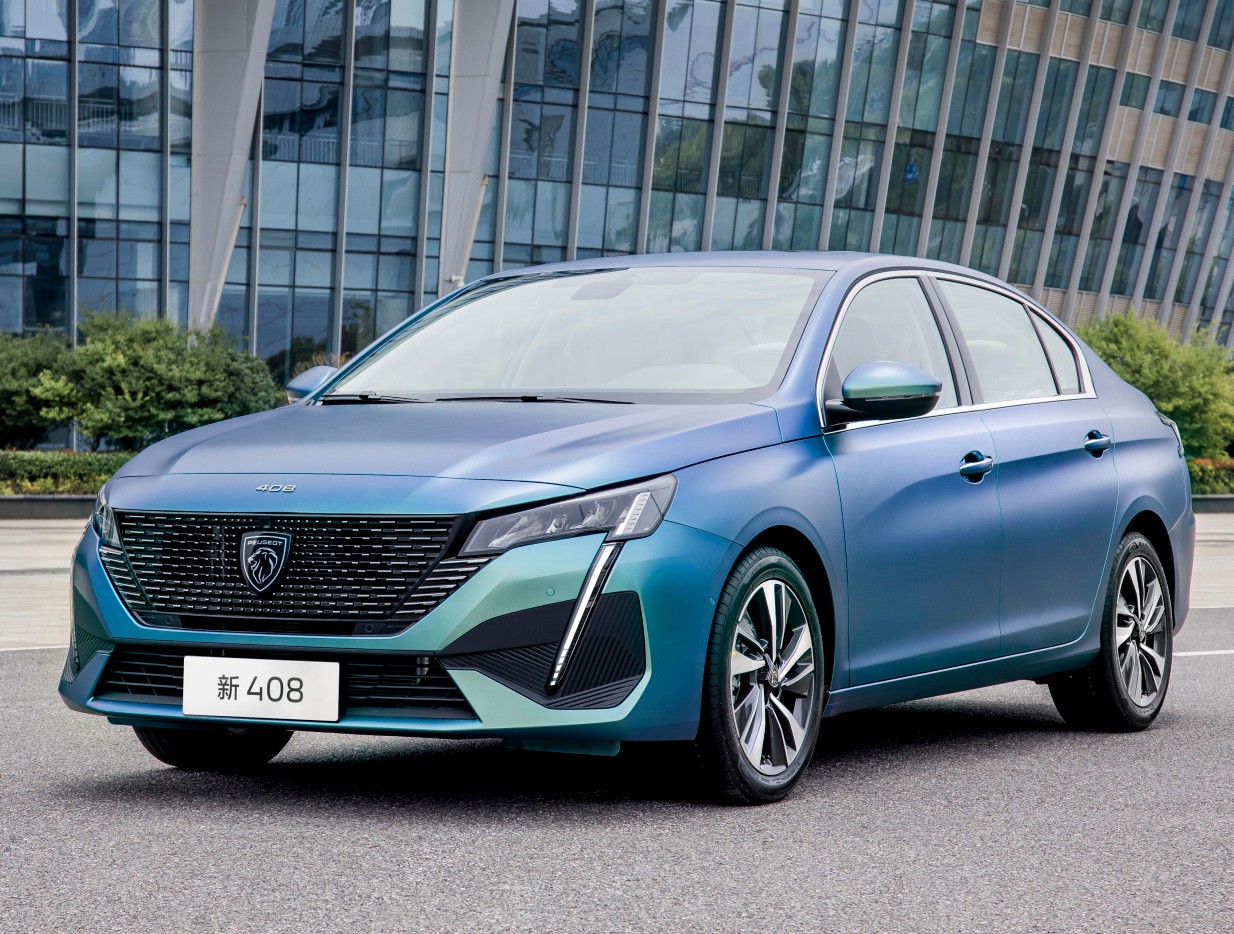
2022 Peugeot 408 Sedan Unveiled in China Wearing a 308 Face
Peugeot's Chinese-market 408 sedan gets a comprehensive visual overhaul borrowing the 308's sharp front-end design, while staying true to its own longer-wheelbase roots.
Peugeot has given its China-only 408 sedan a thorough visual refresh for 2022, and the most striking change is up front: the car now wears the same sharp, aggressive face as the latest-generation 308 hatchback. Unveiled by Dongfeng Peugeot in June 2022, the updated sedan bridges two generations of Peugeot design language while retaining the longer wheelbase and rear-seat legroom that Chinese buyers expect from a compact sedan.
What’s New on the Outside
The headline update is undeniably the front fascia. The 2022 408 ditches the blander visage of its predecessor in favor of Peugeot’s signature vertical pearl-tooth grille, flanked by swept-back LED headlights that angle sharply into the fenders. The look is immediately recognizable to anyone who’s seen the 308 — which, given the 408’s position as a more affordable, roomier alternative in the Chinese market, is presumably the point.
At 4,750 mm long, 1,820 mm wide, and 1,488 mm tall, with a 2,730 mm wheelbase, the 2022 408 sedan is a compact-class sedan built on an extended version of the platform used by the previous-generation 408. It’s longer and lower than the 308 hatchback (which measures 4,360 mm end-to-end), giving it a more traditional three-box silhouette with a proper trunk.
Around back, the changes are more subtle. The taillights receive a new internal graphic, and the bumper gets a minor reshape. The overall effect is cohesive — the facelifted 408 now looks like it belongs in the same model family as the 308, rather than being a distant cousin.
Under the Hood: Familiar Powertrain
Peugeot hasn’t taken the opportunity to introduce any new engine options for the Chinese market. Power comes from a turbocharged 1.6-litre four-cylinder petrol engine — the same unit that powered the previous 408 — producing around 170 horsepower (125 kW) and 250 Nm of torque. Drive goes to the front wheels through a six-speed automatic transmission.
It’s a proven but aging drivetrain. The 1.6 THP engine has been a staple of PSA Group (now Stellantis) products for over a decade, and while it’s refined and reasonably efficient, it doesn’t offer the kind of electrification that competitors in China’s market are increasingly moving toward. A mild-hybrid or plug-in hybrid variant would have given the 408 a stronger story in the world’s largest EV market, but that’s clearly not in the cards for this update.
| Specification | Detail |
|---|---|
| Engine | 1.6L turbo 4-cylinder petrol |
| Power | ~170 hp (125 kW) |
| Torque | ~250 Nm |
| Transmission | 6-speed automatic |
| Drivetrain | Front-wheel drive |
| Length | 4,750 mm |
| Width | 1,820 mm |
| Height | 1,488 mm |
| Wheelbase | 2,730 mm |
| Market | China |
Inside: i-Cockpit with a Twist
Inside, the 2022 408 receives an updated version of Peugeot’s i-Cockpit dashboard layout. The small steering wheel — a love-it-or-hate-it feature that’s become a Peugeot trademark — sits ahead of a digital instrument cluster, while a floating touchscreen infotainment display anchors the centre console. Material quality has been improved for the 2022 model, with soft-touch surfaces in key areas and updated trim inserts.
Rear seat legroom remains one of the 408’s key selling points against the 308 hatchback and its global market siblings. The longer wheelbase translates to genuinely usable rear head- and legroom, which matters a great deal in the Chinese compact sedan segment where rear-passenger comfort is a priority purchase consideration.
Pricing and Market Position
Dongfeng Peugeot priced the updated 408 sedan from ¥119,700 (approximately $17,900 USD) up to ¥159,700 (approximately $23,800 USD), positioning it squarely against established rivals like the Nissan Sylphy (Sentra), Volkswagen Lavida, and Chevrolet Monza. At those price points, the 408 undercuts many of its competitors on specification while offering a more distinctive design language.
The 408 is not to be confused with the Peugeot 408 X — a dramatically styled fastback crossover that debuted at the Paris Motor Show in October 2022 and later went on sale in global markets. The sedan is China-exclusive, produced by the Dongfeng Peugeot-Citroën joint venture, and fills a more conventional (if no less competitive) niche in the world’s most crowded auto market.
Is It Actually a New Generation?
Peugeot has marketed the 2022 408 as a new-generation model, but a closer look reveals it’s more accurately described as a comprehensive mid-cycle refresh of the second-generation 408 that launched in China back in 2010. The platform, powertrain, and fundamental body structure carry over largely unchanged. What is new is nearly everything visible from the A-pillar forward, plus meaningful revisions to the interior.
That’s not necessarily a criticism — the previous 408 was a competent, if unremarkable, compact sedan. The 308-face update brings the visual drama that the car was lacking, and in the Chinese market, where design language and technology perception matter enormously, that counts for a lot.
The Takeaway
The 2022 Dongfeng Peugeot 408 sedan is a thoughtfully updated package that leans into what already worked — space, value, and a distinctive French design — while addressing the one area where the previous car truly lagged: visual appeal. The 308 front end is a genuine improvement, and at prices starting under ¥120,000, the 408 presents a compelling alternative to the usual Japanese and German suspects in China’s compact sedan segment.
That said, the lack of any electrification is a notable omission in 2022, and it’s an area where Chinese domestic brands are moving quickly. The 408 is a solid update, but it feels more like a last stand for the conventional compact sedan than a statement about where Peugeot’s Chinese portfolio is heading.
Related Articles
- Stellantis Pledges $13 Billion U.S. Investment Through 2030 — Stellantis’ broader strategy includes continued investment in its global nameplates, including Peugeot’s sister brands.
- The Chinese EV Market Is Growing Faster Than Anyone Expected — China’s auto market is reshaping global EV strategy for every major manufacturer, including Stellantis.
- Stellantis Scraps Plug-in Hybrids, Goes All-In on EVs — As Stellantis retools its European strategy, the lack of electrification in the 408 sedan looks increasingly like a transitional compromise.