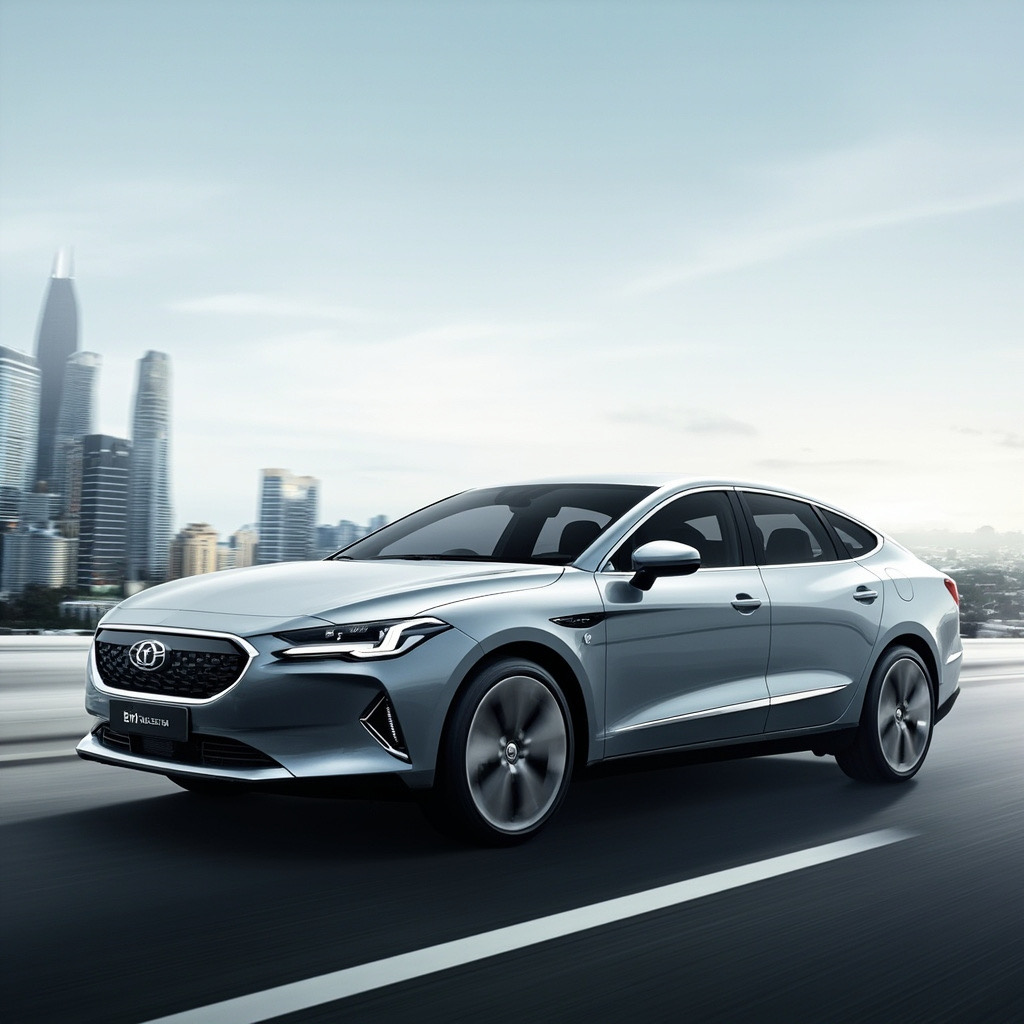
Chinese EV Makers Outsold Legacy Automakers in 2025. What That Means for the U.S.
BYD became the world's largest EV manufacturer in 2025, and Chinese brands now dominate their home market. With tariffs blocking direct entry, how will the Chinese EV revolution affect American consumers?
In 2025, BYD sold more electric and plug-in hybrid vehicles than any other manufacturer in the world — including Tesla. The Chinese EV market, now the largest in the world by a wide margin, is generating vehicle manufacturers and battery companies that are technologically advanced, cost-competitive, and desperate for growth markets outside China. Meanwhile, U.S. tariffs have effectively blocked their direct entry into the American market. Here is what that dynamic means for the future of the auto industry.
The Scale of China’s EV Dominance
China sold approximately 12 million new energy vehicles (BEVs and PHEVs combined) in 2025, representing roughly 45 percent of total new vehicle sales in the world’s largest automotive market. BYD alone sold more than 4 million NEVs in 2025, making it the world’s largest EV manufacturer by volume. Warren Buffett’s early investment in BYD has returned more than 30x.
Chinese EV manufacturers are not just volume leaders — they are technology leaders. BYD’s Blade Battery (LFP chemistry with a distinctive cell-to-pack architecture) has achieved energy densities competitive with NMC cells while eliminating cobalt (an ethically fraught material supply chain). CATL, the world’s largest EV battery manufacturer, has developed the Shenxing LFP cell that can charge at 4C (adding approximately 250 miles of range in 10 minutes).
These are not knockoff products from inferior manufacturers. The BYD Seal, reviewed as one of the best EVs available globally, is a genuinely competitive vehicle that undercuts equivalent Western EVs on price by $10,000-$15,000.
Why Chinese EVs Can’t (Currently) Enter the U.S.
The 100 percent tariff on Chinese EVs, in place since 2024 and expanded in 2025, makes it economically impossible for Chinese EVs to compete in the U.S. market at current pricing. A BYD Seal that costs $25,000 in China would be priced at $50,000+ in the U.S. after tariffs, putting it out of the range of direct price competition with American and Korean EVs.
The tariff regime also extends to components. The 25 percent tariff on Chinese auto parts has forced supply chain reshoring for any automaker that previously sourced components from China — including some battery materials processing that is difficult to replicate outside China in the near term.
The Mexican Workaround
Chinese manufacturers are not giving up on the U.S. market — they are finding alternative paths. BYD has announced plans to build a manufacturing facility in Mexico, which would allow it to export to the U.S. market under USMCA trade agreement provisions. The timing is uncertain, but the strategic intent is clear.
A Mexican BYD factory producing vehicles for the U.S. market would be a significant competitive threat to legacy automakers. The same BYD Seal technology, produced with Mexican labor and exported to the U.S., could be priced at $32,000-$35,000 — competitive with the Chevrolet Bolt and substantially below the Model Y.
The Technology Transfer Concern
The more immediate concern for U.S. competitiveness is not Chinese vehicles entering the U.S. market — it’s the technology gap that is developing between Chinese EV manufacturers and everyone else.
Chinese EVs, benefiting from massive domestic scale, rapid iteration cycles, and aggressive government support, are pulling ahead of Western manufacturers in key technology areas: battery energy density, charging speed, and manufacturing cost. Toyota, Honda, and Ford are still at early stages of EV development where Chinese manufacturers have been iterating for a decade.
This technology gap matters for the U.S. market indirectly: it means that when U.S. tariffs eventually come down (or when Chinese manufacturers find alternative market access routes), American consumers may be denied access to the most advanced, affordable EVs in the world.
What This Means for U.S. Consumers
For now, U.S. consumers are protected from Chinese EV competition by tariffs. What they’re not protected from is the opportunity cost of being unable to buy a genuinely good $30,000 EV with 350+ miles of range, because no American or allied manufacturer has achieved that combination yet.
The hope — for American consumers and for the broader goal of accelerating EV adoption — is that the tariffs buy time for U.S. and allied manufacturers to catch up. GM’s next-generation Bolt, built on Ultium with a target price under $30,000, is one such bet. If GM can deliver that vehicle at scale by 2027, it will have arrived just as the tariff regime is under maximum political pressure.
The Chinese EV revolution is real. Americans just can’t buy into it yet.
Motorlinks covers global EV market dynamics. For more on BYD, see our BYD plug-in hybrid recall story.