Tesla Model 3 vs. Honda Civic vs. Toyota Corolla: The Great Mainstream Sedan Showdown
Which mainstream sedan makes the most sense in 2026? We break down the Tesla Model 3 against the Honda Civic and Toyota Corolla across price, range, running costs, tech, and real-world ownership — EV versus ICE, head to head.
The compact sedan segment has never been more interesting. Three of the most significant players — the Tesla Model 3, Honda Civic, and Toyota Corolla — represent genuinely different philosophies of what a modern family car should be. One is a pure electric vehicle with a minimalist interior and access to the best fast-charging network in North America. The other two have evolved into capable hybrids with rock-solid reliability and dealer networks that stretch to every town in America.
If you’re cross-shopping all three in early 2026, you’re asking a question that goes beyond specs: is now the time to go electric, or does the proven formula of a hybrid powertrain still make more sense for your life?
We dug into the numbers — purchase price, fuel costs, insurance, maintenance, depreciation, and real-world range — to see which sedan gives you the most for your money.
Side-by-Side Specifications
| Vehicle | Starting Price (USD) | EPA Range | Combined MPGe / MPG | Horsepower | Seating |
|---|---|---|---|---|---|
| Tesla Model 3 RWD | $38,990 | 272 mi | 132 MPGe | 283 hp | 5 |
| Tesla Model 3 Long Range AWD | $43,990 | 310 mi | 123 MPGe | 295 hp | 5 |
| Tesla Model 3 Performance AWD | $49,990 | 267 mi | 111 MPGe | 455 hp | 5 |
| Honda Civic LX (ICE) | $24,545 | — | 34 mpg | 158 hp | 5 |
| Honda Civic Sport (ICE) | $26,745 | — | 31 mpg | 180 hp | 5 |
| Honda Civic Hybrid | $28,595 | — | 50 mpg (combined) | 200 hp | 5 |
| Toyota Corolla LE (ICE) | $23,050 | — | 32 mpg | 169 hp | 5 |
| Toyota Corolla SE (ICE) | $25,050 | — | 31 mpg | 169 hp | 5 |
| Toyota Corolla Hybrid | $26,175 | — | 50 mpg (combined) | 196 hp | 5 |
Pricing and Trims
The Honda Civic and Toyota Corolla have price lists that haven’t changed dramatically from a decade ago — and that’s a feature, not a bug. The Corolla LE starts at $23,050, making it one of the most affordable new sedans you can buy in America. The Civic LX isn’t far behind at $24,545. Both offer hybrid variants that slot in at $26,000-$28,600, with meaningfully better fuel economy.
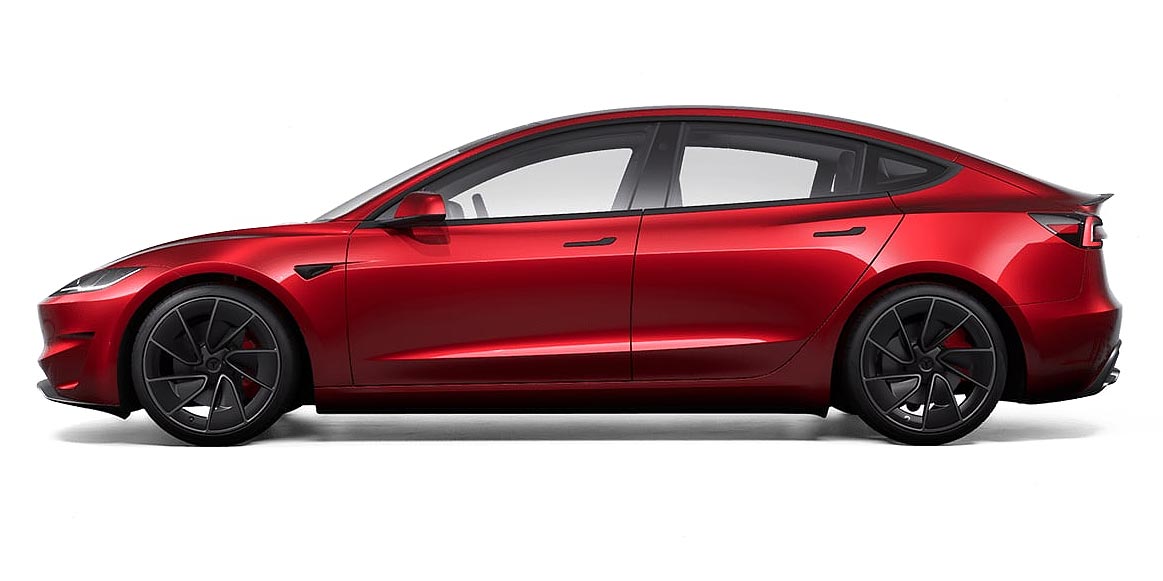
The Tesla Model 3 is the expensive option, starting at $38,990 for the rear-wheel-drive version. But here’s the nuance: after the federal EV tax credit’s expiry at the end of 2025, no Model 3 variant currently qualifies for the $7,500 federal credit. That changes the effective price comparison. A Model 3 Long Range at $43,990 is genuinely $43,990 — no credit offset.
That said, Tesla has been aggressive with pricing adjustments. The Performance trim at $49,990 undercuts what comparable performance sedans cost — a Honda Civic Type R runs $38,870 before destination, and a Toyota GR Corolla starts at $49,880. For 455 hp with all-wheel drive, the Model 3 Performance is genuinely competitive on a pure performance-per-dollar basis.
Practical note on pricing: Destination charges add $1,395 to every new Tesla and $1,250 to Honda and Toyota vehicles. Factor that into your comparisons.
Range and Efficiency: The EV Advantage
This is where the Model 3 pulls decisively ahead — on paper, at least. The Long Range AWD delivers an EPA-estimated 310 miles of range, which is outstanding for the price. In real-world mixed driving with highway speeds, expect 255-280 miles from that configuration. The RWD Model 3 delivers 272 EPA miles (around 220-245 real-world), and the Performance manages 267 EPA miles with its thirstier powertrain calibration.
The efficiency numbers are stark. The Model 3 Long Range achieves the equivalent of 123 MPGe combined — meaning it uses roughly 27 kWh per 100 miles in practice. At home charging at $0.13/kWh (national average), that’s about $0.035 per mile. Even with public Supercharger costs at $0.28/kWh, you’re looking at around $0.075 per mile.
The Honda Civic Hybrid delivers 50 mpg combined — impressive for a non-plug-in. The Corolla Hybrid also hits 50 mpg combined. At $3.50 per gallon (national average as of early 2026), that works out to roughly $0.07 per mile. The ICE versions of both cars are notably thirstier: 31-34 mpg depending on trim, landing you at $0.10-$0.11 per mile.
The efficiency gap: At typical usage of 12,000-15,000 miles per year, the Model 3 Long Range saves roughly $600-$900 annually in fuel versus the hybrid Civics and Corollas — and $1,200-$1,500 versus the ICE-only trims.
Charging: The Practical Reality
Owning an EV requires solving the charging puzzle. The Model 3 charges at home via a Level 1 (120V) trickle cable or Level 2 (240V) wall connector. If you drive under 50 miles per day and plug in nightly, the standard 120V outlet is technically sufficient — but painfully slow (about 3-4 miles of range per hour). A Level 2 wall connector at 48 amps delivers 30-44 miles of range per hour, meaning a full overnight charge from 20% to 80% takes roughly 3 hours.
On road trips, Tesla’s Supercharger network is the gold standard: over 12,000 stalls across North America, excellent reliability, and integrated navigation that routes you to chargers and preconditions the battery automatically. DC fast charging at 250 kW peak means 15-25 minutes to add roughly 150-200 miles on the Long Range.
The Civic and Corolla hybrids don’t require any charging infrastructure. Fill up at any gas station in America, be done in 5 minutes, and drive 450-550 miles between fills. If your daily routine involves any uncertainty — irregular schedules, road trips with variable routes, multiple drivers sharing one car — the ICE/hybrid convenience argument is genuinely strong.
The charging setup cost: A Level 2 home charger installation runs $400-$1,500 depending on your electrical panel capacity and distance from the panel. This is a one-time cost for the Model 3 buyer. Civic and Corolla buyers pay nothing special.
Interior and Technology
The Model 3 interior is a conversation starter in 2026 — but it’s evolved. The Highland refresh brought a redesigned 15.4-inch landscape central screen, improved ambient lighting, and a relocated wireless phone charging pad. Build quality has improved incrementally, though it still trails Japanese competitors on panel gaps and material tactility.
What Tesla does better than anyone: software. The navigation with built-in Supercharger routing, real-time traffic awareness, over-the-air update cadence (Tesla adds meaningful features regularly via software updates), and the Tesla mobile app experience are all genuinely best-in-class. The phone-as-key convenience is seamless once set up. If you want CarPlay or Android Auto, look elsewhere — Tesla doesn’t offer either, and that remains a real omission for buyers who want phone mirroring.
The Civic’s interior is arguably the best in this comparison. The redesigned 2022-generation interior carries into 2026 largely unchanged, and it’s still excellent: clean analog gauges adjacent to a 9-inch touchscreen, physical controls for climate, and a tactile quality to the switchgear that feels more expensive than the price suggests. Honda’s infotainment is intuitive, wireless CarPlay and Android Auto are standard, and the overall ergonomics are excellent.
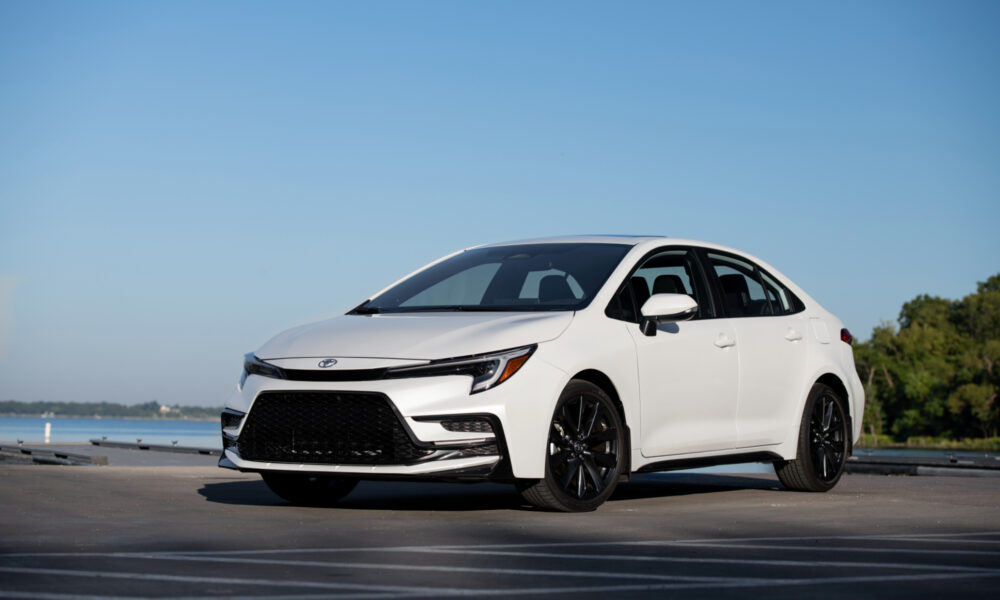
The Corolla interior lags behind. The 2026 refresh updated some materials and the available 10.5-inch infotainment display, but the Corolla’s cabin still feels more budget-oriented than the Civic’s. Toyota Safety Sense 3.0 is standard, which is excellent. Wireless CarPlay is available on higher trims, but not standard on the base LE.
Safety
All three vehicles perform well in crash testing, but the systems underneath differ.
The Civic comes standard with Honda Sensing, which includes adaptive cruise, lane-keeping assist, and automatic emergency braking. The system works well and operates predictably.
The Corolla comes standard with Toyota Safety Sense 3.0 — pre-collision system with pedestrian detection, lane departure alert, and dynamic radar cruise. Toyota’s suite is mature, well-calibrated, and available across all trims.
The Model 3 comes standard with Tesla’s active safety features: automatic emergency braking, lane departure avoidance, and blind spot monitoring. Tesla’s Autopilot (standard) handles lane keeping and adaptive cruise competently. Full Self-Driving (FSD) is available at $8,000 — it’s genuinely impressive in suburban and highway environments, but requires driver attention and doesn’t make the vehicle fully autonomous. The camera-based approach is impressive but polarizing.
Resale and Reliability
This is where Toyota and Honda have historically dominated. The Corolla has a reputation for going 200,000+ miles with routine maintenance — oil changes, brakes, transmission fluid, timing chain (which is chain-driven, not belt, on modern Corollas). The Civic is similarly bulletproof, with a 60+ year reputation for longevity.
The Model 3 is newer to market and has a more mixed reliability picture. The first-generation Model 3 (2018-2020) had issues with the MCU (media control unit) and some suspension components. Later generations have been more solid, but the battery and drivetrain — which Tesla covers for 8 years / 100,000 miles on the Long Range — have proven durable. Early data on high-mileage Model 3s looks reasonable, though long-term depreciation remains uncertain.
On resale: the Model 3 has taken a beating. Early 2025 resale values were down significantly as Tesla cut prices. The Civic and Corolla hold their value with traditional Japanese depreciation curves — approximately 35-40% residual after 5 years for the hybrid variants, better for the ICE versions.
Total Cost of Ownership: 5-Year Analysis
Here’s how the math looks over 5 years / 60,000 miles for a buyer in a mid-size U.S. city:
| Cost Category | Model 3 RWD | Civic Hybrid | Corolla Hybrid |
|---|---|---|---|
| Purchase Price (incl. destination) | $40,385 | $25,845 | $27,425 |
| Federal Tax Credit | $0 | $0 | $0 |
| Fuel / Energy (5 yr) | $2,100 | $4,200 | $4,200 |
| Insurance (5 yr) | $7,500 | $6,000 | $6,000 |
| Maintenance (5 yr) | $1,200 | $2,400 | $2,400 |
| 5-Year Residual (est.) | $18,000 | $16,000 | $16,500 |
| Net 5-Year Cost | $33,185 | $22,445 | $23,525 |
Key takeaways from the TCO analysis:
The Civic Hybrid and Corolla Hybrid have a lower total cost of ownership over 5 years by roughly $10,000-$11,000 versus the Model 3 RWD, even without any tax credit. The gap narrows somewhat against the Performance variant if you factor in that a comparable ICE performance sedan (Civic Type R, GR Corolla) would cost significantly more to purchase and insure.
The Model 3 makes the most financial sense if:
- You drive significantly more than average (20,000+ miles per year), amplifying the fuel savings
- You install home solar + battery, bringing your per-mile energy cost close to zero
- You qualify for a state EV incentive (California, Colorado, New York, and others offer additional credits)
- You value the performance: 455 hp for under $50,000 is genuinely remarkable
The Civic or Corolla Hybrid makes more sense if:
- You want lowest 5-year total cost of ownership
- You don’t have home charging access
- You’re buying without a long-term commitment (leases and short ownership periods favor ICE/hybrid)
- You’re buying your teenager their first car
Which Should You Buy?
Buy the Tesla Model 3 if you’re ready to commit to EV ownership, have a garage or access to a Level 2 charger, and want the best technology, fastest charging network, and most engaging performance in this price range. The Long Range AWD is the sweet spot: 310 miles of range, dual-motor all-wheel drive, and the full Tesla ecosystem. Don’t buy it expecting to save money versus the hybrids — buy it because you want a genuinely different, genuinely excellent vehicle.
Buy the Honda Civic Hybrid if you want the best overall package under $30,000. The interior is the class of this group, the hybrid powertrain delivers 50 mpg without any behavioral change (just fill the tank), and Honda’s dealer network means service is never far away. The Civic Sport Hybrid at $29,745 with 181 hp and a sport-tuned suspension is the enthusiast’s choice.
Buy the Toyota Corolla Hybrid if pure transportation value is your priority. The LE Hybrid at $26,175 delivers 50 mpg, Toyota’s legendary reliability, and a 5-year cost of ownership that beats nearly everything in its class. It’s not as engaging to drive as the Civic, but it’s exceptionally competent.
Motorlinks has covered all three vehicles in depth. See our Tesla Model 3 long-term ownership experience, Compact SUV Hybrid Showdown: RAV4 vs CR-V vs Tucson, and Toyota hybrid reliability analysis for more.
Image Gallery
Related Articles
- Best EVs for First-Time Buyers in 2026 — Making the switch from ICE or hybrid? Here’s what to know before you buy
- EV Ownership Experience: Six Months in the Tesla Model 3 — Real-world long-term ownership impressions from a Model 3 enthusiast
- Toyota Hybrid Success: Why Toyota’s Hybrid Strategy Dominated — How Toyota built the most trusted hybrid drivetrain in the industry