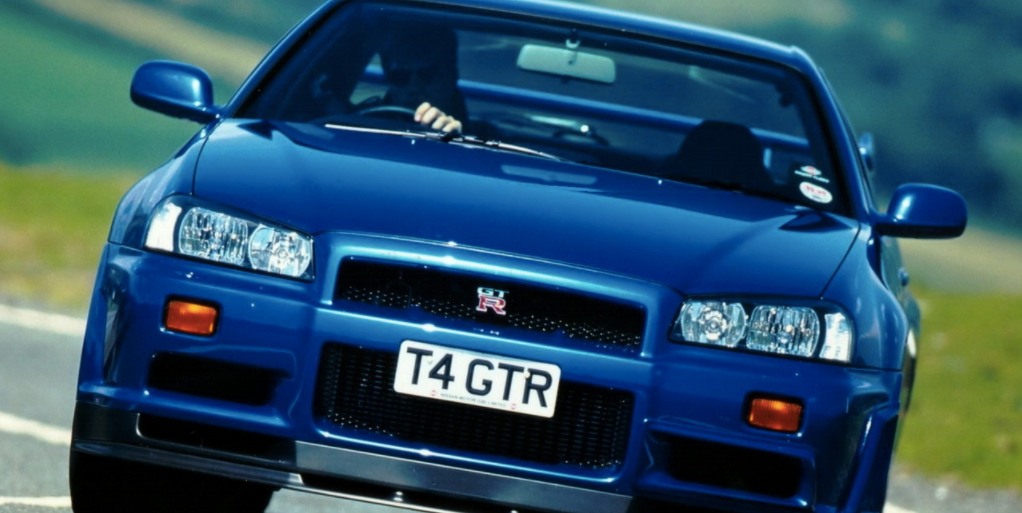
A Trio of Rare Nissan Skyline GT-Rs: Japan's Ultimate Performance Legacy
From the R32's dominant Bahrain Victory to the ultra-rare Z-Tune and R-Tune specials, we celebrate the most coveted Skyline GT-R variants ever built.
The Nissan Skyline GT-R nameplate needs little introduction. For over a decade, it represented the pinnacle of Japanese performance engineering — a dynasty of turbocharged, all-wheel-drive sedans that terrorized homologation rally stages, dominated touring car championships, and eventually became cultural icons thanks to Gran Turismo and Fast & Furious.
But not all GT-Rs were created equal. Among the standard run of R32, R33, and R34 Skyline GT-Rs, a handful of special variants stand apart — built in tiny numbers, engineered for specific purposes, and today worth more than their weight in gold. Let’s look at three of the rarest.
The R32 GT-R: Where It All Started (Again)
The R32 Skyline GT-R (1989–1992) launched Nissan back into the performance conversation in emphatic style. With 320 hp from its twin-turbo RB26DETT inline-six and the advanced ATTESA E-TS all-wheel-drive system, it was a revelation — and immediately began cleaning up in competition.
In touring car racing alone, the R32 claimed four consecutive Japan Grand Prix championships from 1990 to 1993. Then came the thing that cemented its legend: a dominant victory at the 1991 Bathurst 1000 in Australia, where the GT-R finished 1-2-3. The R32’s pace was so overwhelming that Australia eventually introduced a “GT-R rule” banning the car from local production car racing. It was that fast.
Nissan produced approximately 43,000 R32 GT-Rs across its production run — substantial by today’s standards, but remember: this was a JDM-only vehicle, never officially exported to North America. Finding a clean, unmodified R32 GT-R today in export markets is increasingly difficult, with values climbing past $50,000 for decent examples.
| Specification | R32 GT-R |
|---|---|
| Engine | 2.6L twin-turbo RB26DETT I6 |
| Power | 320 hp (jis) |
| Torque | 353 lb-ft |
| Drive | ATTESA E-TS AWD |
| Weight | 1,420 kg |
| 0-100 km/h | ~5.0 seconds |
| Production | ~43,000 units (all variants) |
The R33 GT-R: Bigger, Heavier, Still Brilliant
The R33 generation (1995–1998) grew in every dimension — longer wheelbase, wider body, more equipment — and gained a few more horsepower thanks to refinements to the RB26DETT. Nissan also improved the ATTESA E-TS system and added dynamic damping for better ride quality. Around 16,680 R33 GT-Rs were built, making it the rarest of the “big three” Skyline GT-R generations.
The R33 gets a mixed reputation compared to its siblings. Purists often prefer the R32’s rawness; the R33 gained about 100 kg and some critics felt it had lost a degree of driver communication despite its superior equipment. That said, the R33 GT-R V-Spec and later V-Spec II Nür variants brought upgraded suspension, better brakes, and the sophisticated ATTESA Pro system that could send more torque to the rear wheels for a more traditional sports car feel.
The R33 GT-R’s significance was cemented in pop culture by Gran Turismo 2 — for an entire generation of gamers, the R33 GT-R was the car to drive virtually. That cultural imprint has driven export demand ever since.
The R34 GT-R: The Last (and Most Refined) Stand
The R34 (1998–2002) represents the zenith of the Skyline GT-R lineage — the most powerful, most sophisticated, and most refined GT-R before Nissan’s corporate restructure ended production. The RB26DETT was uprated to around 330 hp (the informal “280I” standard in Japan), with the V-Spec II Nür and later GT500-spec machines pushing toward 500 hp in race trim.
The R34 introduced a cleaner aesthetic, a functional rear wing that became iconic, and the Multi-Information Display in the center console that showed boost pressure, oil temperature, and water temperature — a motorsport-derived touch that enthusiasts adored. The Nür variants added carbon fibre body panels and further chassis stiffening.
Nissan built approximately 12,000 R34 GT-Rs across all variants, with the final 418 units being the limited-edition GT-R Nür — finished in either Midnight Purple or Pearl Black, with unique BBS wheels and a plaque confirming the build number. Today, a tidy R34 GT-R commands $150,000 or more, with Nür variants regularly crossing $250,000 at auction.
R32 GT-R LM: The One Nissan Almost Sent to Le Mans
In 1994, Nissan developed an R32 GT-R variant specifically to compete at the 24 Hours of Le Mans. The R32 GT-R LM (Le Mans) received a stripped-out interior, polycarbonate windows, and aerodynamic bodywork optimized for high-speed circuit running — including the distinctive “slick” side profile with no visible vents or creases.
Nissan built just four R32 GT-R LM machines. The program was ultimately canceled when Nissan’s motorsport focus shifted, and the cars never turned a competitive lap at La Sarthe. All four survivors are accounted for, and they’re among the most fabled GT-R variants in existence — caught in the strange space between homologation special and race prototype that never raced.
| Variant | Approximate Production | Notes |
|---|---|---|
| R32 GT-R (standard) | ~37,000 | AWD turbo sedan, JDM |
| R33 GT-R V-Spec | ~7,700 | Upgraded suspension, ATTESA Pro |
| R34 GT-R V-Spec II Nür | ~1,500 | Carbon fibre upgrade, BBS wheels |
| R34 GT-R Nür | 418 | Final edition, build-number plaque |
| R32 GT-R LM | 4 | Le Mans prototype, never raced |
The Z-Tune R34: When Nissan Built Its Own R34
Perhaps the rarest GT-R of all is the Nissan Skyline GT-R Z-Tune, produced in 2005–2007 by Nissan’s in-house tuning division, Z-Tune. These weren’t regular GT-Rs upgraded post-sale — they were rebuilds. Nissan took R34 GT-R V-Spec II Nür shells, stripped them completely, and reconstructed them to Z-Tune specification with a reinforced RB28DETT engine displacing 2.8 litres and producing around 500 hp.
The bodywork featured hand-crafted carbon fibre panels, including a new front bumper, hood, and rear wing. Inside, there was full Z-Tune leather and trim. Only 19 Z-Tune R34s were ever built, making it statistically rarer than a Ferrari Enzo. Each one carries a build number etched into a unique chassis plate. Values today are simply theoretical — no one selling.
What Makes a Skyline GT-R Rare?
Beyond the obvious limited-production variants like the Z-Tune or GT-R Nür, the “rarity” of any Skyline GT-R is partly market-driven. None of these cars were ever officially exported to North America, so the global enthusiast pool relies on the trickle of cars that have been exported privately over the decades. Left-hand-drive conversions exist but are genuinely uncommon, and purists often penalize them on value.
Condition matters enormously. Rust is the R32’s primary enemy — the undercoating applied at factory was thin, and the doors and quarter panels are particular trouble spots. R33 and R34 models are slightly better protected, but an example that has lived through a Japanese winter without proper protection can be structurally compromised.
Originality also commands a premium. The RB26DETT is robust enough to support big power, but modified examples — particularly those with detonated turbos or neglected maintenance — are worth significantly less than clean, unmolested cars. Documentation matters too: service records, a spare key, and the original exhaust system all add value.
Finding Your Skyline GT-R
If you’re actively hunting for a Skyline GT-R, start with the R33 — it’s currently the most affordable entry point into the “big three” generations, with decent examples available in the $35,000–$55,000 range depending on condition and location. The R32 commands a premium for its rallying and Bathurst legacy, with clean examples starting around $50,000 and climbing.
The R34, meanwhile, has effectively left the realm of “aspirational weekend project” and entered “significant investment asset.” Plan accordingly.
Regardless of generation, engage a specialist inspector before purchase. The RB26DETT engine is interference-fit — a timing belt failure destroys the engine — so verify belt and tensioner age at minimum. Expect to pay for compression testing, and if possible, a boroscope inspection of the cylinder bores.