EV Tire-Pressure Warning in Cold Weather: Why It Can Disappear
A tire-pressure light that goes out after driving still deserves a cold check. Learn which pressure to use and how low inflation differs from a TPMS fault.
Quick Verdict
If your EV’s tire-pressure light comes on during a cold start and disappears after driving, check the tires anyway. Warmer air inside a tire can lift the reading above the warning threshold without correcting low inflation when cold.
For drivers in Canada and colder U.S. regions, the useful October habit is simple: measure all tires with a gauge before driving, and use the vehicle’s recommended cold pressure. Do not wait for the dashboard warning, inflate to the tire sidewall’s maximum, or add an arbitrary extra amount to chase more range.
The same basic inflation rules apply to electric and gasoline vehicles. An EV’s pressure display is convenient, but it does not replace knowing the correct target.
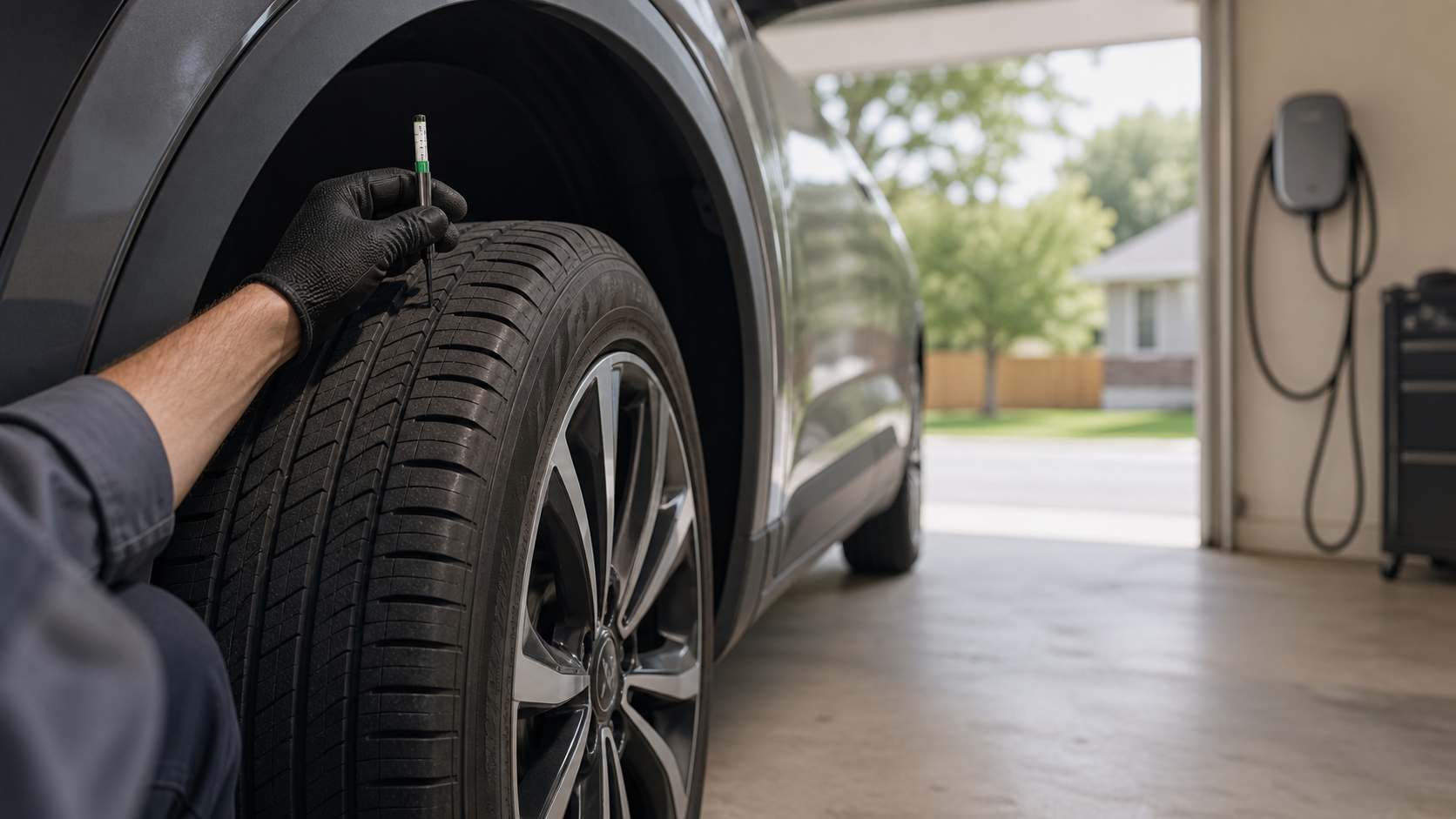
Illustration: Motorlinks, AI-generated. Tire tread inspection beside a home charger. Image.
Why the Light Can Go Out on Its Own
NHTSA’s TireWise guidance describes this exact pattern: marginally low pressure can dip below the warning threshold overnight, then rise as the tires heat up through driving or the outside temperature increases.
That makes a disappearing light an explanation, not an all-clear. The tire may still be below its specified pressure the next time you measure it cold.
Transport Canada also warns that a tire checked in a warm garage can be underinflated when it is below freezing outside. A seasonal temperature change is therefore a reason to check inflation, even if you have not noticed a puncture.
However, do not assume every pressure loss is weather-related. If one tire repeatedly loses pressure, needs frequent topping up, or has visible damage, have it inspected. A cold spell does not rule out a leak.
Use the Door Label, Not the Sidewall Maximum
The tire’s sidewall maximum is not your car’s recommended operating pressure. NHTSA directs owners to the vehicle’s Tire and Loading Information label or owner’s manual.
Look near the driver’s door opening for the placard. Read the values carefully:
- Front and rear can differ. Do not make every tire the same pressure if the manufacturer specifies different targets.
- Load or fitment instructions can matter. Follow the manual for the tires, wheels and loading conditions fitted to your vehicle.
- Use the displayed units correctly. U.S. guidance uses psi; Canadian labels and gauges may also show kPa. Approximately 6.9 kPa equals 1 psi, but the target remains the vehicle’s specification.
- There is no universal EV pressure. Another model’s setting, or a social-media recommendation, is not a substitute for your placard.
Michelin’s EV tire-pressure guidance likewise recommends the vehicle placard and notes that some EVs specify separate front and rear pressures.
Correct inflation is an ownership basic, not a range modification. Do not exceed the manufacturer’s recommended setting to try to recover winter kilometres or miles.
What a Cold Check Actually Means
“Cold” describes the tire’s condition, not a requirement to wait for winter. NHTSA defines a cold tire as one on a vehicle that has not been driven for at least three hours.
A practical routine is to check before your first trip of the day:
- Find the recommended cold targets on the placard or in the manual.
- Measure every road tire with a tire-pressure gauge; check a spare too if the vehicle has one.
- Adjust to the appropriate target for each tire.
- Follow the vehicle’s instructions for updating the pressure display or TPMS after adjustment.
- Recheck if the warning returns or a tire loses pressure again.
NHTSA recommends a manual pressure check at least monthly. Transport Canada advises checking often, particularly before highway driving or longer trips.
If you have already driven and suspect underinflation, NHTSA advises adding air to the recommended cold pressure rather than continuing with a significantly underinflated tire, then rechecking and adjusting once the tires are cold. That is a temporary response, not a replacement for an accurate cold reading.
A Warning Light Is Not a Maintenance Schedule
TPMS stands for tire-pressure monitoring system. Its job is to alert the driver to a pressure problem; it is not a promise that every tire is correctly inflated whenever the warning is off.
NHTSA notes that TPMS warnings activate when a tire is significantly underinflated. A monthly gauge check can catch low pressure before that threshold is reached.
A malfunction is a separate issue. In NHTSA’s U.S. guidance, a TPMS fault may cause the symbol to flash for 60–90 seconds, then remain illuminated. A steady low-pressure warning and a flashing-then-steady malfunction indication should not automatically receive the same response.
For Canadian vehicles, and for the exact symbols and messages on either market’s car, use the owner’s manual. Do not assume an American regulatory description tells you every detail of your model’s display.
After a seasonal wheel change, confirm that any required sensors and learning procedure are correct for the vehicle. Repeatedly resetting or dismissing a warning is not a repair.
Why It Matters to EV Range—Without a Magic Percentage
Michelin identifies tire pressure as a factor in rolling resistance and EV range. That is a good reason to maintain the specified pressure, but it is not a basis for promising a fixed number of extra miles or kilometres.
Winter consumption can also change with cabin heating, battery temperature, road conditions and the tires themselves. Correcting underinflation does not cancel those other effects.
Nor does proper pressure turn an unsuitable tire into a winter tire. Seasonal grip, approved fitment and tread condition remain separate checks. Our EV winter-tire guide explains what to look for when choosing a replacement set.
The best response to a cold-start warning is a measured check, not a dashboard dismissal. Get the tires to their specified cold pressure, investigate recurring loss, and let the manual distinguish inflation from a monitoring-system fault.
FAQ
Can cold weather turn on an EV tire-pressure warning?
Yes. Tire pressure falls as the air cools. A marginally low tire can trigger a warning overnight, then rise above the warning threshold as it warms during driving. Check and adjust the pressure when the tires are cold.
Which tire pressure should an EV owner use?
Use the vehicle manufacturer’s recommended cold pressure on the tire-information placard or in the owner’s manual, not the maximum printed on the tire sidewall. Front and rear targets may differ.
Does a tire-pressure warning going out mean the tire is fixed?
No. Warming can raise pressure enough to switch off the warning without correcting low cold inflation. Measure all tires with a gauge when cold. Repeated pressure loss or visible damage needs inspection.
Is a flashing TPMS light the same as a low-pressure warning?
Not necessarily. NHTSA says a U.S. TPMS malfunction may flash for 60 to 90 seconds and then remain illuminated. Follow the warning instructions for your exact vehicle and arrange a system inspection when indicated.
Sources
- NHTSA: TireWise tire maintenance, cold-pressure checks and TPMS warnings
- Transport Canada: winter tires and checking air pressure
- Michelin Canada: EV tire pressure and maintenance