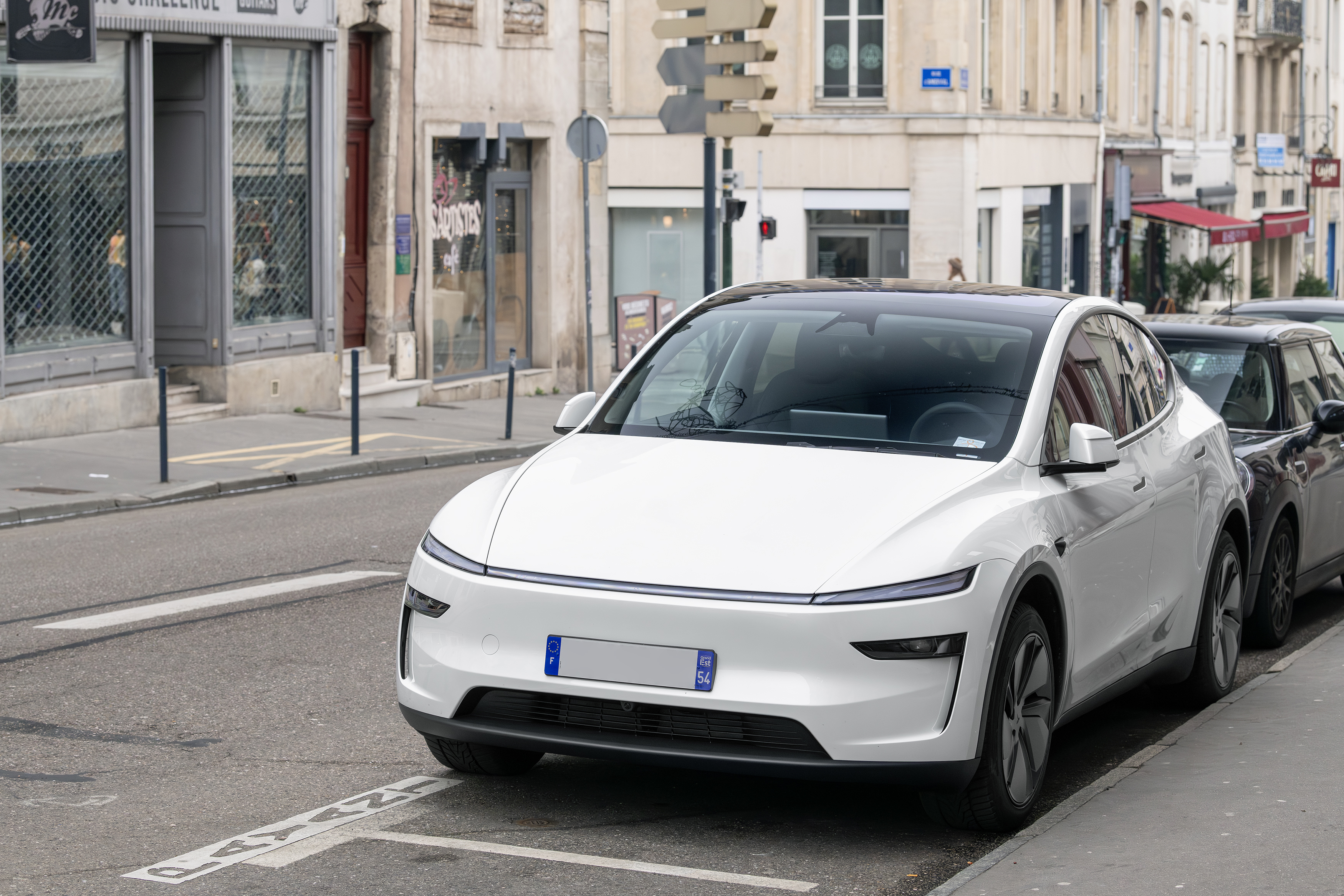
Which 2026 Tesla Model Y Should You Buy? U.S. and Canada Trim Guide
The 2026 Tesla Model Y spans six U.S. versions and three Canadian trims. Here is the range, price and equipment that make each one worth choosing.
The 2026 Tesla Model Y is no longer a simple choice between rear- and all-wheel drive. U.S. buyers face six versions, ranging from a relatively lean RWD crossover to the longer, six-seat Model Y L. Canada gets a smaller three-trim lineup, and its entry RWD model has different range, acceleration and charging figures from the American car.
That creates two separate buying decisions. The order page makes the Performance and Model Y L look exciting, but the best version is the one whose battery, cabin and seating will improve ordinary days—not the one with the longest option list.
Quick Verdict
U.S. value pick: Model Y Rear-Wheel Drive. It keeps the Model Y’s space, software and charging integration for US$39,990 and is rated at 321 miles.
U.S. sweet spot: Premium Rear-Wheel Drive. The US$6,000 step from RWD buys the richer cabin, faster charging and the lineup’s best listed range at 357 miles.
Canadian value pick: Model Y Rear-Wheel Drive. At C$49,990, it is the only Canadian Model Y on Transport Canada’s current EVAP vehicle list. Confirm that the final transaction qualifies before treating the incentive as money in hand.
Best all-weather all-rounder: Premium All-Wheel Drive. It is the easiest recommendation for frequent winter highway travel, but Canadian buyers pay a steep C$15,000 premium over RWD.
Choose Performance for its chassis and speed, not because it is the rational value leader. Choose the U.S.-only Model Y L only when its six-seat layout solves a recurring family-space problem.
2026 Model Y Prices and Key Specifications
| U.S. version | Cash MSRP | Listed range | 0–60 mph | Peak DC rate | Best for |
|---|---|---|---|---|---|
| Rear-Wheel Drive | US$39,990 | 321 mi | 6.8 sec | 225 kW | Lowest price and efficiency |
| All-Wheel Drive | US$41,990 | 294 mi | 4.6 sec | Not separately stated | Budget AWD and speed |
| Premium Rear-Wheel Drive | US$45,990 | 357 mi | 5.4 sec | 250 kW | Range and cabin value |
| Premium All-Wheel Drive | US$49,990 | 327 mi | 4.6 sec | 250 kW | All-weather versatility |
| Performance | US$57,990 | 306 mi | 3.3 sec* | 250 kW | Chassis and acceleration |
| Model Y L Premium | US$61,990 | 325 mi est. | 4.4 sec | 250 kW | Regular six-passenger use |
*Tesla’s Performance acceleration claim subtracts rollout.
Tesla listed a US$1,390 destination fee and US$250 order fee when checked, adding US$1,640 before tax to each American configuration. Because Tesla changes pricing and fees frequently, use the table to understand trim spacing and confirm the complete order summary before paying a deposit.
| Canadian version | MSRP | Listed range | 0–100 km/h | Peak DC rate | Best for |
|---|---|---|---|---|---|
| Rear-Wheel Drive | C$49,990 | 463 km | 7.2 sec | 175 kW | Price and possible EVAP value |
| Premium All-Wheel Drive | C$64,990 | 542 km | 4.8 sec | 250 kW | Winter travel and comfort |
| Performance | C$74,990 | 494 km | 3.5 sec* | 250 kW | Enthusiast all-rounder |
Canada does not currently list the standard AWD, Premium RWD or long-wheelbase Model Y L. The Canadian RWD’s 463-km rating and 175-kW peak also show why U.S. specifications should not be converted directly into kilometres and assumed to apply north of the border.
What Every Model Y Still Gets Right
The core Model Y case does not depend on buying Premium. Every trim packages a large rear cargo area with a front trunk, phone-key access, app-controlled climate, over-the-air updates and Tesla’s close integration between route planning and the Supercharger network.
Pet Mode, Camp Mode and Sentry Mode are part of the broader software experience. Full Self-Driving (Supervised) is also a separate software decision rather than a reason to buy one drivetrain over another. Choose the battery, seating and chassis first; software can be evaluated on its own terms.
The basic RWD and AWD cars are deliberately simpler inside. They use an 18-inch wheel, a 15.4-inch centre display, heated front seats and a seven-speaker system. Their panoramic roof is hidden by a conventional headliner, and they omit the rear screen, ventilated front seats and power-folding rear seats found on Premium versions.
Rear-Wheel Drive: The Rational Value Choice
The American RWD is the least expensive route into the current Model Y. Its 321-mile EPA estimate beats the standard AWD’s 294 miles, and Tesla lists up to 160 miles added in 15 minutes under its stated Supercharging conditions. A 6.8-second sprint to 60 mph is ordinary by Tesla standards but entirely adequate for a family crossover.
Its omissions are comfort and theatre, not basic utility. Buyers who charge at home, drive mostly on pavement and would rather keep US$6,000 than have ventilated seats and premium audio should stop here.
Canada’s RWD is slower and charges at a lower peak, but its financial argument is stronger. Transport Canada’s current EVAP vehicle data lists the 2026 Model Y RWD-B for up to a C$5,000 purchase or 48-month lease incentive in 2026.
That is not an automatic C$5,000 discount on every order. EVAP requires a final transaction value of C$50,000 or less and has buyer, vehicle and submission rules. The government also warns that appearing on the list does not guarantee every transaction. Check the exact bill of sale and MotorLinks’ Canadian EV incentive guide before calculating an effective price.
Standard AWD: The Clever U.S. Performance Upgrade
For US$2,000 over RWD, the U.S.-only standard AWD adds a second motor and cuts the 0-to-60-mph claim from 6.8 to 4.6 seconds. The cabin remains the simpler non-Premium specification, while rated range drops to 294 miles.
That is unusually inexpensive if stronger launch traction or acceleration matters. It does not replace winter tires: AWD helps the vehicle get moving, while the tires still determine much of its braking and cornering grip.
Choose RWD for highway efficiency. Choose standard AWD for snowy hills, frequent poor-road starts or because 4.6-second acceleration sounds like US$2,000 worth of fun.
Premium RWD: The U.S. Sweet Spot
Premium RWD is where the Model Y becomes noticeably more complete. Range climbs from 321 to 357 miles, peak charging rises from 225 to 250 kW, and Tesla estimates up to 182 miles added in 15 minutes under its conditions.
The cabin upgrade is equally important. Premium brings a 16-inch front display, 8-inch rear screen, ventilated front seats, heated rear seats, full synthetic-leather upholstery, ambient lighting, a 15-speaker audio system with subwoofer and power-folding rear seats. Its panoramic roof is exposed rather than covered by a headliner.
The US$6,000 premium therefore buys range, road-trip speed and equipment occupants will notice every day. Buyers who keep vehicles for years or travel frequently will extract more value from this upgrade than from larger wheels or expensive paint.
Premium AWD: The Best All-Weather All-Rounder
In the U.S., Premium AWD costs US$4,000 more than Premium RWD. It adds the front motor, cuts 0–60 mph to 4.6 seconds and enables the regular Model Y’s optional seven-seat layout. The trade-off is a 30-mile drop to 327 miles.
The standard AWD is equally quick and US$8,000 cheaper, but Premium AWD adds 33 miles of rated range, the better cabin and 250-kW charging. It makes sense when AWD and daily comfort matter together.
Canada asks a harder question. Premium AWD costs C$15,000 more than RWD before any incentive. In exchange, listed range rises by 79 km to 542 km, acceleration improves dramatically, charging peaks at 250 kW and the cabin gains the Premium equipment.
That is useful hardware for frequent winter highway trips and long-distance family travel. It is difficult to justify for an urban commuter with dependable home charging—especially if the base RWD transaction qualifies for EVAP and widens the effective gap.
Performance: Emotionally Excellent, Financially Optional
Performance costs US$8,000 more than Premium AWD in the U.S. and C$10,000 more in Canada. It adds electronically adaptive suspension, 21-inch wheels, upgraded brakes, more supportive sport seats, distinct bodywork and a carbon-fibre spoiler. Acceleration falls to 3.3 seconds to 60 mph in the U.S. and 3.5 seconds to 100 km/h in Canada, using Tesla’s rollout-subtracted claims.
The running-cost trade-offs extend past the order page. Range falls to 306 miles or 494 km, ground clearance is lower and 21-inch performance tires are more expensive and less forgiving on broken pavement. Get an insurance quote before assuming the only extra cost is the C$10,000 or US$8,000 trim premium.
Performance is valuable when its chassis, seats and acceleration will be enjoyed regularly. Premium AWD is the better transportation value when range, ride comfort and tire cost matter more.
Model Y L: Buy It for Space, Not Status
The U.S.-only Model Y L is not merely another equipment package. Its longer wheelbase and body create a six-seat cabin with second-row captain’s chairs and a more useful third row. Tesla lists 89 cubic feet of maximum cargo space, versus 76 in the regular Premium model.
It retains AWD, is estimated at 325 miles and reaches 60 mph in a claimed 4.4 seconds. The US$61,990 MSRP is US$12,000 above Premium AWD, which is poor value for a household that normally carries four people. It can be sensible for a family that regularly carries five or six and would otherwise move into a larger, more expensive three-row EV.
Treat any launch-specific charging, connectivity or software offer as temporary. The permanent value is in the longer body and better third row.
Which Model Y Should You Choose?
- Choose RWD when price, efficiency and everyday utility matter most.
- Choose standard AWD in the U.S. for inexpensive AWD and much stronger acceleration.
- Choose Premium RWD in the U.S. for the best blend of range, charging and cabin comfort.
- Choose Premium AWD when all-weather traction and the Premium cabin outweigh the price and range penalty.
- Choose Performance because its chassis and speed are part of the appeal, not because a spreadsheet says you need them.
- Choose Model Y L when six-passenger space is a weekly need rather than a once-a-year inconvenience.
One last value rule applies across the lineup: stay with the smallest practical wheels unless appearance is a priority. Smaller wheels generally improve range, ride comfort, pothole tolerance and replacement cost.
FAQ
Which 2026 Tesla Model Y trim is the best value?
The Rear-Wheel Drive is the value pick in both countries. U.S. buyers wanting the best overall mix should step up to Premium Rear-Wheel Drive; Canadian buyers needing AWD and more road-trip range should consider Premium All-Wheel Drive.
Which 2026 Model Y has the longest range?
The U.S. Premium Rear-Wheel Drive leads at 357 miles. Canada’s Premium All-Wheel Drive has the highest listed Canadian figure at 542 km.
Is the 2026 Model Y RWD eligible for EVAP?
Transport Canada’s list includes the 2026 Tesla Model Y RWD-B for up to a C$5,000 2026 incentive. The final transaction must meet the C$50,000 cap and all other program rules, so eligibility should be confirmed on the bill of sale.
Is Model Y Performance worth it?
It is worth considering for buyers who value adaptive suspension, better seats, upgraded brakes and very quick acceleration. Premium AWD is the better value for range, comfort and running costs.
Who should buy Model Y L?
Households that regularly carry five or six people. Its longer body and captain’s chairs make the third row more useful than the occasional-use seats in a regular Model Y.
Sources
- Tesla U.S.: Model Y lineup and specifications
- Tesla Canada: Model Y lineup and specifications
- Transport Canada: EVAP overview and eligibility rules
- Transport Canada: Current EVAP eligible-vehicle data